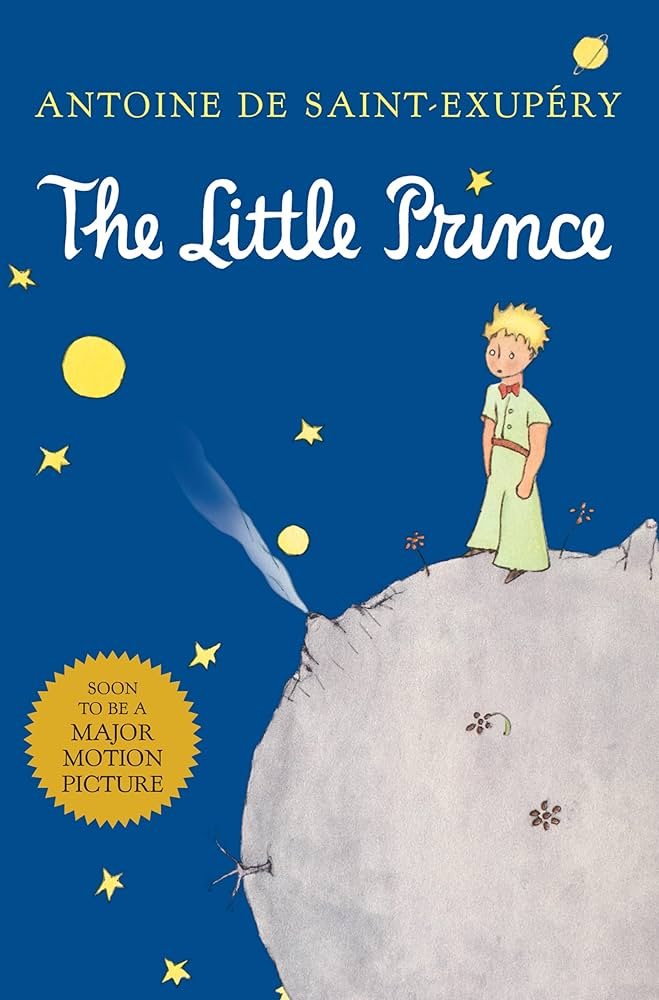
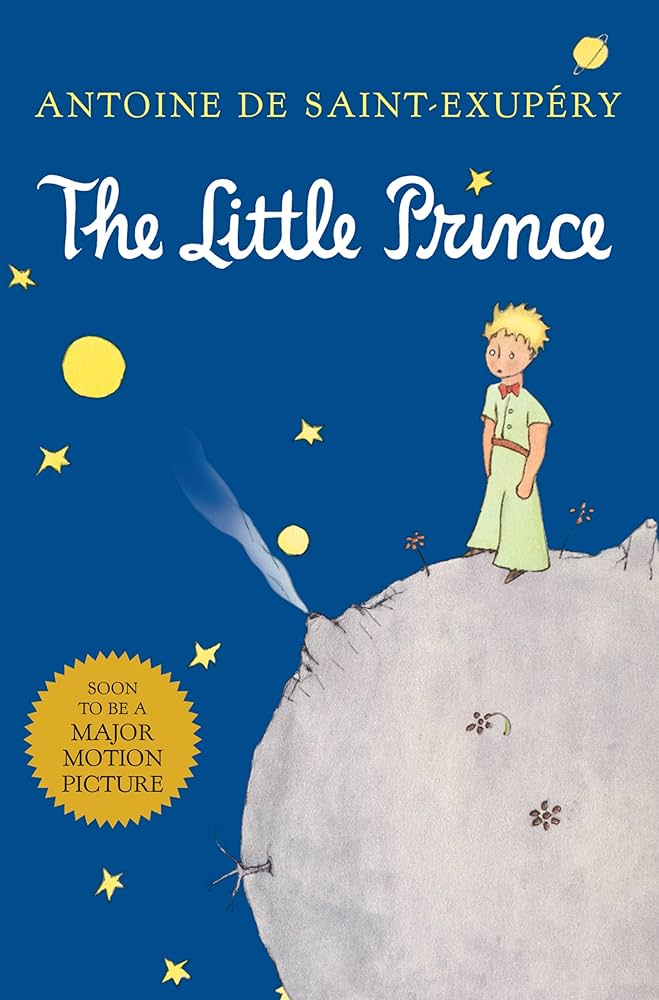
Some literary works exist merely for entertainment, while others transcend time and become lifelong companions to generations of readers. The Little Prince: A Small Book for Children That Leaves Adults Thinking for a Lifetime is undoubtedly one of those rare masterpieces. With its simple storytelling, gentle tone, and delicate illustrations, the book may at first appear to be a children’s tale. Yet beneath that quiet simplicity lies a profound reflection on love, loneliness, childhood, and humanity’s search for the true meaning of life.
More than eight decades after its publication, The Little Prince continues to hold a special place in the hearts of readers around the world. Antoine de Saint-Exupéry does not captivate readers through dramatic plot twists or heavy philosophical arguments, but through sincerity, emotional depth, and an extraordinary ability to touch the most hidden corners of the human soul. Every rereading offers a different emotional experience, because The Little Prince is not simply the story of a boy from a distant planet, but also a gentle reminder to preserve our innocence, our capacity to love, and our ability to see the world with the heart rather than the eyes.
1. Antoine de Saint-Exupéry and the Journey Behind The Little Prince
The Life of Antoine de Saint-Exupéry: A Writer with the Soul of an Aviator
Antoine de Saint-Exupéry was born on June 29, 1900, in Lyon, France, into an aristocratic family with a long-standing heritage. Despite his noble background, his childhood was far from carefree. After losing his father at a young age, Saint-Exupéry grew up in an atmosphere marked by emotional and financial hardship. These early experiences shaped his sensitive personality, reflective nature, and lifelong desire to search for deeper meaning in life.

From an early age, he displayed a vivid imagination and a profound fascination with the sky. At a time when aviation was still dangerous and experimental, Saint-Exupéry chose to become a pilot, a bold and unconventional decision in early twentieth-century Europe. Flying was never merely a profession for him; it became a way to explore humanity, solitude, and the world itself.
During his years working for airmail companies, he undertook countless flights across the Sahara Desert, over the Atlantic Ocean, and through extreme conditions where death was often only moments away. These experiences profoundly shaped his worldview. They taught him about loneliness, friendship, human connection, and the fragile beauty of life, themes that would later become central to The Little Prince.
Saint-Exupéry’s life itself carried an almost mythical quality. In 1944, while serving in the French Air Force during World War II, he disappeared during a reconnaissance mission over the Mediterranean Sea. Decades later, fragments of his aircraft were discovered off the coast of France. His mysterious disappearance only deepened the legend surrounding his name, echoing the dreamlike loneliness that filled so much of his writing.
A Literary Career Shaped by Life Experience
Unlike many writers who lived primarily within the world of books, Saint-Exupéry drew his literary voice directly from real-life experience. His works were deeply influenced by aviation, long journeys through vast landscapes, and the emotional isolation that came with flying alone across endless skies. Yet beneath these stories of pilots and adventure lay profound reflections on human existence and the meaning of life.
He first gained recognition through works such as Southern Mail, Night Flight, and Wind, Sand and Stars. These books established his reputation in French literature thanks to their poetic language, emotional depth, and philosophical undertones.
One of the most distinctive aspects of Saint-Exupéry’s writing is his ability to blend realism with humanistic romanticism. He did not write merely to describe the world around him. Instead, his stories constantly explored larger existential questions: What gives life meaning? What truly matters to human beings? Why do people often become lonelier as they grow older?
All of these reflections reached their fullest expression in The Little Prince, the work widely considered the masterpiece of his literary career. First published in the United States in 1943 in both French and English, the book quickly transcended the boundaries of children’s literature and became a global literary symbol.
Today, The Little Prince has been translated into hundreds of languages and remains one of the best-selling books of all time. More than simply a literary classic, it has become a timeless source of reflection on love, humanity, loneliness, and the journey toward emotional maturity.
The Creation of The Little Prince: A Story Born from Loneliness, War, and the Desire for Human Connection
The Little Prince was written during one of the most turbulent periods in modern history. At the time, Saint-Exupéry was living in exile in the United States after France had been occupied by Nazi Germany during World War II. Far from his homeland and witnessing the devastation of war across Europe, he experienced deep loneliness and emotional turmoil.

It was within this state of exile and uncertainty that he created a story that appeared simple and childlike on the surface, yet carried the emotional depth of an adult struggling to rediscover love, hope, and faith in humanity.
Many elements of The Little Prince were inspired directly by Saint-Exupéry’s own life experiences. The image of the pilot stranded in the Sahara Desert came from a real حادثة airplane crash he survived in 1935, when he and his mechanic became lost in the desert for several days under extreme conditions. The overwhelming silence and isolation of the desert later became one of the most symbolic and emotional settings in the novel.
The rose in the story is also widely believed to represent Consuelo, Saint-Exupéry’s wife. Like the rose, she was described as delicate, emotional, proud, and sometimes difficult to understand. Despite the misunderstandings and emotional pain between them, she remained deeply important to him, much like the rose remained precious to the Little Prince.
What makes The Little Prince so enduring is that it reflects not only the external world but also the inner world of its author. The novel carries the loneliness of modern humanity, the sorrow of lost innocence, and the longing to love and be understood in a rapidly changing and uncertain world.
Perhaps that is why, even more than eighty years after its publication, The Little Prince continues to resonate deeply with readers across generations and cultures, remaining one of the most beloved literary works ever written.
2. The Journey of The Little Prince: A Story About Childhood, Love, and Growing Up
The Little Prince begins with the narration of a pilot, who is also the story’s first-person narrator. As a child, he was deeply passionate about drawing and possessed a vivid imagination. One of his very first drawings depicted a boa constrictor swallowing an elephant, yet every adult who saw it assumed it was simply a hat. No one truly understood the imaginative world of the little boy behind the drawing. Instead, they advised him to give up art and focus on more “practical” subjects such as mathematics, geography, and stable career paths.
The indifference of adults gradually caused him to lose faith in his creativity and imagination. Eventually, he abandoned drawing altogether and became a pilot.
Years later, during a solo flight across the Sahara Desert, the pilot’s airplane suddenly suffers a mechanical failure, forcing him to make an emergency landing in the middle of a vast and deserted landscape. Surrounded by silence and isolation, he unexpectedly encounters a mysterious little boy with golden hair and clear, innocent eyes. Rather than appearing frightened or confused, the boy calmly says:
“Please… draw me a sheep.”
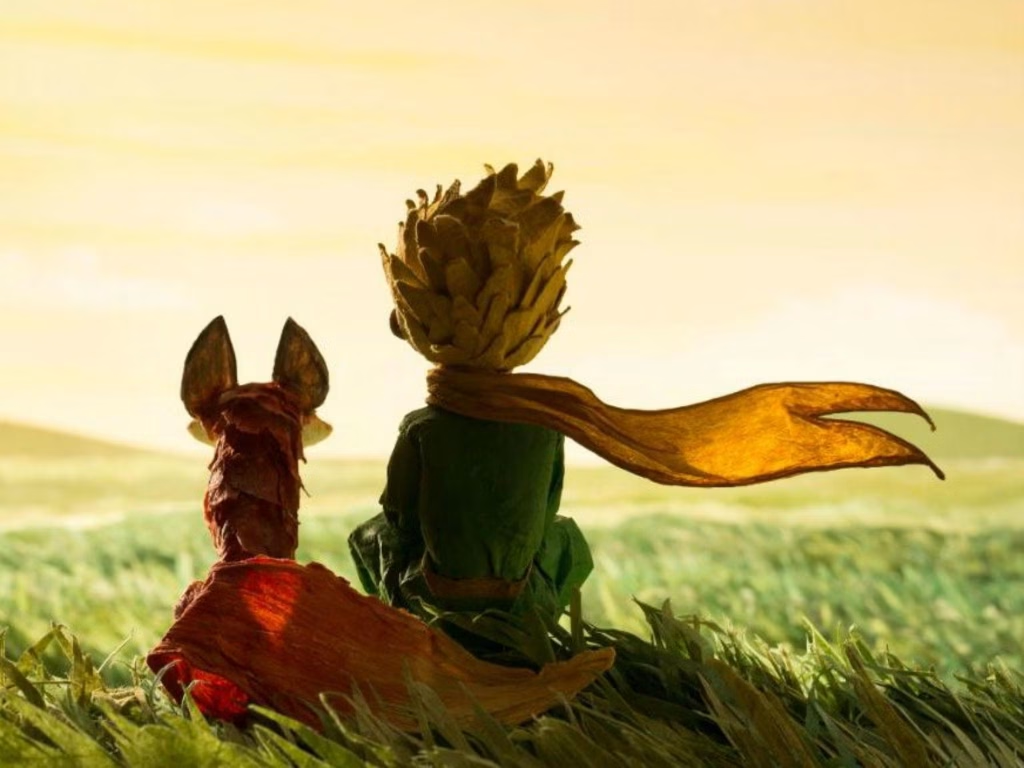
That strange and almost surreal encounter becomes the beginning of the entire story of the Little Prince, a child who comes from a tiny asteroid called B612.
On his small planet, the Little Prince lives a simple life alongside three volcanoes and a very special rose. Every day, he carefully cleans his volcanoes and removes young baobab trees before they can grow large enough to destroy the planet. His quiet existence changes when the rose appears.
The rose is beautiful, delicate, and deeply proud. She constantly longs for affection and attention, yet often expresses herself through vanity and emotional contradictions that hurt the Little Prince. Because he is still too young to fully understand love, he sees only her pride and sensitivity without realizing the vulnerability and genuine affection hidden beneath them. Filled with confusion and sadness, the Little Prince decides to leave asteroid B612 and begin a journey across the universe.
During his travels, he visits several different planets, each inhabited by only one adult. Every character he meets represents a different aspect of the adult world.
The first is a king who desperately wishes to rule over everything despite having no subjects at all. He symbolizes humanity’s obsession with power and meaningless control.
Next, the Little Prince meets a vain man who desires nothing more than admiration and applause. Through this character, Saint-Exupéry critiques vanity and society’s endless need for validation.
He then encounters a drunkard who drinks to forget the shame of being an alcoholic, trapping himself in an endless cycle of despair and self-destruction. This character reflects human weakness and the tendency to escape rather than confront personal pain.
On another planet, the Little Prince meets a businessman who spends all his time counting stars because he believes he owns them. He becomes so consumed by possession and accumulation that he loses sight of life’s true meaning.
The Little Prince also meets a lamplighter who endlessly follows rigid orders and continues performing a meaningless task without question. The character symbolizes people trapped in mechanical routines, responsibilities, and habits that no longer bring purpose or joy.
Before arriving on Earth, the Little Prince visits a geographer who dedicates his life to studying the world despite never exploring any part of it himself. Through this character, Saint-Exupéry highlights the contrast between theoretical knowledge and genuine life experience.
When the Little Prince finally arrives on Earth, he discovers a world far larger and more complicated than anything he has ever known. Although surrounded by countless people, he still feels profoundly lonely. One of the most heartbreaking moments in the story occurs when he discovers an entire garden filled with roses identical to his own. Until then, he had believed that his rose was unique in all the universe.
However, everything changes after he meets the fox.
The fox teaches the Little Prince the meaning of “taming,” explaining that it is the process of creating emotional bonds between two beings. Once a connection is formed, that person becomes unique and irreplaceable.
Through the fox’s wisdom, the Little Prince finally understands that his rose is special not because she is unlike any other flower, but because of the love, time, care, and devotion he has given her. It is that emotional connection that makes her truly unique in his heart.
After all the lessons and experiences from his journey, the Little Prince decides to return to asteroid B612. In order to leave Earth behind, he allows himself to be bitten by a snake, believing that only by leaving behind his heavy physical body can he return home among the stars.
The pilot watches the Little Prince disappear with deep sorrow and helplessness. Yet the ending of the story is not entirely tragic. Instead, it carries a haunting beauty filled with poetry and emotion. The Little Prince may vanish from the physical world, but the lessons he leaves behind continue to endure: lessons about love, responsibility, human connection, and the ability to see life with the heart rather than the eyes.
It is this emotional depth and timeless humanity that allow The Little Prince to transcend the boundaries of ordinary children’s literature and remain one of the most meaningful literary works ever written.
3. When a Children’s Story Becomes a Philosophical Masterpiece of Humanity
The Little Prince and the Layers of Meaning Beyond a Children’s Tale
The Little Prince is one of the rare literary works capable of accompanying readers through different stages of life. As children, readers often see it as a magical adventure across distant planets filled with strange and imaginative characters. Yet as adults, they return to the very same story and discover profound reflections on loneliness, love, maturity, and the true nature of humanity.
What makes The Little Prince so extraordinary lies in the way Antoine de Saint-Exupéry chooses to tell the story. Rather than presenting heavy philosophical arguments or direct moral lessons, he allows the meaning to emerge naturally through the Little Prince’s journey and the seemingly simple encounters that quietly mirror human society.
Each planet visited by the Little Prince represents a fragment of the adult world. The king who longs to rule over everything symbolizes humanity’s meaningless obsession with power and control. The vain man who lives only for admiration reflects superficiality and the selfish desire for recognition. The drunkard trapped in an endless cycle of shame and escape represents human weakness and emotional despair. The businessman who endlessly counts the stars embodies materialism and the never-ending pursuit of possession. The lamplighter, mechanically repeating the same task without question, reflects people who become prisoners of routine and responsibility. Meanwhile, the geographer who studies the world without ever exploring it himself symbolizes the distance between theoretical knowledge and genuine experience.
Through these deeply symbolic characters, Saint-Exupéry raises a haunting question: as people grow older, do they gradually lose the ability to appreciate life’s simple beauty and forget how to listen to their own hearts?
The Core Values of the Story: Love, Responsibility, and Human Connection
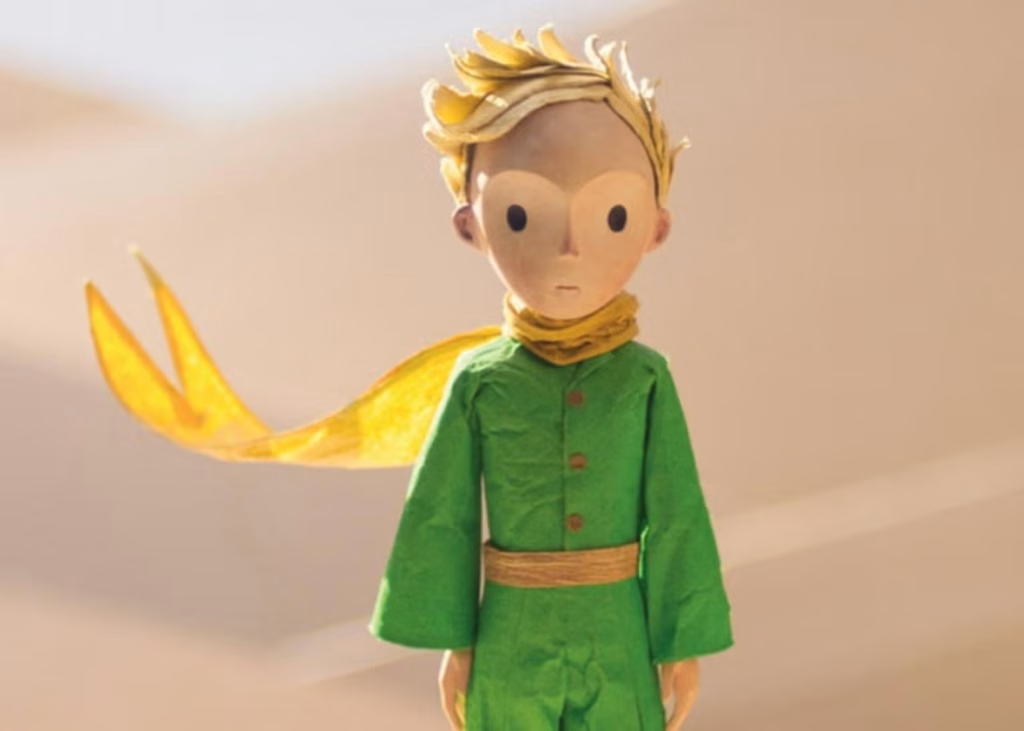
One of the most philosophically significant moments in The Little Prince is the encounter between the Little Prince and the fox. This chapter is often considered the emotional and spiritual heart of the entire book because it contains the story’s deepest reflections on love and connection.
The fox teaches the Little Prince the meaning of “taming.” In the fox’s understanding, taming means creating a bond between two souls that were once strangers. When someone spends time caring for, waiting for, and loving another person, that relationship becomes unique and irreplaceable.
Through this lesson, the Little Prince finally understands the true value of his rose on asteroid B612. There may be thousands of roses in the universe that look exactly like her, but none of them can replace her because he has devoted his time, affection, and genuine love to her.
This becomes one of the most powerful humanistic messages in the novel: the value of a relationship does not come from perfection or outward uniqueness, but from the emotional connection people build with one another.
In modern society, where everything moves quickly and relationships often become fragile or temporary, this message feels more meaningful than ever. The Little Prince reminds readers that love is not merely a fleeting emotion, but also responsibility, patience, and the willingness to remain connected through time.
Loneliness in the Modern World Through the Universe of The Little Prince
Beneath its gentle fairy-tale surface, The Little Prince is also a deeply emotional work about loneliness.
The pilot is alone in the vast desert. The Little Prince is alone in the endless universe. Even the adults on the different planets exist in isolated worlds of their own. Although they are physically present, they rarely form genuine emotional connections with anyone around them.
What makes Saint-Exupéry’s portrayal of loneliness so profound is that loneliness in the story is not caused by the absence of people, but by the absence of understanding. Every character is consumed by personal routines, obsessions, or ambitions, yet none of them truly listen to or empathize with others.
Through this, the author reflects the condition of modern society itself. As people grow older, they become increasingly absorbed in work, money, status, and social expectations, often neglecting their emotional lives in the process. They speak constantly, yet rarely truly understand one another.
That is why the meeting between the pilot and the Little Prince becomes such a meaningful part of the story. It represents a rare connection between two souls who still retain sincerity and the ability to see the world with the heart. Unlike the adults around them, they are capable of listening, understanding, and emotionally connecting in a genuine way.
Childhood as a Symbol and a Message for Adults
One of the most famous lines in The Little Prince is:
“All grown-ups were once children… but only few of them remember it.”
This simple sentence captures the spirit of the entire book.
In Saint-Exupéry’s world, childhood symbolizes innocence, honesty, imagination, and emotional openness. Children experience the world through wonder and curiosity, while adults tend to see everything through logic, numbers, and practical concerns.
Throughout the story, the author repeatedly contrasts these two worlds to show how adulthood often causes people to lose the most beautiful parts of themselves. They become more pragmatic, emotionally distant, and disconnected from the simple joys that once gave meaning to life.
Yet The Little Prince does not reject adulthood itself. Instead, Saint-Exupéry gently reminds readers that even as they grow older, they should preserve their sincerity, compassion, imagination, and ability to feel deeply like a child.
Perhaps that is why the book continues to resonate so strongly across generations. Every rereading of The Little Prince feels not only like revisiting a story, but also like reconnecting with the forgotten child still hidden within ourselves.
A Simple Yet Poetic Storytelling Style Rich in Symbolism
One of the reasons The Little Prince has remained timeless is the unique storytelling style of Saint-Exupéry himself.
The language of the novel is remarkably simple, gentle, and accessible. The sentences are concise and emotionally delicate without ever becoming overly complicated. Yet it is precisely this simplicity that allows the philosophical ideas in the story to feel intimate and deeply moving.
Saint-Exupéry structures the narrative like a fairy tale, but beneath its imaginative surface lies an intricate system of symbols and metaphors. The desert represents loneliness and the search for meaning. The rose symbolizes love and the fragility of relationships. The fox represents emotional connection and understanding. The tiny planets reflect different types of people and the absurdities of modern society.
In addition, the illustrations drawn by Saint-Exupéry himself contribute greatly to the book’s emotional charm. Their childlike simplicity and sincerity perfectly match the spirit of the story, giving the novel a sense of innocence and poetic beauty.
It is perhaps this rare combination of gentle storytelling, rich symbolism, emotional honesty, and philosophical depth that allows The Little Prince to transcend the boundaries of children’s literature and remain one of the most beloved and meaningful literary classics in the world.
4. Memorable and Meaningful Quotes from The Little Prince
One of the reasons The Little Prince has become a timeless literary classic lies in its unforgettable quotations. Antoine de Saint-Exupéry did not rely on complicated language or heavy philosophical explanations. Instead, he expressed profound truths through simple, emotional sentences that continue to resonate deeply with readers long after they finish the book.
What makes these lines especially powerful is that their meaning seems to deepen with age. Certain quotes may appear simple at first glance, yet they quietly reflect the loneliness, emotional longing, and inner struggles of modern human life.
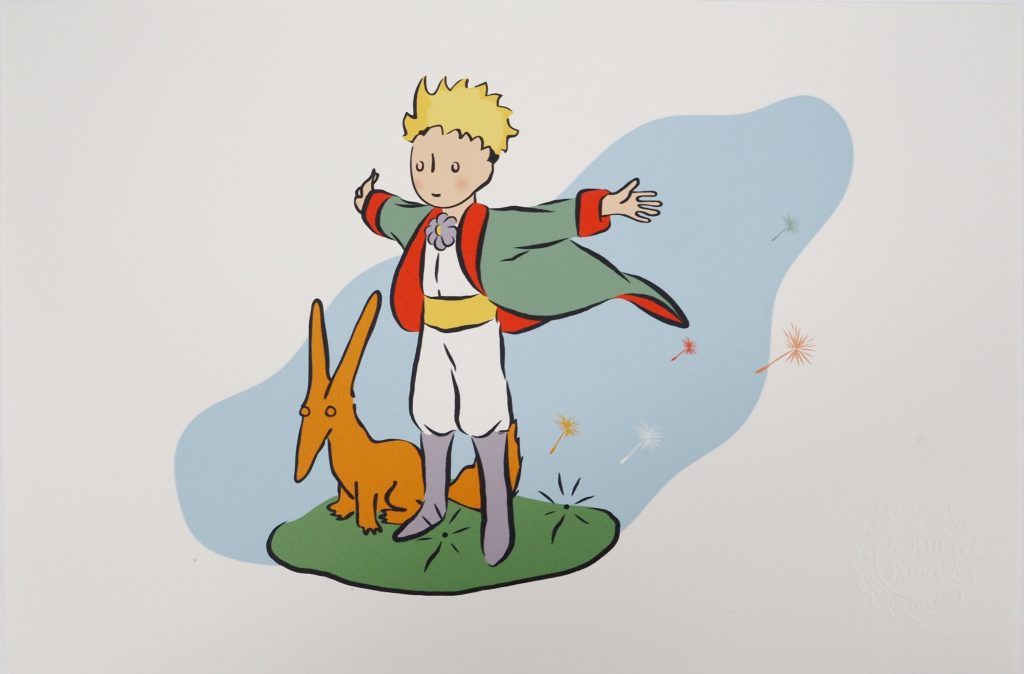
“It is only with the heart that one can see rightly. What is essential is invisible to the eye.”
Through this line, Antoine de Saint-Exupéry emphasizes that the most important things in life, such as love, sincerity, and understanding, cannot be seen through appearances alone. As people grow older, they often become consumed by material things, social status, and superficial values. Only by seeing with the heart can we truly understand the worth of another person or the meaning of a relationship. Perhaps that is why this quote continues to move readers every time they return to The Little Prince.
“All grown-ups were once children… but only few of them remember it.”
Behind this gentle sentence lies one of the deepest sorrows within the novel. As people grow older, they gradually lose their imagination, innocence, and ability to experience the world with emotional honesty. They become more practical, yet often more emotionally distant as well. Through this quote, Saint-Exupéry softly reminds readers not to lose the child that still exists within them, no matter how much life changes.
“Grown-ups never understand anything by themselves, and it is tiresome for children to be always and forever explaining things to them.”
This quote carries both humor and quiet criticism toward the adult world. Adults tend to interpret life through logic, numbers, and rigid standards, while children approach the world with imagination, curiosity, and genuine emotion. The distance between those two perspectives often prevents real understanding. Through this reflection, Saint-Exupéry encourages readers to preserve their sense of wonder and emotional sincerity rather than allowing adulthood to harden the way they see the world.
“It is the time you have wasted for your rose that makes your rose so important.”
What makes someone truly special is not perfection or uniqueness in appearance, but the love, care, and time we devote to them. The Little Prince’s rose becomes irreplaceable not because she is the most beautiful flower in existence, but because he has cared for her, waited for her, and loved her with all his heart. This line remains one of the most beautiful reflections in the novel on love, emotional connection, and the meaning of devotion in human relationships.
5. The Little Prince and What Remains After the Final Page
There are books we finish and quickly forget, and then there are books that quietly remain in our hearts long after the final page is turned. The Little Prince is that kind of book for me. It does not overwhelm readers with dramatic plot twists or complicated philosophy. Instead, it gently settles into the emotions through simplicity, loneliness, tenderness, and quiet beauty.
The first time I read The Little Prince, I simply saw it as a beautiful and slightly melancholic story. But the older I become, the more I understand why so many people return to this book at different stages of their lives. Every rereading feels different, because each time, readers discover another part of themselves hidden within the story.
At times, I see myself in the lonely pilot wandering through the vast desert, surrounded by life yet longing for someone who truly understands him. At other moments, I find myself reflected in the Little Prince, searching for the meaning of love, connection, and the small things in life that somehow become the most important.
What moves me most about the novel is the way Antoine de Saint-Exupéry writes about growing up. He never condemns adults, nor does he romanticize childhood in an unrealistic way. Yet through every chapter, readers gradually realize how easily people lose their sensitivity to life’s simplest joys as they grow older. We become consumed by work, pressure, numbers, and social expectations until we forget the feeling of quietly watching the sky or sincerely giving our time and attention to someone we care about.
Love in The Little Prince is also portrayed in a deeply unique way. It is not loud, dramatic, or conventionally romantic. Instead, love appears through patience, care, waiting, and responsibility. That is what makes the story of the rose and the fox so emotionally powerful and unforgettable.
I believe The Little Prince is a book for readers of all ages, but it may resonate most deeply with those who feel exhausted, lonely, or lost within the complexities of adult life. This is not a book that offers direct advice or tells readers how they should live. Rather, it gently encourages people to slow down, look inward, and ask themselves what truly matters.
Perhaps that is why, despite being written so many decades ago, The Little Prince continues to hold a special place in the hearts of generations of readers around the world. Because in a world that moves too quickly, people still need stories gentle enough to remind them of sincerity, love, and the childlike wonder that once lived inside their hearts.
6. When The Little Prince Ends, What Remains Is Ourselves
The Little Prince is not the kind of novel that captivates readers through dramatic twists or intense conflicts. Instead, it quietly enters the heart through small stories and seemingly simple conversations that carry profound reflections on life, love, loneliness, and growing up.
What makes The Little Prince so special is that the older readers become, the more beautiful, melancholic, and deeply personal the story feels. Antoine de Saint-Exupéry never tries to impose direct lessons or obvious answers. Rather, he gently reminds us that in a world consumed by speed, practicality, and material concerns, there are still invisible things that matter most: sincerity, understanding, responsibility, and the ability to truly love another person.
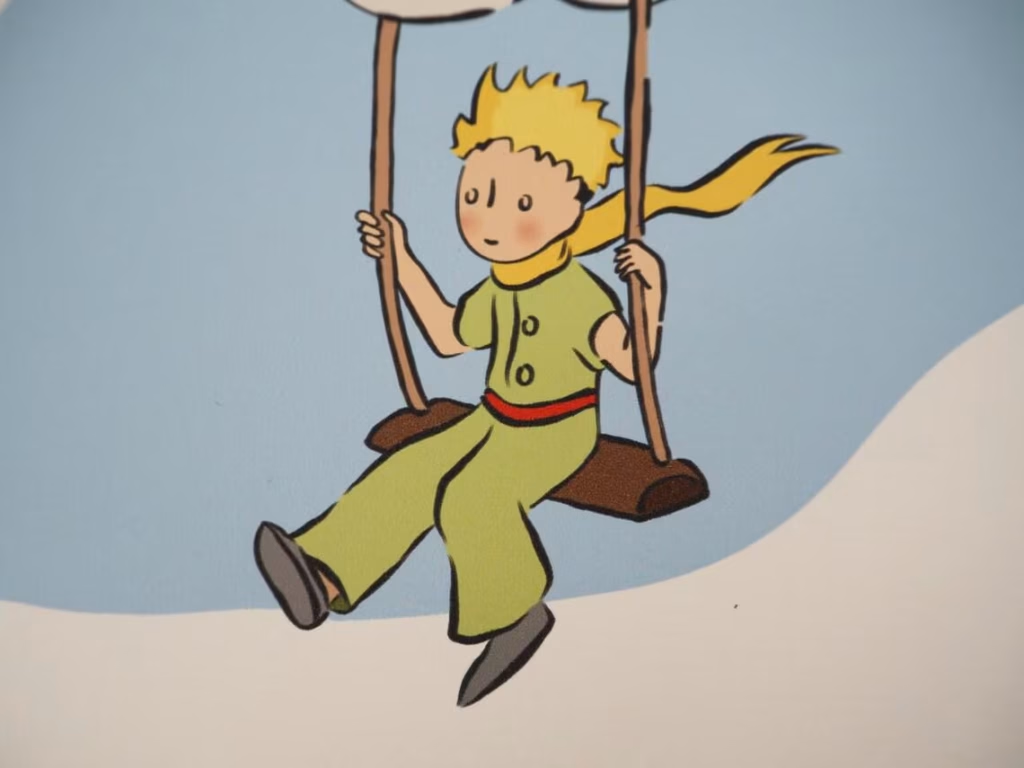
Perhaps that is why, for more than eight decades, The Little Prince has remained a book people return to during the most uncertain moments of their lives. Not because it provides clear solutions, but because it encourages readers to slow down, listen to their hearts more carefully, and remember that every adult was once a child.
And perhaps, after closing this book, the most heartbreaking realization is not the Little Prince’s farewell itself, but the moment we begin to wonder how long it has been since we last looked at life through the eyes of our younger selves.
7. References
[1] A. de Saint-Exupéry, Le Petit Prince. New York, NY, USA: Reynal & Hitchcock, 1943.
[2] A. de Saint-Exupéry, The Little Prince, K. Woods, Trans. Hertfordshire, U.K.: Wordsworth Editions, 1995.
[3] A. de Saint-Exupéry, The Little Prince, N. Thanh Long, Trans. Hanoi, Vietnam: Writers’ Association Publishing House, 2019.
[4] S. Schiff, Saint-Exupéry: A Biography. New York, NY, USA: Alfred A. Knopf, 1994.
[5] T. Howard, “The Enduring Philosophy of The Little Prince,” The Paris Review, vol. 67, no. 3, pp. 45-52, 2018.
[6] Encyclopaedia Britannica, “Antoine de Saint-Exupéry,” Encyclopaedia Britannica. [Online]. Available: Encyclopaedia Britannica – Antoine de Saint-Exupéry. [Accessed: May 18, 2026].
[7] The Morgan Library & Museum, “The Little Prince: A New York Story,” The Morgan Library & Museum. [Online]. Available: The Morgan Library & Museum – The Little Prince. [Accessed: May 18, 2026].