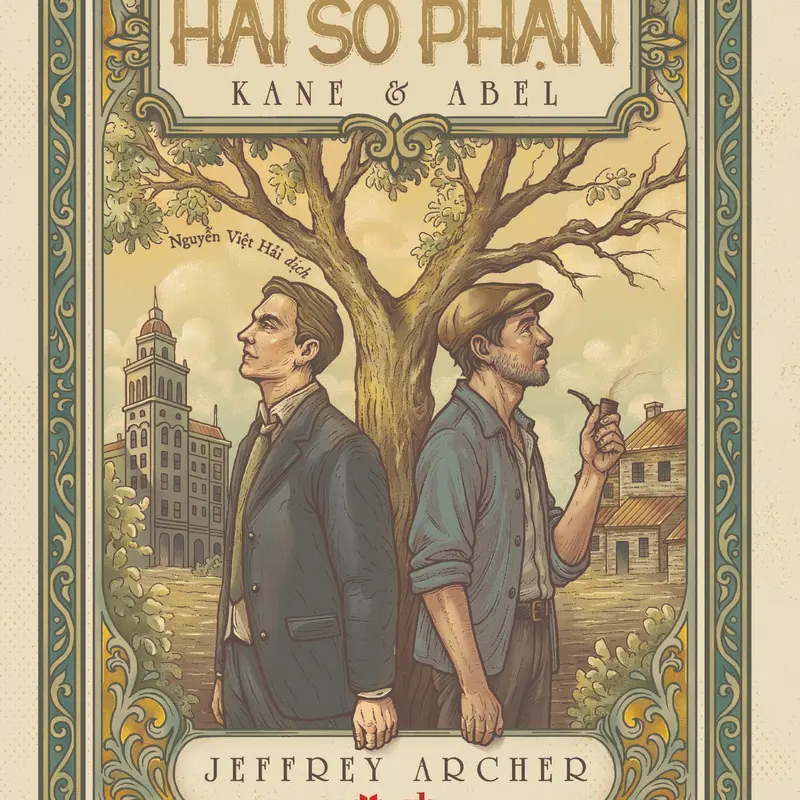
Some novels simply tell a story. Others make readers feel as though they have lived an entirely different life, witnessing the turbulence of history, the pursuit of ambition, the intensity of love, the weight of pride, and the painful sacrifices people make in the name of success. Kane and Abel by Jeffrey Archer is one of those rare books.
From the moment it was published, Kane and Abel quickly became a global literary phenomenon and has since been regarded as one of the most iconic novels about ambition and power in the twentieth century. More than just a story about two men locked in rivalry, the novel paints a sweeping portrait of society, war, business, and human destiny across several decades.
What makes Kane and Abel so compelling is that readers cannot completely hate either character. Both William Lowell Kane and Władek Koskiewicz, later known as Abel Rosnovski, are driven by immense ambition, yet beneath their determination lie deep emotional scars, fierce pride, and an unrelenting desire to prove their worth.
Long after the final page is turned, what lingers is not only the intensity of the plot, but also a profound reflection on life itself: is success truly worth it if it comes at the cost of a lifetime consumed by hatred?
1. Jeffrey Archer and the Birth of the Masterpiece Kane and Abel
Jeffrey Archer: From a Turbulent Political Career to a Master Storyteller
Jeffrey Archer, born in London in 1940, is widely regarded as one of the most successful and influential commercial novelists in modern British literature. Before becoming internationally known as a bestselling author, Archer was actively involved in politics and served as a member of the British Conservative Party. However, his political journey was far from smooth, as a series of scandals and controversies repeatedly placed his career under intense public scrutiny.

Ironically, it was these real-life experiences with power, money, ambition, and public pressure that later became the foundation of his fictional world. Rather than focusing on heavy philosophical reflections or overly literary prose, Jeffrey Archer developed a storytelling style defined by fast-paced narratives, dramatic twists, psychological tension, and compelling rivalries.
One of Archer’s greatest strengths as a writer is his ability to transform stories about business, politics, and the upper class into narratives that feel deeply human and emotionally engaging. His characters are never entirely heroic or villainous; instead, they are ambitious, flawed, proud, and emotionally conflicted, much like real people in real life.
Throughout his literary career, Archer produced numerous bestselling novels, including Not a Penny More, Not a Penny Less, First Among Equals, As the Crow Flies, and the acclaimed The Clifton Chronicles series. Yet among all his works, Kane and Abel remains the novel most closely associated with his name and the book that elevated him to international fame.
Jeffrey Archer’s Literary Career and His Signature Storytelling Style
Jeffrey Archer is often described by readers as “the master of impossible-to-put-down novels.” This reputation comes not only from his ability to craft gripping plots, but also from the way he maintains suspense and emotional momentum throughout hundreds of pages.
Many of Archer’s novels revolve around timeless themes that continue to resonate with readers across generations:
- Ambition and power
- Wealth and social status
- Rivalries between extraordinary individuals
- Secrets, conspiracies, and unexpected twists
- The relationship between love, pride, and personal ambition
What makes Jeffrey Archer’s storytelling particularly compelling is that he does not merely celebrate success. Instead, he explores the emotional and moral cost of achieving it. His characters often stand at the crossroads between logic and emotion, between the desire to win and the emotional wounds they carry within themselves.
Kane and Abel is perhaps the clearest example of Archer’s signature style. The novel is far more than a story about business or competition between two powerful men. It is a sharp and emotionally layered portrait of pride, prejudice, ambition, and the tragedy of people who spend an entire lifetime fighting one another.
The Birth of Kane and Abel: When Ambition and Destiny Collide
First published in 1979, Kane and Abel was written during a period when Jeffrey Archer had largely stepped away from politics to focus entirely on his literary career. It was also the moment when he began establishing himself as a major figure in international fiction.
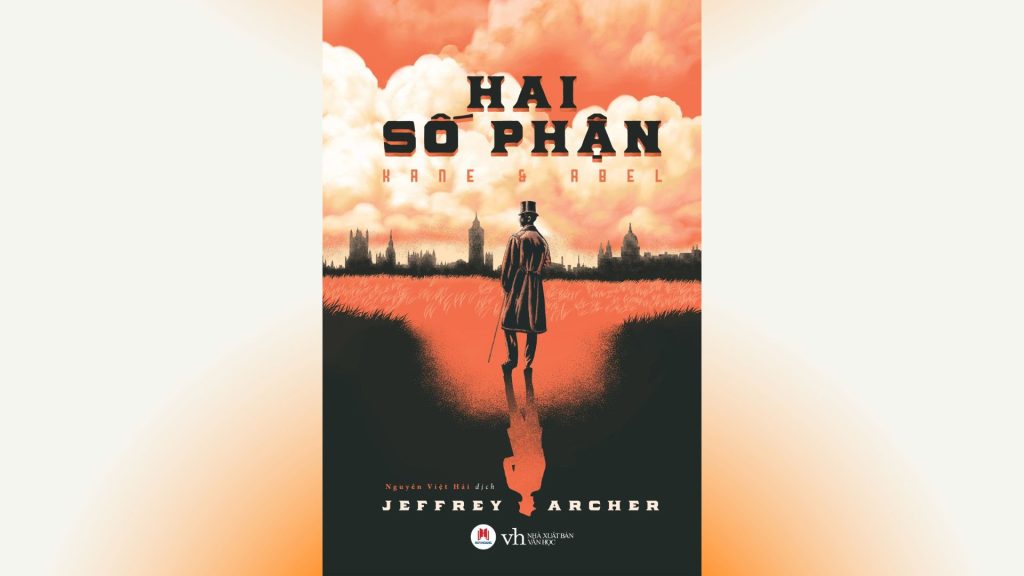
The inspiration for the novel came from the biblical story of Cain and Abel, a timeless symbol of rivalry, jealousy, and human tragedy. However, Archer did not retell the story in a traditional religious sense. Instead, he transformed it into a modern epic about power, ambition, and human conflict in the twentieth century.
At the center of the novel are two men born into completely opposite worlds.
On one side is William Lowell Kane, the heir to a prestigious American banking dynasty, raised in wealth and privilege and destined for the highest levels of financial power.
On the other is Władek Koskiewicz, a poor Polish boy who survives war, hardship, and unimaginable suffering before eventually arriving in America with nothing but determination and adopting the name Abel Rosnovski.
From these contrasting beginnings, Jeffrey Archer constructs a rivalry that spans decades, driven by pride, ambition, misunderstanding, and the inability to let go of hatred.
More than simply a novel about success or failure, Kane and Abel is a story about how people are shaped by their past, consumed by ambition, and ultimately trapped by their own ego. Through this unforgettable conflict, Jeffrey Archer created one of the defining literary classics about power and human ambition in twentieth-century fiction.
2. Kane and Abel: A Destined Rivalry Between Two Men Born to Oppose Each Other
Kane and Abel begins with the birth of two boys on the very same day, yet in worlds that could not be more different. This striking contrast becomes the foundation of one of the most memorable rivalries in modern literature.
In the wealth and elegance of early twentieth-century America, William Lowell Kane is born into a prestigious banking dynasty in Boston. From the moment he enters the world, Kane is destined to inherit the immense financial empire of the Kane & Cabot family. Raised in privilege, educated among the elite, and taught from an early age about honor, responsibility, and power, he grows into a man shaped by expectation and legacy.

Meanwhile, in a cold forest in Poland, another child is born under circumstances marked by poverty and mystery. That boy is Władek Koskiewicz, who would later become known as Abel Rosnovski. Unlike Kane, Władek has no wealthy family, no social status, and no protection from the harshness of life. After being adopted by a fisherman, he grows up surrounded by hardship and scarcity, learning from childhood that survival depends on resilience, determination, and the refusal to surrender to fate.
If Kane is raised to lead, Władek is forced to fight simply to survive.
The violent upheavals of twentieth-century Europe, particularly the world wars, transform Władek’s life into a long journey of suffering and displacement. His family is torn apart, his homeland collapses into chaos, and he is repeatedly thrown into some of history’s darkest moments. Yet it is precisely these hardships that forge his extraordinary strength of character and his relentless desire to rise above his circumstances.
After years of war, loss, and wandering, Władek eventually arrives in America with nothing to his name and begins a new life under the identity of Abel Rosnovski. With no money, no influence, and no one to support him, Abel enters the fiercely competitive world of American capitalism armed only with ambition and determination. Starting from the lowest positions imaginable, he gradually proves himself and builds a powerful hotel empire through sheer will and perseverance.
At the same time, William Kane is establishing himself as one of the most influential figures in American finance. Intelligent, disciplined, and highly ambitious, Kane quickly demonstrates that he is far more than the privileged heir of a wealthy family; he is a formidable leader in his own right.
Despite their vastly different paths, destiny ultimately pushes the two men toward inevitable conflict.
Everything changes when Abel becomes convinced that William Kane is indirectly responsible for the death of the man who once saved his life during the war. Driven by grief, anger, and misunderstanding, Abel develops a deep hatred toward Kane and dedicates much of his life to destroying him.
The tragedy is that Kane himself has no real understanding of why Abel despises him so intensely. All he knows is that Abel is a dangerous rival determined to undermine both his reputation and his success.
From that moment onward, Kane and Abel becomes far more than a novel about success or entrepreneurship. It evolves into a decades-long battle between two extraordinary men. Their rivalry stretches across business, politics, and even their personal lives. Every victory achieved by one man provokes retaliation from the other. Every triumph comes with emotional wounds, personal sacrifices, and growing bitterness.
What makes the novel especially powerful is its deeply ironic truth: the more Kane and Abel fight each other, the more similar they become.
Both men:
- Possess exceptional intelligence
- Share immense ambition and determination
- Worship success and power
- Refuse to accept defeat
- Are willing to sacrifice almost everything to achieve their goals
They hate one another, yet they also serve as reflections of each other.
The tragedy deepens further when the next generation becomes entangled in the hatred carried by their fathers. Abel’s daughter falls in love with Kane’s son, creating a painful conflict between love and resentment, between the burden of the past and the desire to escape inherited prejudice.
As the truth behind years of misunderstanding slowly comes to light, both Kane and Abel begin to realize that much of their lives has been consumed by pride and hatred they could never let go of. But by then, very little time remains for reconciliation.
The ending of Kane and Abel is not only emotional, but profoundly heartbreaking. Jeffrey Archer leaves readers with the realization that sometimes people spend an entire lifetime fighting an enemy, only to discover too late that what they truly lost along the way were the most meaningful things in life.
3. Analyzing Kane and Abel: An Epic of Ambition, Power, and Human Tragedy
The Conflict Between Fate and Human Will
One of the most remarkable elements that gives Kane and Abel its enduring power is the way Jeffrey Archer builds his two central characters as complete opposites within society, while simultaneously revealing how deeply alike they are in their human nature.
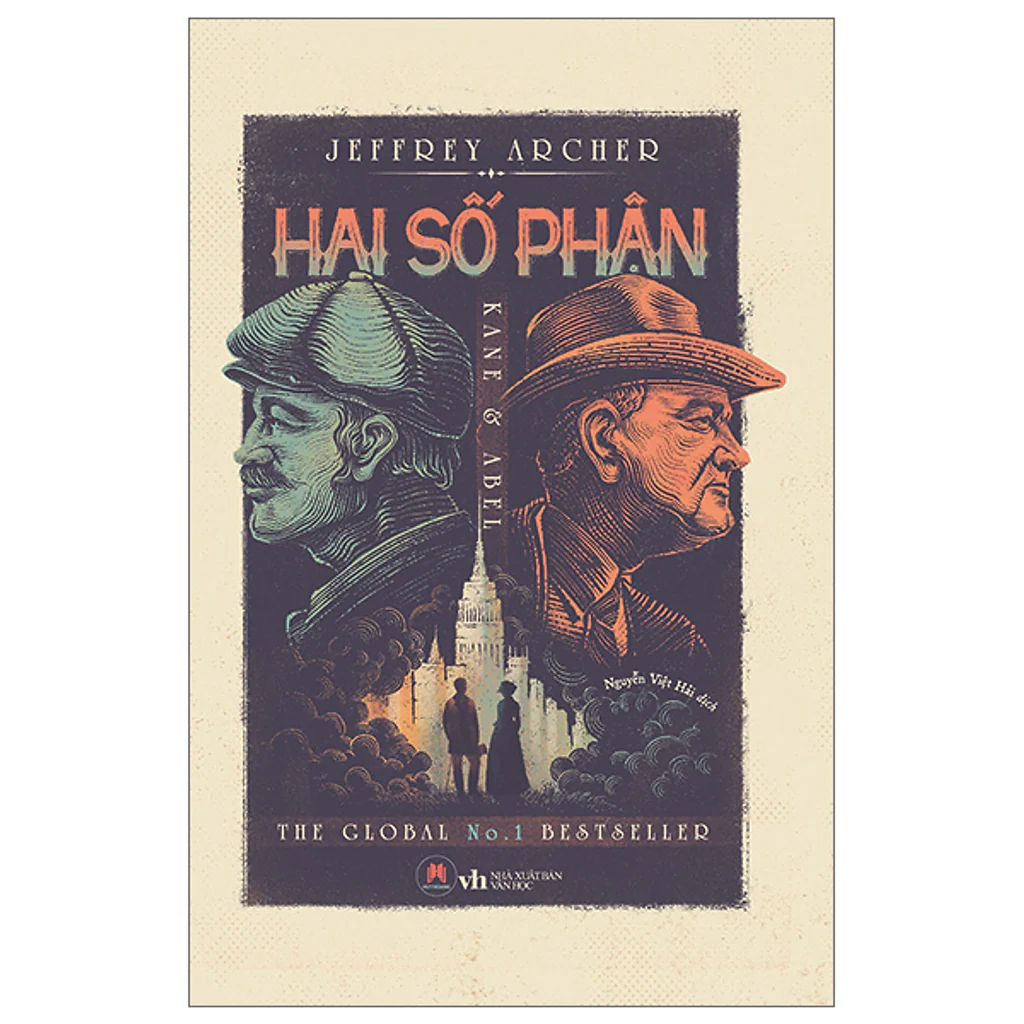
William Lowell Kane represents the American elite of the early twentieth century, a world where power, wealth, and social status are passed down through generations. Born into privilege, Kane grows up surrounded by luxury and exceptional education, carefully prepared from an early age to inherit his family’s financial empire. Yet beneath that polished and seemingly perfect exterior lies the enormous pressure of responsibility, reputation, and family expectations.
In sharp contrast stands Abel Rosnovski, a man shaped by poverty, war, and loss. Abel has no influential background, no social status, and none of the advantages that fate grants to Kane. The only things he truly possesses are an extraordinary will to survive and an unrelenting determination to rise above his circumstances.
It is precisely this contrast that gives the story its unique emotional force.
Jeffrey Archer never turns Kane into a cold symbol of capitalism, nor does he portray Abel as a flawless underdog hero overcoming adversity. Both men possess qualities worthy of admiration, but they are also deeply human, carrying within themselves flaws, prejudice, pride, and emotional darkness.
That is why readers cannot completely love or hate either character.
The further we follow the journeys of Kane and Abel, the more our emotions continue to shift. At times, Kane appears deeply sympathetic because of the immense burden of preserving his family’s reputation and legacy. At other moments, readers are drawn toward Abel because of his extraordinary resilience and determination to escape a cruel and unforgiving fate.
This balance makes Kane and Abel feel far more authentic and emotionally compelling than many conventional rivalry-driven novels.
The Clash Between Fate and Human Determination
One of the greatest strengths of Kane and Abel lies in the way Jeffrey Archer crafts his two central characters as complete social opposites, while at the same time revealing the striking similarities hidden deep within their personalities.
William Lowell Kane represents the American elite of the early twentieth century, a world where wealth, power, and influence are inherited through generations. Born into privilege, Kane is raised in an environment of luxury and elite education, carefully groomed from childhood to become the heir to his family’s financial empire. Yet beneath that polished and seemingly flawless image lies the immense pressure of responsibility, reputation, and the expectations placed upon him by his family legacy.
Standing in complete contrast is Abel Rosnovski, a man shaped by poverty, war, and personal loss. Abel has no prestigious background, no social status, and none of the advantages that fate grants to Kane. All he possesses is an extraordinary instinct for survival and an unwavering determination to rise above the hardships that life has forced upon him.
It is precisely this contrast that gives the story its remarkable emotional power.
Jeffrey Archer never portrays Kane as a cold and heartless symbol of capitalism, nor does he turn Abel into a perfect underdog hero who triumphs over adversity without flaws. Both men possess qualities worthy of admiration, but they are also deeply human, carrying within themselves mistakes, prejudice, pride, and emotional darkness.
That is why readers cannot fully love or hate either character.
The more we follow the journeys of Kane and Abel, the more our emotions continue to shift. At times, readers sympathize with Kane as he struggles under the burden of preserving his family’s reputation and legacy. At other moments, they are drawn toward Abel because of his extraordinary resilience and determination to escape the cruel fate life has given him.
This emotional balance makes Kane and Abel feel far more realistic and compelling than many conventional novels centered around rivalry and conflict.

Wealth, Power, and the Question of True Happiness
Although Kane and Abel revolves around banking, business, and the world of the upper class, the novel has never been merely a story about money.
Beneath the fierce competition and struggles for power lies a deeper question that Jeffrey Archer continually raises throughout the story: does material success truly bring happiness?
William Kane possesses everything that many people dream of: power, prestige, social status, and an impressive career. Yet his life is constantly accompanied by pressure, loneliness, and the exhausting burden of maintaining a flawless public image in the eyes of society.
Abel Rosnovski, on the other hand, spends his entire life trying to escape poverty and prove his worth. He achieves a level of wealth and success he once could never have imagined, but deep inside, he remains haunted by his past and consumed by his hatred toward Kane.
Both men achieve success according to society’s standards, yet neither of them ever truly finds peace.
This is one of the reasons why Kane and Abel continues to remain relevant even today. In an era where success is often measured through wealth, influence, and social standing, the novel reminds readers that the greatest victory is not always defeating someone else, but knowing when to let go in order to protect one’s own inner peace.
Jeffrey Archer’s Deeply Layered Character Development
One of the reasons Kane and Abel has remained compelling for decades is Jeffrey Archer’s exceptional ability to create characters with remarkable emotional depth and complexity.
William Kane is far from the stereotypical cold and emotionless wealthy businessman often found in fiction. He is intelligent, sophisticated, responsible, and deeply committed to preserving the values and legacy passed down through his family. Yet beneath his calm and polished exterior lies a profoundly lonely man, constantly burdened by expectations and the pressure to uphold perfection.
In contrast, Abel Rosnovski embodies a man forged through hardship and adversity. He is strong-willed, determined, and fiercely ambitious, but he is also impulsive, stubborn, and deeply haunted by the traumas of his past.
It is through these very human inner conflicts that Jeffrey Archer makes both characters feel vivid and real.
What makes the novel especially tragic is that despite spending decades fighting each other, Kane and Abel never truly understand one another. They continue to see each other through the lens of prejudice, misunderstanding, and resentment. Only the reader is allowed to witness the full tragedy of both lives from beginning to end.
That is precisely what creates such a powerful emotional impact when the novel comes to a close. Readers realize that much of the suffering in Kane and Abel’s lives is rooted not only in ambition or rivalry, but also in misunderstandings and a pride neither man was ever willing to abandon.
Kane and Abel as a Reflection of the Twentieth Century
Beyond the personal story of its two central characters, Kane and Abel also serves as a sweeping portrait of the major transformations and tensions of the twentieth century.
Through Abel Rosnovski’s journey, Jeffrey Archer vividly recreates the brutality of war in Europe, the devastating losses endured by ordinary people, and the dreams of immigrants seeking a new life after arriving in America.
Through William Kane, Archer portrays the world of the American financial elite, where success is no longer simply an ambition, but an obligation that must be preserved and passed down through generations.
At the same time, the novel reflects several major themes of the modern twentieth century:
- The dramatic rise of American capitalism
- Global economic and financial transformations
- The shifting identity of the modern upper class
- The intense culture of competition within Western society
Because of this, Kane and Abel is not only compelling as an entertaining novel, but also valuable as a vivid social and historical portrait of its era.ấp dẫn ở góc độ tiểu thuyết giải trí mà còn mang giá trị như một lát cắt xã hội và lịch sử đầy sinh động.
Why Kane and Abel Continues to Captivate Readers Decades Later
Many bestselling novels gradually lose their relevance over time, yet Kane and Abel has continued to attract new generations of readers ever since its publication in 1979.
The main reason lies in the universality of Jeffrey Archer’s storytelling.
No matter the era, people continue to carry the same desires within themselves:
- The desire for success
- The longing to be recognized
- The pressure to prove one’s worth
- The determination to overcome rivals and conquer fate
These emotions never become outdated.
In addition, Jeffrey Archer possesses a highly cinematic storytelling style, filled with fast pacing, dramatic tension, and constant suspense. Every chapter functions like an essential piece of a larger puzzle, making the novel incredibly difficult to put down.
Yet beyond its entertainment value, what truly gives Kane and Abel its lasting power is its emotional depth. The novel is not simply about success or failure; it is also about loneliness, pride, regret, and the emotional cost of spending an entire lifetime fighting another person.
That is why, long after finishing Kane and Abel, what remains with readers is not merely the memory of an extraordinary rivalry, but a lingering reflection on ambition, human nature, and the true meaning of fulfillment in life.
4. Memorable Quotes from Kane and Abel: When Ambition, Power, and Loneliness Are Captured in Every Line
One of the reasons Kane and Abel by Jeffrey Archer has continued to resonate with readers for decades is the remarkable depth hidden within its dialogue and reflections. Jeffrey Archer never relies on overly complicated philosophy or elaborate language, yet he possesses a unique ability to craft simple lines that capture the essence of ambition, pain, pride, and human loneliness.
Some quotes reflect Abel Rosnovski’s relentless determination to rise above poverty and war, revealing the mindset of a man who refuses to surrender to fate. Others expose the emotional isolation of William Kane, whose life of power and prestige often comes at the cost of personal peace and genuine connection.

Most importantly, many of the novel’s most powerful lines remind readers that the greatest danger in life is not failure itself, but allowing hatred and pride to consume an entire lifetime.
“If you have a dream, and you believe in yourself, you can achieve anything.”
This quote perfectly captures the spirit of Abel Rosnovski’s journey. Despite being born into poverty and surviving unimaginable hardship, Abel’s unwavering belief in himself becomes the driving force that allows him to overcome even the harshest circumstances.
“Time is the most valuable thing a man can spend.”
One of the most haunting reflections in the novel. Time may seem invisible, yet it is ultimately the most precious thing human beings possess. Both Kane and Abel spend decades fighting each other, only to realize too late how much of their lives has been lost to resentment and rivalry.
“Only the weak blame others for their failures.”
Jeffrey Archer never portrays his characters as helpless victims of destiny. Despite their vastly different backgrounds, both Kane and Abel are men determined to take control of their own lives and accept responsibility for their choices.
“Power and wealth do not necessarily bring wisdom.”
This line represents one of the central messages of Kane and Abel. Material success may bring influence, prestige, and authority, but it does not automatically lead to emotional maturity, inner peace, or true happiness.
“A man who trusts no one is apt to be the kind of man no one trusts.”
This quote reflects the tragedy created by suspicion and pride. When people become too obsessed with protecting themselves, they slowly lose the ability to truly connect with others.
These quotes are far more than inspirational lines scattered throughout the novel. Together, they capture the emotional core of Kane and Abel: a story about ambition, rivalry, loneliness, and the painful realization that success can sometimes cost far more than people ever expected.
5. Personal Reflections on Kane and Abel: When the Greatest Battle Exists Within Human Nature
What stayed with me most after reading Kane and Abel was not the massive scale of the story, the intense business rivalries, or the dramatic power struggles. The feeling that lingered the longest was the deep sense of regret and emotional emptiness that remained after turning the final page.
Jeffrey Archer manages to keep readers emotionally invested through hundreds of pages as they follow the rivalry between William Kane and Abel Rosnovski with almost nonstop suspense. Every strategic move, every confrontation, and every moment when one man seems close to defeating the other pulls the reader deeper into the story.
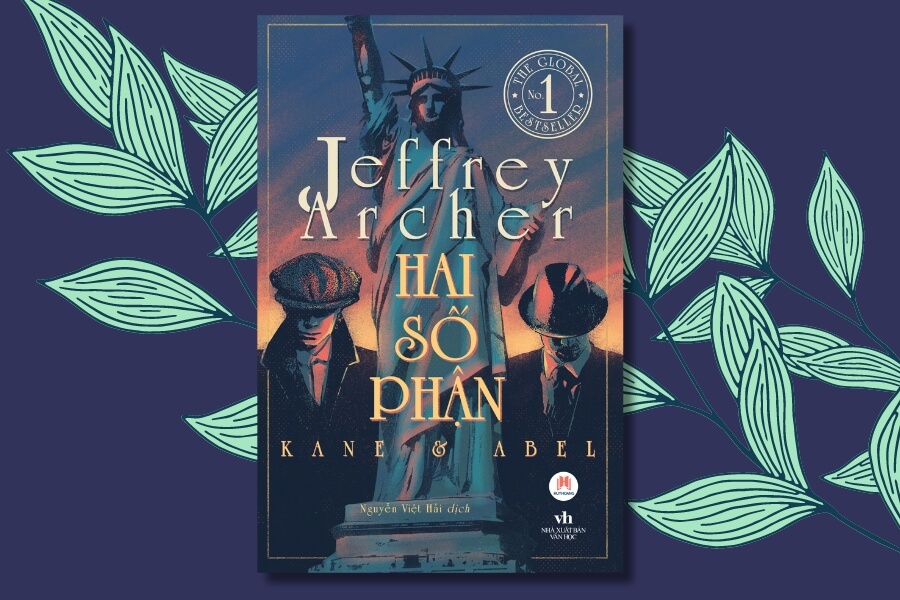
Yet as the novel approaches its conclusion, the question of who wins and who loses gradually becomes less important.
What truly remains is the tragedy of two men who are far too proud to genuinely listen to or understand one another.
There were moments when I sympathized more with William Kane, a man born into wealth yet forced to spend nearly his entire life carrying the burden of reputation, responsibility, and expectation. At other times, however, I found myself drawn toward Abel Rosnovski, the man who emerged from war, poverty, and personal loss and fought to build everything with his own hands.
The more I read, the more I realized that Jeffrey Archer never attempts to portray either man as entirely right or entirely wrong. Both Kane and Abel carry emotional scars, personal obsessions, and a stubborn pride that slowly traps them in a cycle of hatred lasting decades.
Perhaps that is what makes Kane and Abel feel far more authentic than many traditional rivalry novels.
The book also made me reflect deeply on the meaning of success in modern society.
Today, people are constantly pushed to compete, outperform others, and achieve more in order to prove their worth. It becomes very easy to believe that victory is the most important thing in life.
But Kane and Abel raises a far more unsettling question: if we spend our entire lives trying to defeat someone else, are we still truly living for ourselves?
Both Kane and Abel achieve the things society admires most: wealth, influence, power, and success. Yet the higher they rise, the lonelier they become. They devote so much of their lives to fighting each other that they lose the ability to truly enjoy the lives they worked so hard to build.
What I admire most about Kane and Abel is that the novel never tries to force moral lessons upon its readers. Jeffrey Archer simply tells the story of two human beings with all their ambition, flaws, pain, and emotional complexity, allowing readers to draw their own reflections from the experience.
And perhaps that is why, despite being published decades ago, Kane and Abel continues to be regarded as one of the greatest novels about ambition and power. Beneath its story of business rivalry and competition, the novel is ultimately about deeply human emotions: pride, the desire for recognition, loneliness, regret, and the emotional cost of never being able to let go of the past.
After finishing Kane and Abel, what remains is not only admiration for two unforgettable characters, but also a quiet sense of self-reflection: in our own lives, are we sometimes so consumed by the pursuit of victory that we forget what truly matters most?
6. Closing Thoughts on Kane and Abel: Sometimes the Greatest Battle Is Not Against Others, but Within Ourselves
Kane and Abel is far more than a novel about business, finance, or the rivalry between two powerful men. Beneath its fierce competition and relentless ambition, Jeffrey Archer creates a deeply human story about the desire to rise above one’s circumstances, the burden of pride, the danger of stubbornness, and the emotional price people pay when hatred is allowed to shape an entire lifetime.
William Kane and Abel Rosnovski come from completely different worlds. One is born into wealth, privilege, and power, while the other grows up surrounded by poverty, war, and hardship. Yet the further readers follow their journeys, the clearer it becomes that these two men are, in many ways, strikingly alike. Both are intelligent, ambitious, determined, and driven by an overwhelming need to prove their worth.
Perhaps it is precisely because they are so similar that they can never stop fighting each other.
What truly makes Kane and Abel a timeless classic is not simply its dramatic twists or intense business rivalries, but the emotional weight the story leaves behind after the final page. Jeffrey Archer does not merely write about success and failure; he reveals the loneliness hidden behind power, the emptiness that can exist behind victory, and the painful regret that comes when people realize too late what truly mattered in life.
That is also why, despite the passing of decades, Kane and Abel continues to resonate with readers from different generations. Beneath its story of ambition and competition lie questions that almost everyone eventually faces:
- What does true success really mean?
- Does victory always lead to happiness?
- And do people sometimes become so obsessed with surpassing others that they forget how to truly live for themselves?
After finishing Kane and Abel, what remains is not only the image of two extraordinary men who spent their lives battling one another, but also a lingering urge for readers to reflect on their own lives.
If one day we are forced to look back on everything we have lived through, will we remember the moments that genuinely brought us happiness, or only the battles we fought so hard to win?
7. References
[1] Kane and Abel, J. Archer, Kane and Abel. London, U.K.: Hodder & Stoughton, 1979.
[2] J. Archer, “Official Biography,” Jeffrey Archer Official Website. [Accessed: May 20, 2026].
[3] “Jeffrey Archer,” Encyclopaedia Britannica. [Accessed: May 20, 2026].
[4] “Kane and Abel by Jeffrey Archer,” Penguin Random House. [Accessed: May 20, 2026].
[5] “Kane and Abel Reviews,” Goodreads. [Accessed: May 20, 2026].
[6] “20th Century Literature Resources,” The British Library. [Accessed: May 20, 2026].
[7] “Jeffrey Archer Biography,” Encyclopedia.com. [Accessed: May 20, 2026].
[8] “Kane and Abel,” Wikipedia. [Accessed: May 20, 2026].