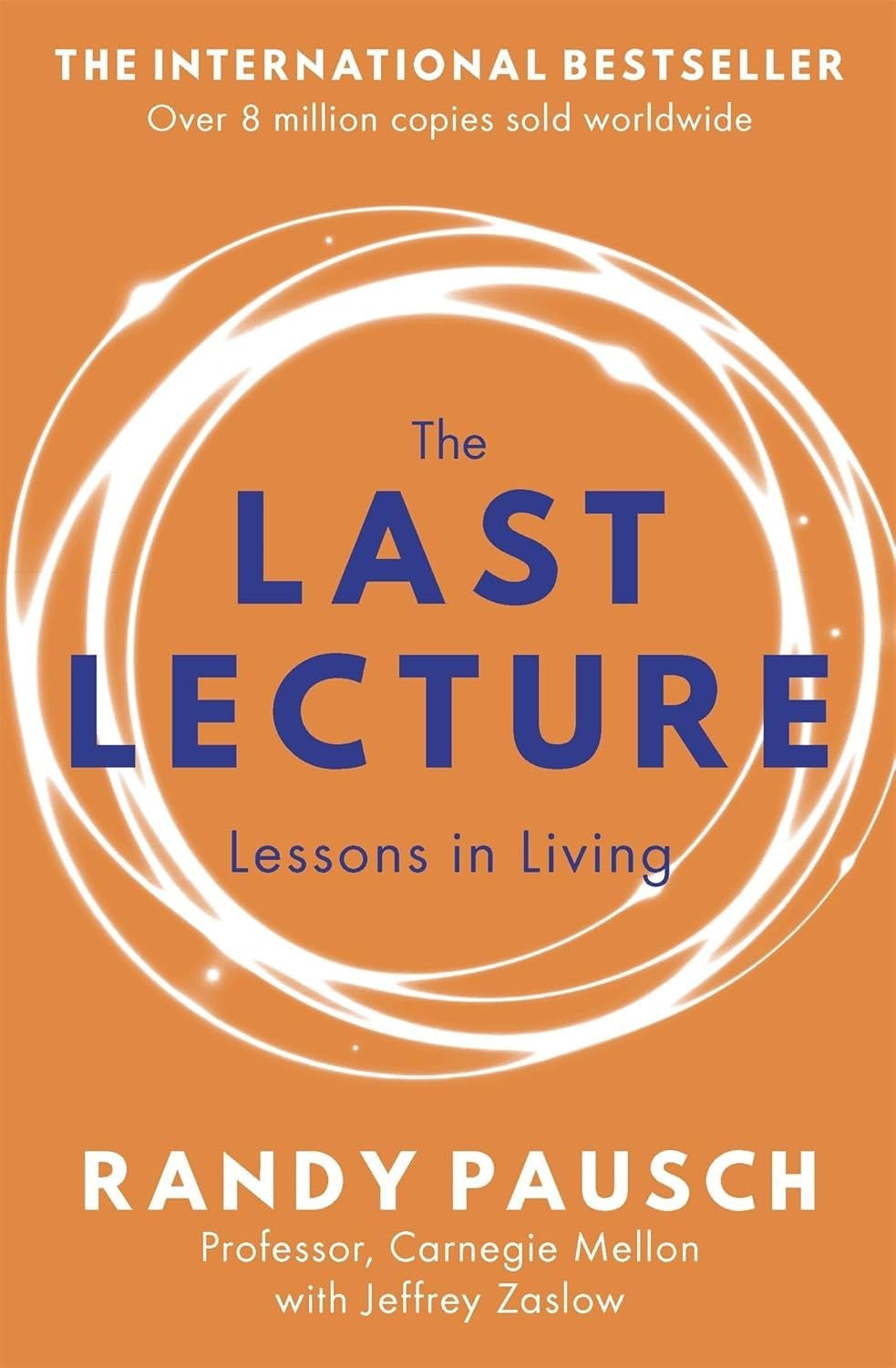
Not every book that leaves readers silent needs dramatic climaxes or intense conflicts. The Last Lecture makes its impression in a different way – quietly, steadily, yet enduringly. From the very first pages, the book creates the feeling of sitting across from a seasoned individual, calmly recounting the story of his life—without melodrama, without exaggeration, and without idealizing reality. What remains is sincerity, a measured sense of humor, and a positive outlook on life distilled from real, deeply lived experiences.
What allows The Last Lecture to linger in readers’ minds is not a collection of direct moral instructions, but the way the author places human beings face to face with the finite nature of life. The book raises essential questions: How should we live when time becomes more precious than ever? And what will we leave behind for those we love? For this reason, reading The Last Lecture is not merely about absorbing life lessons; it is a process of self-reflection – learning to slow down, to live more consciously, and to accept the fragility of human existence with calmness and humanity.
1. Introduction to the Author and the Work
The author of The Last Lecture is Randy Pausch, a highly respected professor of computer science at Carnegie Mellon University in the United States. He was not only a scholar with significant contributions to technology – particularly in the field of human – computer interaction – but also an outstanding educator known for his ability to inspire students through a humanistic educational philosophy and an energetic teaching style.
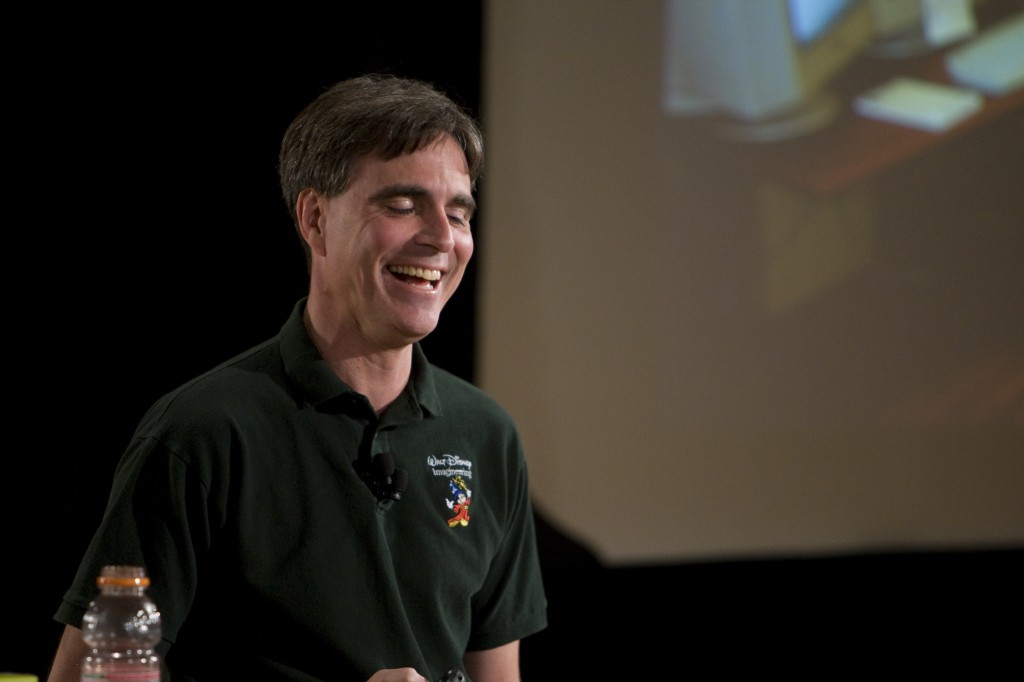
Before The Last Lecture was published, Randy Pausch had already established a solid academic career. However, the most profound turning point in his life did not come from scientific achievements, but from the moment he was diagnosed with terminal pancreatic cancer – an illness with almost no chance of recovery. When confronted with the reality that his remaining time was measured in months, Pausch made a remarkable choice: instead of spending his final days lamenting fate, he transformed them into an opportunity to share the most essential insights he had gained about life.
It was in this context that the lecture titled The Last Lecture: Really Achieving Your Childhood Dreams was delivered in 2007. Initially, it was simply a talk for students and faculty as part of the university’s “Last Lecture” series, in which professors were invited to share what they would say if it were their final lecture. Few could have anticipated that Randy Pausch’s lecture – with its optimism, humor, and emotional power – would spread rapidly online, attracting millions of viewers and generating a profound global response.
In response to this overwhelming public interest, Randy Pausch collaborated with journalist Jeffrey Zaslow to transform the spirit of the lecture into the book The Last Lecture. The work is not merely a transcript of the speech, but a thoughtfully expanded and deepened narrative that combines personal memories, life philosophy, and educational insights. The book takes the form of a life reflection, in which the author revisits his childhood dreams, his failures and successes, and the teachers and companions who shaped who he became.
More importantly, The Last Lecture was written with a deeply personal purpose: to serve as a spiritual gift for Pausch’s three young children – children he knew he would not be able to accompany into adulthood. This motivation allows the book to transcend the boundaries of a conventional self-help work, becoming instead a heartfelt, sincere, and profoundly paternal text.
Thanks to its fusion of authentic personal experience, clear scientific thinking, and a rare spirit of optimism, The Last Lecture quickly became one of the most beloved inspirational books worldwide. The work not only portrays the image of a devoted and admirable teacher, but also offers readers a deeper perspective on the value of time, dreams, and the true meaning of a human life.
2. Summary of the Content
The Last Lecture does not follow a traditional narrative structure with a clear beginning, climax, and conclusion. Instead, it unfolds as a continuous stream of reflection and contemplation, centered on the final lecture of Randy Pausch’s life. The starting point of the book is the moment when the author is forced to confront a harsh truth: he has terminal pancreatic cancer and only a short time left to live. Rather than allowing fear of death to dominate the narrative, Pausch chooses a completely different approach – he speaks about life.
The book opens with the setting of the final lecture at Carnegie Mellon University, where professors are invited to share the most important lessons they would leave behind if this were their last lecture. Standing before an audience of students and colleagues, Pausch speaks little about illness or impending death. Instead, he appears energetic, humorous, and clear-minded, emphasizing that this is not a farewell speech, but a lecture about achieving childhood dreams.
From that point onward, the book leads readers back to the author’s childhood, where early lessons about discipline, honesty, and perseverance were instilled by his family. Pausch recounts seemingly small memories – being firmly corrected by his parents, childhood games, early failures. Yet through these details, he illustrates how his character and worldview were quietly and steadily shaped.
The narrative then moves through his pursuit of dreams that once seemed unrealistic: becoming an astronaut, working for Disney, and creating meaningful educational technologies. Not every dream was fully realized, but each pursuit provided invaluable lessons. Pausch emphasizes that failure is not an endpoint, but an essential part of personal growth. The “brick walls” people encounter in life are not meant to stop them, but to test how deeply they desire what lies beyond.
Another significant thread throughout the book is the role of education and teachers. Pausch devotes considerable attention to honoring the mentors who profoundly influenced his life – those who not only imparted knowledge, but also taught him how to live, work, and face failure. From these experiences, he articulates a clear educational philosophy: teaching is not merely about delivering information, but about awakening potential and nurturing self-belief in learners.
Alongside his professional life and philosophy, the book gradually deepens emotionally as Pausch writes about his family. The passages devoted to his wife and three young children carry a quieter, more reflective tone, yet never descend into sentimentality. Aware that he would not be present for his children’s future, Pausch uses The Last Lecture as a way to pass on fundamental life lessons and core values. In this sense, the book is both a public lecture and a deeply personal spiritual legacy for those he loves most.
As the book draws to a close, Pausch does not offer a conventional “farewell.” Instead, he leaves readers with a sense of continuity. The stories, lessons, and reflections in The Last Lecture do not end with the author’s life; they continue to live on in how readers think about dreams, time, and what it means to live a full and meaningful life.
3. Content Value and Artistic Value
The greatest value of The Last Lecture lies first and foremost in the spirit of optimism it conveys – an optimism that is grounded in reality rather than illusion. This is not a book that promotes shallow positivity, nor is it a motivational speech filled with clichés. Its weight comes from the fact that every message is built upon truth: the truth of illness, of human limitation, and of unavoidable loss. When faced with death, Randy Pausch does not complain or dramatize his fate; instead, he chooses to live more consciously, more responsibly, and more fully in each remaining moment.
From this foundation, The Last Lecture raises a universal question: the value of time and how human beings choose to use their finite allotment of it. The book does not urge readers to achieve something “extraordinary,” but encourages them to live with integrity, perseverance, and honesty toward their own values. The message of “pursuing childhood dreams” is not a romantic idealization of ambition, but an emphasis on persistence, accountability, and the courage to face failure. For Pausch, dreams are not destinations, but forces that shape character throughout life’s journey.
Another notable content value of the book lies in its profound perspective on education and the role of teachers. The Last Lecture shows that education extends beyond textbooks and classrooms – it exists in how people treat one another, in discipline, kindness, and empowerment. Through stories of mentors who shaped his life, Pausch affirms that true teachers do more than transmit knowledge; they teach students how to confront failure, how to rise after setbacks, and how to believe in themselves. This is a modern, deeply humanistic view of education that remains highly relevant today.
On the level of family, the book carries strong emotional value as a spiritual legacy for Pausch’s children. Without indulging in excessive sentiment, The Last Lecture expresses parental love through quiet preparation – preparing life lessons, moral principles, and values the author hopes his children will carry with them. This emotional restraint makes the work even more moving, as its impact arises not from tears, but from sincerity.
Artistically, The Last Lecture stands out for its simple, clear, yet evocative prose. Pausch avoids ornate language or elaborate imagery, opting instead for a conversational, approachable style, often infused with gentle self-deprecating humor. This voice allows the book to reach a wide audience while creating the feeling of an intimate, direct conversation between author and reader.
The structure of the work is another notable strength. Rather than adhering to a rigid chronological order, the book unfolds as a fluid sequence of memories and reflections, where past, present, and contemplation interweave naturally. This structure mirrors the spirit of the book itself: life is not a straight line, but a series of experiences connected by meaning. Each small story reinforces a larger message, forming a cohesive and persuasive whole.
Through the combination of humanistic content, progressive educational thinking, and a simple yet effective artistic form, The Last Lecture transcends the label of an inspirational book to become a deeply reflective text. It reminds readers that living meaningfully does not require brilliance or grandeur, but responsibility toward time, dreams, and the people we love.
4. Memorable Quotations
One of the reasons The Last Lecture has maintained its lasting appeal is its collection of concise yet philosophically rich statements. These are not phrases deliberately crafted to become “life mottos,” but natural conclusions drawn from experience, struggle, and serious reflection. Because they emerge from real-life contexts – moments of failure, limitation, and confrontation with death – the quotations never feel slogan-like; instead, they grow more resonant the more one reflects on them.
- “We cannot change the cards we are dealt, just how we play the hand.”
- “Brick walls are there for a reason: they let us prove how badly we want things.”
- “Experience is what you get when you didn’t get what you wanted.”
- “If you live your life the right way, the dreams will come to you.”
- “Time is all you have. And you may find one day that you have less than you think.”
- “Gratitude is not just an emotion; it is a choice.”
- “Teaching is not about transmitting knowledge; it is about inspiring.”
- “Kindness is always an option, even when you have reasons not to choose it.”
- “The greatest legacy of a person is not what they own, but the values they leave behind.”
When taken individually, these statements may appear simple. Yet when placed within the broader intellectual and emotional framework of the book, they become spiritual anchors – guiding readers in both life and work.mạch tư duy của tác phẩm, chúng trở thành những điểm tựa tinh thần cho người đọc trong hành trình sống và làm việc.
5. Conclusion
The Last Lecture is not a book that overwhelms readers with new knowledge or revolutionary ideas. Its value lies in something far simpler: it encourages people to reexamine how they are living. Through real-life stories, unrepeatable experiences, and a clear-eyed attitude toward death, the book poses fundamental yet timeless questions: How are we using our time? What are we truly pursuing? And what will we leave behind?
What makes The Last Lecture especially meaningful is that it does not impose an idealized model of living upon the reader. Instead, it opens a reflective space in which each person can engage in honest self-dialogue. The lessons in the book are not delivered as direct advice, but emerge from the author’s calm, humorous, and responsible way of confronting limitation, failure, and human finitude.
As a book lover, I believe The Last Lecture is a work that should be read slowly, thoughtfully, and revisited at different stages of life. Each reading may not yield new answers, but it will almost certainly generate deeper questions. And sometimes, those questions are the greatest gift a book can offer.
When the final page of The Last Lecture is turned, what lingers is not sorrow over a life nearing its end, but gratitude for having witnessed a life lived fully, consciously, and lovingly until its final days. That enduring resonance is precisely why this modest, unassuming book continues to touch readers worldwide and deserves a place on the bedside table of anyone searching for the true meaning of living.