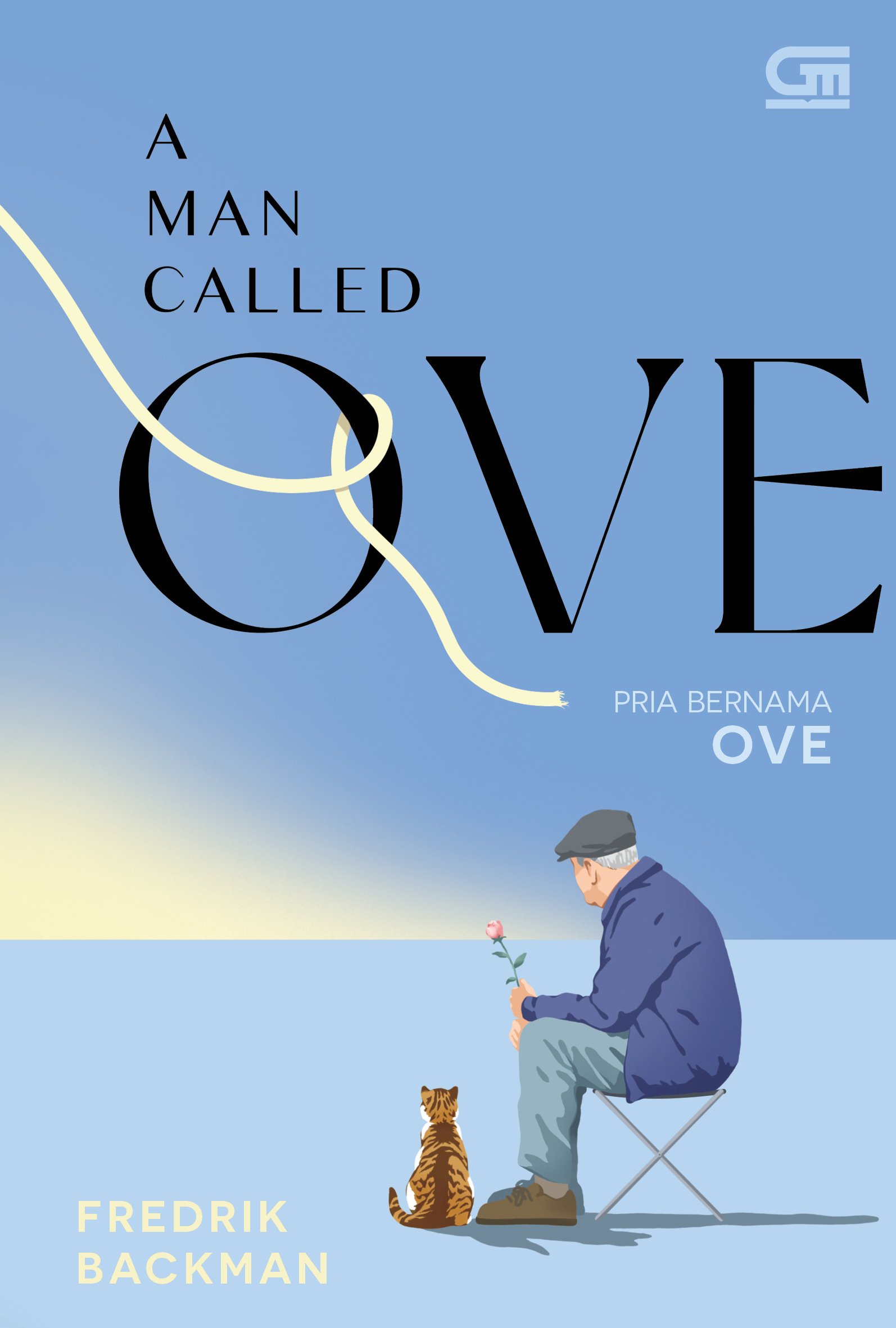
We judge people through a handful of outward behaviors, a few brief encounters, and then hastily draw conclusions about an entire human being. Yet literature, when it fulfills its humanistic role, often forces us to slow down – slow down to look more deeply at those judgments, and slow down to ask: what has shaped a person into who they are?
A Man Called Ove begins precisely with that question. Without attempting to impress readers through sensational plot twists or dramatic tragedies, the novel adopts a quiet, almost ordinary narrative rhythm, guiding readers gently into the inner world of a misunderstood man. Ove is not the kind of character one immediately likes. On the contrary, he appears gruff, rigid, and unapproachable – traits that modern society is often quick to exclude from its circle of concern.
Yet the further one reads, the clearer it becomes that beneath this thorny exterior lies a deeply wounded inner life, a heart that once loved profoundly and lost just as profoundly. The novel therefore does not merely tell Ove’s personal story; it opens a broader space for reflection – on loneliness in modern society, on how people hide pain behind rules and principles, and on the quiet power of kindness, which can transform a person without the need for moral lectures.
It is through this very simplicity that A Man Called Ove gradually affirms its value: as a gentle but persistent reminder that sometimes what a person needs most is not to be fixed, but to be understood.
1. Introduction to the Author and the Work
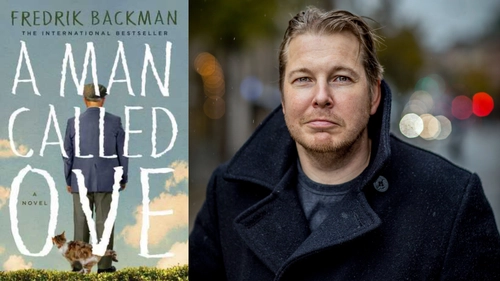
A Man Called Ove is the novel that brought Fredrik Backman beyond the borders of Sweden and established him as one of the most beloved contemporary writers worldwide. First published in 2012, the book quickly became a rare publishing phenomenon: translated into more than forty languages, selling millions of copies, consistently appearing on bestseller lists across Europe, North America, and Asia, and later adapted into a successful film. Yet the true value of the novel does not lie in these impressive figures, but in its ability to touch readers across generations and cultures.
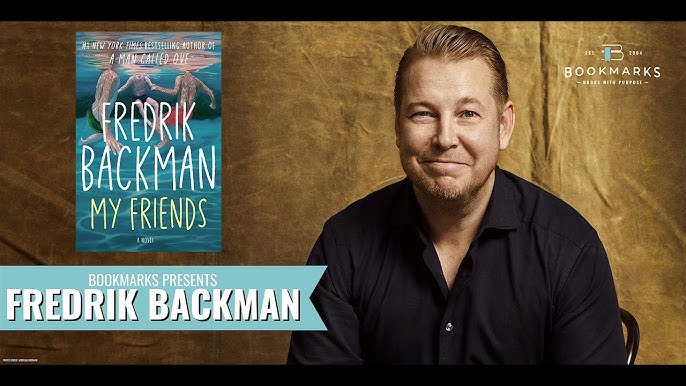
Fredrik Backman was born in 1981 in Sweden. Before becoming a novelist, he worked as a blogger and journalist—an experience that clearly shaped his literary style: simple language, clear narrative flow, a rhythm closely tied to everyday life, yet layered with meaning. Backman does not pursue ornate prose or heavy philosophical exposition; instead, he chooses to tell very “ordinary” stories, centered on seemingly unremarkable characters, through which he opens profound reflections on human nature and contemporary society.
Within the context of Nordic literature – often associated with dark, cold crime fiction – A Man Called Ove emerges as a notable exception. The novel does not explore crime or sensational tragedy, but focuses on the inner life of an ordinary individual, placing that character within small yet enduring relationships in a residential community. This choice gives the book its distinctive appeal: it reminds readers that the greatest stories are sometimes told through the smallest details.
Ove – the central character of the novel – is neither a heroic figure nor an immediately likable one. He embodies a familiar type in modern society: rigid, conservative, clinging to principles as a way to resist the chaos of the surrounding world. Through Ove, Backman expresses a consistent concern for those left on the margins of contemporary life – people who struggle to adapt to change, who are poor at expressing emotion, yet carry deep and lasting wounds.
In this sense, A Man Called Ove is both the starting point of Fredrik Backman’s novelistic career and the foundation of his entire literary universe thereafter – a world where kindness is understated, pain is quiet, and redemption arises from the most ordinary things. The book does not merely introduce a new author to the public; it establishes a distinctive humanistic voice that has since become Backman’s enduring literary signature.
2. Summary of the Plot
A Man Called Ove opens with the image of Ove, a fifty-nine-year-old man living in a quiet row – house neighborhood, where everything seems to operate according to unwritten rules. Ove sees himself as the neighborhood’s “guardian of order”: he monitors parking, enforces waste sorting, and scrutinizes every minor detail to ensure that no one violates regulations. In the eyes of his neighbors, Ove is the embodiment of irritation – gruff, rigid, unforgiving, and always ready to criticize the world around him.
Yet from the very first pages, the author reveals an important truth: Ove is not merely a difficult man, but one who has lost all reason to continue living. Since the death of his wife, Sonja, Ove’s life has become empty. He has been forced into retirement after years of dedication, lost his life partner – the only person who connected him to the world – and gradually descended into absolute loneliness. To Ove, death is not frightening; what is terrifying is continuing to exist in a world to which he no longer belongs.
As a result, Ove plans to end his life in a “proper” manner – according to procedure, according to principle – just like everything else in his life. However, his suicide attempts are repeatedly interrupted by utterly mundane circumstances: neighbors in need of help, a stray cat appearing at the wrong moment, or absurd situations that force him to postpone his “final plan.” These episodes are narrated with a tone that is both humorous and bitter, making readers smile even as they sense the character’s quiet despair.
A major turning point occurs when a young family moves into the house opposite Ove’s. Parvaneh – a woman of Iranian origin – arrives with her husband and two children, inadvertently shattering the closed world Ove has constructed around himself. Parvaneh is neither afraid of Ove nor deterred by his gruffness. She approaches him with blunt honesty, practicality, and vitality – the complete opposite of his gloom and withdrawal. From their initially abrasive encounters emerges a peculiar relationship, one in which Ove is continually drawn back into community life despite his persistent denials.
Interwoven with the present timeline are chapters recounting Ove’s past. Through these memories, readers gradually understand the origins of his rigidity. Ove grew up in poverty, lost his mother early, and lived with a quiet yet principled father who instilled in him an unwavering belief in labor, responsibility, and integrity. His meeting and love with Sonja became the rare bright point in his life. Sonja brought warmth, flexibility, and faith in people – qualities Ove himself lacked.
Tragedy strikes when Sonja suffers a severe accident, leaving her with irreversible injuries. From that moment on, Ove becomes her devoted caregiver, sacrificing quietly while withdrawing further from the world. When Sonja eventually passes away, Ove loses not only his wife but also the sole bridge connecting him to life. These memories reveal that Ove’s gruffness is not his nature, but the result of a prolonged, unhealed sequence of losses.
In the present, Ove gradually – though unwillingly – becomes a support for those around him: helping a lost young man find direction, standing up for an old friend against injustice, caring for an abandoned stray cat as though it were the last thread tying him to life. Each of Ove’s actions is carried out reluctantly, accompanied by his familiar grumbling, yet they reveal deep compassion and a strong sense of responsibility.
The story reaches its climax not through dramatic events, but through a subtle transformation within Ove himself. He begins to realize that although Sonja is gone, the values she embodied continue to live on through him and those around him. Life, it turns out, has not completely turned its back on Ove – and Ove has not entirely turned his back on life.
3. Thematic and Artistic Value
At its deepest level, A Man Called Ove is not a “heartwarming” tale of a grumpy old man learning to integrate into a community, but a serious novel about existential loneliness and human redemption through everyday relationships. Fredrik Backman does not portray Ove as an anomaly, but as a representative of a familiar group in modern society: people who live by principles, work quietly and diligently, yet are gradually left behind when traditional values lose their place.
The novel’s most striking thematic strength lies in its treatment of gruffness not as a moral flaw, but as a psychological consequence of prolonged loss. Ove does not hate people; he hates chaos – he hates arbitrariness, the erosion of clear distinctions between right and wrong. In Ove’s world, principles are the final anchor that allows him to survive after the death of his wife, the emotional center of his life. Every “difficult” act is therefore a desperate attempt to preserve order, meaning, and the sense that life remains controllable.
The novel thus raises a distinctly contemporary issue: the isolation of individuals in modern society, where people grow increasingly impatient with one another and less willing to listen or understand. Ove is labeled “eccentric” not because he is cruel, but because he no longer fits the pace of the modern world. Backman not only tells an individual story, but implicitly critiques a society that is quick to discard slow, rigid, inflexible people rather than choosing empathy and connection.
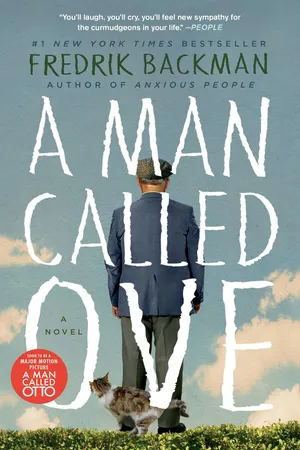
At the same time, A Man Called Ove is a deeply moving meditation on enduring love and quiet fidelity. The love between Ove and Sonja is not idealized through romantic language, but expressed through long-term commitment, small sacrifices, and Ove’s continued – if reluctant – existence as a way of keeping Sonja present in the world. This love does not end with death; it persists as a guiding system of values shaping Ove’s choices in the present.
Artistically, Backman employs a structure that alternates between present and past as a method of gradually decoding the character. Readers are not given Ove’s full story from the outset; instead, they must patiently follow each layer of memory as it is revealed. This technique enables a natural emotional transformation – from irritation to understanding and, finally, to deep compassion. Ove does not change abruptly; he is “unlocked” in a way consistent with human psychological logic.
Backman’s narrative voice is another notable artistic strength. He balances restrained humor with quiet sadness, creating a distinctive tonal quality. Situations that appear comic – especially Ove’s repeatedly interrupted suicide attempts – ultimately emphasize the character’s psychological tragedy. The humor does not diminish the pain; rather, it renders the pain more poignant precisely because it is so close to real life.
Another artistic achievement lies in Backman’s construction of the community as a collective character. The neighbors, each with distinct personalities and circumstances, form a network of relationships in which Ove – unwillingly – occupies a central role. Through this, the novel affirms a profound humanistic truth: no one exists in complete isolation; sometimes life is sustained not by personal will alone, but by fragile yet vital bonds with others.
Taken as a whole, the value of A Man Called Ove lies in its refusal to “magnify” its story. It chooses to tell slowly and quietly, yet this restraint generates substantial intellectual and emotional weight. The novel offers no definitive solution to loneliness, but it demonstrates that as long as connection remains possible, there is still a reason to go on living.
4. Memorable Quotations
One reason A Man Called Ove lingers so long in readers’ minds lies not only in its plot or characters, but also in its simple yet evocative language. Fredrik Backman does not strive to produce heavy philosophical statements; instead, he allows his characters to speak through lived experience, pain, and ordinary moments. As a result, many passages do not overwhelm the reader, but quietly sink in and invite reflection.
When writing about how people judge one another, Backman offers a line that invites careful thought:
“People always think they know others after a few encounters, but rarely know what has made them who they are.”
In passages dealing with loss, death is not portrayed as loud tragedy, but as an endless void:
“When the person you love dies, the world doesn’t end. It just becomes unbearably quiet.”
Love in the novel is not articulated through romantic words, but through endurance and responsibility:
“Loving someone isn’t about when they’re still there, but about how you go on living after they’re gone.”
Some sentences appear simple, yet strip loneliness to its core:
“The most frightening thing isn’t dying, but no longer being needed.”
Ove is a man who struggles to express emotion, and this is reflected clearly in his actions:
“Ove didn’t know how to comfort people. He only knew how to fix what was broken.”
Kindness in the novel is not grand or heroic, but often awkward:
“Some people help others not because they are kind, but because they don’t know how not to.”
Backman also reflects deeply on rules and order—the pillars Ove clings to throughout his life:
“Ove believed that everything would be fine if everyone just did their part.”
Beneath the humor lies a compassionate view of humanity:
“Everyone carries a story within them; it’s just that not everyone has someone patient enough to listen.”
And ultimately, the novel closes with a profoundly human sense of existence:
“A person doesn’t need the whole world to love them. Just one person is enough to keep going.”
These sentences may appear light in isolation, but within the narrative of A Man Called Ove, they become emotional anchors that help readers understand Ove – and themselves – more deeply.
5. Conclusion
Closing A Man Called Ove, what lingers is not a dramatic plot or overwhelming events, but a long, quiet stillness – the kind that arises only after encountering a story that touches the deepest parts of human experience. Fredrik Backman does not tell this story to inspire pity for his character; he tells it to foster understanding, from which genuine compassion naturally emerges.
Ove is not a character “redeemed” in the conventional sense. He does not transform completely, nor does he become idealized or softened. He remains gruff, principled, and difficult. What matters is that he is no longer utterly alone. The novel therefore conveys a deeply honest and humane message: people do not need to become different versions of themselves to deserve love; sometimes, having someone who stays and accepts them as they are is enough to make life meaningful again.
On a personal level, A Man Called Ove encourages readers to reconsider how they treat those around them – especially quiet, difficult individuals who struggle to express emotion. It reminds us that behind harsh exteriors may lie lives shaped by profound loss. And sometimes, a little patience, a quiet presence, can become a lifeline for another human being.
Without preaching or moralizing, Fredrik Backman chooses a slow, restrained narrative approach – and it is precisely this restraint that gives the novel its lasting weight. A Man Called Ove is not a book that makes readers cry immediately, but one that lingers long after the final page, prompting reflection. And perhaps that is literature’s most enduring power: to remain in the reader’s mind, quietly yet persistently, as a reminder that kindness – even when clumsy – always holds the power to save us.