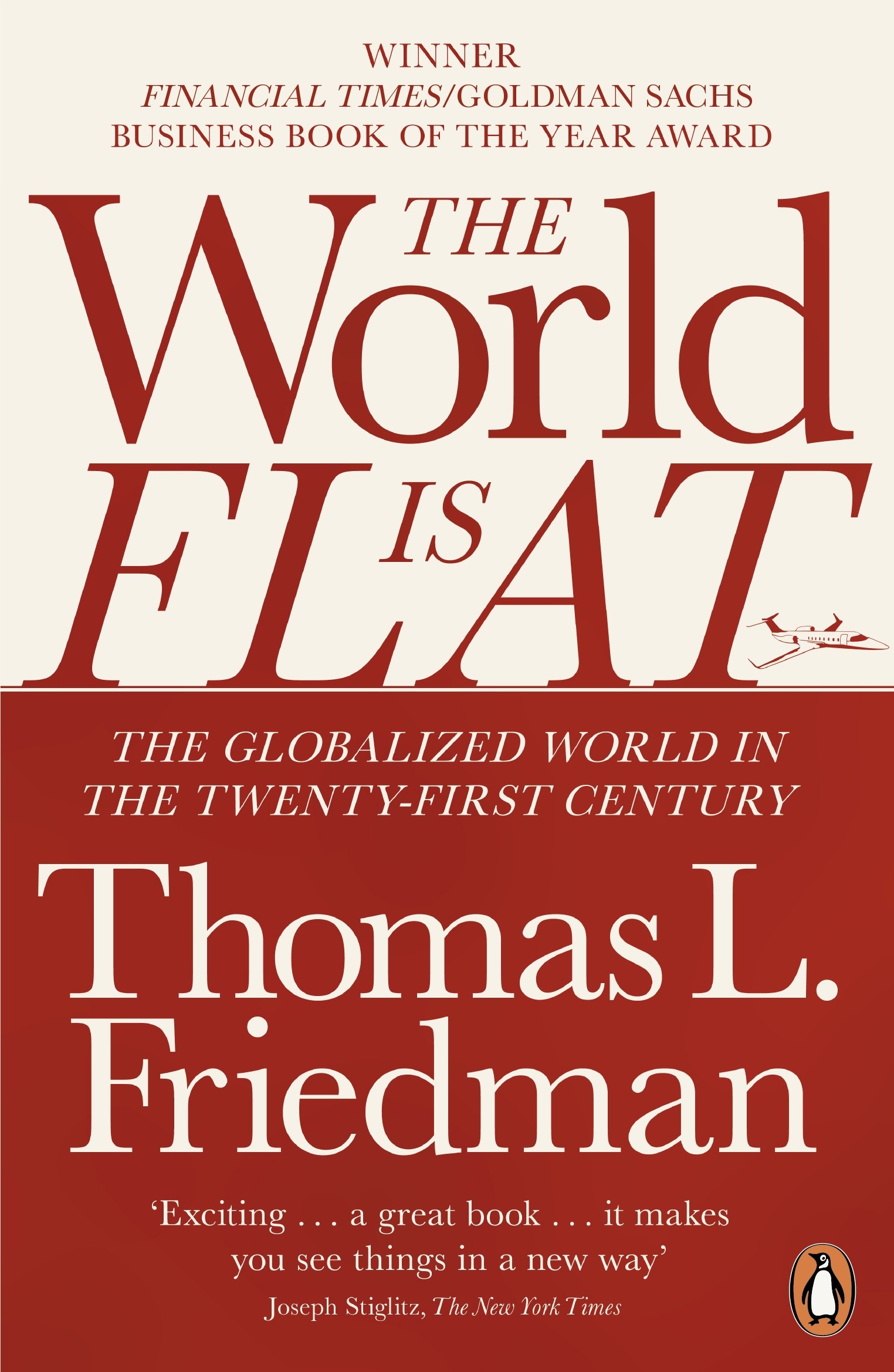
Geographical boundaries began to blur, the distance to knowledge was significantly shortened, and opportunities once reserved for a handful of developed nations became more accessible than ever before. People can now work for companies located on the other side of the globe, study at leading universities without leaving their own rooms, or compete directly with millions of others through nothing more than an Internet connection. It was precisely in this context that The World Is Flat emerged as an important intellectual map, helping readers understand how the world operates and what individuals must prepare in order not to be left behind.
Rather than being a dry academic work, The World Is Flat combines investigative journalism, economic and political analysis, real-life stories, and sharp personal observations. The book puts forward a controversial yet highly thought-provoking central thesis: the world has been “flattened” by technology, globalization, and deep economic integration. From this premise, the work compels readers to reconsider their own position within an increasingly competitive global arena.
1. Introduction to the Author and the Work
The author of The World Is Flat is Thomas L. Friedman, one of the most influential journalists and scholars in the field of contemporary globalization studies. Born in 1953 in the United States, he graduated from Brandeis University and later studied at the University of Oxford as a Rhodes Scholar – a prestigious academic background that played a crucial role in shaping his deep, multidimensional analytical thinking.
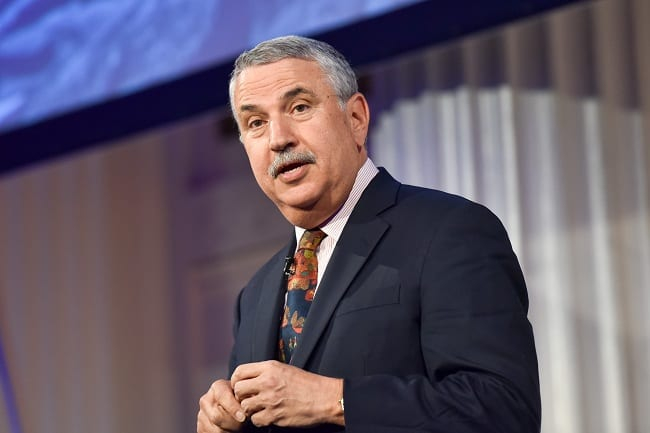
Thomas Friedman is widely known for his role as a senior correspondent and columnist for The New York Times, where he focuses on international affairs, the Middle East, the global economy, and the relationship between politics, technology, and society. Over the course of his decades-long journalism career, he has won the Pulitzer Prize three times, a testament to his professional credibility and the impact of his analytical work.
A defining feature of Friedman’s writing style is his ability to combine academic reasoning, on-the-ground experience, and accessible journalistic prose. He does not approach globalization as an abstract concept, but as a living phenomenon embedded in the daily lives of individuals, businesses, and nations. As a result, his works – including The World Is Flat – consistently reflect the spirit of their time while raising questions with long-term strategic significance.
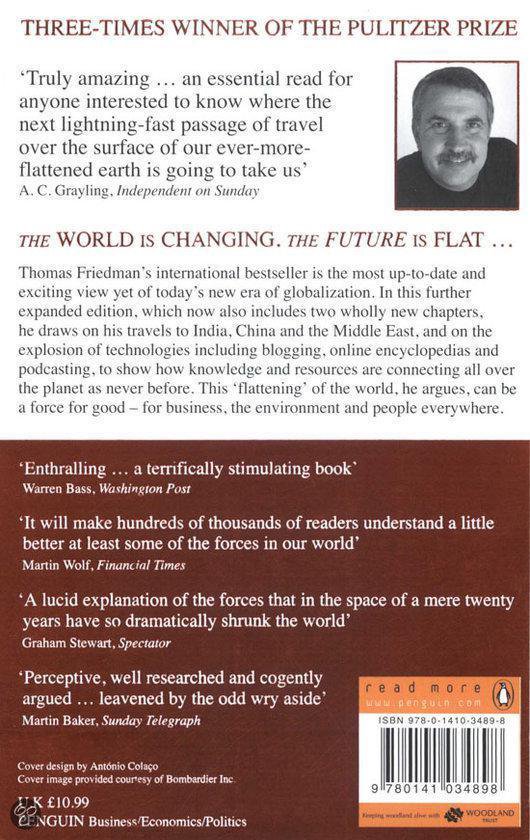
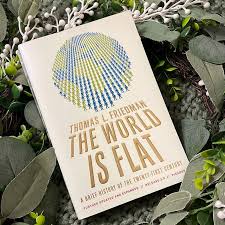
The World Is Flat was first published in 2005 and was subsequently updated and reissued with important additions to reflect new global developments. The book quickly became an international bestseller, was translated into dozens of languages, and has been widely used in universities, research institutes, and economic and political forums around the world. It is frequently placed alongside classic works on globalization as a foundational text for understanding the post – Cold War world.
Beyond describing the rise of technology and global markets, The World Is Flat clearly reflects a central concern that runs throughout Friedman’s career: how individuals – especially younger generations – can adapt and thrive in an increasingly competitive yet opportunity-rich world. This depth of thought has enabled the book to transcend the boundaries of a time-specific commentary and become a reference work with lasting value.
2. Summary of the Main Content
Unlike a work of fictional literature with a linear plot, The World Is Flat is structured as a journey of understanding, in which Thomas Friedman guides readers step by step to confront, interpret, and comprehend the reality of globalization. The book develops logically from personal discovery to systemic analysis, from specific phenomena to a comprehensive picture of the modern world.
The Origin of the Concept of a “Flat World”
The book opens with a pivotal moment in Friedman’s thinking. During his travels to India in the early 2000s, he witnessed thousands of young engineers working for American companies directly from Bangalore. They wrote software, processed data, and solved technical problems for major corporations located tens of thousands of kilometers away. This experience led Friedman to realize that geographical distance – once the greatest barrier in the global economy – was rapidly disappearing.
From this observation, he formulates his central argument: the world has become “flatter,” not because all differences have vanished, but because access to markets, knowledge, and competition has been leveled to an unprecedented degree in human history.
The Three Phases of Globalization
Friedman then situates his argument within a broader historical framework by dividing globalization into three phases:
- Globalization 1.0: a period in which nations expanded territory and trade.
- Globalization 2.0: a phase in which multinational corporations became the primary drivers of the global economy.
- Globalization 3.0: a stage in which individuals become central actors, capable of competing and collaborating globally through technology.
According to Friedman, The World Is Flat focuses primarily on the third phase, where a single individual, equipped with a laptop and an Internet connection, can participate in the global value chain.
The Ten Forces Flattening the World
At the heart of the book is Friedman’s systematic identification of ten forces that have flattened the world. He does not merely list these forces, but devotes substantial attention to explaining how each one operates.
He begins with the fall of the Berlin Wall, symbolizing the collapse of ideological barriers and the opening of the path toward global integration. This is followed by the explosion of the Internet – especially web browsers – which enabled information to be shared on an unprecedented scale.
Subsequent forces such as outsourcing, offshoring, supply-chaining, and insourcing are illustrated through concrete examples involving major corporations like Walmart, Dell, and UPS. Friedman demonstrates how businesses restructure their operations to take advantage of a flat world, while simultaneously exerting intense competitive pressure on the global labor market.
Notably, the concept of “steroids” – including mobile phones, Wi-Fi, software, and digital technologies – is presented as a catalyst that accelerates all other forces, making the flat world not merely a trend but an irreversible reality.
Consequences for Individuals and Society
After constructing this comprehensive framework, Friedman shifts his focus to the impact of the flat world on human beings. He emphasizes that in a globally competitive environment, repetitive and easily standardized jobs are quickly automated or relocated to lower-cost regions. In contrast, skills such as creative thinking, complex problem-solving, communication, and continuous learning become decisive advantages.
The book also raises profound social concerns: widening income inequality, increasing psychological pressure on workers, and the risk that traditional education systems may become obsolete if they fail to adapt. While Friedman does not offer simple solutions, he repeatedly underscores the importance of education, public policy, and individual initiative.
Open Questions for the Future
The final section of the book is reflective and cautionary. Friedman poses a series of critical questions: can nations compete globally while still protecting domestic workers? How can cultural identity be preserved in a flat world? Most importantly, what must individuals do to avoid being left behind?
The book does not conclude with definitive answers, but with a call for awareness. The flat world is neither a paradise nor a dystopia; it is a reality, and how humanity responds to that reality will determine its future.
3. Thematic and Artistic Value of the Work
At its deepest level, The World Is Flat is not merely a book about globalization or technology. Its core value lies in its ability to compel readers to reassess their position in a world that is changing at an extraordinary pace. Thomas Friedman does not write to showcase intellectual authority, but to issue a warning – one that is humanistic, far-reaching, and philosophically grounded.
Thematic Value: Understanding the Nature of the Modern World
First and foremost, The World Is Flat offers significant value by explaining how the contemporary world functions. Globalization is not portrayed as an abstract theory, but as a living system in which technology, economics, politics, and human agency are deeply intertwined. Friedman shows that a flat world does not make life easier; rather, as opportunities are leveled, competition becomes more intense.
One of the book’s most important contributions is its shift in focus from nations and corporations to the role of individuals. In the era of Globalization 3.0, individuals can function as independent economic units, directly competing in the global marketplace. This represents a profound transformation in thinking, offering unprecedented opportunities while placing individuals under greater pressure to take responsibility for their own skills and value.
Warning Value: The Flat World Does Not Reward Passivity
Another notable strength of the book lies in its clear yet balanced warnings. Friedman does not idealize globalization as a flawless process. He candidly acknowledges that a flat world can exacerbate inequality and marginalize those who lack the skills or adaptability to keep pace.
The statement “average is over” stands as one of the book’s most striking warnings. In a world where information is universally accessible, differentiation no longer lies in how much one knows, but in how one thinks, creates, and learns continuously. This insight remains highly relevant, particularly in an era increasingly shaped by artificial intelligence and automation.
Guiding Value: Education and Lifelong Learning
If there is a single intellectual pillar running throughout The World Is Flat, it is the role of education. Friedman does not view education as the transmission of fixed knowledge, but as the cultivation of lifelong learning capacity. In a flat world, knowledge quickly becomes outdated, while adaptability determines survival.
Accordingly, the book offers clear guidance for younger generations, policymakers, and educators. Friedman implicitly issues a demanding requirement: without meaningful reform, education systems will continue to produce individuals ill – equipped to function in the very world they inhabit.
Artistic Value: The Art of Argument and Storytelling
From a stylistic perspective, The World Is Flat is not a literary work in the traditional sense, yet it demonstrates a sophisticated art of argumentation and storytelling. Friedman employs a modern journalistic style that tightly integrates data, real-world examples, and personal experience. Complex ideas are consistently “humanized” through concrete narratives, preventing readers from being overwhelmed by theory.
The metaphor of the “flat world” itself is a major linguistic achievement. With a single, simple image, Friedman encapsulates a complex global phenomenon, making it memorable, widely applicable, and enduring in public discourse.
Moreover, his tone strikes a rare balance between analytical rigor and concern for human consequences. Rather than lecturing from above, Friedman positions himself as a conversational partner, continually posing questions and inviting readers to reflect. This approach prevents the book from becoming dry, despite its engagement with large-scale global issues.
Contemporary Relevance and Enduring Value
Although written in the early twenty-first century, The World Is Flat retains strong contemporary relevance. The issues Friedman addresses – global competition, labor mobility, education, and technology – have not faded but have become increasingly urgent. This sustained relevance constitutes the book’s lasting value: it does not merely document a historical moment, but provides a conceptual framework for understanding present and future transformations.
4. Notable Quotations – The Sentences That Define the Spirit of The World Is Flat
One reason The World Is Flat continues to resonate lies not only in its rigorous arguments, but also in its highly condensed, thought-provoking statements. The quotations throughout the book function not merely as conclusions, but as moments of intellectual pause – points at which readers are compelled to reflect on their place in the modern world.
Before examining specific quotations, a common characteristic becomes evident: Thomas Friedman does not rely on empty slogans. Each quotation is the product of observation, lived experience, and systematic analysis. As a result, they possess both immediate relevance and long-term philosophical value.
Below are some of the most representative quotations that capture the core spirit of the work:
“The world is flat while I was sleeping.”
This iconic line serves as a powerful wake-up call. The world changes without waiting for permission, and those who remain in their comfort zones may awaken to an entirely different reality.
“Globalization has accidentally made Beijing, Bangalore, and Bethesda next-door neighbors.”
Through a vivid metaphor, Friedman illustrates how globalization has erased geographical distance, turning major economic and technological centers into neighbors within a shared competitive space.
“In a flat world, the most important attribute you can have is creative imagination.”
As knowledge becomes widely accessible, creative imagination emerges as the defining source of differentiation.
“Average is over.”
Brief yet uncompromising, this statement underscores the disappearance of safety in mediocrity within a flat world.
“You are not competing against people down the street anymore, but against people across the globe.”
This quotation captures the essence of modern competition: every individual now operates on a global stage, whether consciously or not.
“The winners in the flat world are those who learn how to learn.”
Here, Friedman emphasizes that lifelong learning outweighs any specific technical skill.
“The playing field is being leveled, but the game is getting tougher.”
Equalized opportunity does not imply easier success; on the contrary, it raises the standards required to succeed.
“We need to run faster just to stay in place.”
This striking metaphor reflects the pervasive pressure of constant adaptation in the modern world.
“Education is the single most important investment you can make in a flat world.”
This sentence encapsulates Friedman’s conviction that education underpins both individual and national competitiveness.
“The future belongs to the curious.”
Not the strongest or the wealthiest, but those who remain curious and adaptable will shape the future in a flat world.
Taken together, these quotations form a coherent ideological system. They reflect both the harsh realities of globalization and a constructive outlook: regardless of how rapidly the world changes, opportunities remain accessible to those who sustain a commitment to learning and creativity.
5. Conclusion – The Overall Significance and Value of The World Is Flat
The World Is Flat is a systematic analytical work that examines the nature of the world in the era of globalization and digital technology. Through the concept of a “flat world,” Thomas Friedman constructs a conceptual framework that enables readers to recognize profound changes in how people learn, work, compete, and connect on a global scale.
Throughout the book, globalization is presented not merely as an economic or political phenomenon, but as a comprehensive restructuring of modern society. Within this process, individuals occupy a central position: they are both beneficiaries of expanded opportunities and direct subjects of intensified global competition. This reality requires individuals, organizations, and nations to continually adjust their development strategies, particularly in education, human capital, and innovation.
In addition to clarifying the mechanisms of the flat world, the book offers a clear warning about the long-term consequences of failing to adapt. Intensifying competition, the risk of inequality, and mounting pressure on labor markets are addressed directly and without evasion. In doing so, the work highlights the importance of lifelong learning, creative capacity, and adaptive flexibility in a rapidly changing environment.
From both academic and practical perspectives, The World Is Flat does more than capture a specific phase of early twenty-first-century globalization; it provides a theoretical foundation for analyzing ongoing transformations in the present. Its ability to integrate historical context, economic reality, and future orientation has ensured its enduring reference value. Overall, The World Is Flat stands as a foundational work that helps readers understand the structure and driving forces of the modern world. Beyond imparting knowledge, it shapes a systematic, rational, and responsible approach to globalization – an approach essential for navigating a world that is increasingly “flat,” yet also increasingly complex.