The Road begins at a point when everything familiar about the world has already ended. There is no longer a history to trace, no future to anticipate, and no explanation for the catastrophe that has occurred. The work places the reader in a “post-too-late” state of humanity – a moment when civilization exists only as fragmented memory, and life continues in its most minimal form.
Within this space, human beings are no longer defined by nationality, profession, or social status, but solely by immediate moral choices: whether to keep moving or stop, to protect or abandon, to preserve humanity or trade it away in order to survive. The Road does not recount a disaster; rather, it examines what remains after disaster – the most fragile yet most enduring part of the human condition.
Through a minimalist structure and austere language, the novel follows a father and son along a road with no clearly defined destination. This road functions not merely as a physical space of movement, but as a test of the final moral values still capable of existing in a world without law. It is precisely through this radical reduction that The Road asserts its position as a post-apocalyptic novel with lasting philosophical depth and humanistic value.
1. Introduction to the Author and the Work
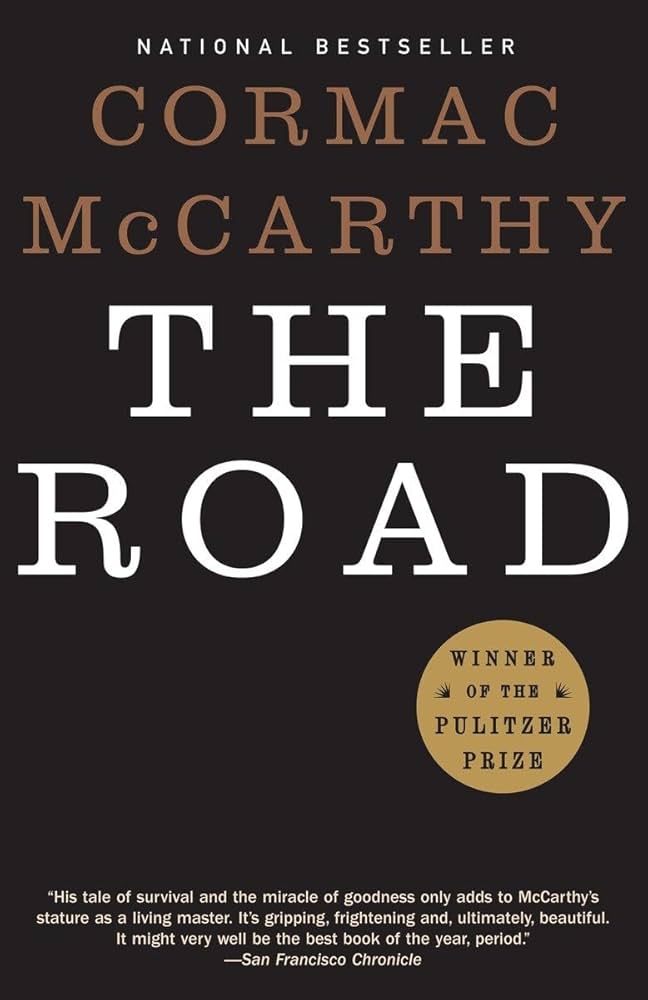
The Road is a novel written by Cormac McCarthy, one of the most significant and influential figures in American literature from the late twentieth century to the early twenty-first century. McCarthy has been widely praised by critics for his distinctive literary style, characterized by restrained language, stark narrative rhythm, and a persistent focus on the extreme limits of human behavior amid violence, moral decay, and the collapse of social order. His works frequently place characters in hostile environments in order to expose the fundamental nature of morality and survival.
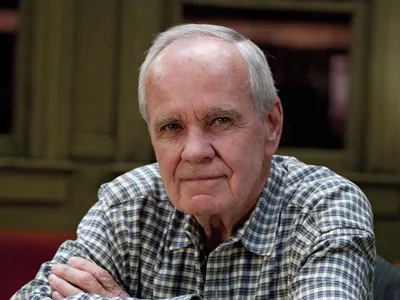
Prior to the publication of The Road, Cormac McCarthy had already established a solid reputation in the literary world with major works such as Blood Meridian – often regarded as a pinnacle of modern American literature – and No Country for Old Men, a novel later adapted into a highly successful film. A recurring feature of McCarthy’s writing is his deep skepticism toward the notion of civilizational progress, coupled with an uncompromising view of violence as an inseparable component of human history.
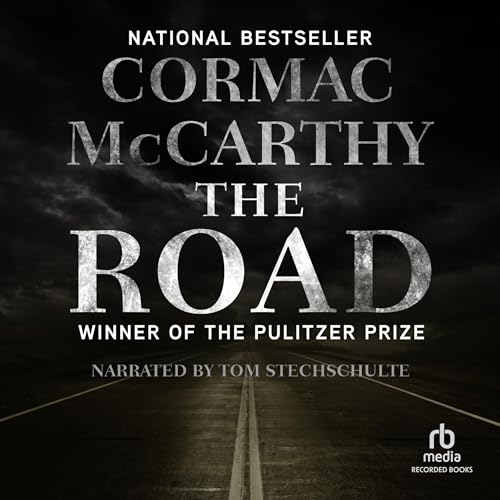
Published in 2006, The Road marks a distinct phase in McCarthy’s literary career. Whereas his earlier works often expanded across broad landscapes and featured dense casts of characters, The Road adopts an almost radically minimalist narrative approach: an indistinct setting, an undefined timeline, a very limited number of characters, and a plot centered on a single journey. This deliberate reduction allows the novel to achieve pronounced philosophical depth, as all secondary elements are stripped away to make room for essential questions about morality and existence.
Upon its release, The Road received widespread attention from both critics and readers and was awarded the Pulitzer Prize for Fiction in 2007, one of the most prestigious literary honors in the United States. The novel is not only classified as post-apocalyptic fiction, but has also been extensively studied in fields such as comparative literature, moral philosophy, and cultural studies, due to its distinctive approach to human nature in a world at the brink of extinction.
2. Summary of the Plot
The narrative of The Road unfolds in a post-apocalyptic world whose cause and moment of collapse are never clearly identified. The author offers no scientific or historical explanation for the catastrophe. Instead, the world is revealed solely through its consequences: ash-covered skies, dim sunlight, complete extinction of plant life, the disappearance of animals, and human civilization reduced to scattered ruins.
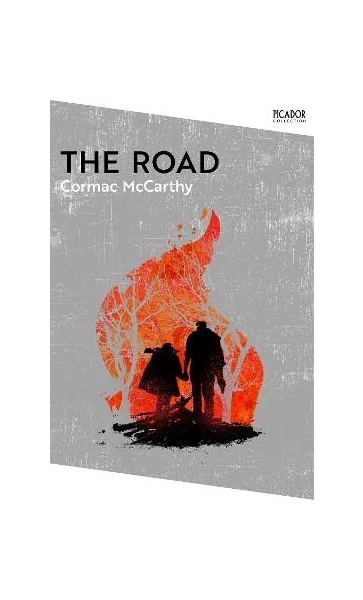
Within this setting, the two central characters – a father and his young son – begin a journey southward. This movement is driven by the fragile belief that a warmer climate may offer a greater chance of survival, despite the absence of concrete evidence. The pair push a cart containing only the bare essentials: worn clothing, blankets, canned food, and a handgun with a limited number of bullets. Each item holds vital survival value and simultaneously reflects the severe depletion of the world they inhabit.
The father occupies the active decision-making role throughout the journey. He remains constantly alert to any signs of other human life, as in the world of The Road, people are no longer fellow beings in the conventional sense. Most survivors have formed violent groups, hunting one another and even resorting to cannibalism as a means of survival. As a result, the journey of the father and son is not only a struggle against a hostile natural environment, but also a continuous flight from humanity itself.
The boy, born after the catastrophe, has never known the world as it once was. He understands reality through his father’s accounts and persistently questions moral standards. Numerous moments in the novel reveal a clear contrast between the father’s pragmatic survival logic and the child’s instinctive moral impulses. When encountering strangers in desperate circumstances, the boy often expresses a desire to help, while the father consistently prioritizes survival risks.
Their journey is composed of a series of fragmented stops: abandoned houses, empty supermarkets, hidden basements stocked with preserved food, roads littered with burned-out vehicles, and towns devoid of life. Each location functions not only as a setting, but also as a representation of different stages of societal collapse – from attempts to maintain order to the complete abandonment of moral norms.
One persistent element throughout the narrative is the constant threat of death. The father suffers from a serious illness, marked by prolonged coughing and steadily deteriorating health. This creates an underlying tension throughout the story, as the journey becomes not only a search for survival, but also a race against time to pass on essential survival skills and moral principles to the child.
The concept of “carrying the fire” emerges as a central ideological pillar within the father-son relationship. This fire is not physical, but symbolic, representing conscience, compassion, and the distinction between “good people” and “bad people.” The father repeatedly emphasizes that they belong to the “good guys,” even as the definition becomes increasingly fragile in a world without laws or community.
In the final stage of the journey, the father becomes physically incapable of continuing and dies. His death is not depicted as a dramatic climax, but unfolds quietly, in keeping with the restrained rhythm of the novel. After burying his father, the boy faces the most significant moment of his life: making his own survival decision without direct guidance.
Eventually, the boy encounters another family – people who still uphold basic moral values and have children of their own. After a period of hesitation, he chooses to join them, carrying with him his father’s words and the “fire” as a spiritual inheritance. The novel concludes not with a promise of rebuilding the world, but with the fragile continuation of humanity in an uncertain future.
3. Thematic and Artistic Value
The core value of The Road does not lie in constructing a novel vision of apocalypse, but in its radical elimination of explanatory elements in order to focus on a fundamental question of literature and moral philosophy: what remains of humanity when all structures of civilization collapse. The absence of an identified cause for the disaster is not an informational gap, but a deliberate artistic choice that elevates the story beyond topical concerns or speculative science fiction, transforming it into a universal allegory.
On a thematic level, The Road places human beings in a state of primal survival, where morality is no longer upheld by law, religion, or community. In such a world, evil ceases to be an aberration and instead becomes a common survival strategy. Cannibalistic groups and violent hunters are not portrayed as anomalies, but as logical consequences of a society that has entirely lost its collective moral foundation. Through this depiction, the novel raises a profound question: is morality an inherent human trait, or does it exist only when supported by social order?
The father-son relationship forms the ideological core of the novel and serves as the sole remaining space where moral values can persist. The father represents the memory of the old world, where distinctions between good and evil once held clear meaning. He not only protects his son from physical danger, but also strives to preserve a moral framework that he himself increasingly doubts can survive. His harsh decisions do not stem from cruelty, but from an internal conflict between survival and humanity.
In contrast, the boy, born into the post-apocalyptic world, possesses no memory of a “normal” society. Notably, his moral instincts do not arise from nostalgia, but from a form of primal ethical intuition. He persistently questions the obligation to help others, responsibility toward the vulnerable, and the meaning of being “good.” His existence suggests an alternative possibility for humanity: morality is not merely a product of civilization, but an innate potential that can be cultivated even under extreme conditions.
From an artistic perspective, The Road stands as a powerful demonstration of minimalist prose. McCarthy employs short sentences, a slow rhythm, extended silences, and minimal direct psychological exposition. The absence of quotation marks in dialogue blurs the boundary between speech and thought, creating the impression that language itself is disintegrating alongside the physical world. This linguistic austerity amplifies the weight of each detail and forces readers to confront the stark reality presented.
The novel’s spatial design is highly symbolic. The road is not merely a geographical route, but a representation of humanity’s existential journey in a world without a clear destination. Continuing to move forward does not signify guaranteed hope, but a moral decision: the choice not to surrender despite the absence of assurance. In this sense, The Road does not promote optimism, but affirms the value of ethical perseverance in the face of despair.
One of the novel’s most significant contributions lies in its redefinition of hope. In The Road, hope does not take the form of salvation or reconstruction, but exists as a moral obligation: the commitment to preserve humanity even when doing so may weaken one’s chances of survival. Through the image of the “fire,” the novel conceptualizes humanity as a spiritual inheritance to be passed on, rather than an achievement to be secured once and for all.
Through the close integration of philosophical content and restrained artistic form, The Road achieves a timeless quality. The novel not only reflects modern anxieties about civilizational collapse, but also raises a fundamental ontological question: when everything is stripped away, what allows human beings to remain worthy of being called human?
4. Notable Quotations
The language of The Road is pared down to its bare minimum, yet it is precisely this reduction that gives each sentence significant philosophical weight. The following quotations not only represent Cormac McCarthy’s distinctive style, but also encapsulate the novel’s central themes: the collapse of the world, moral survival, the father-son bond, and the fragile nature of humanity.
From the opening lines, McCarthy establishes the atmosphere of a dead world, where time no longer implies progress:
“Nights dark beyond darkness and the days more gray each one than what had gone before.”
This sentence does more than describe scenery; it captures the existential condition of humanity – movement without direction, a steady descent into decline.
Within this world, morality is reduced to brief affirmations that verge on self-reassurance:
“We’re the good guys, right?”
“Yes. We’re the good guys.”
This short exchange reveals the fragility of the concept of goodness when no social norms remain to support it.
One of the novel’s most important symbols is the “fire,” passed from father to son as a spiritual legacy:
“You have to carry the fire.”
“I don’t know what it is.”
“Yes you do. It’s inside you.”
The fire is never explicitly defined, allowing it to embody conscience, compassion, and moral awareness.
When confronting the responsibility of fatherhood in a world devoid of protection, the father defines his role in absolute terms:
“My job is to take care of you. I was appointed to do that by God.”
This statement illustrates how personal morality replaces social law as the sole foundation for action.
McCarthy also establishes a connection between the child and a form of metaphysical belief beyond pure survival logic:
“If he is not the word of God God never spoke.”
The child becomes not only someone to be protected, but a testament to the possibility of continued humanity.
Even in the darkest moments, the novel leaves a trace of moral belief:
“Goodness will find the little boy. It always has. It will again.”
This is not a promise, but an ethical conviction that persists despite harsh reality.
Perseverance is distilled into a single, recurring command:
“You have to keep going.”
The phrase functions both as a survival directive and a moral declaration.
At the end of the father’s journey, the fire becomes inheritance rather than instruction:
“The fire was inside him.”
The closing line offers no assurance of a better future, but affirms that the essential core of humanity has not been extinguished.
5. Conclusion
The Road is not a post-apocalyptic novel in the conventional sense, as it does not focus on the cause of catastrophe or visions of rebuilding the world. Its value lies in the radical narrowing of context to illuminate a universal question: how humanity can be sustained when the foundations of civilization have collapsed. Through the journey of a father and son, the novel places human beings at the extreme edge of existence, where every action carries absolute moral significance.
In terms of thematic substance, The Road demonstrates that the tension between survival and humanity cannot be easily resolved. The novel neither idealizes human nature nor denies the emergence of brutality under extreme conditions. Yet, through the recurring image of the “fire,” McCarthy asserts that morality does not depend entirely on social order, but can exist as a conscious choice transmitted across generations.
Artistically, McCarthy’s minimalist, restrained, and austere prose is essential to the novel’s philosophical weight. The brief language, fragmented structure, and prolonged silences not only reflect a devastated world, but also compel readers to confront the ethical questions posed, rather than being guided by emotional or dramatic resolution.
Within contemporary literature, The Road occupies a distinctive position by successfully merging post-apocalyptic fiction with moral philosophy. The novel does not offer solutions for humanity’s future, but reveals the minimum conditions under which human beings can continue to exist as moral agents. This steadfast commitment to fragile values allows The Road to transcend the boundaries of speculative fiction and become a work of enduring intellectual significance.
In conclusion, The Road is a novel that demands slow, careful reading and reflection. It does not aim to comfort or reassure, but instead imposes a rigorous requirement on its readers: to confront the possibility of world collapse and to question what must be preserved until the very end. From this demand emerges The Road’s lasting value within modern literature and broader discussions of humanity and ethics.