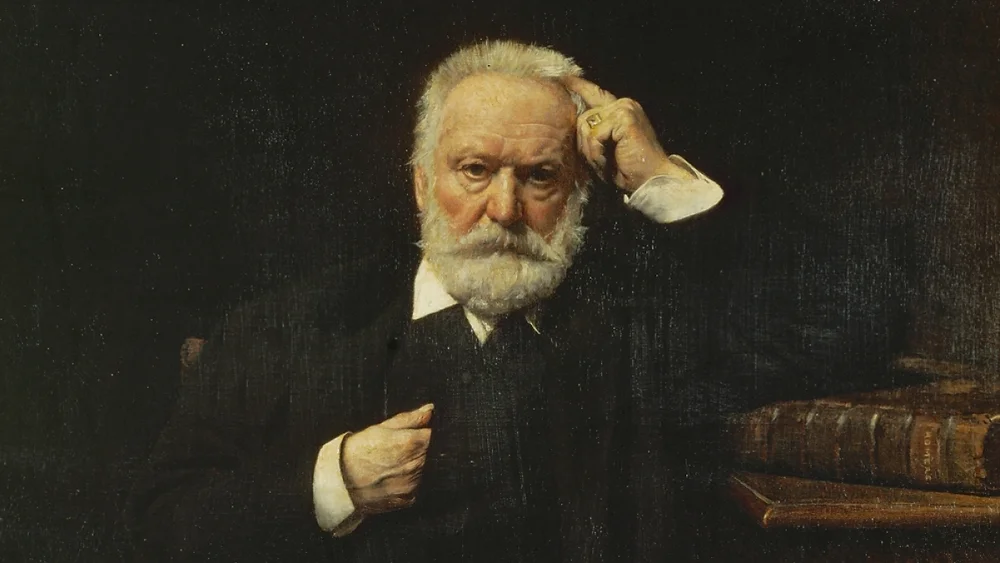
In the history of world literature, few writers embody such a complete combination of artistic stature, intellectual depth, and profound social influence as Victor Hugo. He is not only regarded as one of the great pillars of nineteenth – century French literature, but also as a prominent symbol of humanism, freedom, and social progress. Through emotionally powerful prose, highly symbolic characters, and a strong voice defending the oppressed, Victor Hugo transcended the boundaries of a purely literary writer to become the moral conscience of his age.
With a vast body of work spanning multiple genres such as novels, poetry, drama, and political essays, Victor Hugo left a deep imprint not only on literary life but also on the intellectual history of Europe. His name is closely associated with classic masterpieces such as The Hunchback of Notre-Dame, Les Misérables, The Toilers of the Sea, and Ninety-Three – works that continue to be read, studied, and adapted worldwide to this day.
This article aims to provide a systematic and comprehensive introduction to Victor Hugo, covering his biography, literary career, artistic style and ideology, as well as his legacy and most representative works, thereby highlighting his irreplaceable position in world literature.
1. A Brief Introduction to Victor Hugo
Victor Hugo, whose full name was Victor-Marie Hugo, was born on February 26, 1802, in the city of Besançon in eastern France. He came into the world during a period of intense historical upheaval, when France had just experienced the French Revolution (1789) and was entering a phase of profound social restructuring under the influence of wars and continuous political change. This historical context had a strong and lasting impact on Victor Hugo’s worldview and intellectual development throughout his life.
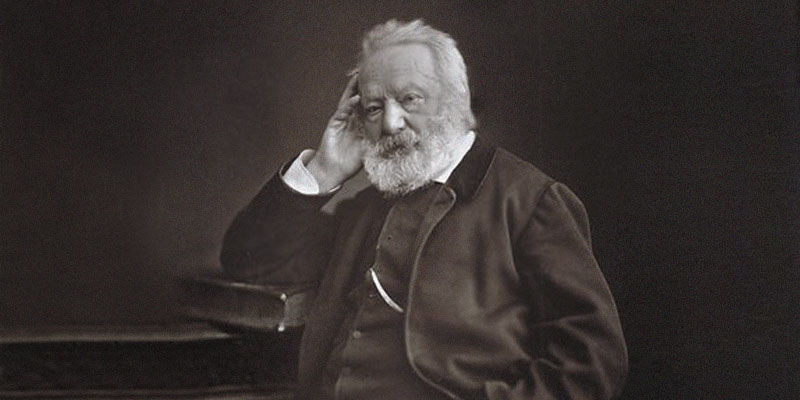
Victor Hugo’s father, Joseph Léopold Sigisbert Hugo, was a general in Napoleon Bonaparte’s army and frequently took part in military campaigns across Europe. His mother, Sophie Trébuchet, on the other hand, held royalist views and possessed a deep inner life. The clear contrast in political ideology between his parents created a multidimensional family environment, which helped shape Hugo’s ability to view issues from multiple perspectives and fostered his early awareness of ideological conflict within society.
Victor Hugo’s childhood was marked by frequent relocation. Due to his father’s military career, the family moved repeatedly between Paris, Marseille, Italy, and Spain. These early journeys exposed Hugo to diverse cultures, customs, and landscapes, nurturing a rich imagination and a broad aesthetic sensibility. Many scholars believe that these formative experiences contributed significantly to his later ability to depict vivid spaces, architecture, and historical settings in his literary works.
In terms of education, Victor Hugo studied at the Lycée Louis-le-Grand, one of the most prestigious secondary schools in France at the time. Although he did not pursue advanced academic training at major universities, he demonstrated remarkable self-learning ability and a strong passion for literature from an early age. As a teenager, Hugo began writing poetry and participating in literary competitions. In 1819, he and his two brothers founded the literary journal Le Conservateur littéraire, marking the official beginning of his professional literary career.
A significant milestone in Victor Hugo’s life occurred when he was awarded a royal pension by King Louis XVIII while still in his early twenties, in recognition of his rising poetic talent. This support allowed him to devote himself fully to writing. Over time, however, Hugo’s political and social views evolved toward progressive, liberal, and humanitarian ideals, laying the foundation for his image as a writer deeply engaged not only with art but also with the fate of humanity and society.
2. Victor Hugo’s Literary Career
Victor Hugo’s literary career spanned more than sixty years and is widely regarded as one of the most extensive, enduring, and influential journeys in the history of French literature. He did not achieve success in only one genre, but left a remarkable legacy across poetry, drama, novels, and political writing, demonstrating the stature of a truly comprehensive artist.
Victor Hugo entered literary life at a very young age. In the early years of the nineteenth century, he was already recognized as a promising poetic talent. His early poetry collections bore the imprint of classical traditions, reflecting the influence of earlier French literature, while also revealing a strong lyrical voice and distinct personal emotion. What ultimately distinguished Victor Hugo, however, was his gradual departure from classical constraints and his emergence as the spiritual leader of French Romanticism.
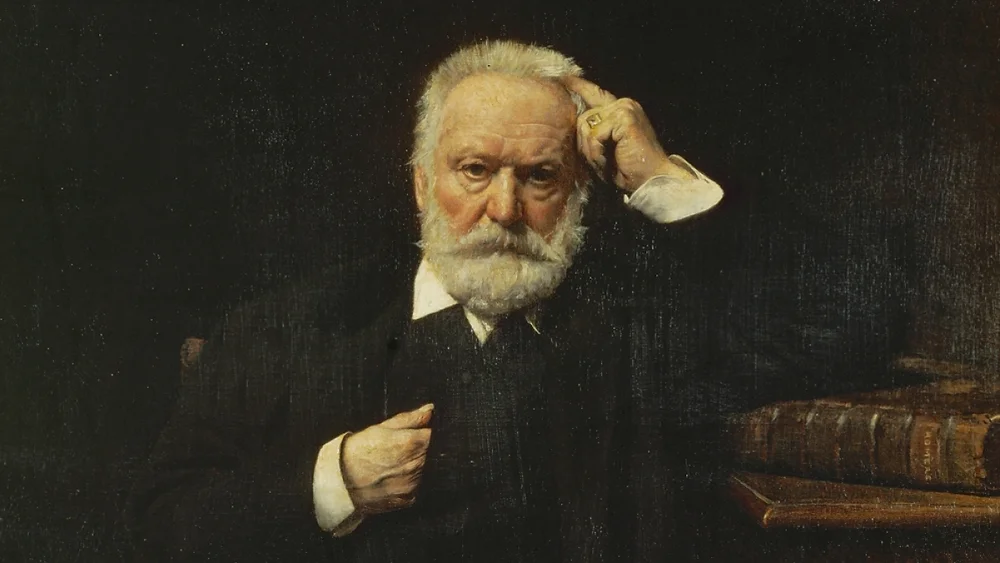
A decisive turning point in Hugo’s career came in 1830 with the play Hernani. This work not only caused a sensation on the Parisian stage but also marked a dramatic confrontation between Romanticism and Classicism. Hernani broke strict classical rules of form, language, and dramatic structure, paving the way for a new artistic vision that emphasized emotion, creative freedom, and individual expression. From that point on, Victor Hugo was regarded as the standard-bearer of the Romantic movement, exerting profound influence on French literary life for decades.
In the field of the novel, Victor Hugo reached artistic heights with large-scale works that combined narrative, lyricism, and social-philosophical reflection. The Hunchback of Notre-Dame (1831) was a pivotal work that brought him international recognition, showcasing his ability to construct historical settings, portray complex characters, and depict human tragedy within medieval society. The pinnacle of his novelistic achievement was Les Misérables (1862), a monumental masterpiece that offers a comprehensive portrayal of nineteenth-century French society, centering on the fate of the poor and the quest for justice and compassion.
Alongside his literary activities, Victor Hugo was actively involved in political life. He served as a legislator and frequently spoke out on social issues such as the death penalty, human rights, freedom of the press, and education. Following Napoleon III’s coup d’état in 1851, Hugo openly opposed the regime and was forced into exile for nearly twenty years on the islands of Jersey and Guernsey. Although marked by hardship and isolation, this period of exile became one of the most productive phases of his career, during which he produced numerous major works imbued with an uncompromising spirit of resistance against injustice and tyranny.
It can be affirmed that Victor Hugo’s literary career not only reflects the evolution of his personal artistic vision but also runs parallel to the major historical and social transformations of France. His literature combines high aesthetic value with a powerful moral voice, helping to define the social role of the writer in the modern era.
3. Artistic Style and Ideology
Victor Hugo’s artistic style represents a unique synthesis of Romanticism, profound humanism, and strong social consciousness. He was not merely an artist in search of beauty for its own sake, but a thinker who used literature as a means to explore human nature and challenge the injustices of his time. This harmonious integration of art and ideology is what gives his works enduring vitality.
First and foremost, Victor Hugo was a leading figure of French Romanticism. In his writings, personal emotion, rich imagination, and a yearning for freedom take precedence over the rigid conventions of Classicism. He advocated for the liberation of art from formal constraints, allowing the sublime and the trivial, the tragic and the ordinary, to coexist within a single artistic whole. This vision is clearly articulated in his artistic manifestos, in which Hugo asserted that art must fully reflect the complexity of life.
One of the most striking features of Hugo’s style is his use of powerful contrasts. Light and darkness, good and evil, beauty and ugliness, power and suffering frequently coexist in his literary world. These oppositions are not merely devices for dramatic effect, but serve to reveal the essence of humanity under extreme circumstances. Characters such as Jean Valjean, Quasimodo, and Fantine are placed in harsh trials that expose their dignity, moral decline, or capacity for redemption.
Ideologically, Victor Hugo remained steadfast in his commitment to progressive humanism. He firmly believed that human beings, no matter how deeply crushed by social conditions, possess the potential for moral transformation if given compassion and opportunity. This belief permeates his major works, particularly Les Misérables, in which he fiercely condemns poverty, harsh legal systems, inhumane prisons, and social structures that corrupt human nature. For Hugo, crime was not merely an individual failing but the consequence of an unjust and unmerciful society.
Moreover, Victor Hugo’s style is marked by epic scope and philosophical depth. He often expanded his narratives with extensive descriptions of history, architecture, nature, or reflective chapters of intellectual inquiry. Though sometimes criticized as overly long, these passages contribute to the grandeur of his works, transforming his novels into panoramic portrayals of society and history. His literature thus does more than tell stories; it invites reflection, interpretation, and moral awareness.
It can be said that Victor Hugo’s artistic style and ideology transcend the boundaries of any single literary movement to attain universal significance. The issues he raised – justice, freedom, human dignity, and compassion – are not confined by time or place, but continue to engage readers in the modern world.
4. Legacy and Contributions of Victor Hugo
The legacy Victor Hugo left behind extends far beyond his vast literary output to become an enduring value in the history of human thought and culture. He not only helped shape the face of nineteenth-century French literature, but also profoundly influenced how society perceives the social role of writers, the power of language, and the responsibility of art toward the community.
Above all, Victor Hugo made foundational contributions to the development of French Romanticism. Through bold innovations in poetry, drama, and fiction, he broke the rigid constraints of Classicism and expanded the expressive scope of literature in terms of subject matter, form, and language. As a result, literature moved beyond courtly circles and elite audiences to embrace the broader realities of society, especially the lives of the poor and marginalized.
Beyond artistic achievement, Victor Hugo left a deep mark on social and political life. He was among the rare intellectuals of the nineteenth century who dared to confront authoritarian power through literature and political discourse. His writings and speeches opposing the death penalty, defending human rights, condemning war, and denouncing social injustice contributed to important debates within French society. Hugo’s decision to endure exile for the sake of his ideals became a powerful symbol of intellectual commitment to national destiny.
Victor Hugo’s legacy is also evident in the global reach of his works. Novels such as Les Misérables and The Hunchback of Notre-Dame have been translated into hundreds of languages and have inspired countless adaptations in theater, film, music, and visual arts. Through continuous reinterpretation and adaptation, Hugo’s humanitarian ideals continue to reach new generations of readers worldwide.
Recognition of Victor Hugo reached its peak after his death in 1885. The French state held a grand national funeral, and his remains were laid to rest in the Panthéon, the resting place of France’s most distinguished figures. This honor was not only a tribute to a great writer but also a confirmation of his special status as a cultural and moral symbol of France.
It can be affirmed that Victor Hugo’s legacy and contributions are not confined to a single era or nation. The values he championed – freedom, justice, compassion, and human dignity – retain their relevance in contemporary society, ensuring that his name remains vibrant in the ongoing flow of world literature and thought.
5. Major Works of Victor Hugo
Throughout a creative career spanning more than half a century, Victor Hugo produced an extensive body of work encompassing a wide range of genres and themes. Each work possesses its own artistic value while clearly reflecting the writer’s humanitarian ideals, social vision, and historical perspective. Among them, several works have transcended their original era to become classics of world literature.
- The Hunchback of Notre-Dame (1831): A novel that portrays the tragedy of marginalized individuals within medieval Paris, while simultaneously celebrating the architectural beauty and historical significance of Notre-Dame Cathedral.
- Les Misérables (1862): Victor Hugo’s greatest masterpiece, offering a comprehensive depiction of nineteenth-century French society, focusing on the lives of the poor and their journey toward justice and compassion.
- The Toilers of the Sea (1866): A work that praises human labor, the will to conquer nature, and the resilience of the human spirit.
- Ninety-Three (1874): A historical novel depicting the violent upheavals of the French Revolution, presenting the author’s humane and multidimensional view of history.
- Poetry collections such as Les Contemplations and Les Châtiments: These works reveal Hugo’s philosophical depth, social engagement, and powerful spirit of resistance.
Overall, Victor Hugo’s major works are distinguished not only by their monumental scale and artistic excellence, but also by their profound portrayal of human destiny within social and historical contexts. It is this harmonious fusion of humanitarian inspiration, progressive thought, and extraordinary artistic talent that secures their enduring place in the canon of world literature.
6. Conclusion
Victor Hugo stands as a quintessential example of a great writer deeply connected to the fate of humanity and society. Through his monumental literary career, distinctive artistic style, and progressive humanist ideology, he transcended the limits of individual authorship to become the moral voice of an entire era. His literature not only reflects social reality with all its injustices and tragedies, but also inspires faith in humanity’s capacity for goodness, compassion, and justice.
More than a century later, Victor Hugo’s works continue to retain their ideological relevance and artistic appeal, remaining widely read, studied, and adapted across the globe. This enduring influence confirms his lasting position in the history of world literature and demonstrates the long-lasting vitality of the universal values he upheld.
It can be affirmed that Victor Hugo is not only a source of pride for French literature but also a shared heritage of humanity. His name and works will continue to accompany generations of readers as a profound reminder of humanity’s responsibility toward freedom, justice, and human dignity.