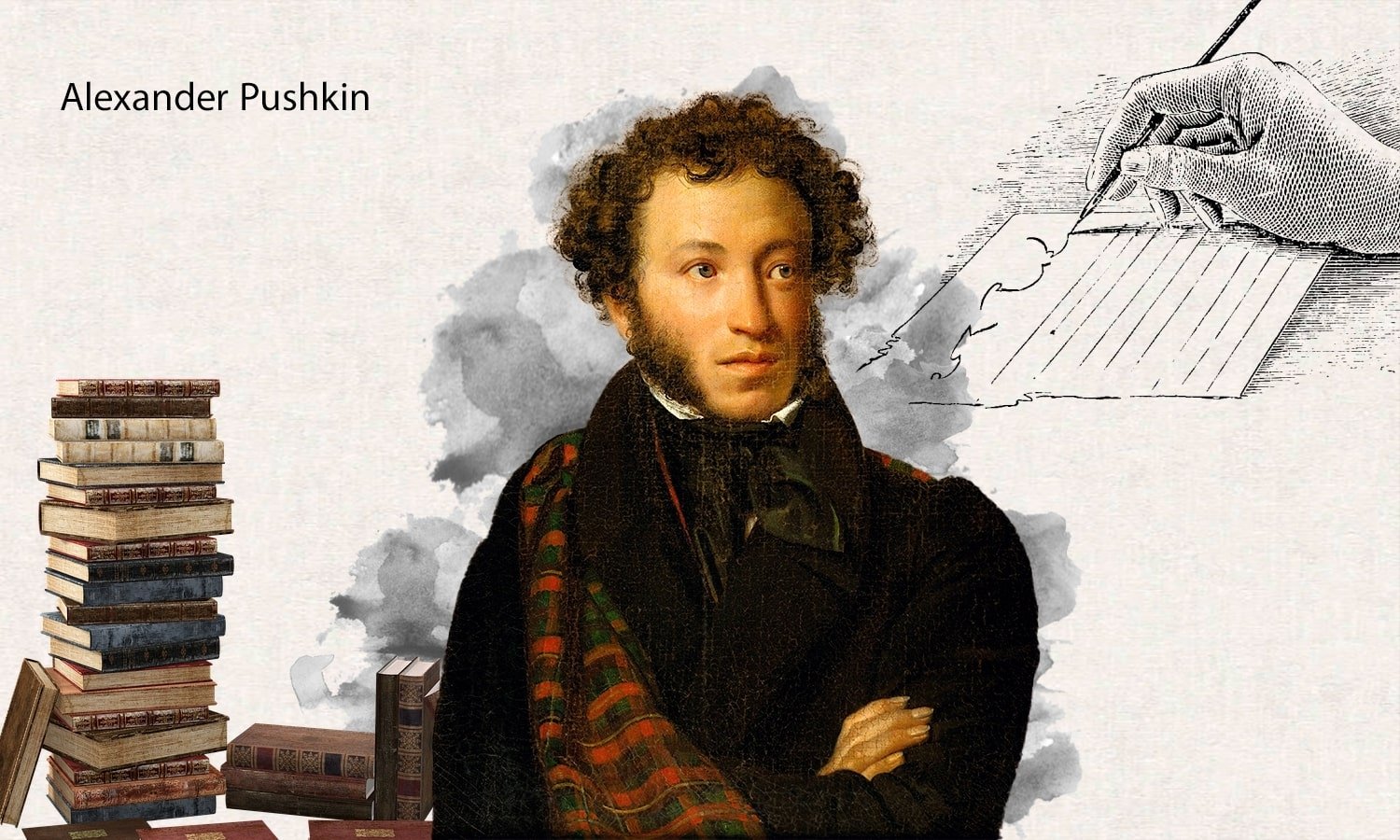
In the course of the formation and development of Russian literature, Alexander Sergeyevich Pushkin is regarded as a pivotal figure who ushered in the era of modern Russian literature in terms of language, artistic thinking, and national consciousness. Before Alexander Pushkin, Russian literature was still deeply influenced by European models, particularly French literature; after Pushkin, it found its own distinct voice – one that was closely connected to national life while also reaching the universal stature of world literature.
Pushkin was not only an outstanding poet but also a versatile writer with the ability to work across a wide range of genres. Within his body of work, Romantic spirit, realist awareness, and classical thinking coexist, forming a balanced, mature style with enduring vitality. His works vividly reflect Russian society of the nineteenth century while simultaneously raising timeless issues such as individual freedom, honor, moral responsibility, and the complex relationship between human beings and power.
As a foundational figure, Pushkin not only exerted profound influence on later generations of Russian writers such as Gogol, Turgenev, Tolstoy, and Dostoevsky, but also contributed to placing Russian literature on the map of world literature. Studying Pushkin’s life, career, and legacy is therefore not merely an exploration of a great talent, but also a key to understanding the nature and depth of modern Russian literature.
1. Brief Introduction to the Author
Alexander Sergeyevich Pushkin was born on June 6, 1799, in Moscow, into a Russian noble family with strong cultural and intellectual traditions. His father, Sergey Lvovich Pushkin, was well-versed in French literature and owned an extensive library, while his mother, Nadezhda Ossipovna Gannibal, was the granddaughter of Abram Petrovich Gannibal – a man of African origin who was adopted and highly esteemed by Tsar Peter the Great. This distinctive family background not only shaped Pushkin’s unique identity but also profoundly influenced his historical awareness, spirit of freedom, and multidimensional perspective on human destiny.
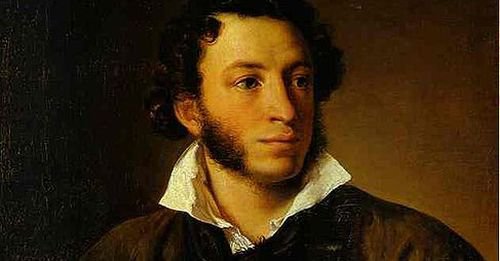
From an early age, Pushkin was exposed to multiple cultures. He became fluent in French before mastering Russian and was introduced early to classical Greek and Roman literature as well as Enlightenment thought in Europe. However, it was the living Russian language, folk tales, and songs sung by family nannies that ultimately nurtured his aesthetic sensibility and national spirit, which later became central to his literary creation.
In 1811, Pushkin enrolled at the Tsarskoye Selo Lyceum, one of the most prestigious educational institutions in the Russian Empire, dedicated to training future intellectuals and state officials. This period played a decisive role in shaping his character and literary talent. In this environment, Pushkin quickly demonstrated exceptional poetic ability, attracting the attention of teachers and contemporary literary circles. His works from the Lyceum years already revealed a fresh, free, and highly individual voice, clearly distinct from the conventional and formulaic poetry of the time.
After graduation, Pushkin entered public life as a young intellectual filled with aspirations for freedom. His early poems and writings soon expressed a critical view of society and a strong concern for justice and human fate, making him a subject of surveillance by the Tsarist authorities. During various periods, Pushkin was exiled or forced to live away from major cultural centers; however, these years allowed him to engage more deeply with the realities of Russian life, enriching his experience and deepening his intellectual outlook.
Pushkin’s life was also marked by numerous personal upheavals, including complex social relationships, conflicts of honor, and pressure from both the authorities and public opinion. In 1837, he died following a tragic duel, bringing an early end to a short life that nonetheless left an irreplaceable mark on Russian literary history. Although he lived only thirty-seven years, Pushkin succeeded in laying a solid foundation for modern Russian literature and became a standard against which later generations would measure themselves.
2. Literary Career
Although Alexander Pushkin’s literary career lasted little more than two decades, it encompassed an exceptionally wide range of genres and brought about a fundamental turning point in the development of Russian literature. From his earliest works, Pushkin demonstrated a clear awareness of the writer’s role as an independent creative subject, rather than a mere imitator of existing Western aesthetic models.
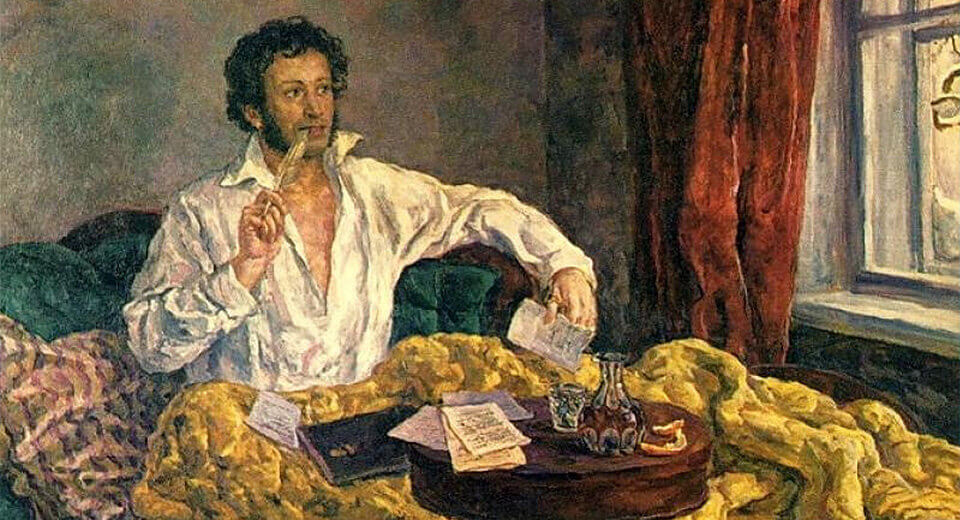
The early stage of Pushkin’s career was closely associated with lyric poetry and narrative poems imbued with a Romantic spirit. Influenced by French literature and especially by George Gordon Byron, his works from this period strongly expressed the individual self, a longing for freedom, and a rebellious attitude toward the constraints of Tsarist feudal society. Unlike the extremism often found in Western Romanticism, however, Pushkin soon showed a tendency toward emotional restraint, seeking harmony between reason and emotion, and between the individual and the community.
From the 1820s onward, Pushkin’s literary career entered a mature phase. He gradually shifted his focus from purely lyrical poetry to more complex narrative forms such as the novel in verse, historical drama, and prose fiction. The creation of Eugene Onegin marked a major milestone not only in Pushkin’s personal career but also in the history of Russian literature as a whole. The work introduced a new type of character – the modern intellectual, lonely, skeptical, and disoriented – which later became a recurring model in many major literary works.
Alongside the novel in verse, Pushkin devoted considerable effort to drama and prose. Historical plays such as Boris Godunov demonstrate his deep political thinking and historical consciousness, as well as his aspiration to build a distinctly Russian dramatic tradition independent of classical European models. In short stories and prose fiction, Pushkin displayed a concise and precise narrative style rich in psychological depth, laying the groundwork for nineteenth – century Russian realism.
A defining feature of Pushkin’s literary career is his continuous process of self-renewal. He consistently experimented with different forms of expression – from lyric poetry and narrative verse to historical prose – while constantly adjusting his artistic views in response to life experience and social context. As a result, Pushkin’s works not only reflect the personal development of a great writer but also parallel the major transformations of Russian society in his time.
Overall, Pushkin’s literary career represents a journey from reception to creation, from imitation to independence. He left behind not only works of lasting value but also established artistic and linguistic standards that paved the way for the flourishing of Russian literature in the latter half of the nineteenth century.
3. Artistic Style and Thought
Alexander Pushkin’s artistic style is widely regarded as one of the most complete and enduring models in Russian literature. In his work, classical, Romantic, and realist elements do not exist as isolated fragments but are harmonized into a balanced, cohesive whole marked by strong artistic discipline. He placed particular emphasis on clarity, precision, and naturalness of language, avoiding excessive ornamentation, emotional display, or rhetorical excess.
A key characteristic of Pushkin’s style is his ability to control emotion and exercise restraint in expression. Whether writing about love, freedom, honor, or personal tragedy, he consistently maintained the necessary artistic distance between the author and the subject. This restraint creates intellectual depth, allowing readers to reflect independently rather than being directly guided by emotion. As a result, Pushkin’s works have not aged with time and continue to retain lasting aesthetic value.
In terms of thought, Pushkin was deeply concerned with individual freedom and human dignity. However, freedom in his writing is not radical or confrontational in nature; instead, it is closely linked to moral responsibility and social awareness. Many of his characters face decisive choices, in which each action carries ethical, social, and historical consequences. Through these situations, Pushkin raises questions about the boundary between individual aspiration and collective order.
Humanism constitutes the central axis of Pushkin’s entire body of work. He approached human beings with profound empathy, including characters who are flawed, weak, or unsuccessful. Rather than judging or condemning them, Pushkin sought to understand their motives, circumstances, and limitations within specific historical conditions. This approach paved the way for the strong development of psychological realism in later Russian literature.
In addition, Pushkin demonstrated a mature historical consciousness and political awareness. He viewed history not as a series of dry events, but as a living space shaped by human beings and marked by conflicts of power, ethics, and responsibility. In his historical works, Pushkin avoided simplistic idealization or condemnation, opting instead for a multidimensional, objective, and reflective perspective.
Overall, Pushkin’s artistic style and thought reflect the early maturity of a great intellect. He not only renewed the forms and language of Russian literature but also established a standard of artistic thinking in which beauty is inseparable from truth, freedom is paired with responsibility, and creativity is always accompanied by deep humanistic awareness.
4. Legacy and Contributions
Alexander Pushkin’s legacy and contributions to Russian literature are foundational and long-lasting, extending far beyond the scope of an individual career. Before Pushkin, Russian literature was still searching for its identity, heavily influenced by foreign linguistic and aesthetic models. With Pushkin, Russian literature for the first time established a relatively complete system of standards in language, genre, and artistic thinking, laying the groundwork for the brilliant literary achievements of the nineteenth century.
Pushkin’s most significant contribution lies in the formation and standardization of modern literary Russian. He skillfully combined everyday language and folk speech with written literary tradition, eliminating the heaviness and rigidity of Church Slavonic and reducing the excessive intrusion of French used by the nobility. As a result, literary Russian became clear, expressive, and capable of conveying the full range of social life. This linguistic standard was quickly adopted and developed by subsequent generations of writers.
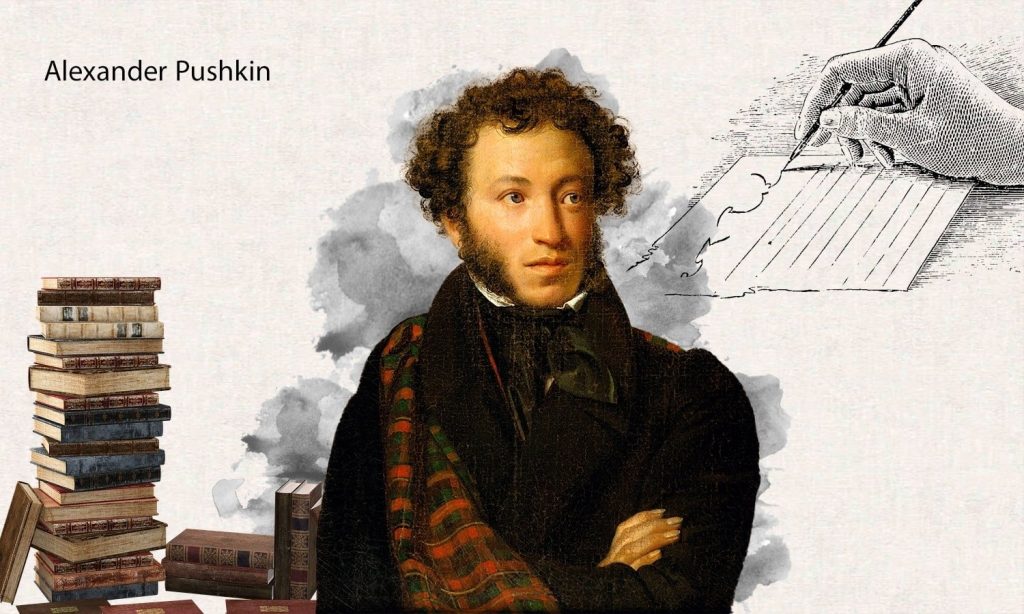
Beyond language, Pushkin also laid the foundation for several major literary genres. The novel in verse, realist short fiction, historical drama, and Russian prose fiction all bear the direct influence of his artistic experiments and achievements. Many character types created by Pushkin – especially the lonely, skeptical, and disoriented intellectual – became starting points for major works by Gogol, Turgenev, Tolstoy, and Dostoevsky.
Pushkin’s influence extended beyond literature into other artistic fields. Many of his works were adapted into operas, stage plays, ballets, and films, becoming an integral part of Russian cultural life. Through these adaptations, Pushkin’s ideas and artistic imagery have continued to be reinterpreted, renewed, and made accessible to contemporary audiences.
On the international level, Pushkin is regarded as a vital bridge through which Russian literature entered the global literary landscape. Translations of his works have introduced the Russian soul, history, and spiritual life to readers around the world. Many scholars consider Pushkin a writer deeply rooted in national culture yet capable of achieving universality, where the specific concerns of Russia are framed within questions shared by humanity as a whole.
Overall, Pushkin’s legacy lies not only in individual works but also in the artistic and intellectual value system he established. He became a reference point for modern Russian literature and a symbol of creative freedom, social responsibility, and the historical role of the artist. It is this enduring legacy that secures Pushkin’s special place in Russian cultural memory and in the history of world literature.
5. Major Works
Within Pushkin’s literary career, several works can be identified as particularly representative, both reflecting his artistic style and holding an important position in world literary history.
- Eugene Onegin (1823–1831) is widely regarded as Pushkin’s greatest masterpiece. Written as a novel in verse, it portrays Russian society in the early nineteenth century through the lives of young, educated, and lonely individuals. The work not only revolutionized the form of the novel but also laid the foundation for psychological realism in Russian literature.
- Boris Godunov (1825) is a significant historical drama that depicts the tragedy of power and political responsibility. Through the character of Boris, Pushkin raises questions about legitimacy, morality, and the cost of power, demonstrating his profound political and philosophical insight.
- The Queen of Spades (1834) is a famous short story combining realist, psychological, and fantastic elements. The work exposes human greed, obsession, and moral decay in modern society, while showcasing Pushkin’s mastery of concise and effective storytelling.
- The Captain’s Daughter (1836) is Pushkin’s final historical novel, depicting the Pugachev Rebellion and the social upheavals of eighteenth-century Russia. The work is distinguished by its balanced, non-extreme perspective, clearly reflecting Pushkin’s mature humanism and historical vision.
Overall, Pushkin’s major works represent not only the pinnacle of his individual achievement but also key milestones in the development of world literature. They affirm his position as a foundational writer who opened the path for Russian literature to enter its golden age.
6. Conclusion
Reviewing the life and literary career of Alexander Sergeyevich Pushkin, it can be affirmed that he was not only a great writer but also the architect of modern Russian literature. Within a relatively short creative period, Pushkin succeeded in establishing core standards of language, genre, and artistic thinking, effecting a fundamental transition from imitation to independent creation in Russian literature.
Pushkin’s lasting value does not lie in the quantity of his works but in the depth of his influence. From standardizing literary Russian and expanding genre boundaries to addressing universal issues such as freedom, responsibility, human dignity, and the relationship between the individual and history, Pushkin created a durable system of artistic values. This system has continued to be inherited, developed, and reexamined by later generations of writers.
Within the broader panorama of world literature, Pushkin occupies a position as a figure of intersection between national identity and universal human spirit. His works are deeply rooted in Russian history and culture while engaging with concerns shared by people across time and place. This harmonious integration has enabled Pushkin to transcend spatial and temporal boundaries, securing his lasting presence in humanity’s cultural memory.
It can be said that studying Pushkin is not only an exploration of a great writer but also a means of gaining deeper insight into the origins of modern Russian literature and the role of literature in shaping thought, language, and social consciousness. With his foundational contributions, Alexander Pushkin deserves recognition as one of the central pillars of world literary history.