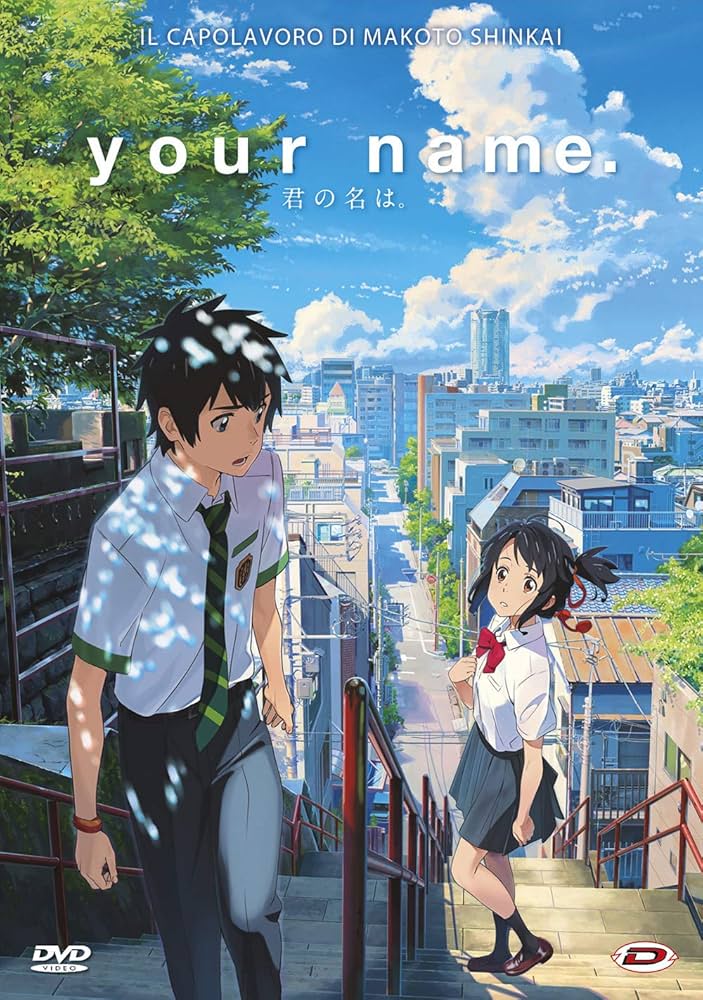
In the era of globalization in popular culture, the boundaries between artistic forms have become increasingly fluid. Japanese manga, anime, and novels are no longer perceived merely as region-specific entertainment products; instead, they have emerged as cultural texts with international reach, actively participating in global discourses on humanity, society, and existence. It is within this context that Your Name (Kimi no Na wa) by Makoto Shinkai appears as a significant milestone, marking a stage of maturity in both artistic vision and narrative capability within contemporary Japanese anime.
First released in 2016, Your Name quickly transcended the conventional framework of an animated feature film to become a global cultural phenomenon. The success of the work cannot be measured solely by box office revenue or the number of novel copies sold, but is also evident in the extensive discussions it generated among critics, scholars, and international readerships. The work has been received as a story that is both universal in its appeal and deeply imbued with Japanese cultural identity, where traditional and modern elements coexist within a tightly constructed narrative structure.
What distinguishes Your Name is its harmonious integration of fantasy and science-fiction elements with profound philosophical and humanistic concerns. Through the story of body swapping, temporal dislocation, and fragmented memory, Makoto Shinkai raises fundamental questions about existence and about human connections in an increasingly fragmented modern world. This is not a love story built upon familiar narrative formulas, but a multilayered structure in which emotion, memory, and fate are intricately interwoven.
From the perspective of literary and cultural studies, Your Name can be regarded as an interdisciplinary text situated at the intersection of cinema, literature, and Eastern philosophical thought. The work not only reflects the collective consciousness of contemporary Japanese youth, but also addresses issues of global relevance, allowing readers and viewers from diverse cultural backgrounds to find points of resonance and dialogue.
For these reasons, approaching Your Name as an object of literary and artistic analysis is necessary in order to clarify its ideological values, artistic achievements, and lasting influence within the flow of modern popular culture.
1. Introduction to the Author and the Work
1.1. Makoto Shinkai – A Representative Voice of Contemporary Japanese Anime
Makoto Shinkai (新海誠, born 1973) is one of the most influential directors, screenwriters, and novelists in Japanese anime of the twenty-first century. He belongs to a generation of artists who matured during a period when anime began a decisive transformation – from a purely entertainment-driven model to a form of artistic expression characterized by intellectual depth and a strong sense of personal authorship.
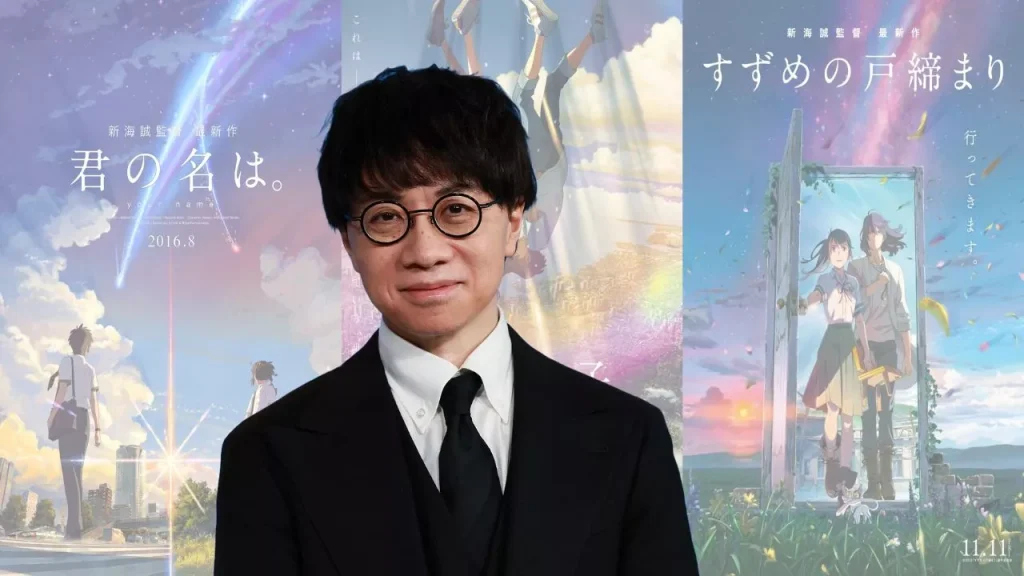
Beginning his career with independent animation projects produced on limited budgets, Makoto Shinkai quickly attracted attention for his meticulous visual style and contemplative narrative approach. Early works such as Voices of a Distant Star (2002) and The Place Promised in Our Early Days (2004) clearly established the recurring themes that would define his oeuvre: spatial and temporal distance, separation, memory, and the loneliness of individuals in modern society.
Throughout his career, Shinkai has persistently explored existential issues while situating them within the context of ordinary, everyday life. His characters are typically ordinary individuals without heroic destinies, yet they confront profound internal conflicts brought about by changes in time and circumstance. This artistic choice enables Shinkai’s works to evoke broad resonance, transcending cultural and national boundaries.
1.2. Your Name in Makoto Shinkai’s Creative Trajectory
Released in 2016, Your Name (Kimi no Na wa) is widely regarded as a major turning point in Makoto Shinkai’s career. While his earlier works tended toward slower pacing, introspective monologues, and a subdued emotional tone, Your Name demonstrates a clear shift in narrative structure: a more tightly constructed plot, faster tempo, and greater accessibility to a broad audience, while still preserving the intellectual depth characteristic of the author.
The work was released simultaneously in two forms: an animated feature film and a novel written by Shinkai himself. The novel version is not merely a straightforward adaptation, but rather an expansion of the characters’ inner worlds, adding layers of meaning that cinematic time constraints cannot fully convey. As a result, Your Name exists as a cross – media work, belonging to the realm of cinema while also standing as an independent literary text.
In terms of genre, Your Name represents a fusion of romance, fantasy, science fiction, and traditional Japanese spiritual elements. Concepts such as body swapping, temporal displacement, and intervention in historical timelines are not deployed for scientific explanation alone, but to foreground humanistic concerns: personal identity, memory, connection, and the meaning of existence in human life.
1.3. The Position of Your Name in Japanese Popular Culture
Beyond being a personal success for Makoto Shinkai, Your Name is widely regarded as a landmark phenomenon in contemporary Japanese anime. The work helped reshape the prevailing perception that anime caters only to a limited audience, affirming its capacity to convey universal stories that are accessible yet intellectually substantial.
Moreover, Your Name demonstrates how Shinkai reconciles tradition and modernity. Elements associated with Shinto beliefs, family rituals, and the relationship between humans and nature are juxtaposed with urbanization, modern lifestyles, and the sense of alienation experienced by younger generations. This synthesis allows the work to retain a strong Japanese cultural identity while remaining open to global dialogue.
From a critical standpoint, Your Name can be seen as a culmination of the defining features of Makoto Shinkai’s artistic style, marking a stage of maturity in his creative vision. This foundation is essential for understanding the work’s enduring influence within contemporary cultural life and in anime and literary studies.
2. Summary of the Plot
The narrative of Your Name unfolds across two parallel spatial and temporal dimensions, representing two seemingly contrasting worlds: the tranquil rural town of Itomori and the bustling modern metropolis of Tokyo. The central characters are Mitsuha Miyamizu, a high school girl living with her family at a Shinto shrine in Itomori, and Taki Tachibana, a high school boy studying and working part-time in Tokyo.
Mitsuha feels constrained by the closed nature of rural life, repetitive traditional rituals, and the social expectations tied to her position. In contrast, Taki lives within the fast-paced rhythm of urban modernity, balancing school, part-time work, and fleeting social relationships. The two characters share no direct connection – until a mysterious phenomenon occurs: they begin randomly swapping bodies during their sleep.
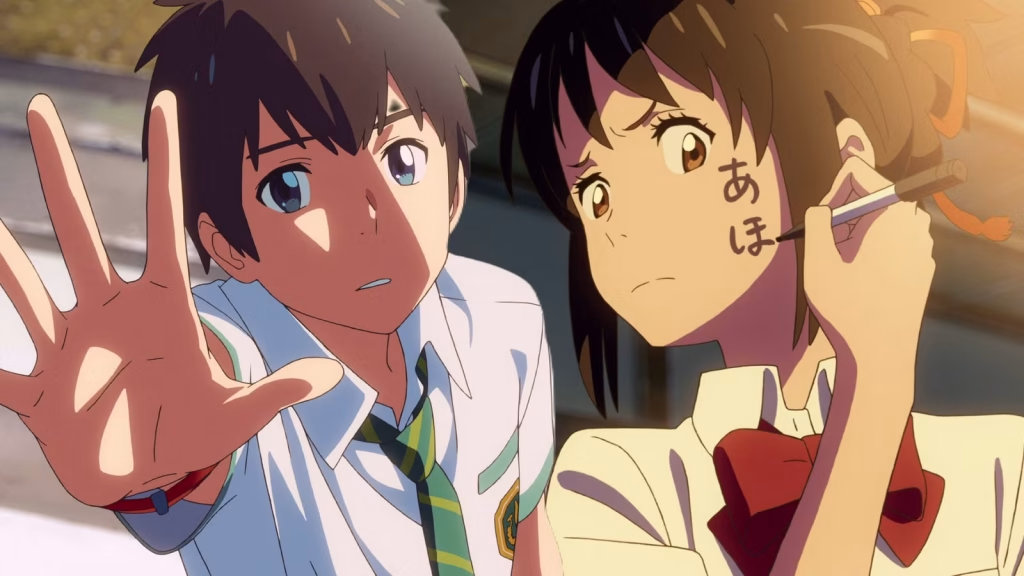
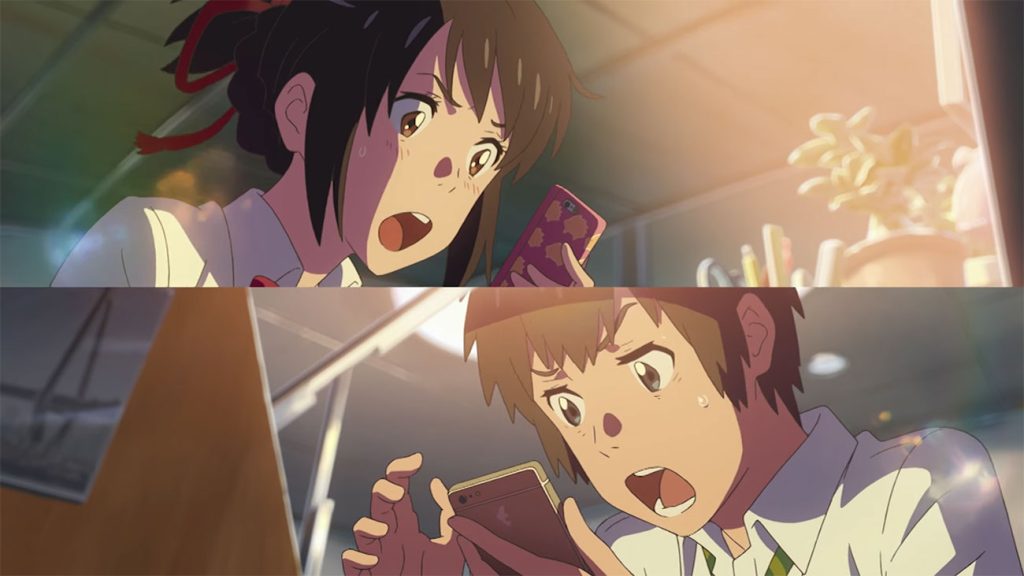
The early phase of Your Name unfolds with a relatively gentle rhythm, focusing on the characters’ process of adapting to this extraordinary situation. Mitsuha and Taki, inhabiting each other’s bodies, must learn to survive in unfamiliar environments – from maintaining family and social relationships to preserving personal identity in front of others. To avoid chaos, they leave detailed notes on phones, notebooks, and even on their bodies, creating an indirect yet effective mode of communication.
Through these exchanges, Mitsuha and Taki gradually intervene in each other’s lives in constructive ways. Mitsuha helps Taki become more confident and socially open, while Taki assists Mitsuha in confronting familial and communal pressures. Despite never having met in person, a strong spiritual bond forms between them, surpassing the initial curiosity surrounding the supernatural phenomenon.
A major turning point occurs when the body-swapping suddenly ceases. In an effort to find Mitsuha, Taki travels to Itomori, only to uncover a shocking truth: the town was completely destroyed by a meteorite three years prior to his present timeline. This revelation means that Mitsuha and many of Itomori’s residents perished, and that the body swaps had in fact occurred between two individuals living in different points in time.
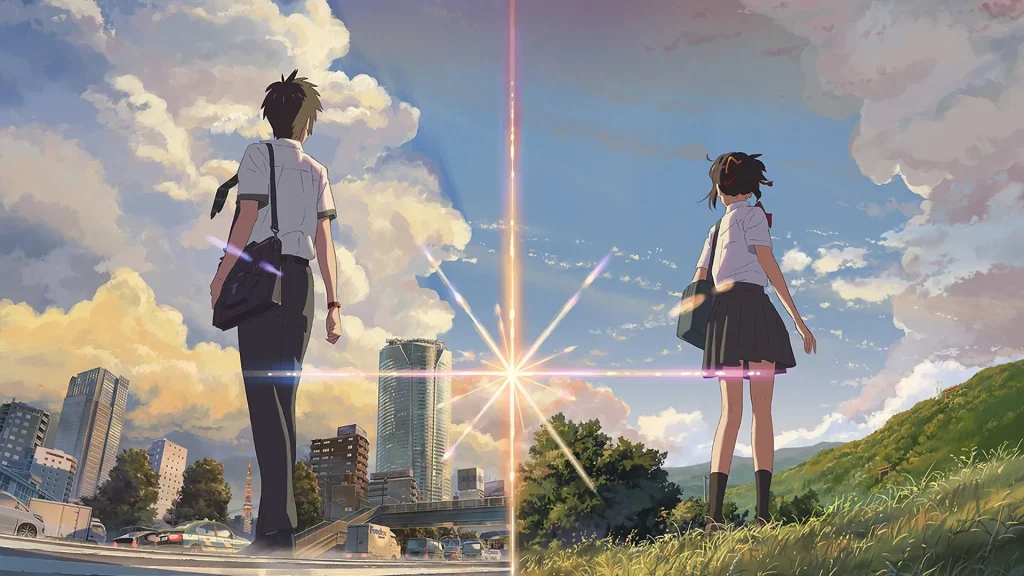
From this moment, Your Name moves into a more complex narrative layer, as the initial romantic premise gives way to a story centered on time, memory, and the possibility of altering fate. Through a traditional ritual associated with Mitsuha’s family, Taki attempts to return to the past to warn her of the impending disaster. Their brief encounter at the twilight moment – when day and night, and two timelines, overlap -becomes the narrative’s crucial node.
After this encounter, memories of each other gradually fade from both characters’ minds. Names, faces, and shared experiences become indistinct, yet a persistent sense of absence remains, haunting and inexplicable. Years later, as adults living in the same city, Mitsuha and Taki continue to feel an unconscious urge to search for something they have lost.
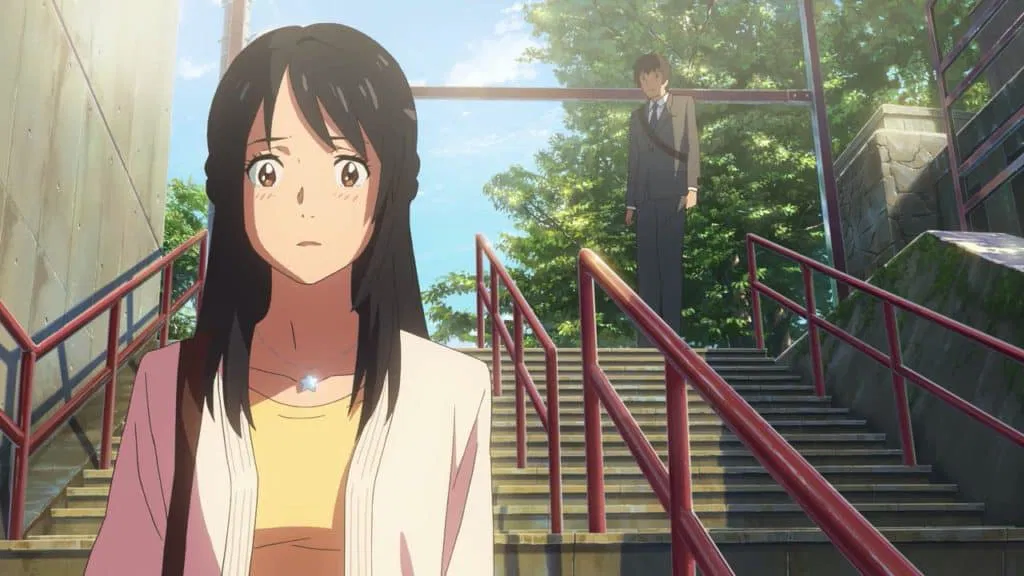
The story concludes with a chance meeting on a staircase, where both recognize an unnameable familiarity and pose the symbolic question: “What is your name?” This ending not only closes a narrative arc but also opens a broad interpretive space concerning memory, identity, and human connection, consistent with the core spirit of Your Name.
3. Themes and Ideas
3.1. Time as a Non-Linear Structure
One of the central conceptual pillars of Your Name is its redefinition of time. Rather than treating time as a linear, immutable flow from past to future, Makoto Shinkai constructs time as a non-linear structure in which moments can overlap, diverge, and interact.
The body-swapping phenomenon between Mitsuha and Taki functions not merely as a fantasy element, but as a narrative mechanism that disrupts conventional temporal order. The fact that the two characters exist in different time periods yet influence each other raises questions about the relativity of past and present. In Your Name, the past is not sealed off; it persists as a realm that can be accessed and reshaped through human action and choice.
This temporal conception aligns closely with Eastern philosophical views, where time is often understood as cyclical rather than strictly linear. Such an approach contributes to the film’s philosophical depth, elevating it beyond the framework of a conventional fantasy narrative.
3.2. Memory and Personal Identity
Memory in Your Name is not merely a repository of experiences, but a foundational element in the construction of personal identity. The gradual loss of memory between Mitsuha and Taki – even the forgetting of each other’s names – demonstrates the intimate connection between memory and existence.
However, the work does not equate identity with memory in absolute terms. Even as concrete memories fade, a sense of absence – a kind of invisible trace – persists within the characters’ consciousness. This suggests that identity is shaped not only by what can be recalled, but also by experiences embedded deeply within the unconscious.
Through its treatment of memory, Your Name raises a fundamental ontological question: if memories can disappear, can human bonds still endure? The work’s response lies not in rational logic, but in the persistent presence of emotional attachment that transcends forgetting.
3.3. Fate and the Role of Human Choice
The concept of fate in Your Name is developed in an open-ended manner, avoiding rigid determinism. The meteorite strike on Itomori is presented as a disaster seemingly inscribed in the timeline, yet human responses to the event reveal the possibility of intervention and change.
Through the actions of Taki and Mitsuha, the work emphasizes that fate is not an unalterable decree, but the outcome of interaction between objective circumstances and subjective choice. Warning and evacuating the town does not deny the existence of fate; rather, it demonstrates humanity’s capacity to reshape its consequences.
At this level, Your Name underscores individual responsibility within historical flow and collective destiny. Even small choices can generate significant transformations, altering the trajectory of the future.
3.4. Human Connection in Modern Society
Another persistent theme in Your Name is the nature of human connection in modern society. Despite living in an era defined by advanced technology, rapid communication, and expansive urban spaces, the characters confront feelings of isolation and alienation.
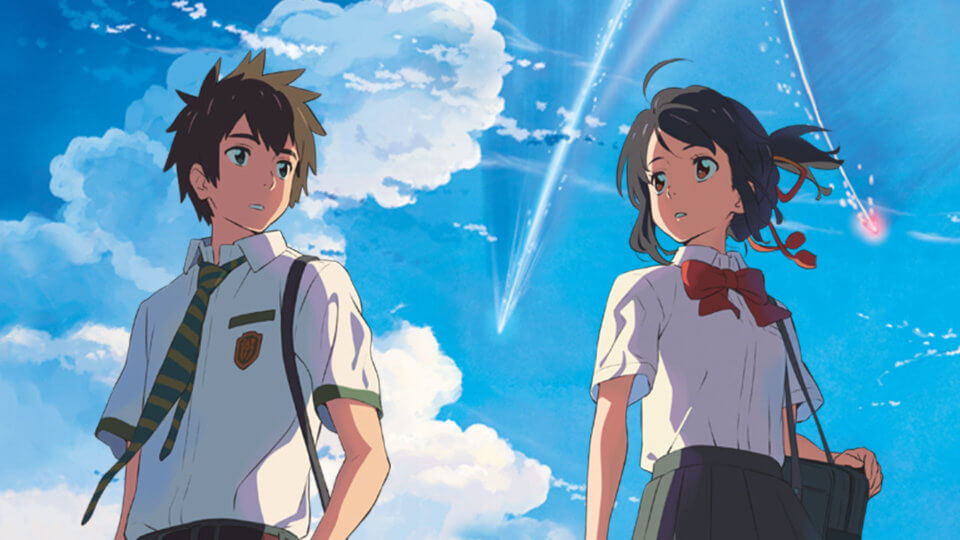
The bond between Mitsuha and Taki – formed without direct physical contact or conventional communication – serves as a metaphor for humanity’s longing for genuine connection. This bond transcends spatial, temporal, and communicative constraints, existing as a fundamental existential need.
In this way, Your Name reflects a paradox of modern life: while communication has become easier, deep understanding remains elusive. The work suggests that authentic connection arises not from the quantity of interactions, but from the depth of mutual resonance.
3.5. Tradition and Modernity in the Ideological Structure
Finally, Your Name illustrates the reconciliation of tradition and modernity within Makoto Shinkai’s artistic vision. Shinto rituals, beliefs in spiritual bonds, and cyclical conceptions of time are placed alongside contemporary urban life, forming a multilayered ideological structure.
This synthesis is neither nostalgic nor confrontational, but rather reflects an effort to find balance between cultural roots and modern existence. Through this approach, Your Name affirms that tradition need not hinder modernity, but can instead provide a foundation for self-understanding in a rapidly changing world.
4. Value and Influence
4.1. Artistic Value in Narrative Structure and Visual Expression
One of the most notable strengths of Your Name lies in its ability to organize a complex narrative structure while remaining accessible to a broad audience. Makoto Shinkai employs a multilayered storytelling model that interweaves everyday realism with fantasy elements, resulting in a plot that is both cohesive and flexible. The controlled interlacing of timelines, spaces, and narrative perspectives allows the story to progress in surprising yet coherent ways.
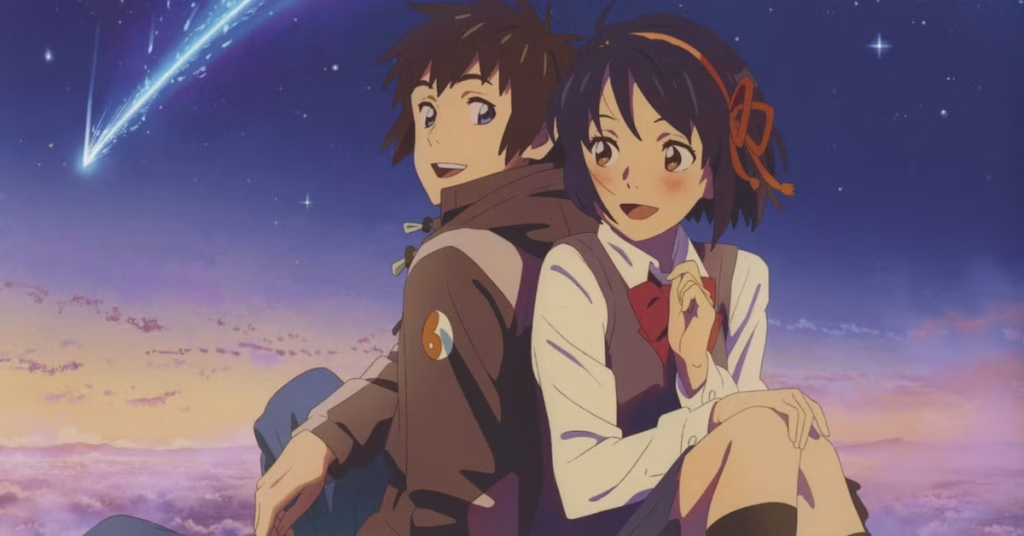
Visually, Your Name demonstrates a high level of aesthetic refinement in its depiction of space. Modern Tokyo is rendered with remarkable detail, reflecting the fast-paced, fragmented rhythm of contemporary society. In contrast, the town of Itomori is portrayed as tranquil and nature-oriented, embodying tradition and continuity. Space thus functions not merely as setting, but as a narrative component that illuminates the characters’ internal conflicts.
4.2. Music and Narrative Rhythm
Music plays a particularly significant role in shaping the rhythm and emotional flow of Your Name. Songs and background scores are strategically placed at key narrative junctures, enhancing continuity between visual imagery and narrative progression.
Rather than serving as simple accompaniment, music operates as a supplementary narrative language. This integration allows Your Name to maintain a flexible rhythm, smoothly transitioning between quiet, everyday scenes and decisive moments of dramatic intensity.
4.3. Cultural Value and Japanese Identity
Beyond its artistic achievements, Your Name holds special significance in its transmission and reinterpretation of Japanese cultural identity. The work incorporates Shinto elements, family rituals, and human–nature relationships in a natural, understated manner.
Concepts such as “musubi” (binding connection), cyclical time, and intergenerational bonds form the ideological foundation guiding the characters’ actions and decisions. Through these elements, Your Name demonstrates how traditional culture can continue to exist and adapt within modern contexts rather than being discarded or positioned in opposition to contemporary life.
4.4. Influence on Anime and Global Popular Culture
Upon its release, Your Name rapidly exerted a profound influence on the anime industry and global popular culture. The work expanded the audience for anime, attracting not only those familiar with Japanese culture but also first-time viewers of the medium.
The success of Your Name highlights the potential of anime to tell universally resonant stories that transcend linguistic and cultural barriers. It stands as a clear example of how popular appeal and artistic depth can coexist, paving the way for subsequent anime projects with global aspirations.
4.5. Academic Value and Interdisciplinary Research Potential
From a scholarly perspective, Your Name represents a rich subject for interdisciplinary approaches, encompassing literature, film studies, philosophy, and cultural studies. Themes such as non-linear time, memory, fate, and personal identity allow the work to be analyzed through diverse theoretical frameworks, from narratology to existential philosophy.
The openness of its ideological structure enables Your Name to sustain long-term relevance, not only within entertainment but also within academic discourse. Rather than closing with a single definitive message, the work invites multiple interpretations, fostering ongoing dialogue among readers, viewers, and scholars.
5. Conclusion
From the standpoint of literary and cultural studies, Your Name can be regarded as one of the most representative works of contemporary Japanese anime, embodying the qualities of a cultural product that is both widely accessible and intellectually profound. Through a complex yet coherent narrative structure, Makoto Shinkai constructs a story that transcends the conventions of romantic fantasy to address fundamental questions of modern human existence.
Throughout the work, themes of non-linear time, memory, fate, and human connection are developed consistently and systematically. The fantasy elements do not serve merely to generate dramatic effect, but function as cognitive tools that illuminate core questions of personal identity and existential meaning in an ever-changing world. This synthesis enables Your Name to retain universal relevance and to engage diverse audiences in meaningful dialogue.
In addition to its conceptual depth, Your Name leaves a strong imprint in artistic and cultural terms. The integration of visually refined imagery, purposefully employed music, and traditional Japanese cultural elements results in a harmonious whole that helps define Makoto Shinkai’s distinctive artistic style. The work demonstrates that anime is fully capable of functioning as a serious mode of artistic expression, capable of addressing major issues of contemporary society.
In terms of influence, Your Name not only marks a turning point in Makoto Shinkai’s career, but also enhances the global standing of Japanese anime within popular culture. It stands as evidence of the power of storytelling to connect cultures through narratives that speak to shared human experiences beyond geographic and linguistic boundaries.Overall, Your Name deserves recognition as a work of enduring value – not only as entertainment, but also as a significant object of study in literature, film, and cultural analysis. Through its contributions to narrative thinking, thematic depth, and wide-ranging influence, Your Name occupies an important position in the development of contemporary anime and remains a fertile subject for future critical inquiry.