Over the past several decades, programming has evolved from a purely technical activity into a complex professional field, where thinking ability, responsibility, and adaptability are just as important as technological knowledge. Amid the constant emergence – and rapid obsolescence – of programming languages, frameworks, and tools, the need for enduring principles capable of transcending technological change has become more urgent than ever. It is within this context that The Pragmatic Programmer emerges as a guiding work, prompting a fundamental question: what truly defines a professional programmer?
Unlike the majority of technical books that focus primarily on “how to write code,” The Pragmatic Programmer approaches programming as a profession with depth, requiring systems thinking, a strong sense of responsibility, and professional maturity. Rather than offering ready-made formulas or universal solutions, the book encourages readers to cultivate a pragmatic, flexible mindset that adapts to the real-world context of each software project.
What distinguishes The Pragmatic Programmer is its independence from any particular technology or short-lived trend. The principles presented in the book address the enduring essence of software development: how humans interact with source code, complex systems, and their own limitations. As a result, despite being first published at the end of the twentieth century and later updated for the modern technological era, the book has retained its influence and continues to serve as a valuable reference for the global programming community.
With this standing, The Pragmatic Programmer is regarded not merely as a technical manual, but as a foundational text on professional thinking – one that helps shape the standards of the modern programmer in an ever-changing technological landscape.
1. Introduction to the Authors and the Work
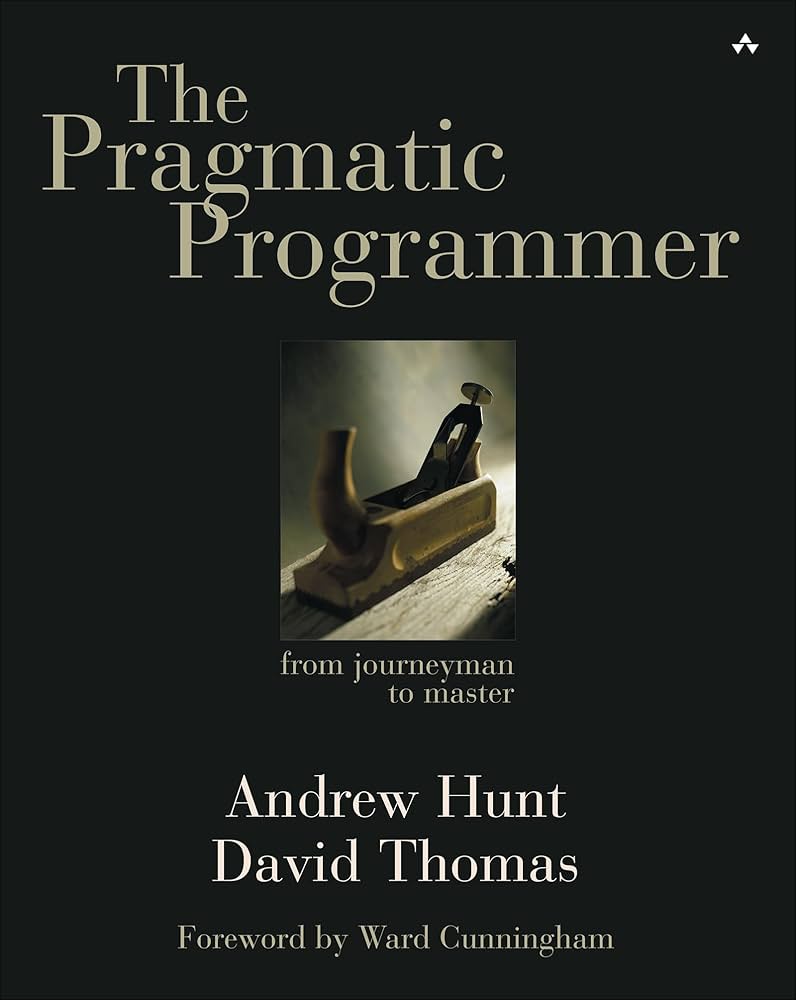
The Pragmatic Programmer is a seminal work by Andy Hunt and Dave Thomas, two figures with profound influence in modern software development and software engineering. Both authors are not only writers but also seasoned practitioners who have directly participated in building, operating, and improving software systems in real industrial environments. This strong practical foundation lends depth and credibility to the arguments presented throughout the book.
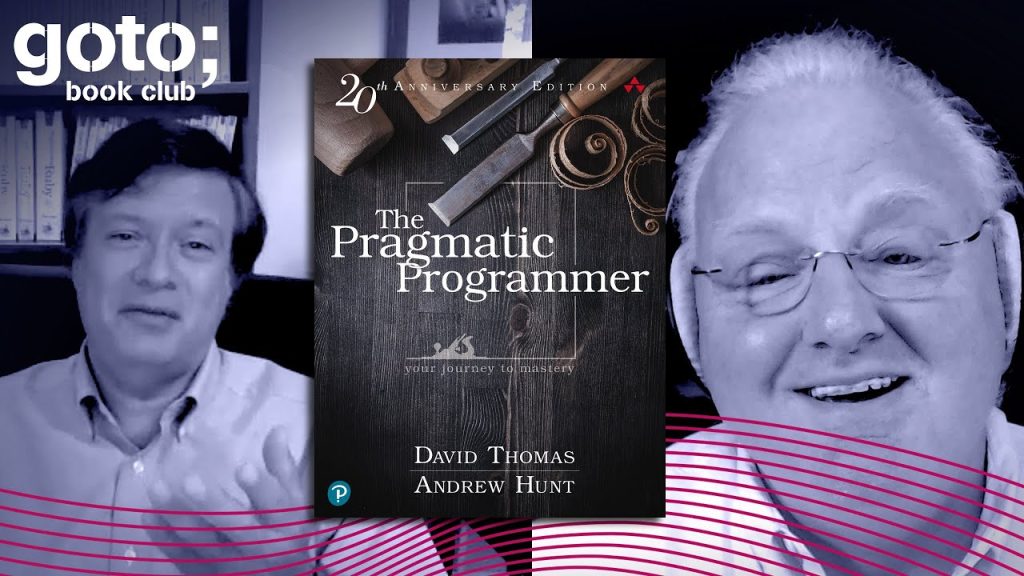
Andy Hunt is widely recognized as a software engineer, speaker, and thought leader who has played a significant role in shaping agile software development thinking. He is one of the signatories of the Agile Manifesto, a foundational document that emphasizes adaptability, collaboration, and human values in software development. In addition, Andy Hunt has extensive experience in consulting, training, and leading software development teams, giving him a comprehensive perspective on the recurring challenges faced in real – world projects.
Dave Thomas is a software engineer, technology entrepreneur, and experienced author who has contributed to the development of large-scale systems across various domains. He is highly regarded for his ability to connect software architecture, development processes, and human factors within organizations. Dave Thomas has also been a pioneer in promoting flexible working methodologies and design principles that emphasize system sustainability.
Together, Hunt and Thomas co-founded The Pragmatic Bookshelf, a publishing house specializing in technical and software development books. The publisher is known for its philosophy of prioritizing practical value and depth of thinking over short-term technological trends – a philosophy clearly reflected in The Pragmatic Programmer itself.
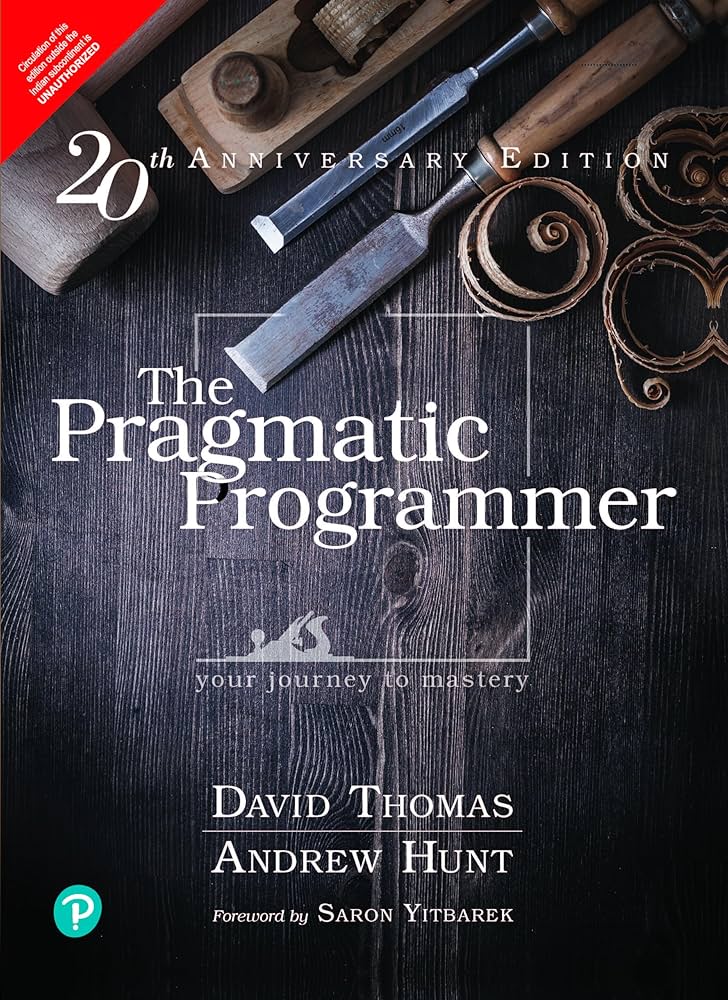
The Pragmatic Programmer was first published in 1999, at a time when the software industry was experiencing rapid growth in new technologies and methodologies. Rather than focusing on a specific technology, Hunt and Thomas adopted a generalized approach centered on foundational principles with long-term applicability. The 20th Anniversary Edition not only updates examples and terminology to suit the modern era but also demonstrates the enduring relevance of the book’s core ideas.
In terms of academic and professional standing, The Pragmatic Programmer is often grouped with classic works such as Code Complete, Clean Code, and Design Patterns. However, its distinction lies in the fact that it does not function as a detailed technical manual, but rather as a cognitive map for professional development—guiding programmers in how to think, make decisions, and grow over the long term.
Through a combination of practical experience, systems thinking, and concise presentation, Andy Hunt and Dave Thomas have established The Pragmatic Programmer as a work of lasting reference value – useful not only for beginners, but especially for programmers seeking maturity and sustainability in their software development careers.
2. The Pragmatic Programmer
The Pragmatic Programmer is not structured as a linear narrative or a traditional technical textbook. Instead, it is organized as a collection of thematic discussions and practical principles, each focusing on a critical aspect of the programming profession. This approach clearly reflects Hunt and Thomas’s viewpoint: software development is a complex activity that cannot be reduced to a fixed set of formulas.
Overall, the content of The Pragmatic Programmer can be divided into several major thematic groups, closely interconnected to form a comprehensive cognitive framework for professional programmers.
2.1. Programmers and Professional Responsibility
One of the book’s central themes is redefining the role of the programmer in software projects. The Pragmatic Programmer emphasizes that programmers are not merely individuals who write code according to requirements, but professionals who bear direct responsibility for the quality of the products and systems they create.
The book addresses responsibility across multiple dimensions, from understanding business requirements and identifying risks to proactively improving code and workflows. Hunt and Thomas argue that avoiding responsibility or deferring decisions to others is a common cause of low-quality, hard-to-maintain systems.
Through this perspective, The Pragmatic Programmer establishes the foundation for the concept of “ownership”—treating software products as professional assets that programmers are responsible for maintaining and evolving over time.
2.2. Pragmatic Thinking in Problem Solving
Another key axis of the book is pragmatic thinking. Rather than promoting rigid adherence to models or methodologies, The Pragmatic Programmer encourages programmers to evaluate problems within their specific contexts.
The book discusses how to balance factors such as time, resources, complexity, and risk when making technical decisions. Software development choices inevitably involve trade-offs, and the programmer’s task is to understand these trade-offs rather than pursuing an idealized “perfect” solution.
This content helps readers develop independent thinking and avoid blind reliance on technological trends or context-free “best practices.”
2.3. Code Structure and System Quality
The Pragmatic Programmer devotes significant attention to code and system structure, without delving into syntax or language-specific details. Instead, it focuses on universal principles.
One prominent concept is the avoidance of knowledge duplication, commonly associated with the DRY (Don’t Repeat Yourself) principle. Hunt and Thomas view duplication not only as a code issue, but also as a design, documentation, and process problem. When knowledge is duplicated across multiple locations, the risk of inconsistency and long-term maintenance costs increases.
The book also addresses the importance of managing complexity, designing systems that can accommodate change, and maintaining clarity in code. These topics are presented as guiding principles to support sound decision-making when dealing with increasingly large and complex systems.
2.4. Testing, Automation, and Reliability
Another significant area in The Pragmatic Programmer is testing and automation. The book treats testing not as a final, optional step, but as an integral part of the software development process.
Hunt and Thomas emphasize the role of automated testing in ensuring system reliability and enabling safe code changes. Testing is framed as a continuous feedback mechanism that helps programmers detect issues early and reduce risk throughout development.
This perspective reinforces a quality-first mindset, emphasizing prevention over late-stage remediation.
2.5. Communication, Teamwork, and the Development Environment
Beyond technical concerns, The Pragmatic Programmer addresses human factors in software development. The book discusses communication with clients, teamwork, and interactions with stakeholders.
Hunt and Thomas argue that many technical problems originate from unclear communication or misunderstood requirements. Therefore, asking the right questions, confirming assumptions, and maintaining transparency in communication are considered essential professional skills.
2.6. Personal Development and Lifelong Learning
The final, overarching theme of The Pragmatic Programmer is long-term professional development. The book introduces the concept of a “knowledge portfolio” as a systematic approach to learning in the software field.
Programmers are encouraged to continuously update their knowledge, broaden their perspectives across related domains, and proactively adapt to technological change. This reinforces the idea that professional competence is not a fixed state, but an ongoing process of accumulation and adjustment.
3. The Role, Benefits, and Influence of The Pragmatic Programmer in Software Development
3.1. Guiding Professional Mindset for Programmers
One of the most significant contributions of The Pragmatic Programmer is its role in shaping professional mindset across different experience levels. The book provides readers with a reference framework for evaluating technical decisions within real-world project contexts.
By emphasizing personal responsibility, quality awareness, and long-term thinking, The Pragmatic Programmer helps transform the image of the programmer from a mere executor into a professional capable of analysis, critical thinking, and proactive solution design – an increasingly vital role in modern development environments.
3.2. Practical Benefits in Software Development Processes
In practical terms, The Pragmatic Programmer offers clear benefits in improving software quality and sustainability. Its principles help programmers identify potential risks in design, code, and workflows early, reducing long-term maintenance and remediation costs.
The book also supports improvements in individual and team efficiency. Through its discussions of communication, automation, and testing, The Pragmatic Programmer contributes to building transparent, responsive, and adaptable development environments – benefits that extend beyond technical quality to overall project outcomes.
3.3. Influence on Standards and Software Development Culture
The influence of The Pragmatic Programmer extends beyond individual readers to shape broader standards and development culture. Many concepts introduced in the book have become part of the shared vocabulary within the programming community and are widely taught, discussed, and applied in practice.
The book promotes a culture of responsibility, transparency, and continuous improvement, encouraging individuals and organizations to prioritize long-term sustainability over short-term or trend-driven solutions.
3.4. Long-Term Impact on Education and Workforce Development
In education, The Pragmatic Programmer is frequently used as a reference in software engineering curricula and professional training programs. It helps bridge the gap between academic theory and industrial practice by offering realistic insights into the challenges and responsibilities of programming as a profession.
Its long-term impact is evident in the many generations of programmers who have used the book as a foundational guide for career development. The principles it presents continue to be applied and reinterpreted in new technological contexts, underscoring the book’s flexibility and enduring value
4. Target Audience and Scope of Application of The Pragmatic Programmer
Unlike many programming books written for narrow audiences or specific skill stages, The Pragmatic Programmer offers broad and flexible applicability. Its content is designed to resonate with a wide range of individuals in the software development field, from beginners to experienced professionals seeking deeper professional maturity.
4.1. Entry-Level Programmers and Computer Science Students
For newcomers to programming, The Pragmatic Programmer serves as a foundational orientation guide. Rather than focusing solely on syntax or specific techniques, the book helps readers develop an early understanding of the true nature of software development as a profession.
By emphasizing personal responsibility, pragmatic thinking, and lifelong learning, the book helps young programmers avoid a purely mechanical approach driven by tools or trends. For this audience, The Pragmatic Programmer functions as a compass for building a solid cognitive foundation before pursuing advanced technical expertise.
4.2. Practicing Programmers in Real-World Environments
For working programmers, The Pragmatic Programmer offers value by systematizing common challenges encountered in real projects. Many of the book’s themes reflect familiar issues such as maintainability problems, shifting requirements, time pressure, and ineffective communication.
The book is particularly suited for programmers seeking to improve work quality, enhance personal effectiveness, and reduce development risk. Rather than providing prescriptive solutions, it strengthens the reader’s ability to evaluate and decide within complex contexts.
4.3. Senior Engineers and Technical Leaders
For senior software engineers, technical leads, and system architects, The Pragmatic Programmer serves as a reference on professional philosophy and standards. Its principles support strategic design decisions that balance business needs with technical quality.
The book is especially relevant for those in leadership roles, as it addresses communication, responsibility, and development culture – providing a cognitive foundation for building effective and sustainable teams.
4.4. Learners and Researchers in Software Engineering
Beyond practitioners, The Pragmatic Programmer is also suitable for individuals interested in software engineering from an academic or research perspective. The book presents generalized concepts that can be used for analysis, teaching, or comparison with other development methodologies and schools of thought.
In educational contexts, The Pragmatic Programmer often serves as a bridge between theory and practice, helping learners better understand the realities and expectations of professional software development.
4.5. Scope and Limitations
Despite its broad applicability, The Pragmatic Programmer is not intended for readers seeking detailed technical instructions or solutions tied to specific technologies. It is best suited for those interested in principles, thinking frameworks, and long-term professional development rather than time-bound technical skills.
This characteristic enables the book to maintain its long-term relevance and remain a valuable reference throughout multiple stages of a programmer’s career.
Conclusion
The Pragmatic Programmer is not merely a programming guide, but a work that offers long-term direction for the software development profession. Through its system of principles and pragmatic thinking, the book helps readers view programming as a disciplined professional activity, where quality, responsibility, and adaptability are central.
The core value of The Pragmatic Programmer lies in its independence from specific technological contexts or fleeting trends. Its content addresses the enduring essence of software engineering: how humans think, make decisions, and work with complex systems. This quality has enabled the book to maintain lasting influence despite continuous technological change.
From a professional perspective, The Pragmatic Programmer helps define the standards of the modern programmer – not only technically proficient, but also responsible, self-directed, and capable of critical thinking. The book serves as an important reference for programmers at various stages of their careers, supporting sustainable and effective professional growth.
It can be confidently stated that The Pragmatic Programmer has transcended the boundaries of a conventional technical book to become a foundational intellectual framework for the software development community. Among classic works in software engineering, it holds a distinctive position due to its ability to integrate theory, practice, and professional philosophy – thereby affirming its enduring value in the field of information technology.
References
[1] A. Hunt and D. Thomas, The Pragmatic Programmer: Your Journey to Mastery, 20th Anniversary ed. Boston, MA, USA: Addison-Wesley Professional, 2019.
[2] S. McConnell, Code Complete: A Practical Handbook of Software Construction, 2nd ed. Redmond, WA, USA: Microsoft Press, 2004.
[3] R. C. Martin, Clean Code: A Handbook of Agile Software Craftsmanship. Upper Saddle River, NJ, USA: Prentice Hall, 2008.
[4] R. C. Martin, The Clean Coder: A Code of Conduct for Professional Programmers. Upper Saddle River, NJ, USA: Prentice Hall, 2011.
[5] E. Gamma, R. Helm, R. Johnson, and J. Vlissides, Design Patterns: Elements of Reusable Object-Oriented Software. Reading, MA, USA: Addison-Wesley, 1994.
[6] K. Beck et al., Manifesto for Agile Software Development, 2001. [Online]. Available: Agile Alliance.
[7] M. Fowler, Refactoring: Improving the Design of Existing Code, 2nd ed. Boston, MA, USA: Addison-Wesley Professional, 2018.
[8] F. P. Brooks, Jr., The Mythical Man-Month: Essays on Software Engineering, Anniversary ed. Boston, MA, USA: Addison-Wesley, 1995.
[9] T. DeMarco and T. Lister, Peopleware: Productive Projects and Teams, 3rd ed. Boston, MA, USA: Addison-Wesley Professional, 2013.
[10] D. Spinellis, Code Reading: The Open Source Perspective. Boston, MA, USA: Addison-Wesley Professional, 2003.