In the modern world, where the Internet has become an inseparable part of human life, personal privacy is facing unprecedented challenges. Every click, every search query, every login, and every interaction on social media leaves behind a trace. These traces do not simply disappear; instead, they are collected, stored, analyzed, and exploited by increasingly sophisticated technological systems. Whether unintentionally or deliberately, individuals are gradually becoming “living data” within a digital space that operates continuously and largely invisibly.
In this context, anonymity, personal data security, and privacy are no longer concerns limited to technology experts, but have become shared issues of society as a whole. One does not need to be a hacker, an activist, or a public figure to be subject to surveillance, behavioral analysis, or data exploitation for commercial, political, or security purposes. It is precisely the “normalization” of data collection that makes individuals more likely to lose control over their personal information.
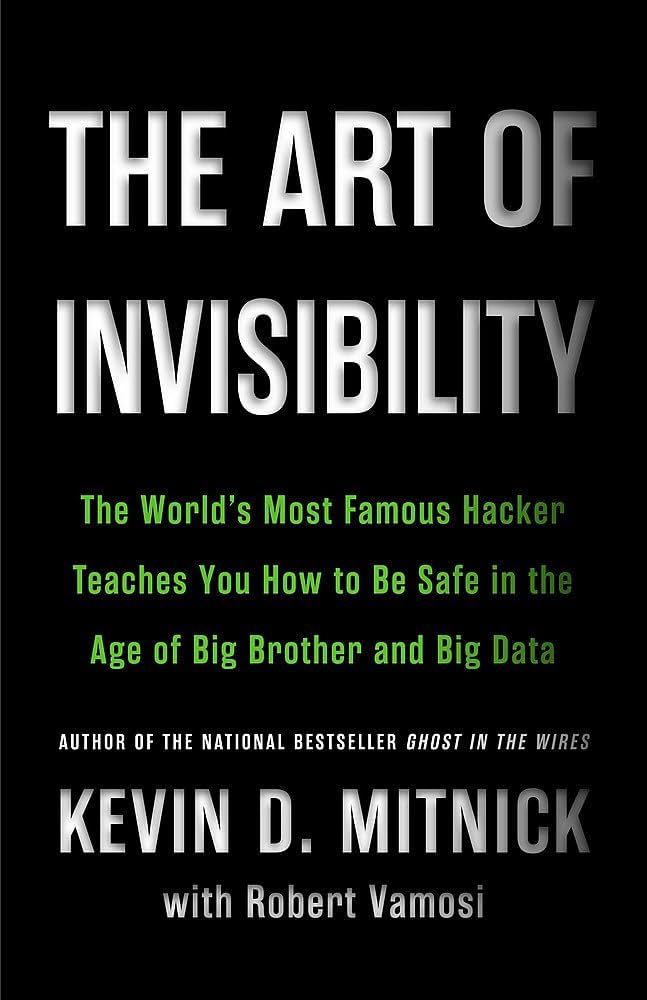
Emerging from this reality, The Art of Invisibility approaches the issue not through sensationalism or fear, but through a sober, practical, and systematic perspective. The book raises a fundamental question: How can individuals live, work, and connect in the digital world while still preserving a necessary level of privacy? Rather than calling for withdrawal from technology, the work guides readers toward understanding how the digital environment operates, thereby enabling them to make informed choices to protect themselves.
With a clear structure, abundant real – world examples, and insights grounded in extensive experience in cybersecurity, The Art of Invisibility is not merely a book about security, but a guide that helps readers redefine the relationship between individuals and technology. It is a work for those who seek to understand how the digital world functions – and, more importantly, who wish to reclaim control over their own information in the data-driven era.
1. The Author and the Work
Kevin Mitnick is widely regarded as one of the most influential figures in the history of modern cybersecurity. His name is associated with two seemingly opposite sides of the technology world: once known as a notorious hacker, he later became a leading security expert and advisor to major organizations worldwide. This distinctive journey forms the intellectual foundation and unique perspective that define the core value of The Art of Invisibility.

During the 1980s and 1990s, Kevin Mitnick was portrayed by the American media as one of the most dangerous hackers of his time – not because of destructive cyberattacks, but because of his ability to exploit people and organizational processes rather than relying solely on technical methods. The events surrounding his pursuit, arrest, and imprisonment turned Mitnick into a controversial symbol of the early Internet era. However, instead of ending his career in technology, this period marked a crucial turning point in his life.
After serving his sentence, Kevin Mitnick re-emerged in a completely new role: that of a cybersecurity and information security consultant. He founded Mitnick Security Consulting, a firm specializing in penetration testing, vulnerability assessment, and security awareness training for businesses. Major organizations sought Mitnick’s expertise not only for his technical knowledge, but also for his ability to view systems from both the attacker’s and the defender’s perspectives.
Alongside his consulting work, Kevin Mitnick is also the author of several highly influential books in the field of cybersecurity, including The Art of Deception, Ghost in the Wires, and The Art of Invisibility. While The Art of Deception focuses on social engineering and the exploitation of human factors in security, and Ghost in the Wires takes on an autobiographical tone recounting the life of a hacker, The Art of Invisibility represents a clear shift toward a broader societal issue: personal privacy in the digital age.
The Art of Invisibility was first published in 2017, at a time when the world was witnessing the rapid expansion of social media, smartphones, and large – scale data – collection platforms. This period marked the point at which concepts such as online tracking, big data, and privacy invasion began to receive widespread attention, not only within the technology sector but also in mainstream public discourse.
What distinguishes The Art of Invisibility is its intended audience. Kevin Mitnick does not write for hackers, nor does he address only security engineers or IT professionals. Instead, the book targets everyday Internet users – individuals who rely on technology daily yet rarely fully recognize the extent to which they are monitored and their data is exploited. The work is designed as a bridge between the complex technical world and the everyday lives of modern digital citizens.
From a conceptual standpoint, The Art of Invisibility clearly reflects the maturation of Kevin Mitnick’s perspective. The author does not advocate evading the law or achieving absolute anonymity. Rather, he emphasizes the right to control one’s personal data. “Invisibility” in this context does not mean disappearing from society, but minimizing unnecessary digital footprints, understanding the boundaries between convenience and risk, and between sharing information and losing privacy.
Through the combination of hands-on experience, deep knowledge of technological systems, and an accessible communication style, Kevin Mitnick has transformed The Art of Invisibility into a work that is simultaneously instructive, analytical, and cautionary. The book not only reflects the mindset of a security expert, but also demonstrates the social responsibility of someone who understands the darker side of the digital world and seeks to help the broader public use technology more safely.
2. The Art of Invisibility
The Art of Invisibility is not constructed as a purely technical manual, but rather as a comprehensive map of how individuals are monitored in modern life and how they can consciously and legally reduce their digital presence. Kevin Mitnick develops the book’s content in a logical sequence: from identifying the problem, to explaining the mechanisms of surveillance systems, and finally to proposing practical strategies for protecting personal privacy.
2.1. The Reality of Human Surveillance in the Digital Age
In the opening chapters, Kevin Mitnick focuses on clarifying a crucial reality: most Internet users are not fully aware of the extent of personal information they expose on a daily basis. The author points out that surveillance is no longer a science-fiction scenario, but the default state of digital life. From simple activities such as searching for information, sending emails, and using social media to online shopping, every action can be recorded and analyzed.
The book describes how online platforms construct user profiles based on browsing history, consumption habits, geographic location, and social connections. Kevin Mitnick emphasizes that the issue does not lie with a single individual or organization, but with the entire data ecosystem operating silently behind the modern Internet.
2.2. Mechanisms of Personal Data Collection and Exploitation
After establishing the broader context, The Art of Invisibility delves into the technical and non-technical mechanisms used to track users. Kevin Mitnick explains concepts such as IP addresses, cookies, metadata, advertising trackers, and location data in accessible language, deliberately avoiding excessive technical jargon that might overwhelm readers.
The author analyzes how:
- Cookies and tracking tools monitor browsing behavior
- Smartphones collect location data and usage patterns
- Emails, messages, and phone calls expose critical metadata
- Social networks link digital identities to real-world lives
Notably, the book does not focus solely on threats from hackers, but also highlights the role of technology companies, advertisers, and data brokers in collecting and trading personal information. Through this analysis, Kevin Mitnick demonstrates that privacy risks arise not only from illegal activities, but also from legal yet opaque practices.
2.3. Potential Risks of Losing Privacy
A significant portion of the book is devoted to examining the consequences of excessive exposure of personal information. Kevin Mitnick approaches this issue without exaggeration, presenting risks in a concrete and well-founded manner.
According to the book, the loss of privacy can lead to:
- Identity theft and financial fraud
- Surveillance and intrusion into personal life
- Behavioral manipulation through targeted advertising and curated content
- Loss of data control in the event of information breaches
These analyses help readers understand that privacy is not an abstract concept, but one that directly affects safety, freedom, and quality of life.
2.4. Strategies for “Invisibility” in Digital Life
The core of The Art of Invisibility lies in its system of strategies designed to help individuals minimize their digital footprints. Kevin Mitnick adopts a realistic stance, acknowledging that complete elimination of surveillance is impossible, but that the level of exposure can be significantly reduced.
The solutions are presented in thematic groups, including:
- Securing personal devices and operating systems
- Managing passwords, accounts, and authentication
- Using privacy-focused email services, browsers, and search engines
- Controlling information sharing on social media
- Exercising caution in both online and offline transactions
The author emphasizes that “invisibility” does not equate to extreme or unlawful behavior. Rather, it is a process of raising awareness, making informed choices, and building safer technology usage habits.
2.5. A Long-Term Perspective on Personal Privacy
In the final chapters, The Art of Invisibility broadens its scope to a long-term perspective. Kevin Mitnick argues that privacy is not a fixed state, but an ongoing process that must adapt to technological development. Users cannot rely on a few measures and then ignore the issue; instead, they must cultivate a sustainable security mindset.
The book encourages readers to:
- Understand the value of personal data
- Question every act of information sharing
- Proactively update their knowledge of technology and security
Through this approach, The Art of Invisibility offers not only short-term solutions, but also a long-lasting framework for engaging with digital life.
3. Value and Key Highlights of The Art of Invisibility
Beyond warning readers about the dangers of privacy loss, The Art of Invisibility delivers lasting value through a comprehensive approach that balances specialized knowledge with real-world applicability. The book’s strengths lie not in sensationalism, but in the depth of its reasoning and its systematic practicality.

3.1. Re-centering Personal Privacy as a Fundamental Concern
The first core value of The Art of Invisibility is its reassertion of personal privacy as a central issue in the digital world. Kevin Mitnick does not portray privacy as a luxury or something reserved for those who “have something to hide,” but as a fundamental right closely tied to personal freedom and social security.
The book demonstrates that the erosion of privacy does not occur suddenly, but accumulates gradually through small, seemingly harmless choices. In doing so, The Art of Invisibility encourages readers to reconsider familiar behaviors and recognize that protecting privacy is a rational and necessary action.
3.2. Bridging Security Thinking with Everyday Life
Another notable strength of The Art of Invisibility is its ability to connect cybersecurity knowledge with daily life. Kevin Mitnick does not treat security as a closed domain reserved for technical experts, but restores it to its proper role as an integral part of modern living.
The analyses show that security is not solely about technology, but also about awareness and human behavior. Social media usage, information-sharing habits, choice of online services, and communication practices all directly influence the safety of personal data. This perspective makes the book both accessible and highly practical.
3.3. Translating Technical Expertise into Accessible Content
With a background as a seasoned cybersecurity expert, Kevin Mitnick possesses extensive technical knowledge. However, the strength of The Art of Invisibility lies in the author’s deliberate effort to distill and organize that knowledge for a broad audience.
Concepts such as behavioral tracking, metadata, data breaches, and identity theft are explained clearly and supported by real-world examples. As a result, the book avoids a didactic or overly technical tone, instead functioning as a guide to security-oriented thinking for Internet users at all levels.
3.4. Practicality and Long-Term Applicability
Unlike many security resources that quickly become outdated due to dependence on specific technologies, The Art of Invisibility focuses on foundational principles. Rather than emphasizing a particular software or service, the author highlights risk assessment, informed decision-making, and the cultivation of safe technology habits.
This approach ensures that the book’s value is not confined to its time of publication. Even as technology continues to evolve, principles of data control, digital footprint reduction, and awareness remain relevant and adaptable.
3.5. A Balanced, Non-Extreme View of “Invisibility”
Another noteworthy aspect of The Art of Invisibility is the author’s balanced and cautious stance. Kevin Mitnick does not advocate complete withdrawal from the Internet or absolute anonymity. Instead, the book promotes conscious choice, allowing individuals to determine an appropriate level of information sharing based on their needs and circumstances.
This perspective helps the book avoid two common extremes: dismissing privacy concerns altogether or approaching the issue with excessive fear. As a result, The Art of Invisibility serves as a guiding resource that helps readers balance technological convenience with self-protection.
3.6. Educational Value and Cognitive Orientation
Beyond its role as a practical guide, The Art of Invisibility holds clear educational value. The book fosters a critical mindset toward technology, encouraging readers to question seemingly free and harmless conveniences.
In doing so, it emphasizes that in the digital world, proactive awareness is just as important as technical measures. This constitutes the book’s most enduring and sustainable contribution.
4. Who The Art of Invisibility Is For
The Art of Invisibility addresses a wide range of readers, reflecting the reality that digital privacy is a shared concern in modern society.
First and foremost, the book is particularly suitable for general Internet users – those who regularly use social media, email, online shopping, and digital payments, yet lack a comprehensive understanding of how their personal data is collected and exploited. The book helps this group raise awareness and develop safer technology habits.
In addition, students and professionals in the field of information technology can view The Art of Invisibility as an important supplementary resource on security mindset and data responsibility, complementing their technical expertise.
The book is also relevant to individuals working in online environments, including entrepreneurs, freelancers, content creators, and digital business practitioners, for whom data security and privacy increasingly affect both effectiveness and personal credibility.
Moreover, journalists, researchers, and those interested in personal privacy will find in the book valuable principles for understanding the relationship between technology, data, and personal safety in the digital era.
Overall, The Art of Invisibility is suitable for anyone who seeks to use the Internet consciously, knowledgeably, and while maintaining control over their personal information.

5. Conclusion
The Art of Invisibility is not merely a book about security or cybersecurity, but a serious analytical work on the position of individuals in the digital world. By clarifying how personal data is collected, monitored, and exploited, Kevin Mitnick helps readers recognize that privacy is not a given, but something that must be properly understood and actively protected.
The book’s greatest value lies in its balanced and practical approach. The Art of Invisibility neither calls for disengagement from technology nor instills fear of the Internet, but instead guides readers toward building a responsible relationship with digital tools. In this context, “invisibility” is understood as managing digital footprints, making informed choices, and reducing risk – rather than avoidance or denial of the online world.
In addition to its cautionary role, the book provides clear guidance that helps readers develop everyday habits for protecting personal information. The principles and strategies presented are not tied to any specific platform or technology, allowing them to retain long-term relevance in an ever-changing technological landscape.
Taken as a whole, The Art of Invisibility is a valuable resource for anyone seeking a deeper understanding of privacy, personal data, and the relationship between humans and technology. It serves not only as a practical reference, but also as an essential conceptual foundation for individuals aiming to live, connect, and thrive proactively in the digital age.
6. References
[1] F. P. Brooks Jr., The Mythical Man-Month: Essays on Software Engineering, Anniversary Edition, Boston, MA, USA: Addison-Wesley, 1995.
[2] F. P. Brooks Jr., “No Silver Bullet – Essence and Accidents of Software Engineering,” Computer, vol. 20, no. 4, pp. 10–19, Apr. 1987.
[3] R. C. Martin, Clean Code: A Handbook of Agile Software Craftsmanship, Upper Saddle River, NJ, USA: Prentice Hall, 2008.
[4] R. C. Martin, The Clean Coder: A Code of Conduct for Professional Programmers, Upper Saddle River, NJ, USA: Prentice Hall, 2011.
[5] S. McConnell, Code Complete: A Practical Handbook of Software Construction, 2nd ed., Redmond, WA, USA: Microsoft Press, 2004.
[6] A. Hunt and D. Thomas, The Pragmatic Programmer: From Journeyman to Master, Reading, MA, USA: Addison-Wesley, 1999.
[7] B. Schneier, Secrets and Lies: Digital Security in a Networked World. New York, NY, USA: Wiley, 2000.
[8] E. Snowden, Permanent Record. New York, NY, USA: Metropolitan Books, 2019.
[9] National Institute of Standards and Technology (NIST), Guide to Protecting the Confidentiality of Personally Identifiable Information (PII), NIST Special Publication 800-122, Gaithersburg, MD, USA, 2010.
[10] European Union Agency for Cybersecurity (ENISA), Privacy and Data Protection by Design – from Policy to Engineering, Heraklion, Greece, 2015.