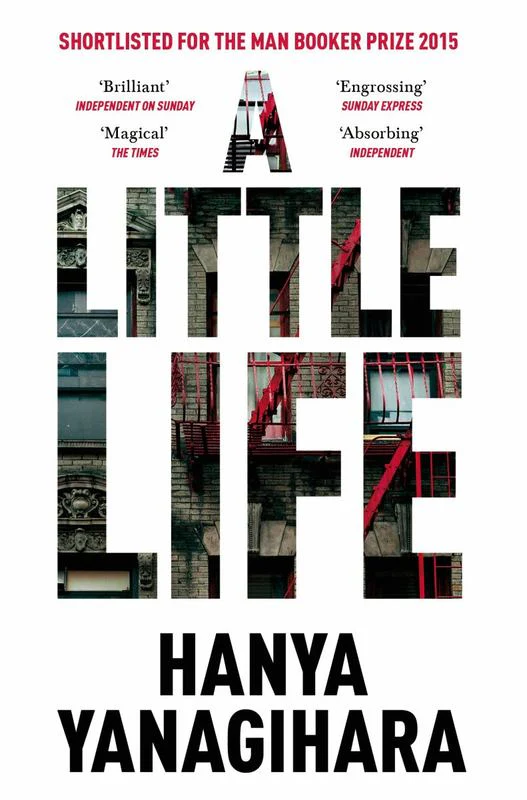
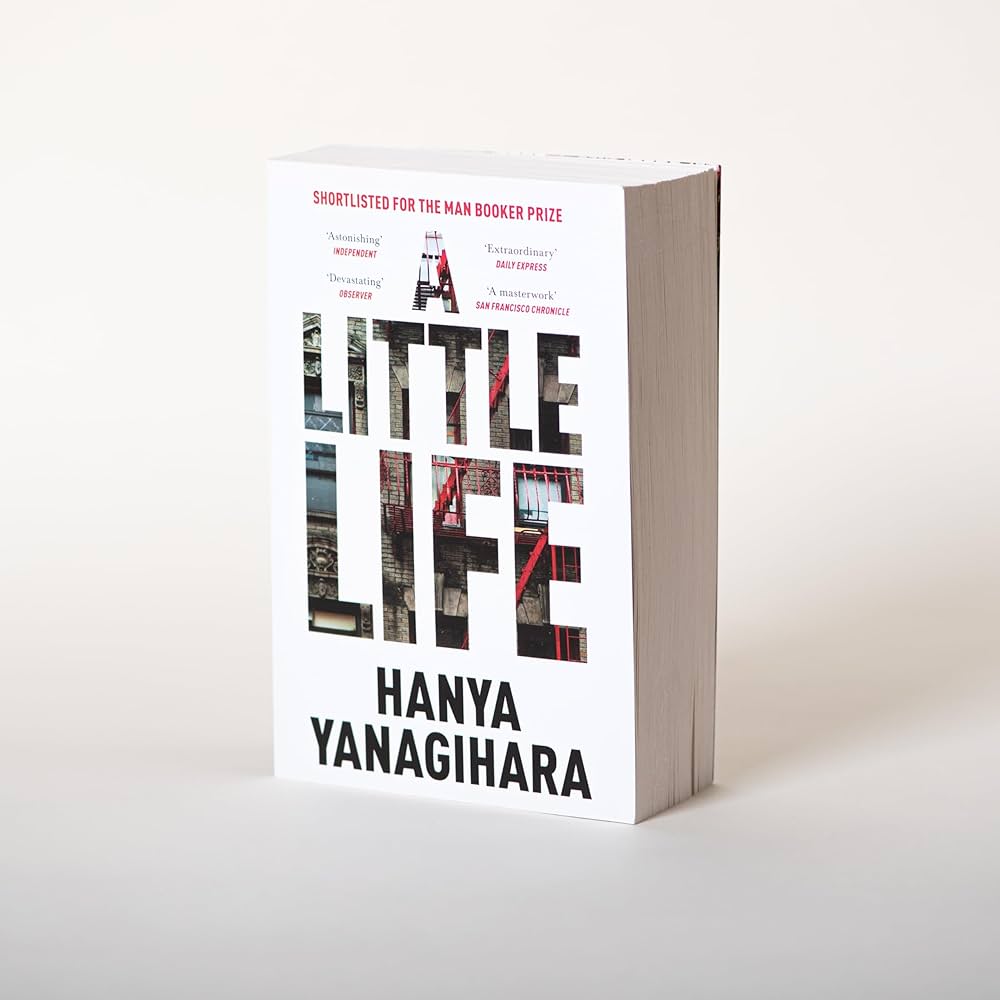
In contemporary American literature, A Little Life is widely regarded as an exceptional case: a large-scale novel with a slow narrative tempo that nonetheless exerts a profound and lasting influence. The work does not attract attention through dramatic plot twists or innovative storytelling techniques, but through its persistent engagement with some of the most difficult aspects of human existence: psychological trauma, the prolonged persistence of suffering, and the limits of redemption.
Rather than asking “what will happen,” A Little Life concentrates on “what has already happened and continues to unfold.” Its multi-decade narrative structure allows the author to examine the long-term effects of violence and trauma, not only on individuals but also on the relationships that surround them. This deliberate choice enables the novel to transcend the boundaries of a story about youth or friendship, becoming instead a serious literary study of the human condition under sustained damage.
In this respect, A Little Life does not aim to offer comfort to the reader. It demands patience, endurance, and a serious reading posture. In return, it provides a reading experience of considerable depth, compelling readers to confront the limits of empathy, love, and language itself when faced with enduring pain.
1. Introduction to the Author and the Work
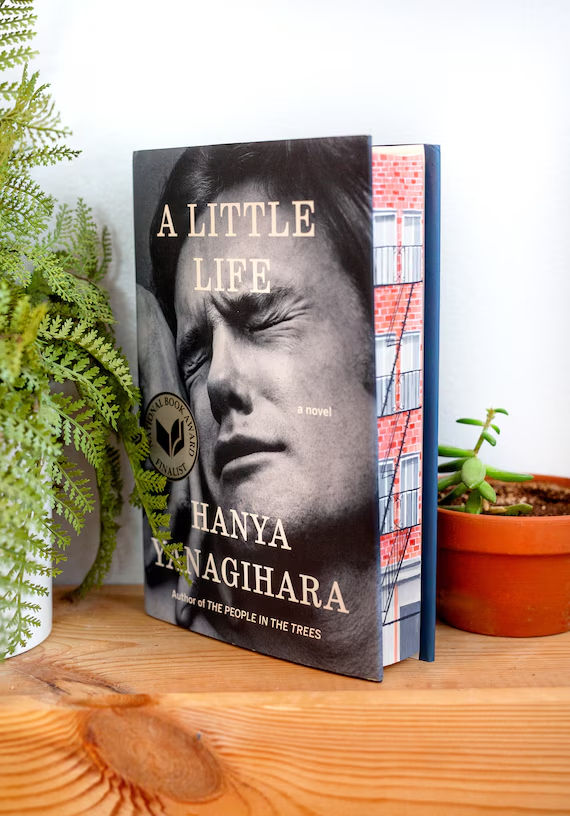
A Little Life is the second novel by Hanya Yanagihara, one of the most prominent figures in twenty-first-century American literature. Born in 1974 in Los Angeles and raised in Hawaii, Yanagihara did not emerge from a purely literary background but instead developed a solid foundation in journalism and publishing. She has held senior editorial positions at several prestigious cultural and arts publications, including The New York Times Magazine and T Magazine. This professional experience has had a clear influence on her literary style: disciplined, restrained, structurally attentive, and deeply concerned with contemporary social issues.

Before A Little Life, Yanagihara published her debut novel The People in the Trees (2013), a work marked by ethical inquiry and an exploration of the consequences of scientific colonialism. However, it was not until the publication of A Little Life in 2015 that her name achieved global recognition. The novel quickly attracted the attention of critics and international readers alike, was shortlisted for several major literary awards, and became a publishing phenomenon, despite – or perhaps because of – its refusal to offer an “easy” reading experience.
In terms of genre, A Little Life is commonly classified as literary fiction, yet it clearly exceeds conventional genre boundaries. It is not merely a novel about friendship, nor simply a coming-of-age or psychological novel. Yanagihara constructs a narrative that spans several decades, focusing on interior life and the long-term consequences of psychological trauma, thereby expanding the scope of the modern novel in terms of time, depth, and the intensity with which human suffering is examined.
Another notable aspect is that although A Little Life is set within contemporary American society, it does not emphasize topical or overtly political themes. Instead, Yanagihara chooses to engage with universal concerns: violence, the silence of victims, the relationship between love and responsibility, and the question of whether human beings are morally obligated to continue living when pain exceeds their capacity to endure. This focus on foundational questions has allowed A Little Life to transcend national and cultural boundaries, becoming a work that provokes widespread debate on a global scale.
Within Yanagihara’s literary career, A Little Life is not only her most famous novel but also her clearest artistic statement: literature does not necessarily need to provide redemption, but it can – and must – bear honest witness to the darkest regions of human experience.
2. Summary of the Plot
A Little Life opens with the story of four young men who meet as university students at a prestigious college in Massachusetts: Jude St. Francis, Willem Ragnarsson, JB Marion, and Malcolm Irvine. After graduation, they move together to New York City – the central setting of the novel – to begin their adult lives, each with distinct professional ambitions. In its early stages, the novel resembles a narrative about friendship and early career formation, with a relatively gentle pace that focuses on the dynamics among the four characters and their initial encounters with urban adulthood.
Malcolm comes from a wealthy family and pursues architecture while constantly torn between personal desire and familial expectation. JB, a Haitian-American artist, is sharp, ambitious, and openly proud, yet gradually reveals a capacity for cruelty and exploitation, viewing others as raw material for his art. Willem, raised in poverty, initially drifts through a series of minor jobs before gradually establishing himself as an actor. Jude, the most reserved of the group, quickly distinguishes himself through exceptional intelligence and academic success in law, while simultaneously exhibiting troubling physical and psychological signs.
From the earliest chapters, Jude is presented as a mysterious central figure. He has a severe physical disability affecting his legs, endures frequent bouts of intense pain, and categorically avoids any discussion of his past. This secrecy not only creates distance between Jude and the outside world but also becomes an underlying tension within the group’s friendship. While the others gradually share stories of family, childhood, and personal failure, Jude remains almost entirely silent.
As the narrative progresses, A Little Life steadily shifts its focus away from the group as a whole and increasingly centers on Jude. Through non-linear flashbacks, his past is slowly revealed: abandoned as an infant, Jude grows up in religious institutions and care facilities where he repeatedly becomes the victim of sexual abuse, violence, and betrayal by figures of authority. These experiences result not only in lasting physical damage but also in psychological wounds that prove impossible to heal.
Parallel to Jude’s growing success as a lawyer is a persistent pattern of self-destruction. He regularly engages in self-harm, treating it as a form of self-punishment, and holds a deeply ingrained belief that he is undeserving of love or protection. Despite achieving social and professional status, Jude remains trapped in a state of chronic shame, continually reenacting trauma within his inner life.
Among the four friends, Willem is the most deeply connected to Jude. Their friendship evolves over time into a relationship grounded in care, patience, and a commitment to remain. Willem’s gentle and stable nature gradually makes him Jude’s most important emotional anchor. This relationship is not built on redemption or transformation, but on acceptance: Willem loves Jude not because he believes he can “heal” him, but because he chooses not to leave.
Nevertheless, A Little Life does not idealize the power of love or friendship. The relationships surrounding Jude – friends, lovers, and benefactors alike – eventually reach the limits of endurance. JB, as an artist, exploits Jude’s suffering as material for his work, causing a severe rupture in their friendship. Malcolm, though sympathetic, remains too distant to grasp the full depth of Jude’s trauma. Even Willem, the most steadfast presence, is forced to confront his own helplessness when he realizes that love cannot erase memories embedded within Jude’s psychological structure.
Toward the end, the novel narrows almost entirely to Jude’s inner life. The final chapters abandon external events in favor of an intense focus on the silent struggle between the desire to continue existing and the longing to end suffering. The novel concludes with a tragic ending that remains consistent with the psychological logic established throughout: Jude does not find liberation in the conventional sense, and the story closes in an atmosphere of sustained loss, without full consolation.
Overall, the plot of A Little Life does not follow the familiar arc of climax and resolution. Instead, it unfolds as a slow accumulation of memory, trauma, and consequence. This relentless narrative method demands a high degree of concentration from the reader and serves as the foundation for the novel’s psychological and philosophical depth.
3. Thematic and Artistic Value
At its deepest level, A Little Life is a novel that interrogates the limits of human endurance. It does not frame pain as a necessary stage of growth, nor does it treat trauma as a catalyst for moral transcendence. Instead, Yanagihara presents suffering as a persistent condition – one capable of shaping an individual’s psyche and character over time, even for an entire lifetime.
Thematic Value: Unending Trauma and the Rejection of the “Healing” Myth
One of the novel’s most significant contributions lies in its dismantling of a widespread cultural myth: that time, love, or social success can “heal” all wounds. Through Jude’s character, the novel demonstrates that psychological trauma does not function like an ordinary injury. It does not fade with time; rather, it embeds itself within cognitive structures and becomes part of personal identity.
Jude is not merely a victim of past violence; he carries that past into every decision, every relationship, and every perception of himself. His belief that he is “undeserving” solidifies into an internal ideology that governs how he receives kindness and affection. In this way, Yanagihara confronts an uncomfortable reality: some individuals cannot be redeemed in conventional terms, and society must face this truth rather than conceal it beneath simplified narratives of positivity.
The novel extends this question into the ethical domain: if someone cannot recover, what responsibility do others bear? At what point does staying become an act of love, and when does it become an unfair burden? A Little Life offers no definitive answers, instead leaving these questions unresolved and forcing readers to confront the limits of their own compassion.
Friendship as a Central Moral Structure
Unlike many modern novels that center romantic love, A Little Life positions friendship – particularly male friendship – as its core emotional and moral structure. The bond between Jude and Willem is not idealized as a redemptive miracle, but portrayed as a prolonged commitment marked by responsibility and powerlessness.
Yanagihara shows that friendship does not necessarily entail complete understanding. Willem loves Jude deeply, yet never fully comprehends the totality of his pain. This unbridgeable distance reflects a crucial truth: love does not equate to possession or total explanation. Friendship in A Little Life thus takes on an existential quality, defined by the choice to remain even when one’s presence cannot alter the outcome.
Artistic Value: Narrative Structure and Linguistic Strategy
Artistically, A Little Life is distinguished by its controlled yet non-linear narrative structure. Yanagihara does not reveal Jude’s past all at once; instead, memories surface gradually, in accordance with his psychological state. This structure mirrors the nature of trauma itself: memories do not emerge logically, but are triggered by emotional stimuli and seemingly ordinary moments.
The novel’s language is restrained, resembling the neutral tone of journalistic prose, yet it is used to describe extreme experiences. This contrast produces a powerful effect: pain is not aestheticized or softened, but presented with stark clarity, compelling readers to confront it directly. Yanagihara deliberately avoids traditional emotional climaxes, opting instead for repetition and duration – a strategy that allows readers to feel the exhaustion and erosion caused by prolonged trauma.
The novel’s length and slow pacing are not incidental choices. The sheer scale of A Little Life becomes an artistic device in itself, reflecting the experience of living with pain over many years. Readers do not merely read about trauma; they endure it through the extended act of reading, creating a rare alignment between form and content.
Intellectual Significance and Place in Contemporary Literature
Within contemporary literature, A Little Life remains a controversial yet deeply influential work. It challenges the tendency to sentimentalize human experience and reasserts literature’s role not as comfort, but as confrontation. By persistently exploring the darkest aspects of psychological life, Yanagihara expands the scope of the modern novel, demonstrating that literature can still engage with difficult questions that resist comforting answers.
The value of A Little Life therefore lies not in offering hope, but in forcing readers to reconsider what hope means. In the world of the novel, hope is not deliverance, but the capacity to face suffering without turning away. This is the most significant intellectual contribution A Little Life makes to readers and to contemporary literature.
4. Notable Quotations
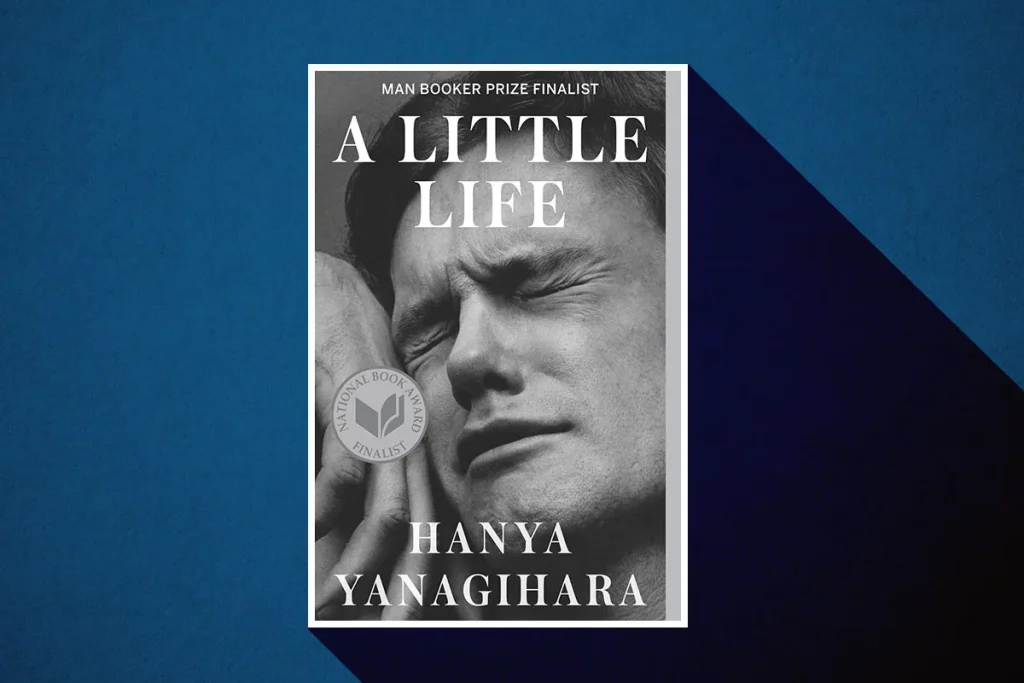
In A Little Life, quotations function not merely as elegant sentences, but as conceptual nodes – points at which language reaches its limit in articulating pain, memory, and existence. Yanagihara does not craft aphoristic lines designed for easy recall; instead, her sentences are often long and weighty, gaining their full force only within the broader psychological context of the narrative. Each quotation below should therefore be read as part of the novel’s overarching intellectual structure.
First, A Little Life repeatedly emphasizes that the past is not something one can leave behind, but a presence that continues to accompany the present:
“He had learned long ago that there was no escaping the past; it only receded, becoming smaller but never vanishing.”
This sentence encapsulates Jude’s psychological logic: memory does not disappear – it merely changes form, continuing to shape perception and behavior.
When addressing pain and inequality in lived experience, the novel offers a cold but sharply delineated observation:
“The world was made of two kinds of people: those who knew suffering and those who didn’t.”
Here, suffering becomes not a temporary condition, but a dividing line that determines how individuals perceive the world and one another.
Another central theme is shame – a feeling more persistent and deeply rooted than fear:
“Shame, he knew, was the strongest emotion, stronger than fear, stronger than love.”
This line helps explain why Jude repeatedly punishes himself even when external threats have long disappeared.
For Jude, kindness does not signify safety, but instead foreshadows harm:
“He believed that kindness was a prelude to harm.”
This perception reveals how trauma has fundamentally distorted his capacity to receive care, transforming positive gestures into warning signs.
Friendship in A Little Life is not depicted as gentle comfort, but as prolonged endurance:
“Friendship, he realized, was not about comfort, but about endurance.”
The sentence redefines friendship as the willingness to remain in the presence of what cannot be repaired.
The novel also repeatedly raises the ethical question of responsibility toward another’s suffering:
“What was the responsibility of the listener when someone else’s pain was too large to bear?”
This is one of the novel’s central questions, addressed not only to its characters but directly to its readers.
At a deeper level, Yanagihara shows how pain can restructure self-understanding:
“He did not believe in his own goodness; he believed only in his capacity to be hurt.”
This line illustrates the inversion of Jude’s internal value system, where injury becomes his defining trait.
When addressing love, the novel avoids any form of idealization:
“Love was not a sufficient force; it could not save him.”
This statement powerfully rejects familiar narrative models in which love functions as a final solution.
Finally, A Little Life concludes with reflections on existence that resist closure, leaving a prolonged sense of emptiness:
“He did not know if life was meant to be endured or escaped; he only knew that he was tired.”
This sentence offers neither explanation nor justification, but records exhaustion as an undeniable reality.
Taken together, these quotations do not aim for immediate impact. Instead, they function as intellectual markers, guiding readers deeper into the novel’s exploration of trauma, friendship, and the limits of redemption. Within the full narrative context, they reinforce the work’s central argument: some forms of pain cannot be fully articulated, only acknowledged and endured.
5. Conclusion
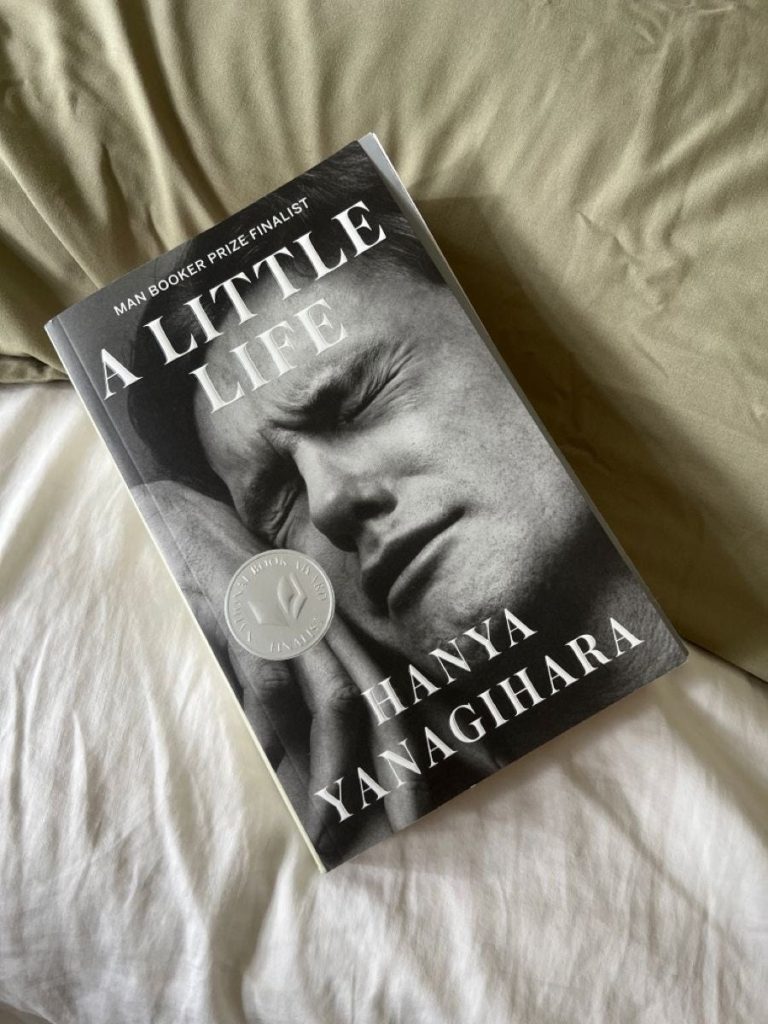
A Little Life is a controversial novel not because it is extreme, but because it resolutely refuses comforting interpretations of human suffering. Through an extended narrative structure, a slow pace, and an almost exclusive focus on psychological trauma, the novel places readers in an uncomfortable position: confronting the possibility that some wounds cannot be healed, and some individuals cannot be saved in the ways literature often promises.
The novel’s value does not lie in plot in the traditional sense, but in its process of accumulation and erosion. It presents pain not as a single event, but as a sustained mode of existence – one capable of reshaping inner life, relationships, and self-perception. In doing so, Yanagihara compels readers to reconsider concepts often taken for granted: hope, love, responsibility, and the limits of empathy.
Artistically, the novel demonstrates a deliberate and consistent aesthetic choice. Length, pacing, and repetition are not flaws, but strategies designed to simulate the experience of living with long-term trauma. The text does not beautify pain, nor does it attempt to legitimize it through redemptive endings. This commitment makes A Little Life a demanding work, one that requires patience and emotional resilience from its readers.
From a personal standpoint, A Little Life is not a book for everyone, nor is it a work to be approached as entertainment. However, for readers who regard literature as a space for examining the most difficult aspects of human existence, it is a novel well worth reading and reflection. It offers no consolation, but it offers a rare form of honesty – honesty about pain, about the limits of love, and about the reality that not every story needs, or is able, to end with hope.