In the vast flow of world literature, few writers have achieved both enduring artistic success and reached such a wide readership across generations as Alexandre Dumas. His name is closely associated with thrilling adventure stories, intense intellectual confrontations, heroic characters, and above all, a powerful spirit of freedom, justice, and faith in human values. The literature of Alexandre Dumas does not merely serve the purpose of entertainment; it opens up a vivid historical space in which individuals confront power, conspiracy, friendship, loyalty, and personal destiny amid the dramatic upheavals of their time.
Emerging in nineteenth-century France – a period marked by revolutions, reforms, and political conflicts – Alexandre Dumas skillfully combined historical material with a rich imagination to create works of lasting appeal. He liberated history from the rigidity of dry chronicles, transforming it into dramatic narratives closely connected to human life, where each character embodies a desire to live, to love, and to fight for justice. Thanks to this approach, Dumas’s works were not confined to French cultural boundaries but quickly spread, becoming a shared spiritual heritage of humanity.
With a vast body of work, an engaging narrative style, and far-reaching influence, Alexandre Dumas is regarded as one of the most representative great writers of world literature. Studying his life, career, artistic style, and contributions not only helps readers better understand an extraordinary individual but also sheds light on the role of literature in reflecting history, nurturing humanistic ideals, and connecting people across generations.
1. A Brief Introduction to Alexandre Dumas
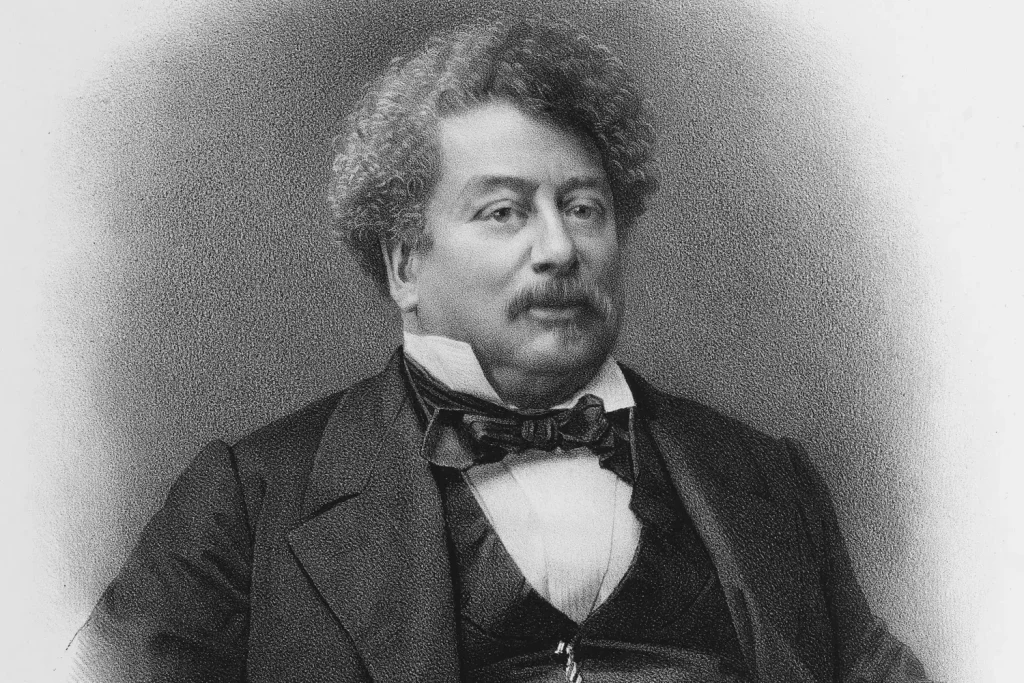
Alexandre Dumas (24 July 1802 – 5 December 1870) was one of the greatest French writers of the nineteenth century and a figure of profound influence in the history of world literature. He is often referred to as Alexandre Dumas père (Alexandre Dumas the elder) to distinguish him from his son, Alexandre Dumas fils, who was also a renowned writer. Alexandre Dumas’s name is inseparably linked with historical and adventure novels, the genres that made him one of the most widely read authors of all time.
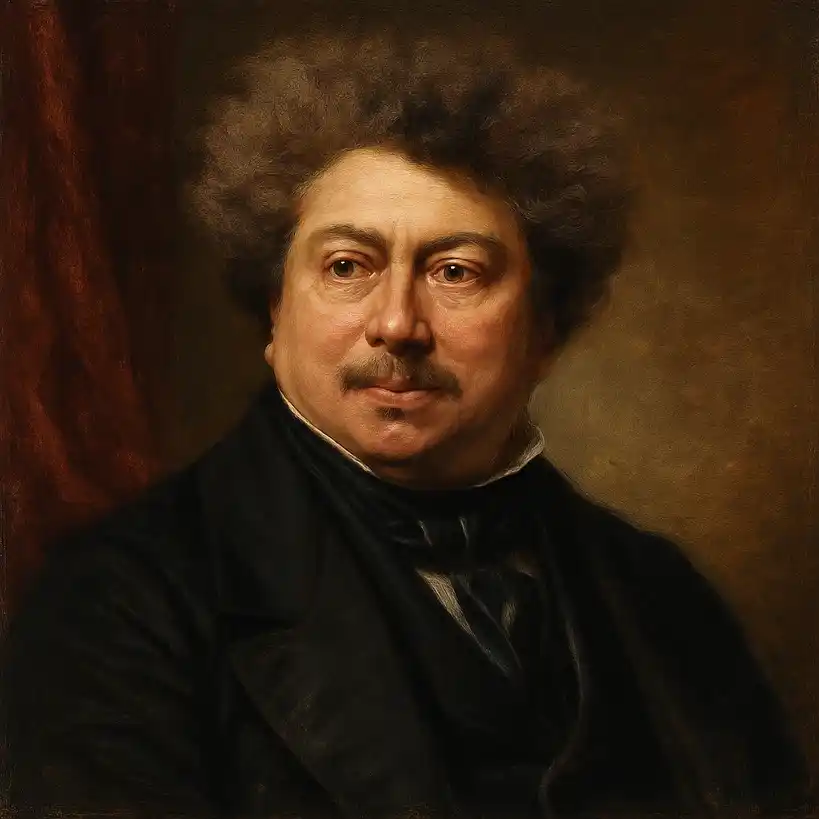
Alexandre Dumas was born in the town of Villers-Cotterêts, in the Aisne region of northern France. He came from a family with a distinctive background. His father, Thomas-Alexandre Dumas, was a talented general in the army of the French Revolution, of mixed African and European descent, who once held important military positions under the Republic. However, following political upheavals, the family fell into decline, and his father died when Alexandre Dumas was still very young. This loss not only profoundly affected his childhood but also contributed to his strong awareness of social injustice, power, and human fate—recurring themes throughout his later works.
Because of financial hardship, Alexandre Dumas did not receive a complete formal education like many intellectuals of his time. Nevertheless, he soon demonstrated a strong spirit of self-education, a passion for reading, and a remarkable ability to absorb knowledge. From an early age, Dumas was fascinated by history, classical literature, theater, and adventure stories, which laid a solid foundation for his future literary career. This process of persistent self-study enabled him to develop a rich and flexible intellectual background, free from rigid academic constraints.
In 1823, Alexandre Dumas moved to Paris – the political, cultural, and artistic center of France – with the ambition of establishing himself through literature. There, he worked in the office of the Duke of Orléans (later King Louis-Philippe), a position that not only provided him with financial stability but also allowed him to engage with intellectual circles, artists, and contemporary political life. At the same time, Dumas began experimenting with playwriting, gradually making a name for himself on the French stage.
These early successes in drama paved the way for Alexandre Dumas’s entry into professional literary life. From a young man of modest origins, he gradually rose to become a central figure in the French literary scene of the nineteenth century. With strong creative energy, tireless labor, and an acute understanding of public taste, Alexandre Dumas quickly established a solid position, preparing for the most brilliant phase of his writing career.
2. The Literary Career of Alexandre Dumas
The literary career of Alexandre Dumas is considered one of the most prolific, dynamic, and far-reaching in nineteenth – century French literature. Over more than four decades of relentless creative activity, he produced an enormous body of work encompassing various genres, including drama, novels, short stories, memoirs, travel writing, and journalism. Nevertheless, it was historical and adventure novels that truly elevated Alexandre Dumas to the forefront of world literature.
At the beginning of his career, Alexandre Dumas started with the theater – a creative environment that strongly influenced his later narrative style. In 1829, the play Henri III et sa cour premiered and quickly achieved great success, marking Dumas’s breakthrough in Parisian literary life. The work not only brought him fame but also contributed to the rise of French Romantic drama, challenging the classical conventions that had long dominated the stage. His theatrical success allowed Dumas to hone his skills in constructing conflict, sharp dialogue, and dramatic pacing – elements that later became defining strengths of his novels.
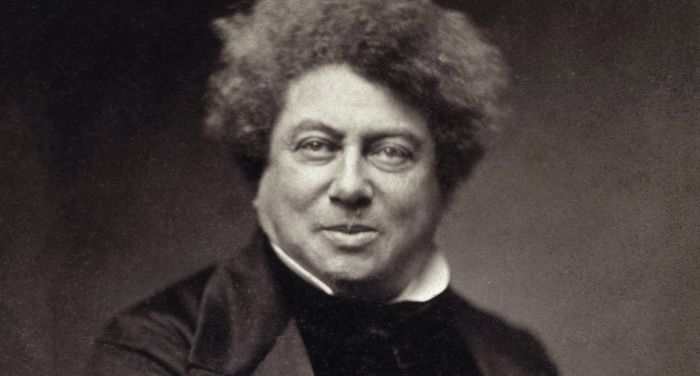
The most significant turning point in Alexandre Dumas’s career came when he began writing serialized novels for newspapers, a popular and influential publishing format in nineteenth-century France. Serialization enabled his works to reach a broad readership across social classes while requiring the author to maintain an engaging narrative pace and continuous suspense to retain readers’ interest. Alexandre Dumas proved exceptionally well suited to this form, thanks to his rapid writing speed, rich imagination, and flexible organization of plot.
During the most productive period of his career, Alexandre Dumas produced a series of major works that left a profound mark on literary history. Les Trois Mousquetaires (The Three Musketeers, 1844) and Le Comte de Monte-Cristo (The Count of Monte Cristo, 1844 – 1846) were not only resounding publishing successes but also cultural phenomena, warmly received by readers from their very first appearance. These novels harmoniously combine historical elements, adventure, action, and psychological depth, creating an enduring appeal across generations.
A notable feature of Alexandre Dumas’s literary career was his collaborative working method. He often worked with assistants and collaborators, most notably Auguste Maquet. These collaborators helped research historical materials, outline plots, or draft preliminary manuscripts, while Dumas played the central role in shaping the final work, defining characters, tone, and narrative rhythm. Although this method sparked debate among critics, it reflects the vast scale of Dumas’s production and his exceptional ability to coordinate creative processes, without diminishing his distinct personal imprint on each work.
Alongside his remarkable success, Alexandre Dumas’s career was also marked by instability. His generous lifestyle, extensive spending, and investment in artistic projects frequently led him into financial difficulties. Nevertheless, even during periods of hardship, Dumas maintained an astonishing level of productivity, viewing writing not merely as a profession but as a means of existence and self-affirmation.
Overall, the literary career of Alexandre Dumas stands as clear evidence of extraordinary creative labor, adaptability to the popular literary market, and outstanding storytelling talent. His achievements not only secured his place in nineteenth – century French literature but also laid the foundation for the long – term development of adventure and historical novels in world literature.
3. Artistic Style and Ideological Thought of Alexandre Dumas
The artistic style of Alexandre Dumas is first and foremost defined by his exceptional storytelling ability – a quality that enabled him to captivate readers across generations and cultures. Dumas’s literature does not focus on complex psychological analysis or deeply philosophical introspection; instead, it emphasizes the construction of dramatic, constantly evolving plots, with tightly arranged sequences of events full of surprise. Rapid pacing and successive climaxes are distinctive features that give his works a strong sense of momentum, making them particularly suited to serialized publication.
Another important aspect of Alexandre Dumas’s artistic style is his ability to create highly symbolic characters. The central figures in his novels are portrayed with clear personalities, decisive actions, and consistent moral values. The courageous and loyal musketeers, the intelligent and resolute Edmond Dantès, and the cunning antagonists do not exist merely as individual characters, but also represent social forces, moral conflicts, and historically significant choices. This approach makes Dumas’s works accessible, memorable, and widely influential.
In terms of structure, Alexandre Dumas excelled at combining historical elements with creative imagination. He used real historical events and figures as a broad backdrop upon which he developed richly dramatic fictional narratives. Dumas did not aim to reconstruct history with absolute accuracy; rather, he sought to convey the “spirit of history” – the atmosphere of the era, power struggles, and human psychology within a turbulent social context. This approach rendered history in his novels vivid, relatable, and artistically compelling.
Ideologically, the literature of Alexandre Dumas is deeply imbued with Romanticism and humanism. He upheld values such as individual freedom, loyalty, honor, friendship, and faith in justice. His characters often confront injustice, betrayal, or political intrigue, yet through determination and resilience, they affirm moral values and human dignity. In The Count of Monte Cristo, the journey of revenge is not merely an act of personal retribution, but a meditation on justice, forgiveness, and the limits of human power.
Furthermore, Alexandre Dumas clearly expressed a critical stance toward the abuse of power, hypocrisy among the ruling classes, and social injustice in feudal and bourgeois French society. Although he did not issue direct political manifestos, his works profoundly reflect the democratic spirit and the desire for justice that emerged strongly after the French Revolution. Consequently, Dumas’s literature combines high entertainment value with enduring social significance.
Overall, the artistic style and ideological thought of Alexandre Dumas are founded on a harmonious balance between engaging storytelling and universal humanistic values. This balance has enabled his works to transcend their historical moment and continue to be read, reinterpreted, and appreciated in modern cultural contexts.
4. Legacy and Contributions of Alexandre Dumas
The legacy Alexandre Dumas left to French and world literature is vast, multifaceted, and enduring. With hundreds of works across various genres, he was not only a successful writer but also a figure who shaped reading habits and literary tastes in the nineteenth century. Alexandre Dumas helped liberate literature from the confines of elite academic circles, transforming it into an open space accessible to readers from all social backgrounds.
One of Alexandre Dumas’s greatest contributions was his role in popularizing and elevating the historical adventure novel. Before him, history in literature was often dry and didactic; under Dumas’s pen, history became a living source of emotionally rich and dramatic narratives. He demonstrated that history does not belong solely to the past, but can engage in dialogue with the present through human destinies, moral choices, and power struggles. This approach opened new directions for the modern historical novel and deeply influenced later writers.
Alexandre Dumas also played a crucial role in shaping popular literature. He was among the pioneers who fully exploited the serialized novel format, transforming each chapter into a compelling focal point that kept readers eagerly awaiting the next installment. This model not only brought commercial success to Dumas but also established a new mode of literary dissemination that forged a close connection between writer and audience. In the long term, this narrative form influenced the structure of novels, film scripts, and modern television series.
The influence of Alexandre Dumas extends beyond literature. His works have been continually adapted into theater, film, television, comics, and other art forms. The Three Musketeers and The Count of Monte Cristo have become global cultural icons, reimagined in diverse forms and contexts while retaining their core appeal. This enduring adaptability attests to the lasting value of the narrative worlds and characters Dumas created.
On an ideological and social level, Alexandre Dumas’s legacy is also evident in the deeply humanistic and democratic spirit that permeates his works. He upheld human dignity, loyalty, friendship, and the aspiration for justice, while criticizing hypocrisy, injustice, and the abuse of power. These values not only reflect the post–French Revolution era but also possess universal significance, enabling Dumas’s works to remain relevant and respected in modern times.
Recognition of Alexandre Dumas came not only from readers but also from official cultural institutions. In 2002, on the bicentennial of his birth, his remains were transferred to the Panthéon – the resting place of France’s great figures. This event carried profound symbolic meaning, affirming Alexandre Dumas’s irreplaceable position in national and world literary culture.
In summary, the legacy and contributions of Alexandre Dumas lie not only in the sheer volume of his works, but also in his ability to connect literature with a broad readership, to merge entertainment with thought, and to unite history with humanistic values. These qualities have secured Alexandre Dumas’s status as one of the most influential and enduring writers in the history of world literature.
5. Major Works of Alexandre Dumas
Within the vast literary output of Alexandre Dumas, several works have transcended national boundaries to become classics of world literature. These works are not only representative of Dumas’s historical adventure style but also clearly express his humanistic thought, Romantic spirit, and masterful storytelling.
Representative Works
- Les Trois Mousquetaires (The Three Musketeers, 1844) The novel tells the story of friendship, loyalty, and chivalric spirit embodied by d’Artagnan and the three musketeers – Athos, Porthos, and Aramis. With its gripping plot and vivid characters, the work has become a symbol of adventure literature and one of the most beloved novels of all time.
- Vingt ans après (Twenty Years After, 1845) A sequel to The Three Musketeers, this novel revisits the characters two decades later within a new historical context, exploring more deeply the changes brought about by time and political upheaval.
- Le Vicomte de Bragelonne (The Vicomte de Bragelonne, 1847–1850) The final part of the musketeer trilogy, reflecting the decline of chivalric ideals and the inevitable losses experienced by a generation of heroes.
- Le Comte de Monte-Cristo (The Count of Monte Cristo, 1844–1846) masterpiece centered on revenge, justice, and rebirth. The character of Edmond Dantès has become a symbol of resilience and the quest for justice, elevating the novel to the pinnacle of world fiction.
- La Reine Margot (Queen Margot, 1845) A historical novel depicting political intrigue and religious conflict within the French royal court of the sixteenth century, demonstrating Alexandre Dumas’s talent for vividly reconstructing history.
Overall Assessment
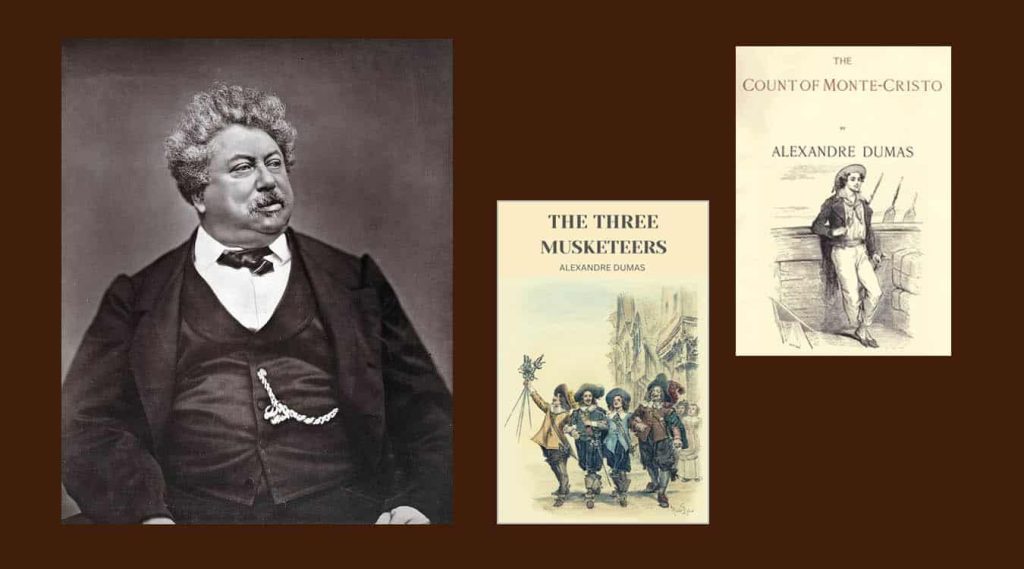
The major works of Alexandre Dumas not only achieved outstanding success in narrative art but also firmly established his position as one of the most influential writers in the history of world literature. Through captivating adventure stories, Dumas conveyed universal humanistic values, allowing his works to transcend their era and continue to live on in the hearts of readers today.
6. Conclusion
Alexandre Dumas was not only a great French writer of the nineteenth century but also one of the most influential and enduring figures in the history of world literature. Through his vast literary output, distinctive artistic style, and consistent humanistic ideology, he helped shape the face of the historical adventure novel while expanding the reach of literature to a broad audience. Under Alexandre Dumas’s pen, literature transcended mere entertainment to become a medium for reflecting history, posing moral questions, and nurturing faith in human values.
Major works such as The Three Musketeers and The Count of Monte Cristo have crossed the boundaries of time and culture to become a shared heritage of humanity. Their lasting vitality derives not only from gripping plots and memorable characters but also from the universal values of freedom, justice, friendship, and loyalty that Alexandre Dumas conveyed. These values have enabled his literature to be continually reread, adapted, and reinterpreted in diverse historical and social contexts.
Overall, Alexandre Dumas stands as a compelling example of the harmonious balance between art and popular appeal, between history and imagination, and between entertainment and thought. His position in French and world literature is defined not merely by the quantity or popularity of his works, but by the profound influence he has exerted on how people approach and experience literature. To this day, Alexandre Dumas remains a symbol of unceasing creativity, enduring faith in humanity, and the lasting value that literature can bring to the spiritual life of humankind.