Throughout the history of software engineering, very few books have managed to maintain their status as reference works for decades, despite the rapid evolution of programming languages, tools, and development paradigms. Code Complete by Steve McConnell is one of those rare works to achieve such a position. Rather than being conceived as a syntax manual or a guide tied to fleeting technological trends, the book approaches programming as a systematic engineering activity – one that requires disciplined thinking, rigor, and clearly defined professional standards.
Instead of focusing on the question “how to make code run” Code Complete places its emphasis on “how to build code correctly” The book treats source code as a body of knowledge that must be designed, structured, and maintained throughout the software lifecycle, particularly in contexts where systems grow increasingly complex and are developed by multiple individuals across generations. This perspective allows Code Complete to transcend the boundaries of a conventional technical book, establishing it as a foundational work on quality – oriented thinking in modern programming.
1. Introduction to the Author Steve McConnell and Code Complete
Steve McConnell is one of the most influential figures in the field of software engineering, especially in areas related to code quality, development processes, and software project management. Over the course of his career, he has held a variety of roles, including software engineer, system architect, and engineering manager, through which he accumulated extensive hands – on experience with large – scale and complex software projects.
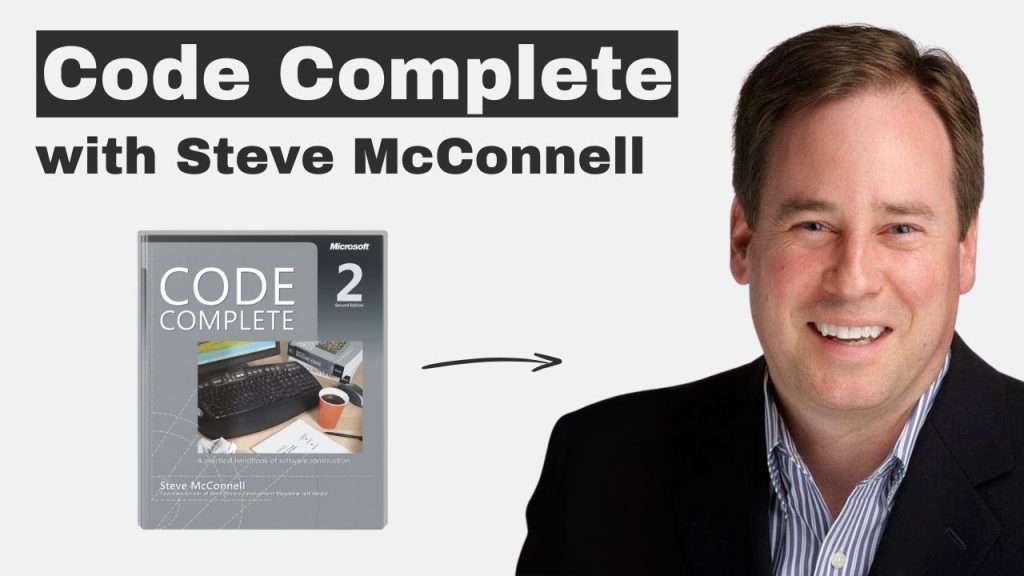
In addition to his professional practice, Steve McConnell is widely recognized as a respected author and speaker. His works are typically grounded in a synthesis of academic research, empirical data, and real -world observations from industrial environments. This approach lends strong credibility to his arguments, allowing his writing to avoid two common extremes: purely theoretical discourse lacking practical applicability, and fragmented personal experience lacking systematic structure.
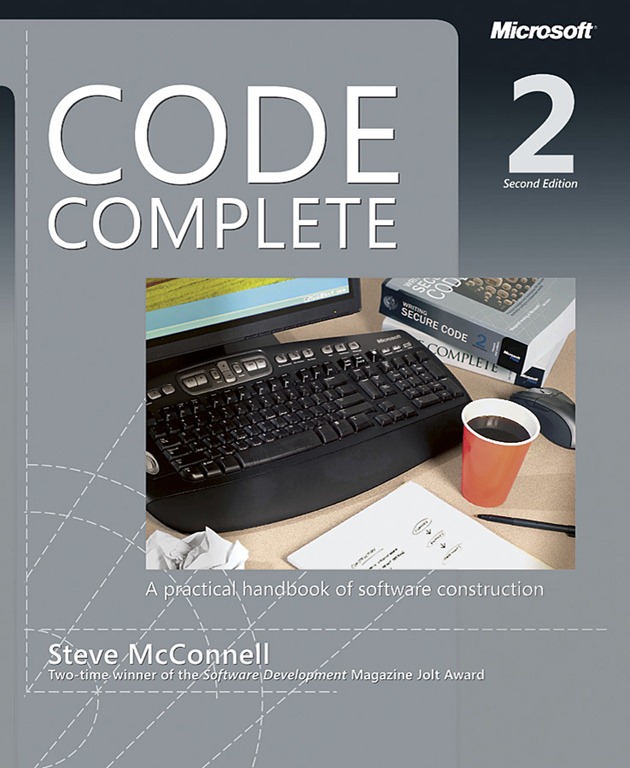
Code Complete was first published in 1993, during a period when the software industry was facing widespread challenges related to quality issues, cost overruns, and project failures. The book emerged as an effort to systematize effective programming practices, with a particular focus on building source code that is well-structured, comprehensible, and maintainable. The second edition, released in 2004, significantly expanded both its scope and supporting evidence, reflecting major shifts in software development thinking over more than a decade.
Unlike many works that focus on a specific programming language or technology stack, Code Complete was designed as a universal reference. The principles presented in the book are not bound to any particular technical ecosystem; instead, they address the fundamental nature of programming itself – how developers organize their thinking, manage complexity, and sustain quality over time. This characteristic has enabled Code Complete to retain its long – term relevance and to be widely regarded as one of the foundational texts in the body of knowledge of modern software engineering.
2. Overview of Code Complete
Code Complete is a comprehensive work that focuses on a thorough analysis of the software construction process at the level of source code. Rather than treating programming as a purely technical activity, the book situates it within a broader context of design thinking, decision – making, and quality control throughout the software development lifecycle. The core question underlying the book is how to write source code that is correct, readable, and maintainable over the long term.
Structurally, Code Complete is organized in a systematic manner, guiding readers from foundational concepts to concrete practices. The opening sections clarify the nature of programming as an activity and emphasize the importance of preparation and design before writing code. McConnell argues that code quality is not the result of post hoc refinements, but is largely determined by how programmers think about problems, model solutions, and make design choices from the outset.
Subsequent chapters delve into the fundamental components of source code, including naming conventions, variable organization, control flow management, function structure, and modularization. Each topic is analyzed from the perspective of reducing complexity and increasing clarity. The author not only presents guiding principles, but also identifies common mistakes, typical forms of “bad code,” and their long-term consequences for system maintainability and extensibility.
A distinctive feature of Code Complete is its strong emphasis on software quality and reliability. The book devotes considerable attention to testing, debugging, code reviews, and techniques for early defect detection. McConnell views defect prevention as a far more effective strategy than fixing errors once systems have become highly complex, thereby underscoring the importance of technical discipline and structured workflows.
Beyond specific programming techniques, Code Complete also extends its discussion to methodological considerations such as complexity management, the trade – off between performance and readability, and the relationship between individual programmers and the overall quality of a project. Through its integration of technical depth and conceptual breadth, the book functions not only as a programming manual, but also as a guide to a professional approach to software development.
3. The Value and Influence of Code Complete
The core value of Code Complete lies in its ability to systematize fragmented programming practices into a coherent and widely applicable body of knowledge. Rather than offering short – term technical “tips,” the book focuses on enduring principles that help readers understand the relationship between code structure, maintainability, and overall software quality. This approach transforms Code Complete from a technical guide into a benchmark reference for quality – oriented thinking in programming.
At the individual level, the book plays a significant role in shaping how programmers perceive their work. Programming is no longer framed merely as the fastest way to achieve functionality, but as a disciplined engineering activity requiring precision and professional responsibility. Concepts such as complexity control, clear design, and early defect prevention have become foundational elements in the training and evaluation of programmers, particularly during the formative stages of their professional development.
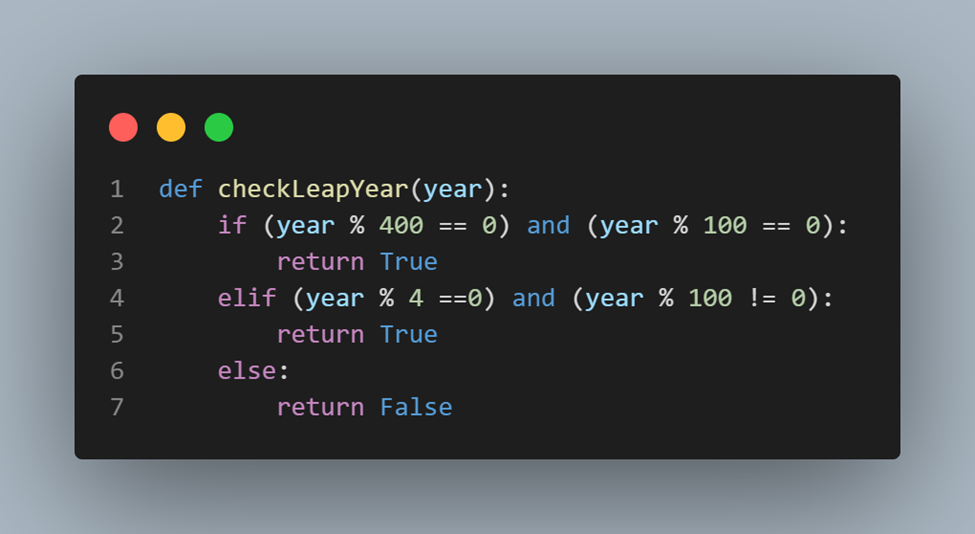
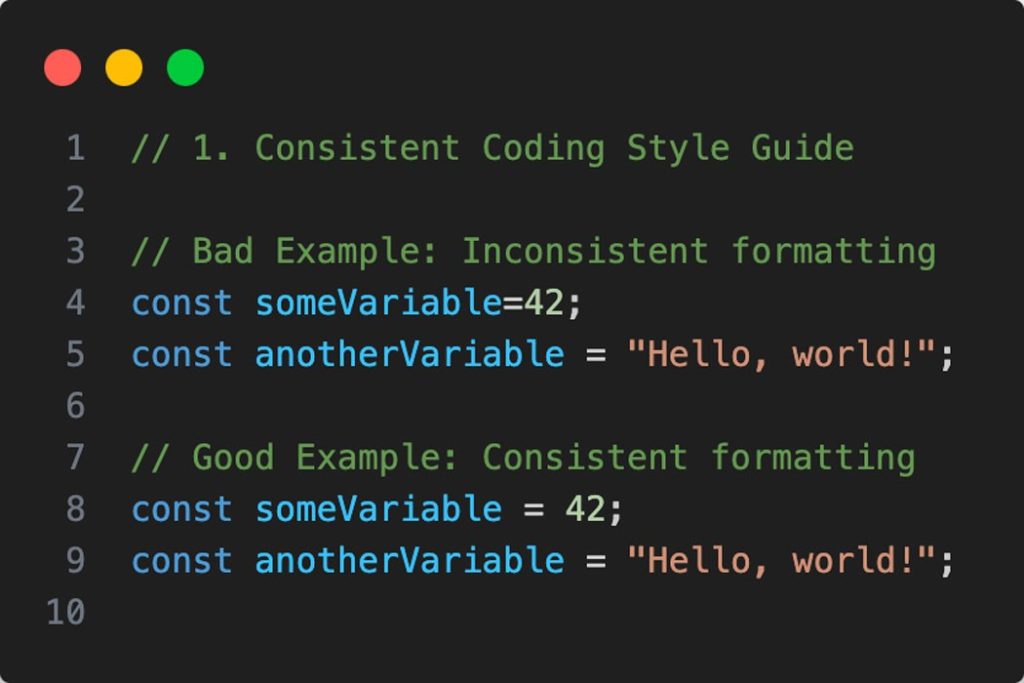
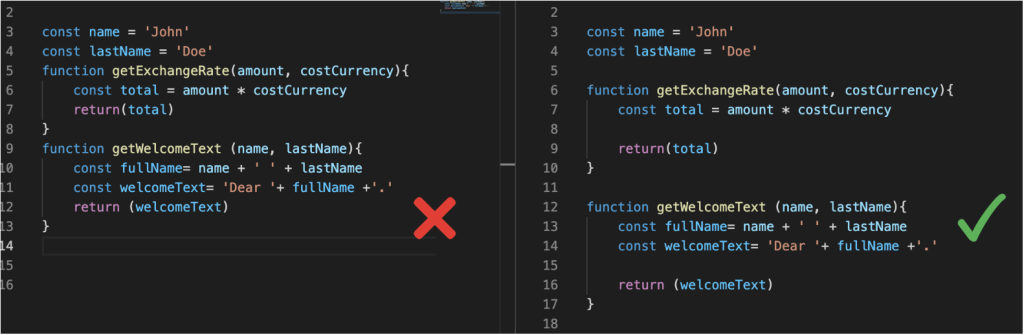
At the organizational and industry levels, Code Complete has had a visible impact on how software teams approach quality and development processes. Many practices discussed in the book – such as code reviews, standardized coding conventions, and a strong emphasis on testing – have become integral to modern software development methodologies. Even with the emergence of frameworks like Agile and DevOps, the principles articulated by McConnell remain compatible and continue to be adapted to new contexts.
From a historical perspective, the influence of Code Complete is also evident in its role in elevating discussions about programming from purely technical concerns to the level of methodology. The book contributes to a shared language for discussing code quality, enabling individuals and organizations to evaluate, communicate, and improve software development practices on a solid conceptual foundation. As a result, Code Complete stands not only as a reference book, but as a pillar in shaping the professional mindset of modern software engineering.
4. Who Should Read Code Complete
Code Complete is intended for a broad audience within the software development field, particularly those directly involved in writing and maintaining source code. First and foremost, the book is highly valuable for early- and mid-level programmers who have already mastered the syntax of one or more programming languages but lack a systematic framework for thinking about code quality. For this audience, Code Complete serves as a guide for transitioning from merely “writing working code” to “writing structured, controlled, and extensible code.”
Experienced programmers can also find significant value in the book through its role in validation and standardization. Rather than introducing entirely new concepts, Code Complete helps consolidate scattered experiential knowledge accumulated over years of practice, while providing a shared vocabulary for articulating and communicating technical standards within development teams. This is particularly beneficial in collaborative environments and long – lived, large – scale projects.
Beyond programmers, the book is also well-suited for roles such as software engineers, system architects, technical leads, and technically oriented project managers. The content of Code Complete helps these professionals better understand the relationship between low – level technical decisions and factors such as maintenance costs, project schedules, and system stability. In this way, the book supports informed technical decision – making grounded in methodological reasoning rather than intuition alone.
Finally, Code Complete is also well suited as a reference for education and training purposes. With its systematic presentation, extensive examples, and clear analyses, the book can serve as a foundation for curricula, internal documentation, or the standardization of development processes within organizations. Thanks to its universality and long-term relevance, the book’s readership is not constrained by specific programming languages or technologies, but extends to anyone concerned with quality and professionalism in programming.
5. Conclusion
Code Complete affirms its status as a foundational work in software engineering not by keeping pace with transient technological trends, but by clarifying the essential nature of programming itself. The book places source code at the center of the software development process, viewing code quality as a decisive factor in system stability, scalability, and long – term value.
By systematizing principles, practices, and quality control methods, Code Complete provides readers with a comprehensive framework for approaching programming as a disciplined profession with clear standards. Steve McConnell’s arguments not only help improve source code quality at a technical level, but also raise awareness of the responsibilities borne by individuals and organizations in building sustainable software systems.
In a technological landscape characterized by constant change, the enduring value of Code Complete lies in its universality and long-term applicability. The book continues to serve as an important reference that guides thinking and standardizes programming practices for generations of software professionals, thereby securing its lasting position within the body of knowledge of the field.
6. References
[1] S. McConnell, Code Complete, 2nd ed. Redmond, WA, USA: Microsoft Press, 2004.
[2] S. McConnell, Rapid Development: Taming Wild Software Schedules. Redmond, WA, USA: Microsoft Press, 1996.
[3] R. C. Martin, Clean Code: A Handbook of Agile Software Craftsmanship. Upper Saddle River, NJ, USA: Prentice Hall, 2008.
[4] R. C. Martin, The Clean Coder: A Code of Conduct for Professional Programmers. Upper Saddle River, NJ, USA: Prentice Hall, 2011.
[5] R. C. Martin, Clean Architecture: A Craftsman’s Guide to Software Structure and Design. Boston, MA, USA: Prentice Hall, 2017.
[6] M. Fowler, Refactoring: Improving the Design of Existing Code. Reading, MA, USA: Addison-Wesley, 1999.
[7] M. Fowler, Patterns of Enterprise Application Architecture. Boston, MA, USA: Addison-Wesley, 2002.
[8] E. Gamma, R. Helm, R. Johnson, and J. Vlissides, Design Patterns: Elements of Reusable Object-Oriented Software. Reading, MA, USA: Addison-Wesley, 1994.
[9] K. Beck, Test-Driven Development: By Example. Boston, MA, USA: Addison-Wesley, 2003.
[10] F. P. Brooks, The Mythical Man-Month: Essays on Software Engineering, Anniversary ed. Boston, MA, USA: Addison-Wesley, 1995.