

In the course of social development, education has always been regarded as the core foundation that determines the quality of human beings and the depth of civilization. However, in historical periods when the old order becomes stagnant – when feudal thinking, habits of blind obedience, and dependence on inherited social status continue to exert strong influence on social life – the proper recognition of the role of learning is by no means simple. It is precisely within such a transitional context that Encouragement of Learning emerges as an Enlightenment text, reexamining fundamental questions about the meaning of learning and the place of knowledge in human life.
Rather than approaching education from a purely scholastic or moralistic perspective, Encouragement of Learning situates learning within a direct relationship with individual freedom, social equality, and national strength. The work argues that learning is not merely the accumulation of knowledge; more fundamentally, it serves to cultivate independent thinking, the ability to distinguish right from wrong, and the capacity to take responsibility for one’s own life. From this perspective, learning becomes a personal obligation with social significance, closely tied to the collective progress of the community.
What distinguishes Encouragement of Learning is its challenge to entrenched notions of fate and social hierarchy. Instead of accepting social stratification as a natural and inevitable order, the work asserts that all differences among people ultimately stem from differences in learning. This viewpoint carries not only educational significance but also a profound reformist spirit, aiming toward the construction of a society based on knowledge rather than privilege.
With its concise style, clear reasoning, and progressive ideas, Encouragement of Learning is not merely a book about education; it is a manifesto advocating the spirit of self-directed learning and intellectual independence. More than a century after its publication, the work retains its relevance, especially in the modern context where lifelong learning has become an essential condition for human adaptation and sustainable development.
1. Introduction to the Author and the Work Encouragement of Learning
Encouragement of Learning is a representative work of Fukuzawa Yukichi (1835–1901), one of the most influential Enlightenment thinkers in the process of Japan’s modernization in the late nineteenth century. He was not only an educator and cultural figure but also a social reformer with a strategic vision of the role of knowledge in building an independent and progressive nation. In Japanese history, Fukuzawa Yukichi is often regarded as a symbol of the Enlightenment spirit, a foundational figure in modern educational thought and civic consciousness.
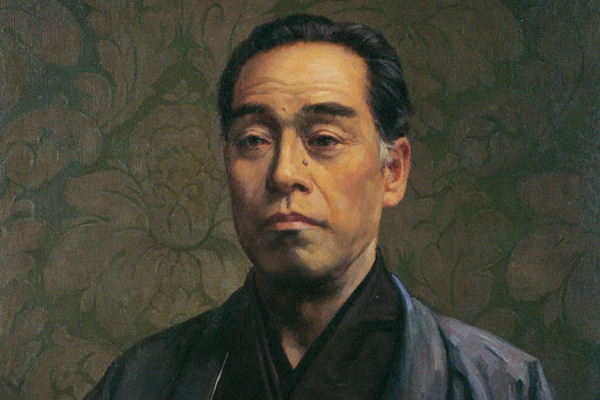
Fukuzawa was born into a lower-ranking samurai family, a social stratum with limited privileges under the Tokugawa feudal system. This background allowed him to perceive early on the injustice and stagnation of a social order based on lineage and inherited status. Through his studies and exposure to Western knowledge – particularly science, philosophy, and modern educational models – Fukuzawa increasingly came to believe that only learning and independent thinking could liberate human beings from dependence and backwardness.
Unlike many scholars of his time who remained loyal to traditional Confucian ideology, Fukuzawa Yukichi chose a more radical path of reform. He advocated the selective adoption of Western ideas while simultaneously promoting educational reform in Japan oriented toward practicality, science, rationality, and individual competence. These views were realized not only through his theoretical writings but also through concrete educational initiatives, most notably the founding of Keio University, which remains one of Japan’s most prestigious institutions today.
Within Fukuzawa’s intellectual system, Encouragement of Learning occupies a particularly significant position. First published in 1872, the work appeared at the very moment when Japan entered the Meiji Restoration – a pivotal period marking the transition from a feudal society to a modern state. Encouragement of Learning consists of a series of short essays written in plain, direct language, addressing the general public rather than an intellectual elite. This clearly reflects the author’s aim of popularizing educational thought and enlightening the public.
The content of Encouragement of Learning focuses on clarifying the role of education in both individual and social life, emphasizing that learning constitutes the foundation of freedom, equality, and national independence. Fukuzawa Yukichi does not regard learning merely as a means of personal advancement; rather, he considers it a prerequisite for forming responsible citizens capable of independent thought and self-determination. For this reason, Encouragement of Learning carries both educational significance and profound socio-political implications.
With its broad and lasting influence, Encouragement of Learning not only transformed Japanese perceptions of education but also became one of the foundational texts of Enlightenment thought in Asia. To this day, the work continues to be studied, taught, and cited as a compelling illustration of the power of knowledge in advancing human and social progress.
2. Summary of the Content of Encouragement of Learning
Encouragement of Learning is not constructed as a narrative work with plot, characters, or dramatic climax in the conventional literary sense. Instead, it is developed as a system of concise, tightly connected arguments designed to elucidate a central idea: learning determines an individual’s position in society and constitutes the foundation of an independent and civilized nation.
From its opening pages, Fukuzawa Yukichi establishes a fundamental thesis: human beings are born equal; no one is inherently noble or inferior. According to him, distinctions in status, wealth, power, or social respect do not arise from divine will or lineage, but primarily from differences in learning. By rejecting deterministic and class-based thinking deeply rooted in feudal society, the author directs readers toward the recognition that each individual must take responsibility for their own position in life.

Building on this premise, Encouragement of Learning proceeds to redefine the concept of “learning” in a broad sense. Fukuzawa Yukichi does not equate learning with book reading or mechanical memorization. For him, learning is a process of intellectual cultivation through which individuals develop independent thinking, analytical ability, sound judgment, and rational decision-making. A learned person is not defined by the possession of degrees, but by the capacity to apply knowledge effectively in real life.
In subsequent sections, the author criticizes habits and modes of thought that hinder human development, particularly dependence, blind obedience, and reliance on protection from others or the state. Fukuzawa argues that a society composed of individuals lacking self-directed learning and independence cannot achieve sustainable progress, as intellectual weakness inevitably leads to economic, political, and cultural dependence.
Beyond the individual level, Encouragement of Learning expands the discussion of learning to the social and national spheres. Fukuzawa Yukichi emphasizes that the educational level of the populace directly reflects the strength of the nation. A country can be truly independent only when its citizens possess knowledge, critical thinking, and resistance to superstition, coercive power, and external influence. Thus, learning is not merely an individual right but also a responsibility toward society and the future of the nation.
Throughout the work, Fukuzawa places particular emphasis on the spirit of self-learning. He affirms that no one can learn on behalf of another and that there are no shortcuts to genuine knowledge. Learning requires perseverance, initiative, and long-term self-discipline. This view clearly reflects the author’s progressive outlook, treating learning as a lifelong process inseparable from continuous human self-improvement.
In its conclusion, Encouragement of Learning returns readers to its original thesis: only when individuals stand firmly on the foundation of knowledge and reason can society establish a solid basis for freedom, equality, and progress. The work thus functions not merely as a call to study, but as an ideological blueprint guiding how people perceive themselves, society, and the role of education in the flow of history.
3. Content Value and Artistic Value of Encouragement of Learning
From an intellectual perspective, Encouragement of Learning is a work of profound content value with enduring influence on perceptions of education and humanity. Fukuzawa Yukichi does not treat learning as a formal, self-contained objective; rather, he situates it within an organic relationship with individual freedom, social equality, and national development. This conceptual framing elevates Encouragement of Learning beyond the boundaries of a conventional educational text, transforming it into a genuine Enlightenment document.
One of the most significant content values of Encouragement of Learning lies in its affirmation of the central role of self-directed learning. The work repeatedly stresses that learning cannot be borrowed or substituted, but must result from sustained personal effort. Fukuzawa views self-learning as a prerequisite for intellectual independence, enabling individuals to control their actions and shape their own lives. This stance not only counters the dependency mentality prevalent in feudal society, but also lays the foundation for the modern concept of lifelong learning.

Moreover, Encouragement of Learning advances a progressive notion of knowledge-based equality. Rather than accepting social stratification as an immutable order, the work asserts that differences in status originate from differences in education. This perspective liberates individuals from fatalistic resignation while fostering a sense of personal responsibility for learning and self-improvement. In the historical context of late nineteenth-century Japan, such ideas were revolutionary, directly challenging long-established feudal ideology.
The content value of Encouragement of Learning is further evident in its articulation of the close relationship between individuals and the nation. Fukuzawa Yukichi argues that national prosperity or decline does not depend on centralized power or natural resources, but on the educational level of the people. When individuals possess knowledge, independent thinking, and a sense of responsibility, society can form a stable foundation for freedom, democracy, and sustainable development. This view reflects the author’s strategic vision of education’s role in modernization.
In terms of artistic value, Encouragement of Learning is distinguished by its concise, direct, and persuasive style. Fukuzawa Yukichi avoids elaborate metaphors or ornate language, opting instead for clear expression accessible to the general public. This simplicity of form enables the work’s profound ideas to transcend academic barriers and reach diverse social groups.
The structure of the work consists of short argumentative essays, each focusing on a specific point while remaining closely connected to the central theme. This organization creates a logical flow of reasoning, facilitating comprehension and retention. The deliberate repetition of key ideas – learning, independence, and personal responsibility – also reinforces the core message of Encouragement of Learning.
The harmonious combination of intellectual depth and simple expression constitutes the distinctive artistic value of Encouragement of Learning. The work seeks not to impress through rhetoric, but to persuade through reason and long-term vision. It is precisely this quality that has allowed Encouragement of Learning to endure over time as a foundational text of modern educational thought, retaining its relevance in contemporary society.
4. Notable Quotations in Encouragement of Learning
One of the factors contributing to the enduring vitality of Encouragement of Learning is its system of concise yet intellectually rich statements. Fukuzawa Yukichi does not convey his ideas through lengthy arguments, but rather condenses his Enlightenment spirit into clear and decisive propositions. The following quotations not only reflect the core ideas of the work, but also function as foundational theses guiding Fukuzawa’s perspective on learning, humanity, and society.

1. “Heaven does not create one person above another, nor does it create one person below another.”
→ This famous opening line establishes the principle of innate equality, rejecting hierarchy based on birth and laying the groundwork for the argument that learning determines human position.
2. “Differences among people arise from differences in learning.”
→ This quotation shifts the focus from fate to personal responsibility, emphasizing education’s decisive role in shaping human value and capability.
3. “A learned person is one who knows how to apply knowledge in life.”
→ Fukuzawa rejects bookish learning and defines practical application as the true measure of education.
4. “Learning is not for display, but for independence.”
→ This statement reflects the pragmatic spirit of Encouragement of Learning and criticizes superficial, reputation-driven education.
5. “Those who do not learn cannot avoid dependence on others.”
→ Learning is directly linked to personal freedom, highlighting knowledge as the condition for independence.
6. “No one can learn on behalf of another.”
→ Fukuzawa affirms the personal and non-transferable nature of learning, reinforcing the principle of self-directed study.
7. “Learning is for distinguishing right from wrong, not for blind obedience.”
→ This emphasizes education’s deeper purpose: cultivating critical thinking and independent judgment.
8. “A strong nation begins with educated citizens.”
→ Individual learning is inseparably connected to national strength.
9. “Those with knowledge are not easily deceived or misled.”
→ This reflects Fukuzawa’s belief in education’s protective function against superstition and coercive power.
10. “Only when people stand firmly on knowledge can society progress.”
→ This quotation succinctly summarizes the entire ideological framework of Encouragement of Learning.
5. Conclusion
Encouragement of Learning by Fukuzawa Yukichi is a work of enduring intellectual value, transcending the limits of an ordinary educational book to become an Enlightenment text with profound influence in modern intellectual history. By placing learning at the center of both individual and social concerns, the work reveals the close relationship between knowledge, personal freedom, and sustainable national development.

Throughout Encouragement of Learning, the principles of self-learning and intellectual independence are consistently articulated as foundational values. The work does not promote learning for fame or status, but emphasizes learning as a means to cultivate independent thinking, sound judgment, and responsibility toward oneself and the community. This perspective accounts for the work’s continued relevance in the modern era, where knowledge determines human adaptability and growth.
From a comprehensive standpoint, Encouragement of Learning demonstrates that the true power of education lies not in form or slogans, but in its capacity to transform individual awareness and behavior. The work affirms that a progressive society can only be built upon educated individuals who think independently and take responsibility for their choices. This enduring message constitutes the core value of Encouragement of Learning within the broader tradition of educational thought. With its clear reasoning, plain language, and progressive vision, Encouragement of Learning remains an essential reference for those interested in education, while also offering a sound perspective on learning in contemporary life. The work thus deserves to be read, reflected upon, and applied as an intellectual foundation for the pursuit of learning and human development in today’s knowledge-based society.