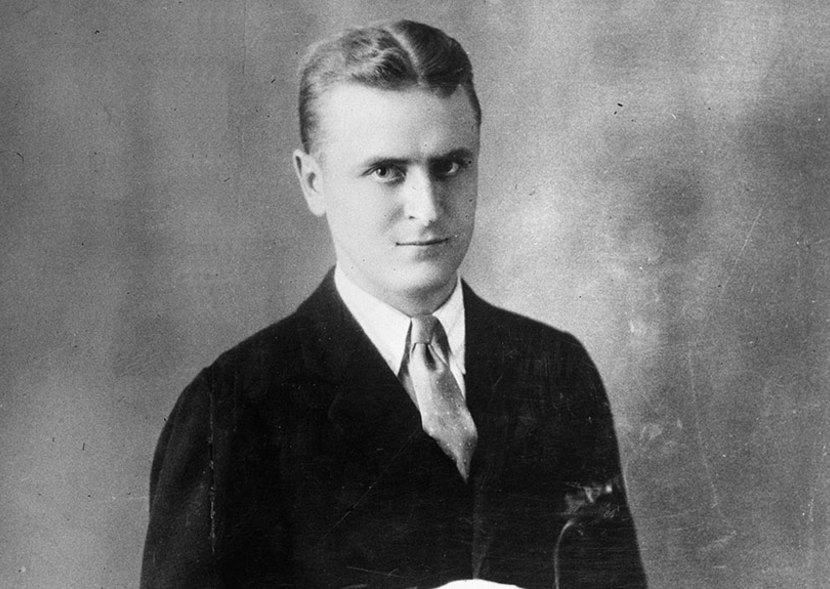
In the development of twentieth-century American literature, F. Scott Fitzgerald is widely regarded as one of the most representative figures reflecting the spirit of the age and the profound transformations of modern society. He was not only a writer who left a strong artistic imprint, but also one who sharply captured the spiritual portrait of the United States in the post – World War I period – a time marked by material brilliance yet deeply fraught with crises of values.
Closely associated with the concepts of the “Jazz Age” and the “Lost Generation,” Fitzgerald employed literature as a means of social reflection, examining the illusions and contradictions embedded in the American Dream – a vision once considered the spiritual foundation of the nation. Through stories of ambition, love, social status, and inner disintegration, he revealed the growing gap between material success and existential meaning.
Despite the many fluctuations of his life and career, the works of F. Scott Fitzgerald have retained enduring value thanks to their intellectual depth, refined artistic style, and ability to address universal concerns of modern humanity. For this reason, he is not merely a writer of his own time, but a voice with lasting influence in world literature.
1. A Brief Introduction to the Author
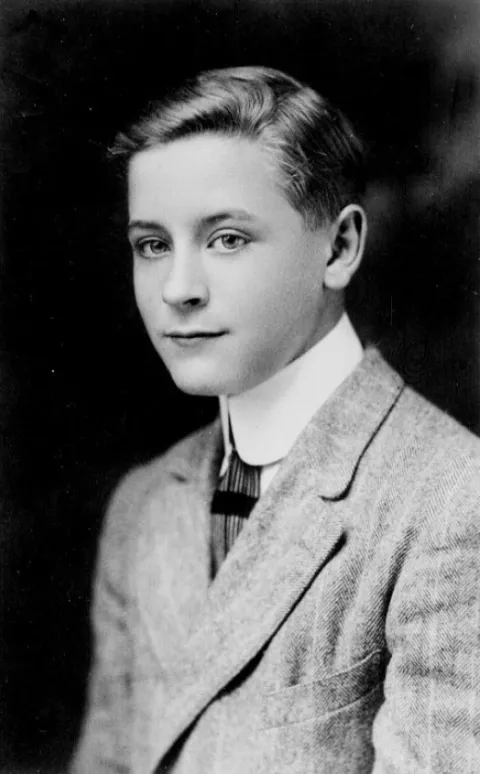
Francis Scott Key Fitzgerald was born on September 24, 1896, in Saint Paul, Minnesota, into a middle-class family of Irish descent. He was named after Francis Scott Key, the author of the lyrics to the United States national anthem – a detail of symbolic significance that partly reflects the cultural atmosphere and sense of national identity surrounding Fitzgerald’s early years. From a young age, he was exposed to literature and demonstrated an early talent for writing through poems and short stories published in school newspapers and magazines.
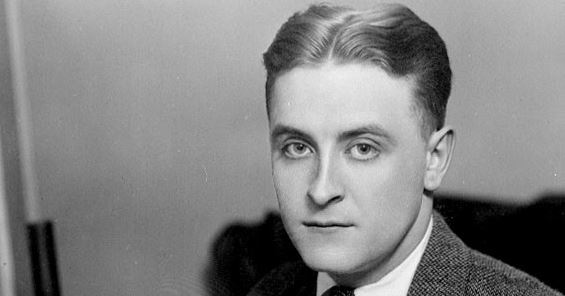
Fitzgerald came of age at a time when American society was undergoing rapid industrialization, marked by increasing class stratification, social mobility, and intense pressure for personal success. Though not born into wealth, he harbored a strong desire for acceptance within upper-class society. As a result, he developed a deep and enduring interest in issues of social status, money, fame, and personal identity – concerns that later became central themes throughout his literary career.
In 1913, Fitzgerald enrolled at Princeton University, one of the most prestigious educational institutions in the United States. There, he actively participated in literary activities, writing plays and short fiction for student publications. However, inconsistent academic performance and an overwhelming focus on creative writing prevented him from completing his degree. In 1917, Fitzgerald joined the U.S. Army during World War I, though the war ended before he was deployed overseas. His military experience, combined with the pervasive anxiety of postwar society, left a lasting imprint on his worldview and generational consciousness.
After the war, Fitzgerald committed himself fully to a professional literary career. In 1920, he married Zelda Sayre, a woman from a wealthy Southern family. This passionate yet unstable marriage profoundly shaped Fitzgerald’s personal life and served as a major source of inspiration for the complex female characters and emotionally turbulent relationships depicted in his novels.
Throughout his life, Fitzgerald experienced both the heights of fame and the weight of financial pressure, declining health, and prolonged psychological crises. He died on December 21, 1940, in Hollywood, California, at the age of forty-four, in relative obscurity. Nevertheless, his legacy far exceeds the boundaries of a personal biography, playing a crucial role in shaping modern American literature and influencing how the world understands the American Dream in the twentieth century.
2.Literary Career
The literary career of F. Scott Fitzgerald is closely intertwined with the major social transformations of the United States in the first half of the twentieth century, particularly the post – World War I era and the Great Depression. Across different stages of his creative journey, Fitzgerald not only faithfully reflected the spirit of his time, but also revealed the evolving self – awareness and inner depth of a writer deeply concerned with humanity’s place in modern society.
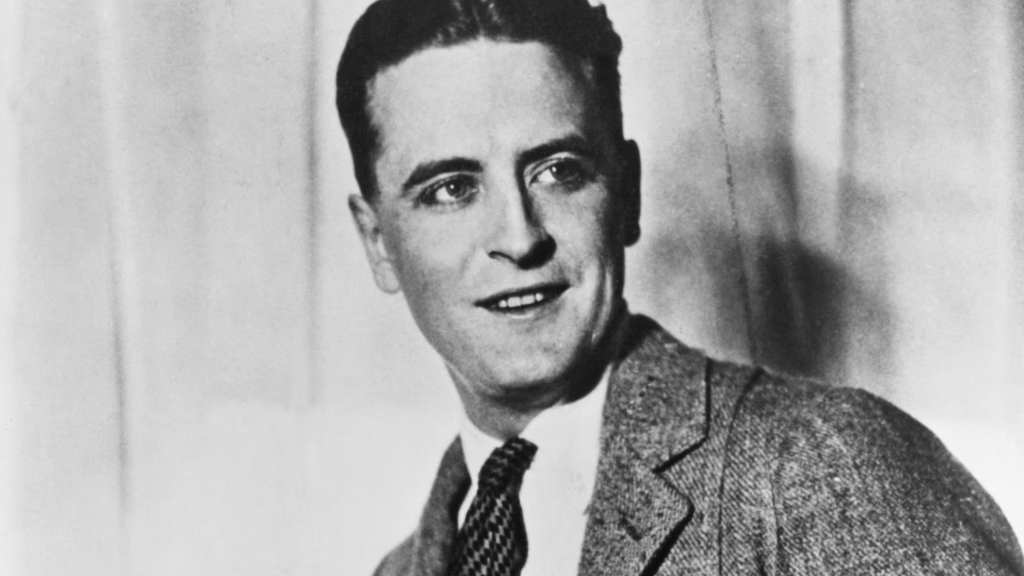
Early Stage: Early Success and the Voice of the Postwar Generation
A decisive turning point in Fitzgerald’s career came in 1920 with the publication of his debut novel, This Side of Paradise, which quickly achieved widespread acclaim in American literary circles. The novel portrays the confusion, idealism, and rebellion of young intellectuals in the aftermath of the war – individuals eager to assert themselves yet disoriented by the collapse of traditional values. Its remarkable success not only brought Fitzgerald fame and financial stability, but also established him as one of the defining voices of the “Lost Generation.”
During this period, Fitzgerald also wrote numerous short stories for major magazines such as The Saturday Evening Post. While these works were often commercial in nature, they nonetheless demonstrated his keen social observation and distinctive lyrical prose.
Peak Period: The Jazz Age and the Consolidation of Artistic Style
The 1920s are widely regarded as the most brilliant phase of Fitzgerald’s career. He became the writer most closely associated with the concept of the Jazz Age, a term he himself popularized to describe a society characterized by economic prosperity, cultural exuberance, and underlying moral instability. In this context, Fitzgerald produced many significant works that vividly expose the contrast between outward glamour and inner emptiness among the upper classes.
The artistic culmination of this period is The Great Gatsby (1925). Although the novel did not achieve immediate commercial success, it demonstrated Fitzgerald’s maturity in narrative structure, symbolic language, and social critique. Through the story of Jay Gatsby and his relentless pursuit of the American Dream, Fitzgerald posed fundamental questions about success, love, and morality within modern capitalist society.
Decline and Reflection: From the Great Depression to the End of Life
Entering the 1930s, Fitzgerald’s career was profoundly affected by the Great Depression and a series of personal crises. Financial hardship, declining health, and his wife’s mental illness plunged him into a prolonged state of instability. Under these circumstances, Fitzgerald moved to Hollywood and worked as a screenwriter, relying on it as his primary source of income.
Although this period brought limited public recognition, Fitzgerald’s later works exhibit greater intellectual depth and a more reflective tone. Tender Is the Night (1934) directly mirrors his painful personal experiences, portraying marital breakdown and psychological deterioration within elite society. His final novel, The Last Tycoon, though unfinished, introduced a new critical perspective on the entertainment industry and the concentration of economic power in Hollywood.
Overall, Fitzgerald’s literary career was marked by dramatic fluctuations yet remained ideologically consistent. Across each stage, he persistently explored the fundamental issues of modern American society, thereby securing his enduring place in the history of world literature.
3. Artistic Style and Ideology
The artistic style of F. Scott Fitzgerald is shaped by a harmonious fusion of social realism, refined lyricism, and a rich symbolic system, resulting in a narrative voice that is both emotionally resonant and intellectually reflective. Through a personal lens, Fitzgerald not only reconstructed American life in the early twentieth century, but also raised fundamental questions about spiritual values, morality, and human identity in modern society.
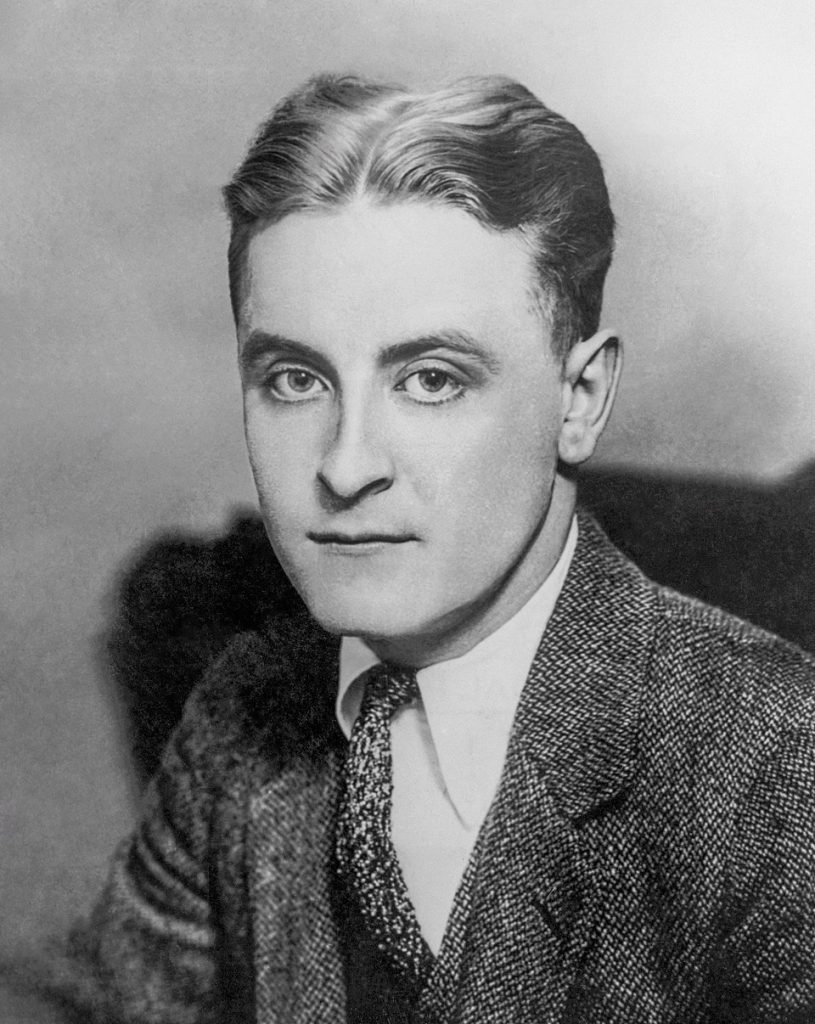
Lyrical Realism and Symbolic Artistry
One of the most distinctive features of Fitzgerald’s style is his ability to depict social reality through lyrical, musical, and image-rich prose. He frequently constructs lavish settings – grand parties, mansions, resorts, luxury automobiles – as elegant backdrops that accentuate the loneliness, emptiness, and psychological crises of his characters.
His symbolic imagery is employed with consistency and purpose, playing a crucial role in conveying thematic meaning. Motifs such as the green light, gold hues, jazz music, and endless social gatherings transcend descriptive function to become metaphors for desire, illusion, and the fragility of happiness in consumer society.
The American Dream and Social Critique
A central ideological concern in Fitzgerald’s work is his sustained reflection on and critique of the American Dream. Through characters driven by ambition and social aspiration, he exposes the disparity between idealized success and ethical reality. In Fitzgerald’s fictional universe, the American Dream no longer represents a path to freedom and fulfillment, but instead evolves into a series of illusions sustained by wealth, status, and fame.
While Fitzgerald does not entirely reject the dream’s foundational ideals, he reveals the psychological cost of equating happiness with material achievement. As a result, his writing carries a profound critical stance toward society, particularly the upper class and the culture of indulgence characteristic of the Jazz Age.
Personal Tragedy and Identity Crisis
Another defining aspect of Fitzgerald’s ideology is his focus on the crisis of personal identity in modern society. His characters are often trapped between an idealized past and a disillusioning present, between individual desire and socially imposed norms.
These personal tragedies not only mirror the author’s own experiences, but also serve as emblematic representations of the collective consciousness of the Lost Generation – a cohort confronting the collapse of traditional values in the wake of war.
Ethical Perspective and Humanism
Despite its critical tone, Fitzgerald’s writing does not descend into extremism or absolute pessimism. Beneath narratives of moral decay and personal failure lies a deeply humanistic perspective, marked by empathy for individuals who have lost their way in the search for meaning.
This balance between social critique and human understanding enables Fitzgerald’s work to transcend its historical moment and continue engaging modern readers in dialogue about aspiration, belief, and existential value.
4. Legacy and Contributions
Although F. Scott Fitzgerald died when his career was in decline and his achievements were not fully recognized, the literary value of his work was powerfully affirmed in the decades that followed. From the mid-twentieth century onward, critics and scholars increasingly acknowledged Fitzgerald as one of the most important figures in modern American literature, whose contributions were foundational in interpreting the social and cultural spirit of early twentieth-century America.
Reassessment and Position in American Literature
Following his death – particularly from the 1950s onward – Fitzgerald’s works, most notably The Great Gatsby, were widely republished and became the subject of extensive academic study. This critical reassessment not only restored his reputation but elevated him to the rank of canonical authors alongside figures such as Ernest Hemingway, William Faulkner, and John Steinbeck.
Within American literary history, Fitzgerald is recognized as the writer who most vividly and sensitively captured the spiritual landscape of the Jazz Age, from its surface glamour to its deep-seated crises of value. His works thus function as both cultural documents and enduring resources for the study of sociology and intellectual history.
Influence on Scholarship and Education
One of Fitzgerald’s most significant contributions lies in the inclusion of his works in formal educational curricula worldwide, particularly The Great Gatsby, which is widely regarded as a core text in American literature courses. Through these works, students engage with major themes such as the American Dream, class stratification, consumerism, and the crisis of personal identity.
Beyond literary studies, Fitzgerald’s writing has been examined in related fields including cultural studies, sociology, history, and media studies, demonstrating its interdisciplinary relevance and capacity for sustained intellectual dialogue.
Impact on Popular Culture and Contemporary Art
Fitzgerald’s legacy extends well beyond academic circles. His works have been adapted multiple times for film, theater, and other art forms, bringing his themes and imagery to a broad public audience. The Great Gatsby, in particular, has become a cultural icon, repeatedly reinterpreted and reimagined within modern contexts.
The fragile American Dream, the contrast between outward splendor and inner emptiness, and the tragedy of the individual within a consumer-driven society continue to inspire contemporary literature and cinema, underscoring the enduring influence of Fitzgerald’s vision.
Enduring Value and Contemporary Significance
What sustains Fitzgerald’s legacy is the universality of his ideas. Although rooted in early twentieth-century America, his works continue to address fundamental concerns of modern humanity: the pursuit of success, the sacrifice of spiritual values, and the loneliness produced by material excess.
As a result, F. Scott Fitzgerald remains not merely a writer of his era, but a voice capable of ongoing dialogue with successive generations, shaping how we understand literature, society, and ourselves.
5. Major Works
Throughout F. Scott Fitzgerald’s literary career, his major works not only reflect the evolution of his artistic development, but also played a significant role in shaping the landscape of twentieth – century American literature. The following are his most important works.
- This Side of Paradise (1920): Fitzgerald’s debut novel brought him immediate fame and captured the confusion, rebellion, and desire for self-affirmation among young Americans in the aftermath of World War I. The novel laid the foundation for the major themes that would recur throughout his writing.
- The Beautiful and Damned (1922): This novel explores the moral and spiritual decay of the upper class, offering a critique of hedonistic lifestyles and dependence on inherited wealth in American society.
- The Great Gatsby (1925): A classic of modern American literature, the novel tells the story of Jay Gatsby and his unfulfilled dream within a world of wealth that is both glamorous and emotionally barren. The book stands as a powerful symbol of the collapse of the American Dream and is widely regarded as the pinnacle of Fitzgerald’s artistic achievement.
- Tender Is the Night (1934): A novel with strong autobiographical elements, it depicts psychological deterioration, marital breakdown, and the consequences of upper-class life. The work demonstrates the psychological depth and stylistic maturity of Fitzgerald’s later career.
- The Last Tycoon (1941, published posthumously): An unfinished novel set in Hollywood, it exposes the darker realities of the American entertainment industry. Despite its incomplete state, the work reveals Fitzgerald’s sharp critical vision and innovations in narrative technique.
In summary, the works of F. Scott Fitzgerald not only reflect the social realities of early twentieth-century America but also laid the foundation for scholarly inquiry into the relationship between literature, popular culture, and consumerism in world literature.
6. Conclusion
In conclusion, F. Scott Fitzgerald occupies a central position in twentieth-century American literature as a writer who captured both the brilliance and the contradictions of modern society. Through his life and works, he offered a nuanced portrayal of an era defined by rapid social change, material prosperity, and profound moral uncertainty. His writing stands as a critical reflection on the American Dream, exposing the tension between aspiration and reality, as well as the human cost of equating success with wealth and status.
Beyond their historical context, Fitzgerald’s works continue to resonate because of their universal concerns with identity, desire, disillusionment, and the search for meaning in a modern, consumer-driven world. His refined artistic style, rich symbolism, and psychological insight have ensured that his fiction remains relevant to both academic scholarship and popular culture. As a result, F. Scott Fitzgerald is not merely a chronicler of the Jazz Age, but a lasting voice in world literature whose insights continue to inform how we understand literature, society, and the complexities of the human condition.