
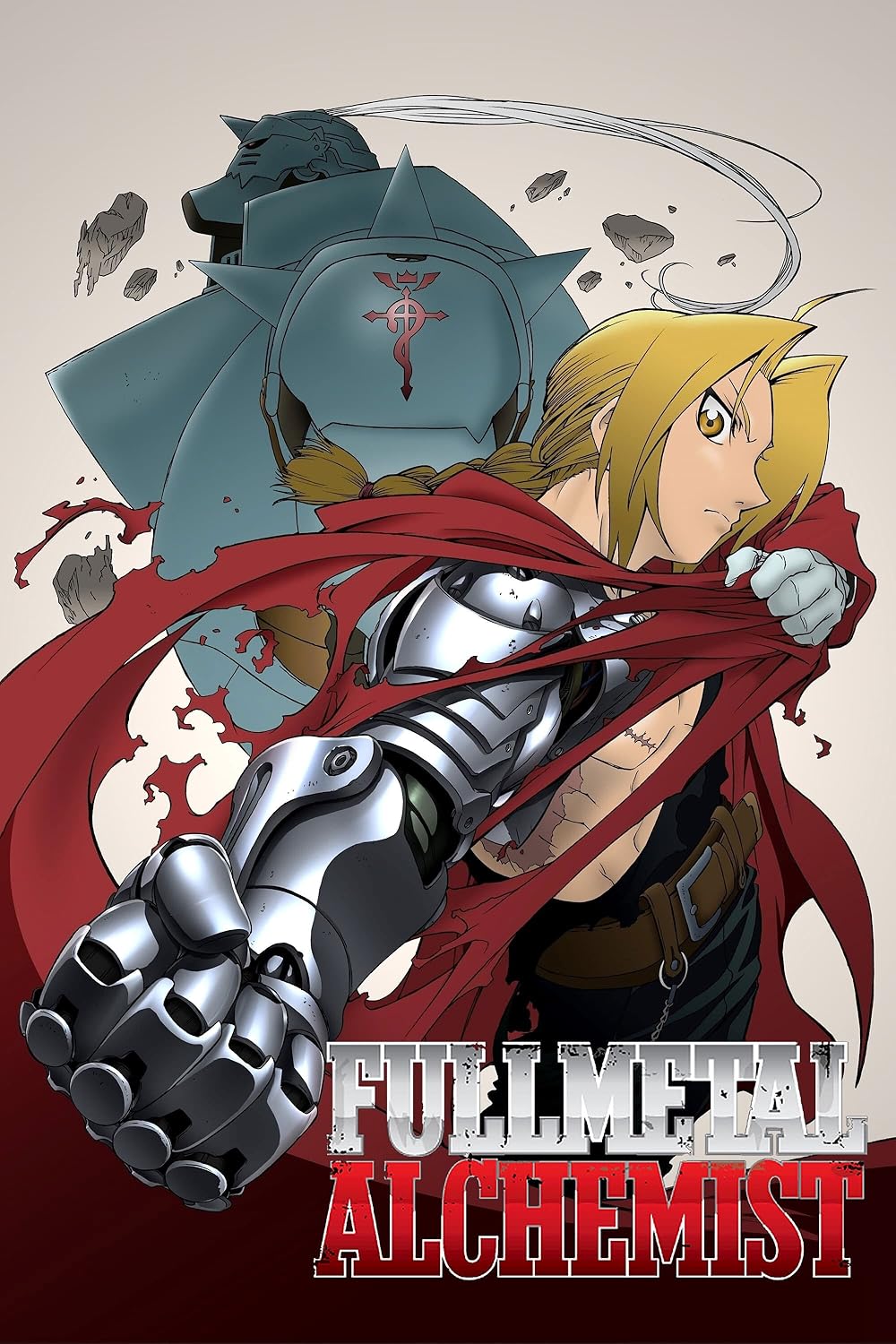
Within the broader development of modern Japanese manga, Fullmetal Alchemist is widely regarded as one of the few works to attain a sustainable balance between mass entertainment and rigorous intellectual depth. Beneath its fictional veneer of alchemy, the series does not simply tell a dramatic adventure story, but constructs a coherent system of philosophical, ethical, and social inquiries that compel readers to reflect on the limits of knowledge, the nature of power, and the price of ambitions that exceed the natural order.
Unlike many contemporary shōnen manga that prioritize escalating power levels or continuously intensifying combat, Fullmetal Alchemist adopts a more restrained and structurally disciplined approach. The narrative places its emphasis on the consequences of action, on losses that cannot be undone, and on personal responsibility within the larger framework of community and history. Every decision made by the characters leaves lasting traces, not only on their bodies but also within the social structures in which they exist.
Through this narrative strategy, Fullmetal Alchemist transcends the boundaries of pure entertainment to become a reflective form of storytelling. Its alchemical world, though imbued with fantasy, clearly mirrors real human concerns: war, systemic violence, the corruption of power, and the obsessive pursuit of truth at any cost. As a result, the work resonates not only with younger readers, but also with mature audiences seeking intellectual depth within the medium of comics.
With its tightly controlled structure, thematic coherence, and forward-looking vision, Fullmetal Alchemist deserves recognition as one of the major milestones of early twenty-first-century manga – a work in which comics function not merely as entertainment, but as a serious space for dialogue about humanity and the world it creates.
1. Introduction to the Author and the Work
Fullmetal Alchemist stands as the most representative work in the career of Hiromu Arakawa, one of the most influential female mangaka of early twenty-first-century Japan. Born in 1973 in Hokkaidō to a farming family, Arakawa’s background played a significant role in shaping her pragmatic worldview, disciplined outlook, and emphasis on the value of labor – qualities that permeate her creative works. Prior to Fullmetal Alchemist, she gained experience through various short manga projects, which helped refine her clear narrative style, structural awareness, and internal consistency.

The series was serialized in Monthly Shōnen Gangan (Square Enix) from 2001 to 2010 and later collected into 27 tankōbon volumes. Over nearly a decade of publication, the manga maintained a remarkably stable level of narrative quality, avoiding the excessive prolongation or ideological dilution common in long-running series. This consistency is widely regarded as a key factor behind Fullmetal Alchemist’s lasting popularity among readers and critics alike.
In terms of genre, the work is often classified as shōnen, action, adventure, and fantasy. However, Arakawa’s execution clearly transcends conventional genre boundaries. Alchemy in Fullmetal Alchemist is not presented as an arbitrary magical system, but as a rigorously rule-bound discipline influenced by science, natural philosophy, and Western rational thought. This logical coherence creates a believable fictional world, enabling readers to engage deeply with the philosophical issues the narrative explores.
The nation of Amestris is depicted with strong parallels to early modern and modern Europe, particularly in its military structure, administrative system, and state ideology. Through this setting, Fullmetal Alchemist expands beyond a personal story into a broader discourse on history, war, and political power. This fusion of fantasy and reality forms the foundation for the work’s exceptional intellectual depth within the shōnen manga tradition.
The manga’s success led to two major anime adaptations, with Fullmetal Alchemist: Brotherhood receiving particular acclaim for its fidelity to the source material and its complete realization of the story’s ideological framework. In addition, the franchise expanded into novels, live-action films, and other media formats, confirming Fullmetal Alchemist as a globally enduring cultural phenomenon.
2. Summary of the Plot
At the center of Fullmetal Alchemist lies the story of brothers Edward and Alphonse Elric, young alchemists growing up in a world where alchemy functions both as a science and as a tool of state power. The tragedy that initiates the narrative stems from a deeply personal loss: the death of their mother. In a desperate attempt to defy the natural order, the brothers commit the ultimate taboo of alchemy – human transmutation. The failed experiment costs Alphonse his entire body and Edward several limbs, marking the starting point of the series’ enduring tragedies and philosophical inquiries.

In the aftermath, Edward sacrifices his right arm and left leg to bind his brother’s soul to an empty suit of armor. From this moment, Fullmetal Alchemist firmly establishes its central theme: every action demands an equivalent price, and no sacrifice is without meaning. Bearing irreversible losses, the Elric brothers set out in search of the Philosopher’s Stone, a legendary artifact said to violate the law of Equivalent Exchange and restore what they have lost.
To pursue this goal, Edward becomes the youngest State Alchemist in history, earning the title “Fullmetal Alchemist” and entering the military apparatus of Amestris. This decision grants him access to knowledge and authority, but also entangles him in increasingly complex moral dilemmas. Along their journey, the brothers encounter individuals shaped by diverse fates and ideologies: alchemists haunted by wartime atrocities, victims of state violence, and figures willing to sacrifice human lives in pursuit of absolute power.
As they delve deeper into the truth behind the Philosopher’s Stone, the brothers uncover its horrific foundation – mass human sacrifice. Simultaneously, the homunculi, artificial beings embodying the seven deadly sins, emerge as shadowy forces manipulating history, wars, massacres, and the very formation of the Amestrian state. The narrative thus expands from a personal quest into a vast socio-political tableau, where individual lives are swept into an overarching conspiracy affecting humanity itself.
The climax of the story centers on the confrontation between finite humans and a being seeking godlike power. Rather than focusing on raw strength, Fullmetal Alchemist emphasizes choice, responsibility, and the price each character is willing to pay. Edward and Alphonse’s journey becomes not merely a quest to reclaim lost bodies, but a process of moral and intellectual maturation – one that affirms human dignity amid systemic injustice and violence.
3. Themes and Ideology
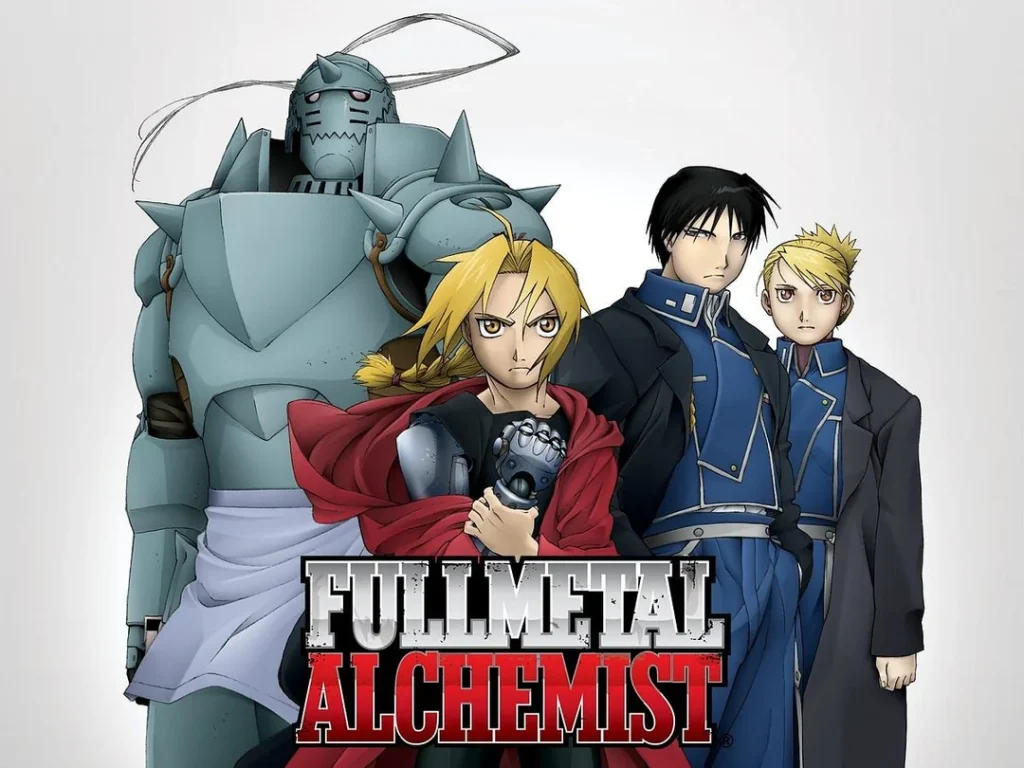
3.1. Equivalent Exchange: A Worldly Law and a Metaphor for Life
The core philosophical pillar of Fullmetal Alchemist is the principle of Equivalent Exchange, a law governing the entire system of alchemy. According to this principle, to obtain something of value, one must offer something of equal worth. On the surface, this rule provides logical coherence to the alchemical system. On a deeper level, it becomes a powerful metaphor for human existence, where achievement is inseparable from loss, responsibility, and long-term consequences.
Through the tragedy of the Elric brothers, the series exposes the dangerous naïveté of believing that knowledge or willpower can transcend all limits. Human transmutation represents not merely a technical error, but a refusal to accept the natural order. The narrative thus poses a fundamental philosophical question: are humans truly prepared to bear the cost of their desires, or do they fixate on outcomes while denying responsibility for consequences?
3.2. Knowledge, Science, and Moral Responsibility
Alchemy in Fullmetal Alchemist is portrayed as a systematic, scientific form of knowledge capable of reshaping society. However, the series does not glorify knowledge as an absolute good. Instead, Arakawa emphasizes that knowledge divorced from ethical foundations becomes a tool of destruction.
State Alchemists – simultaneously scholars and instruments of war – embody the fragile boundary between research and violence. Rather than offering simplistic moral judgments, the narrative foregrounds personal responsibility: the choices individuals make when their expertise serves power. This message carries universal relevance, particularly in the modern world, where science and technology are deeply intertwined with military and political interests.
3.3. State Power and Systemic Violence
Another crucial ideological layer of Fullmetal Alchemist lies in its critique of centralized power and institutionalized violence. Amestris is depicted as a militaristic state in which war and massacre are not aberrations, but structural outcomes of a system designed to serve higher objectives.
The Ishvalan genocide functions as a historical wound, revealing the consequences of dehumanization in the name of order and stability. The series raises pressing questions of collective and individual responsibility: can one evade guilt by invoking obedience or circumstance? While Fullmetal Alchemist offers no definitive answers, it forces readers to confront the moral complexity of war and authority.
3.4. Humanity, Atonement, and Maturity
Beyond its social and philosophical scope, Fullmetal Alchemist is also a story about humanity and atonement. Many characters – from war-torn alchemists to homunculi yearning to become human – are portrayed as individuals grappling with deep internal contradictions.
The series suggests that humanity is defined not by origin or form, but by the capacity to choose, to accept responsibility, and to change. Edward and Alphonse’s journey thus represents not only physical restoration, but moral maturation – learning to acknowledge mistakes, abandon illusions of omnipotence, and affirm human worth in an unjust world.
4. Value and Influence
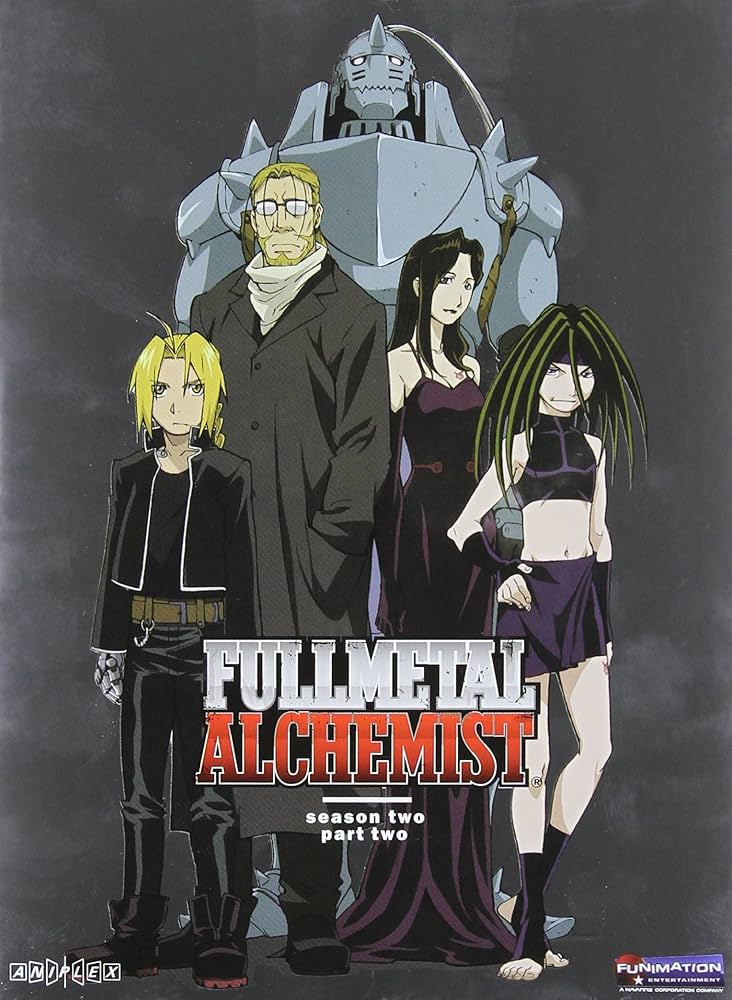
4.1. Artistic Merit and Narrative Structure
One of Fullmetal Alchemist’s most significant contributions to modern manga lies in its tightly controlled narrative structure. Arakawa crafts the story with a long-term vision, maintaining effective pacing and avoiding the narrative sprawl common in extended series. Every character, major or minor, serves a clear function within the thematic whole, directly contributing to the development of the central ideas rather than existing as decorative elements.
Visually, Arakawa’s art avoids excessive technical display, prioritizing clarity, coherence, and narrative efficiency. Controlled character expressions convey complex emotional states without reliance on excessive dialogue. This restraint defines the series’ distinctive style and ensures consistency throughout its run.
4.2. Intellectual Contribution and Academic Depth
Beyond entertainment, Fullmetal Alchemist is celebrated for its integration of philosophical, ethical, and political issues within a popular medium. Themes such as the limits of knowledge, individual responsibility amid collective violence, and the relationship between science and power are systematically developed, making the series a frequent subject of academic discussion in manga and cultural studies.
The work challenges the notion that shōnen manga exists solely for young audiences or superficial enjoyment. Instead, it affirms comics as a legitimate narrative form capable of engaging with complex human concerns on par with literature and cinema.
4.3. Influence on the Manga Industry and Popular Culture
Fullmetal Alchemist significantly reshaped reader expectations for shōnen manga after the 2000s. It established new standards emphasizing coherent storytelling, thematic consistency, and psychologically developed characters. Many subsequent creators have drawn inspiration from Arakawa’s fusion of action and reflective inquiry.
The anime adaptations – especially Fullmetal Alchemist: Brotherhood – expanded the series’ global reach and reinforced its international cultural impact. Its visual presentation, music, and narrative structure are often cited as exemplary models of faithful yet creative adaptation.
4.4. Enduring Value and Longevity
Even after its conclusion, Fullmetal Alchemist maintains enduring relevance through reprints, academic analysis, and the continued interest of new generations of readers. Rather than relying on fleeting trends, the series draws strength from universal human concerns, ensuring its longevity across time and cultural boundaries.
This harmonious integration of narrative craft, intellectual depth, and popular appeal has secured Fullmetal Alchemist a place as one of the most influential works in modern Japanese manga and a lasting landmark in global comic history.
5. Conclusion
Fullmetal Alchemist is not merely a commercially successful or widely popular manga, but a compelling demonstration of the medium’s capacity to engage with the serious intellectual concerns of modern humanity. Through a meticulously constructed fictional world, Hiromu Arakawa presents a narrative in which action, knowledge, and ethics are inseparably intertwined, and every choice carries unavoidable consequences.
From the personal journey of the Elric brothers to a sweeping portrayal of war, power, and systemic violence, the series expands its narrative scope without sacrificing internal coherence. It reveals that the pursuit of truth, when detached from an awareness of limits and responsibility, leads to irreversible tragedy. At the same time, it affirms human value through the capacity to acknowledge error, seek atonement, and choose a more humane path within an unjust world.
On a broader level, Fullmetal Alchemist has redefined perceptions of shōnen manga, elevating the genre beyond mere entertainment into a space for dialogue on knowledge, ethics, and society. This balance between popular accessibility and intellectual rigor has ensured the work’s lasting vitality, keeping it relevant to readers, scholars, and critics long after its conclusion.For these reasons, Fullmetal Alchemist stands as a major milestone in modern Japanese manga and a work of enduring significance for global audiences. Beyond telling a compelling story, it leaves behind a framework of open-ended questions about humanity and the world – questions that remain profoundly relevant in contemporary society.