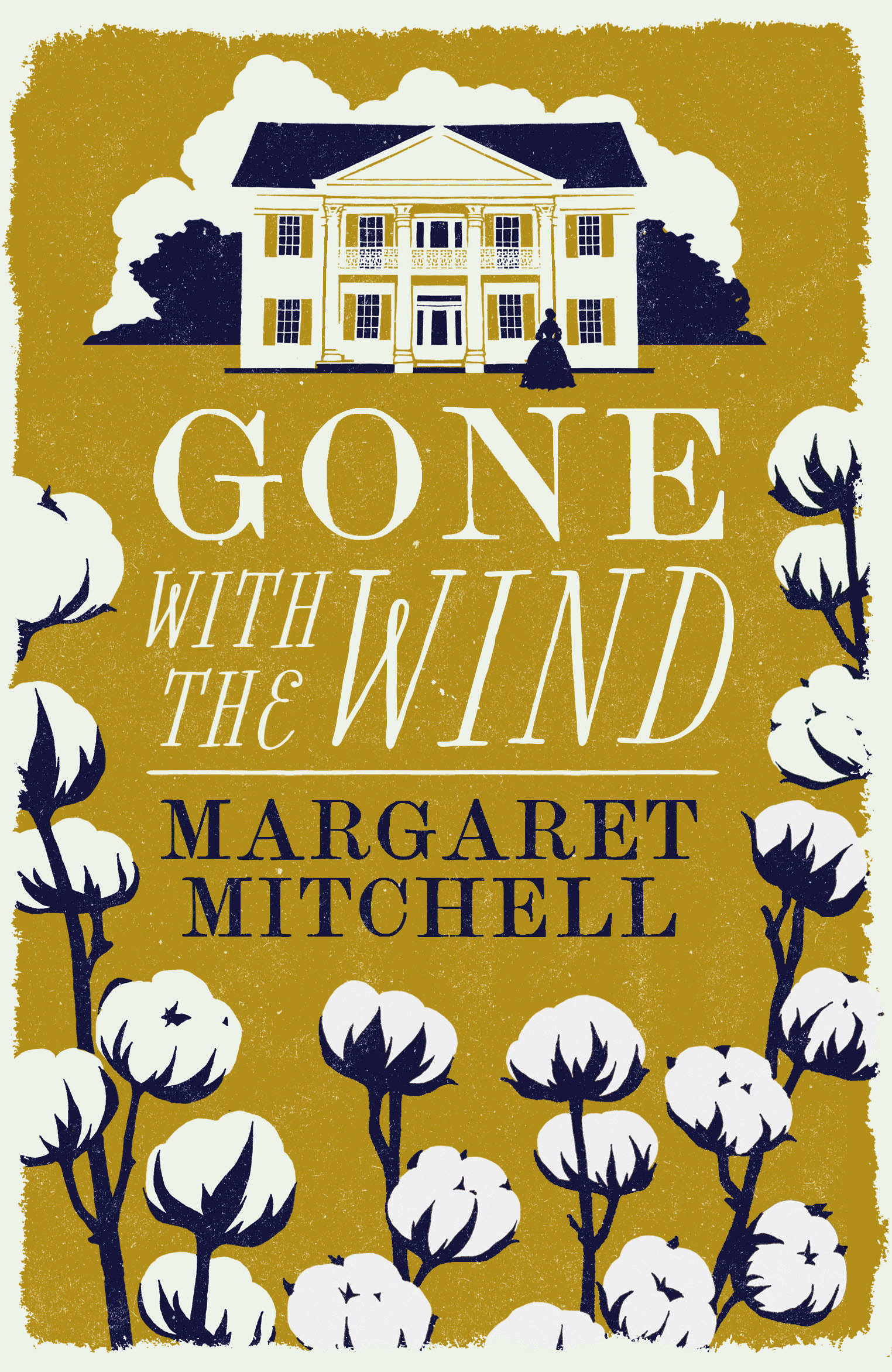
There are books that are not meant merely to be read, but to be lived with. There are stories that do not end when the final page is turned, but continue to linger quietly in the reader’s memory like a long, unresolved echo. Gone with the Wind is one such work.
When I first held this thick novel in my hands, I felt hesitant: a long story, a distant historical setting, a large cast of characters, and complex developments. Yet the further I read, the more deeply I was drawn into the world of the American South during the Civil War – a place where love, war, pride, and the instinct for survival collide with overwhelming force. This is not merely a romantic love story; it is an epic about the collapse and rebirth of human beings amid the turbulence of history.
For a book lover, Gone with the Wind is a demanding but unforgettable reading experience. It requires patience, yet rewards the reader with emotional depth and lasting reflections on humanity, society, and fate.
1. Author Introduction – Margaret Mitchell
Margaret Mitchell (1900–1949) was an American novelist born and raised in the state of Georgia – the very land that forms the primary setting of Gone with the Wind. She was not a prolific writer with many published works, but she remains a rare example of an author whose literary immortality rests upon a single novel.
Published in 1936 after nearly a decade of quiet writing in a small room, Gone with the Wind reflects Mitchell’s deep knowledge of Southern American history and her vivid recollections of stories passed down through previous generations. With a perspective that is both observant and emotionally charged, she reconstructed a turbulent historical period through personal memory and narrative imagination.

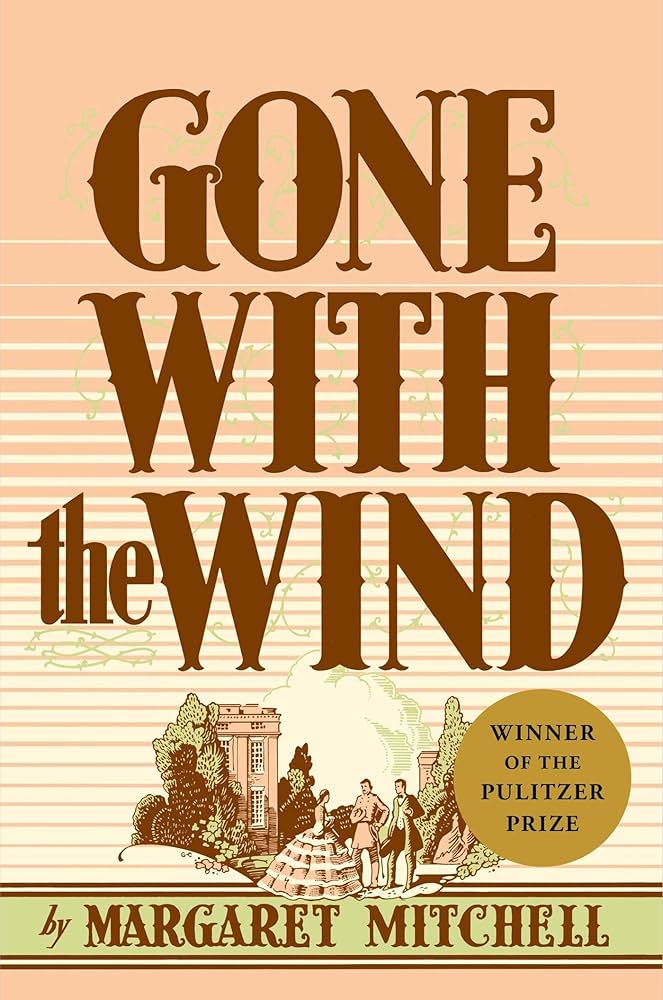
In 1937, the novel won the Pulitzer Prize for Fiction, quickly becoming a publishing phenomenon and later inspiring a classic film adaptation of the same name. Notably, Margaret Mitchell never published another novel, yet her literary legacy has endured for generations.
2. Summary of the Plot
The story opens in the American South during the years preceding the Civil War, depicting the seemingly peaceful yet rigidly formal life of the plantation-owning class. At the center of this world stands Scarlett O’Hara, the eldest daughter of the O’Hara family, owners of the Tara plantation in Georgia. Raised in comfort and privilege, Scarlett is beautiful, intelligent, and accustomed to having everything go her way. To her, life consists of social gatherings, flirtation, and the unwavering belief that the future will always remain generous.
From the very beginning, however, Scarlett carries a deep inner conflict. She is passionately infatuated with Ashley Wilkes – a man who embodies the refined, intellectual values of the old Southern aristocracy. Ashley’s decision to marry Melanie Hamilton, a gentle and kind-hearted woman, delivers Scarlett her first profound emotional blow, wounding both her heart and her pride. From this moment onward, Scarlett’s impulsive, selfish, yet deeply human choices begin to shape her life.
When the Civil War erupts, Scarlett’s familiar world collapses with astonishing speed. Men leave for battle, plantations are destroyed, wealth disappears, and the illusion of Southern invincibility dissolves. Forced to flee Tara, Scarlett experiences hunger, loss, and the constant proximity of death. Her vow never to allow herself or her family to starve again marks the most significant turning point of the novel, transforming her from a frivolous young woman into someone willing to do whatever it takes to survive.
Running parallel to Scarlett’s journey is the compelling presence of Rhett Butler – a pragmatic, skeptical man who rejects the romantic illusions of the old South. From the outset, Rhett sees Scarlett clearly: strong-willed, selfish, intelligent, and ambitious. He loves her not because she is virtuous, but because she is genuine. Yet their similarities – pride, practicality, and fear of vulnerability – condemn their relationship to constant tension and misunderstanding.
After the war, the South enters a chaotic period of Reconstruction. The old values have vanished, while new ones remain uncertain. Driven by a fierce instinct for survival, Scarlett adapts quickly, throwing herself into business and wealth accumulation without hesitation to violate social conventions. Though she becomes financially successful, she grows increasingly isolated, surrounded by people who neither understand nor truly empathize with her.
Meanwhile, Melanie – physically fragile yet morally resilient – emerges as Scarlett’s quiet counterpart. Representing compassion, tolerance, and enduring ethical values, Melanie becomes the unseen emotional pillar of those around her. Only after Melanie’s death does Scarlett finally realize that the person she once despised and underestimated was, in fact, the strongest spiritual support of her life.
The novel’s emotional climax lies in Scarlett’s belated understanding of love. She spends her life chasing Ashley Wilkes – a symbol of nostalgia and illusion – only to lose Rhett Butler, the man who truly loved and understood her. By the time Scarlett recognizes her genuine feelings, Rhett has grown weary of waiting and walks away, leaving behind an irreparable void.
The novel does not conclude with reunion or happiness, but with the famous line: “Tomorrow is another day.” It is a sentence that carries hope, avoidance, and defiance all at once – perfectly reflecting the complex nature of Scarlett O’Hara herself.
3. Thematic and Artistic Values of Gone with the Wind
Thematic Value: History Told Through Human Fate
One of the greatest strengths of Gone with the Wind lies in its portrayal of history not through dates and events, but through the lived experiences of individuals. The Civil War appears as a devastating storm that sweeps away established social orders, forcing people to confront hunger, loss, and disintegration. From prosperous plantations and lavish balls, the American South descends into material and spiritual ruin. History in this novel does not judge; it exists as an indifferent, ruthless force.
Against this backdrop, the theme of survival takes center stage. Scarlett O’Hara is neither noble nor self-sacrificing, yet she epitomizes the individual who adapts in order to live. When traditional moral codes no longer protect people from starvation and fear, Scarlett is willing to break them. The novel thus raises a haunting question: in the harshest moments of history, what matters more – virtue or survival? Margaret Mitchell offers no definitive answer, leaving the reader to reflect through Scarlett’s contradictory journey.
At the same time, Gone with the Wind is a profound exploration of love and self-deception in love. Scarlett’s lifelong pursuit of Ashley Wilkes is less about genuine affection than about her longing for a refined, stable world that no longer exists. Rhett Butler, by contrast, embodies a harsh yet honest reality. Scarlett’s tragedy lies not in losing Rhett, but in realizing her true feelings too late. Through this, the novel reveals a painful truth: people often love ideals rather than the individuals beside them.
Artistic Value: Characterization, Structure, and Narrative Style
Artistically, the novel’s greatest achievement lies in its psychologically complex characters. Scarlett O’Hara stands as one of the most intricate female figures in twentieth-century literature. She is neither idealized nor condemned outright – she is selfish yet resilient, flawed yet formidable. This internal contradiction makes her vividly real. Readers may not admire Scarlett, but they cannot remain indifferent to her.
Supporting characters such as Rhett Butler and Melanie Hamilton serve as carefully crafted counterbalances. Rhett represents realism and clarity, while Melanie embodies compassion and moral steadfastness. Their contrast highlights the enduring conflict between old and new values, ideals and reality – a central tension throughout the novel.
Structurally, Mitchell employs the form of a sweeping epic, allowing the narrative to unfold gradually yet purposefully. Climaxes do not arrive abruptly but accumulate through small events and psychological shifts. This pacing enables readers to feel the erosion of time, war, and repeated misjudgments.
The language of Gone with the Wind is richly descriptive and emotionally resonant without becoming melodramatic. Depictions of nature, the Tara plantation, and postwar devastation carry a tone that is both nostalgic and detached, mirroring the author’s acceptance of an era’s inevitable collapse. This blend of lyricism and realism gives the novel both intellectual depth and lasting appeal.
4. Memorable Quotations from Gone with the Wind
One of the enduring strengths of Gone with the Wind lies in its memorable lines – simple in wording yet profound in meaning. These quotations capture the essence of the novel’s central themes: survival, loss, love, illusion, and the relentless passage of time. Even when taken out of context, they retain a quiet emotional power that lingers with the reader.
- “Tomorrow is another day.”
- “I’ll think about it tomorrow.”
- “War teaches us that what we think will last forever can vanish in an instant.”
- “I never knew hunger could make people so brave.”
- “Love isn’t always what keeps people alive.”
- “She loved a dream, not a man.”
- “Sometimes we don’t realize how deeply we love something until it is gone.”
- “You can’t go back to the past, no matter how much you wish you could.”
- “The world changes, whether we accept it or not.”
- “I loved you, but I’m tired of loving alone.”
- “Not everyone is strong enough to live in a new world.”
5. Conclusion
Gone with the Wind is not an easy book to read, nor is it a fairy tale with a happy ending. Yet it is precisely its harshness, complexity, and honesty that have secured its timeless value.
This novel forces readers to confront fundamental questions: Who are we when everything is taken away? Can love withstand hunger and war? Where is the line between selfishness and survival?
For me, Gone with the Wind is a book that should be read at least once in a lifetime – not for comfort, but to gain a deeper understanding of both the strength and fragility of human beings within the relentless flow of history.