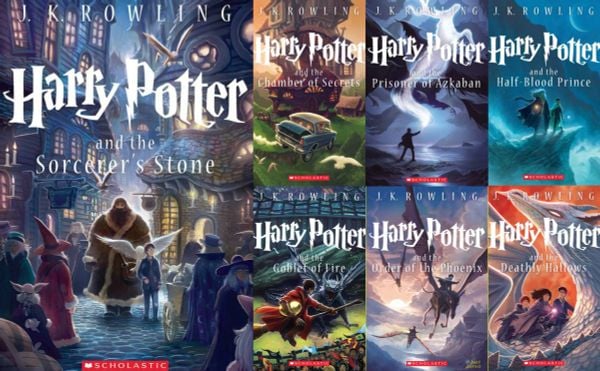
There are literary works that are read only within a particular period of life, but there are also works that accompany multiple generations of readers, becoming an enduring part of collective memory. Harry Potter is a representative example of the latter. Emerging at a time when children’s and fantasy literature was searching for new narrative approaches, the series quickly transcended the framework of entertaining fiction to become a global cultural phenomenon, embraced by readers of all ages and cultural backgrounds.
Rather than merely telling a story about magic, a wizarding school, or fantastical adventures, Harry Potter opens up a parallel world that deeply reflects human life. Within that world exist fear, loss, love, friendship, social prejudice, and, most importantly, moral choices. The magical universe of the series is not detached from reality; instead, it serves as a subtle metaphor for human society, encompassing both light and darkness.
The lasting appeal of Harry Potter does not lie in its spells or spectacular magical battles, but in the process of growth experienced by the central character and the psychological depth developed throughout the series. From the image of an orphaned boy living in neglect, Harry gradually emerges as a symbol of courage, loyalty, and the determination to defend what is right. This journey of maturation allows the work to resonate widely, as each rereading at different stages of life reveals new layers of meaning.
With its well – structured narrative, consistently built fantasy world, and clear humanistic message, Harry Potter not only affirms its status as a successful fantasy work but also demonstrates the power of popular literature in nurturing thought, emotion, and moral values in readers.
1. Introduction to the Author and the Harry Potter Series
The Harry Potter series is the creation of J. K. Rowling, a British author born in 1965. Before achieving remarkable success, Rowling experienced many years of hardship, which had a noticeable influence on her creative perspective and the humanistic themes present in her works. Harry Potter is not only a major milestone in Rowling’s career but also one of the most influential book series in modern children’s and fantasy literature.
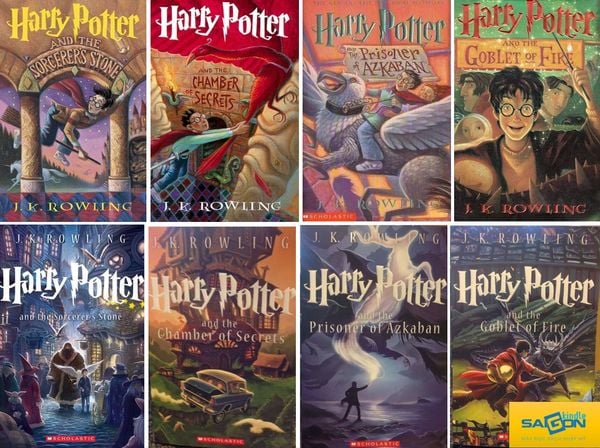
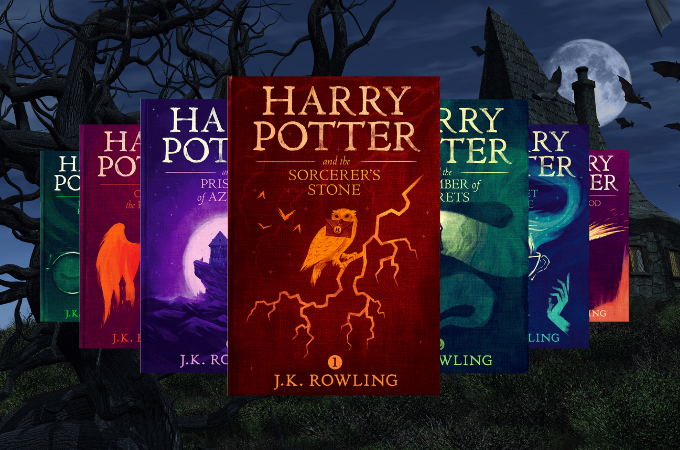
The first volume of the series, Harry Potter and the Philosopher’s Stone, was published in 1997 and quickly attracted the attention of both readers and critics. This early success paved the way for the completion of the seven-book series in 2007. Over the course of a decade, Harry Potter consistently ranked high on bestseller lists, was translated into more than eighty languages, and sold hundreds of millions of copies worldwide.

In terms of genre, Harry Potter belongs to fantasy literature, yet it is not limited to children or young adult audiences. The narrative structure develops in parallel between adventure and psychological growth, with each book corresponding to one academic year of the protagonist at Hogwarts School of Witchcraft and Wizardry. This structure maintains continuity across the overarching storyline while creating distinct climaxes within each installment.
A defining strength of J. K. Rowling’s writing lies in her ability to construct a fantasy world with a coherent system and strong internal logic. The wizarding world in Harry Potter does not exist in isolation; it runs parallel to the human world and possesses its own history, laws, social structure, and power conflicts. Concepts such as “pure-blood,” “half-blood,” and “Muggle-born” are not merely fictional elements but reflections of enduring social issues such as discrimination and prejudice.
Beyond its entertainment value, Harry Potter is highly regarded for its clear ideological orientation. The series raises universal questions: what defines a person’s true nature, where real strength originates, and whether the boundary between good and evil is determined by destiny or by personal choice. The harmonious combination of fantasy elements and philosophical depth allows Harry Potter to move beyond the scope of ordinary entertainment and become a work of lasting cultural significance.
2. Summary of the Harry Potter Plot
The Harry Potter series centers on the life and coming-of-age journey of the young wizard Harry Potter, from an abandoned childhood to becoming a central figure in the life-and-death conflict between good and evil in the wizarding world. The narrative unfolds linearly over seven years of study at Hogwarts School of Witchcraft and Wizardry, gradually deepening in psychological complexity and narrative tension.
The story begins with Harry Potter, an orphan living with his aunt and uncle, the Dursleys, who treat him with neglect and cruelty. Unaware of his true origins, Harry grows up feeling isolated and rejected. A turning point occurs on his eleventh birthday, when he receives a letter inviting him to attend Hogwarts and discovers that he is a wizard. From this moment, the hidden magical world that exists alongside the human world is gradually revealed.
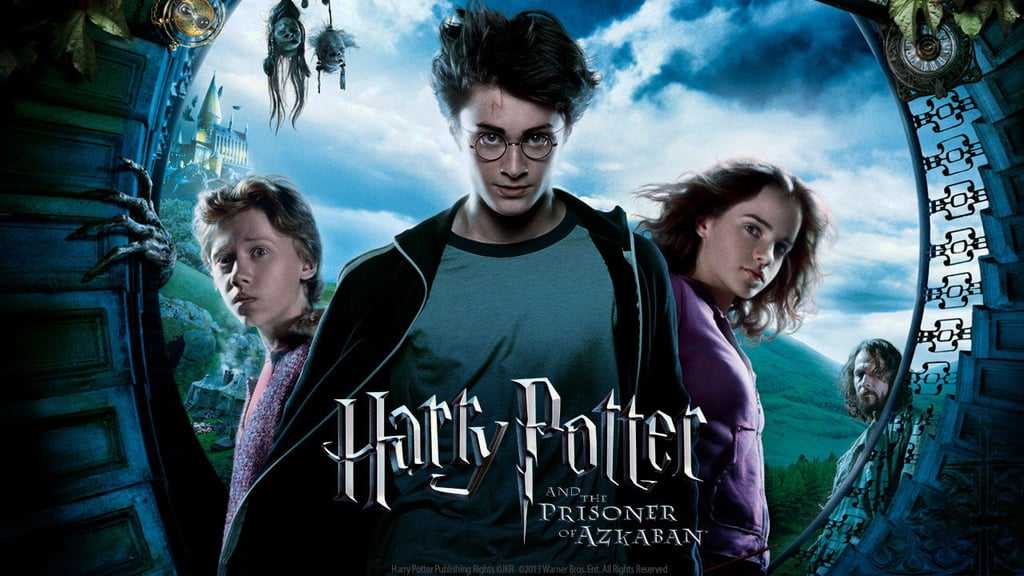
At Hogwarts, Harry quickly befriends Ron Weasley and Hermione Granger. The trio becomes central to a series of events involving mysteries within the school and plots connected to dark forces. In the early years, the narrative adopts an adventure – mystery tone, featuring challenges such as protecting the Philosopher’s Stone, uncovering the secrets of the Chamber of Secrets, and confronting remnants of the Dark Lord Voldemort’s power.
Alongside these events, Harry’s past is gradually uncovered. He learns that his parents were murdered by Voldemort and that he himself survived the Killing Curse through his mother’s sacrifice. As a result, Harry is no longer an ordinary student but becomes a symbol and focal point of the wizarding world. This fame, however, brings increasing pressure, suspicion, and danger.
From the middle books onward, the atmosphere of the series grows darker and more serious. Voldemort steadily regains his strength, gathers followers, and openly challenges the established order of the wizarding world. Themes of death, betrayal, fear, and loss appear with increasing frequency. Hogwarts ceases to be an entirely safe refuge and becomes a microcosm of the larger conflict between opposing forces.
At this stage, Harry must confront not only external enemies but also internal struggles concerning his identity and destiny. He comes to understand the deep connection between himself and Voldemort, as well as the crucial role of the Horcruxes, which grant Voldemort his immortality. Harry’s journey is no longer merely educational but becomes one of accepting truth, sacrifice, and painful maturation.
The climax of the series occurs in the final confrontation between the two opposing forces. The truth behind the prophecy, Voldemort’s past, and the meaning of sacrifice is fully revealed. Ultimate victory is achieved not through superior magical power, but through moral choice – the decision to protect others, accept loss, and reject the pursuit of power at any cost. The conclusion of Harry Potter closes the protagonist’s journey while opening a new era for the wizarding world, one founded on understanding and compassion.
3. Thematic and Artistic Values of Harry Potter
From a thematic perspective, Harry Potter is not merely a tale of magical adventure but a work that raises universal questions about humanity and society. At its core lies a fundamental inquiry: what defines a person’s true nature – predetermined destiny or personal choice? Through the journeys of Harry and those around him, the series asserts that individuals are shaped not by their origins, abilities, or prophecies, but by how they choose to confront circumstances and responsibility.
One of the most prominent thematic strengths of Harry Potter is its multidimensional approach to good and evil. The wizarding world is not rigidly divided into absolute opposites. Even characters aligned with “good” possess flaws, inner conflicts, and make decisions that cause harm. Conversely, the roots of evil are portrayed not only as personal ambition but also as fear, insecurity, and the desire for recognition. This perspective prevents the story from becoming a simplistic fairy tale and more accurately reflects the complexity of real human life.
The series also places strong emphasis on love and sacrifice. Love in Harry Potter is not romanticized in a conventional sense; rather, it appears as a quiet, enduring, and protective force. The sacrifice of Harry’s parents, the loyalty of friendship, and the painful decisions made by adult characters all demonstrate that love is not weakness, but a moral foundation that enables individuals to stand against darkness. This element contributes significantly to the emotional depth and lasting humanistic value of the work.
From a social standpoint, Harry Potter employs the wizarding world as a subtle metaphor for real-world issues. Concepts such as “pure – blood” and “Muggle – born” clearly evoke themes of class discrimination, racism, and prejudice. Power within the wizarding society is not always aligned with justice; instead, it is often manipulated by fear and self-interest. Through this portrayal, the series raises questions about individual responsibility within systems of power and the necessity of resistance when justice is distorted.
Artistically, the greatest success of Harry Potter lies in its coherent world-building and consistent internal logic. The wizarding world is not only imaginative but organized as a complete society with its own history, laws, educational system, and culture. This allows readers to suspend disbelief and fully immerse themselves in the narrative across all seven volumes.
Character development is another notable strength. Characters in Harry Potter evolve over time rather than remaining static, reflecting the natural process of human growth. The psychological development of Harry, Ron, and Hermione unfolds organically in response to events and experiences, lending strong credibility to their arcs. Supporting characters, though sometimes limited in appearance, are vividly portrayed and play essential roles in expanding the thematic depth of the story.
In terms of narrative technique, Harry Potter skillfully blends elements of fantasy, adventure, mystery, and tragedy. The pacing is carefully adjusted: the early books are lighter and filled with discovery, while later installments grow darker, reflecting increasing loss and the brutality of conflict. This shift not only mirrors the characters’ maturation but also creates a sense that readers themselves grow alongside the story.
Through the synthesis of philosophical depth and effective artistic techniques, Harry Potter demonstrates that popular literature can achieve lasting value when crafted with seriousness and a clear humanistic vision. It is precisely this quality that enables the series to transcend boundaries of time, age, and culture, securing its place as one of the most influential works of contemporary literature.
4. Memorable Quotations in Harry Potter
One of the key elements that allows Harry Potter to transcend the boundaries of conventional fantasy fiction lies in its system of dialogue and quotations imbued with philosophical depth. These lines are never presented as overt moral proclamations; instead, they emerge organically from specific characters and narrative situations. As a result, they feel natural, persuasive, and enduring in their emotional and intellectual impact. Through them, the series conveys profound reflections on human nature, morality, love, and the power of choice.
First and foremost, Harry Potter repeatedly emphasizes the decisive role of personal choice as the foundation of individual identity:
“It is our choices, Harry, that show what we truly are, far more than our abilities.”
This statement can be regarded as the ideological core of the entire series. It affirms that human beings are not defined by their origins or innate talents, but by how they choose to act when confronted with moral dilemmas.
Alongside this, the series offers deep contemplations on life and death, confronting loss without avoidance and approaching it with empathy and humanity:
“Do not pity the dead, Harry. Pity the living, and, above all, those who live without love.”
Here, death is not treated merely as a biological ending, but as a lens through which the value of life and human connection is examined.
Hope, as a recurring theme, is expressed through simple yet uplifting lines that provide emotional resilience:
“Happiness can be found even in the darkest of times, if one only remembers to turn on the light.”
Rather than promoting blind optimism, this quotation highlights the importance of conscious effort and inner awareness in seeking hope amid adversity.
On an ethical level, Harry Potter explores the blurred boundary between good and evil, underscoring the duality within every individual:
“We all have both light and dark inside us. What matters is the part we choose to act on.”
This insight explains why the characters in the series resist rigid moral categorization, instead embodying ongoing internal conflict and moral struggle.
The concept of courage is also redefined – not as the absence of fear, but as the willingness to confront it:
“Courage is not the absence of fear, but the determination to stand up to it.”
This grounded and realistic interpretation makes bravery accessible and relatable, especially for younger readers.
The past and memory are acknowledged as integral to personal identity, yet not as chains that bind one permanently:
“The past can hurt. But you can either run from it, or learn from it.”
This line clearly reflects the series’ perspective that individuals retain agency in how they respond to past trauma.
Love, in Harry Potter, is not portrayed merely as romance, but as a protective and redemptive force:
“Love is the one power that the Dark Lord knows not.”
This idea provides a fundamental explanation for the ultimate failure of evil against characters who appear vulnerable yet are bound by genuine affection and sacrifice.
Finally, the series offers a striking meditation on the meaning of existence itself:
“Death is not the worst thing in the world. Living without ever truly living is.”
This quotation closes the collection with a philosophical reflection, emphasizing the importance of living with purpose, responsibility, and compassion.
Taken together, these quotations do more than enrich the language of Harry Potter; they shape its intellectual and emotional depth, ensuring the series’ lasting influence within global reading culture.
5. Conclusion
Spanning seven volumes, Harry Potter has established itself not only as a successful fantasy series but also as a literary work of enduring value. Through the coming-of-age journey of its central character, the series intricately connects magical elements with fundamental aspects of human life: fear, loss, love, responsibility, and moral choice.
In terms of content, Harry Potter presents a coherent ideological framework that emphasizes humanistic values and faith in humanity’s capacity for goodness. Good is not idealized in a simplistic manner but is defined through contrast with evil, highlighting the significance of courage, sacrifice, and compassion. This approach enables the series to transcend the limits of children’s literature and resonate deeply with readers across generations.
Artistically, the success of Harry Potter stems from the harmonious integration of a tightly structured narrative, a logically constructed fantasy world, and a cast of characters who develop with psychological depth. The flexible storytelling and careful modulation of tone and pacing sustain the series’ long-term appeal while reflecting the natural maturation of both the characters and the readers.
Within the context of contemporary literature, Harry Potter stands as clear evidence that popular fiction can possess genuine intellectual and artistic merit when created with serious intent. The series not only contributes to the cultivation of reading culture but also establishes new benchmarks for modern fantasy literature. For these reasons, Harry Potter deserves recognition as a literary and cultural phenomenon of lasting influence – one that transcends mere entertainment to become an integral part of the reading memory of multiple generations.