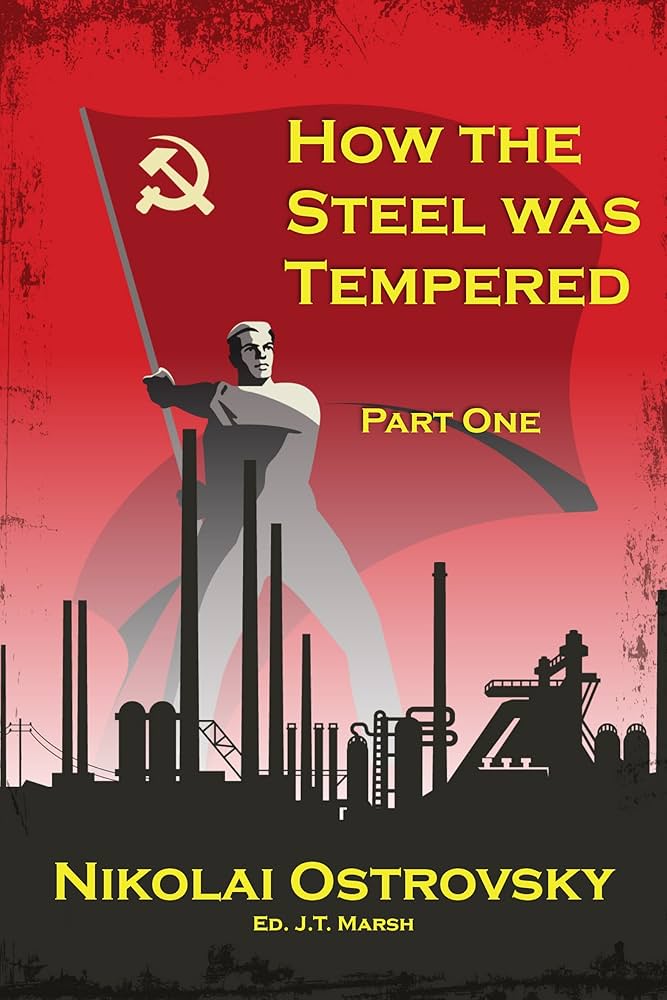
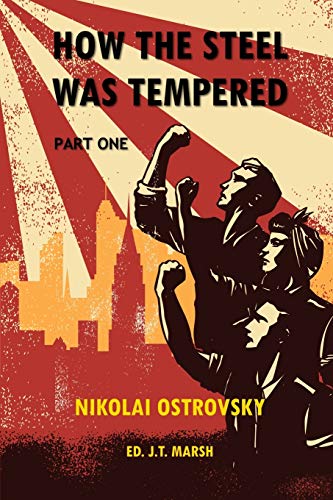
“How the Steel Was Tempered” (Russian: Как закалялась сталь) is one of the classic works of Soviet literature of the 20th century, closely associated with the name of writer Nikolai Ostrovsky. First published in the 1930s – a period of profound historical upheaval in the Soviet Union – the novel not only reflects the harsh realities of its time but also deeply portrays the spiritual strength of human beings in the face of adversity.
Without relying on a complicated plot or dramatic twists in the conventional sense, How the Steel Was Tempered captivates readers through the central character Pavel Korchagin – a seemingly ordinary man who possesses an unyielding will of steel. The book transcends the boundaries of literature to become a symbol of life ideals, faith, dedication, and the indomitable human spirit.
1. Introduction to the Author
Nikolai Alekseyevich Ostrovsky (September 29, 1904 – December 22, 1936) was a renowned Soviet writer, best known for How the Steel Was Tempered. He was born into a poor working-class family in the village of Vilia, Volhynia Province (now part of Ukraine). Ostrovsky’s childhood was marked by hard labor and deprivation, which early on fostered in him a spirit of resistance and revolutionary ideals.
From a young age, Ostrovsky joined the Bolshevik movement and directly fought in the Red Army during the Russian Civil War. These brutal years left severe consequences for his health. War injuries combined with prolonged illness gradually rendered him paralyzed and blind while he was still very young.
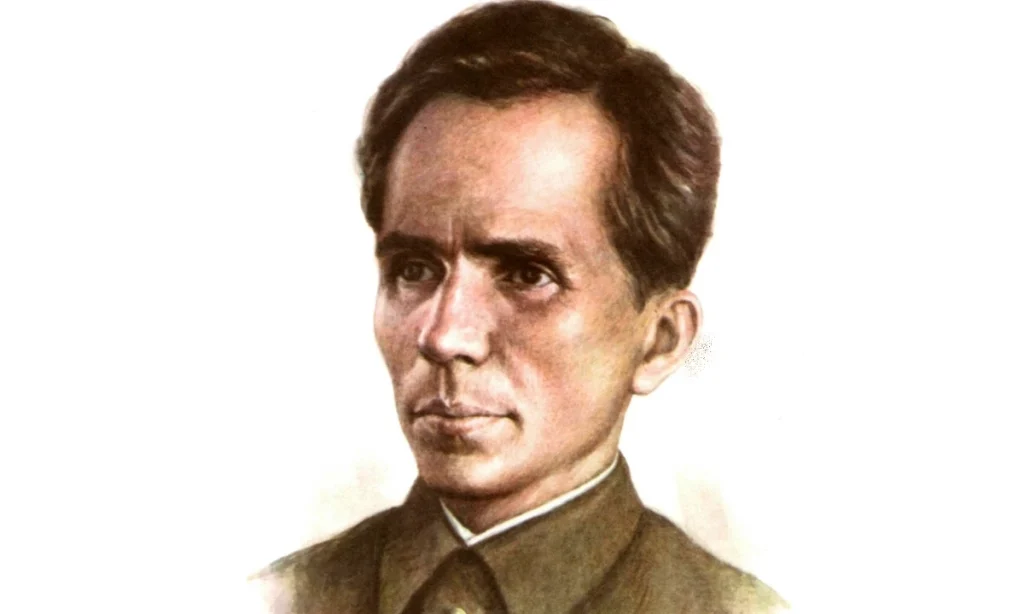
However, it was precisely in this seemingly hopeless situation that Ostrovsky’s extraordinary willpower revealed itself most clearly. Refusing to surrender to fate, he began writing How the Steel Was Tempered in 1930, when he was almost completely immobilized. The novel is not merely a product of literary imagination but a crystallization of the author’s own life experiences and unshakable belief in life.
Ostrovsky’s writing style is simple yet powerful. He does not embellish reality with ornate language, but instead chooses a sincere and emotional narrative approach, focusing on the inner lives and spiritual conflicts of individuals living in a revolutionary era. It is this honesty that has allowed the work to touch the hearts of generations of readers.
2. Summary of the Main Content
How the Steel Was Tempered tells the life story of Pavel Korchagin, a young man born into the poor working class who grows up amid the violent social upheavals of early 20th-century Russia. From an early age, Pavel is exposed to injustice, poverty, and oppression under the old regime. This harsh environment forges within him a rebellious spirit, a hatred of injustice, and a desire to seek a meaningful path in life.
When the October Revolution and the Russian Civil War erupt, Pavel quickly immerses himself in the historical tide of his era. He joins the Red Army with all the passion of youth, ready to fight and sacrifice for revolutionary ideals. On the battlefield, Pavel faces not only enemies but also hunger, cold, illness, and wounds – both physical and psychological. Yet under all circumstances, he remains steadfast in his belief in the path he has chosen.
After the war, Pavel continues to devote himself to the construction of the new country. He participates in arduous labor projects, most notably the construction of a railway under extremely harsh weather conditions and severe shortages of food and manpower. This period severely erodes his health. Old injuries resurface, and his illness worsens, gradually depriving him of the ability to work and move normally.
Pavel’s greatest tragedy does not lie in physical pain, but in the feeling of being deprived of the right to contribute. No longer strong enough to fight on the battlefield or labor as before, he endures intense inner struggles and at times stands on the brink of despair. Yet it is precisely in these moments, when collapse seems inevitable, that Pavel’s “steel” will is revealed most clearly.
Refusing to live a meaningless life, Pavel finds a new way to serve his ideals: writing. Despite being paralyzed, enduring constant pain, and gradually losing his eyesight, he persists in holding the pen, turning words into a spiritual weapon. Writing not only helps Pavel maintain his faith in life but also allows him to continue spreading revolutionary ideals and inspiring those around him.
The entire journey of Pavel Korchagin is the process of a human being being “tempered” through hardship, just as steel must pass through fire to become strong. From a poor and impulsive boy, Pavel matures into a symbol of resilience and an indomitable will. The famous line from the novel:
“The most precious thing a person has is life. A person lives only once, and therefore must live so as not to feel painful regret for wasted years…”
is not only Pavel’s personal philosophy of life, but also the message the work conveys to every reader: live in such a way that, when looking back, we do not feel sorrow or regret for having wasted the precious years of our lives.
3. Messages and Meaningful Lessons in the Book
Noble Life Ideals
Pavel Korchagin’s life ideals are not limited to revolution alone, but more deeply rooted in the aspiration to live a life that is not wasted. He lives with a clear awareness that youth, strength, and time are the most precious assets, and they should be devoted to meaningful goals.
Even when illness weakens his body day by day, Pavel never allows himself to give up. He refuses a passive existence and constantly seeks ways to continue contributing. Through this, the work affirms a simple yet profound truth: a meaningful life is not measured by how long one lives, but by how one lives.
Resilience and an Unyielding Spirit
Pavel’s “steel” spirit is forged through each ordeal. When healthy, he plunges into the battlefield without hesitation. When illness robs him of mobility and sight, he still does not allow his will to be defeated.
In his most painful days, Pavel chooses to take up the pen rather than surrender. Writing becomes his way of continuing to fight and to live usefully. This very spirit gives lasting vitality to the novel’s famous line—a powerful reminder that people may lose many things, but must never lose their will to live.
Dedication and Personal Responsibility
Pavel Korchagin is a representative figure of placing collective interests above personal ones. He does not seek glory or personal comfort, but is willing to sacrifice himself in service of a shared ideal.
Through Pavel, Ostrovsky conveys a clear message about individual responsibility toward society. The work is especially meaningful for young people, emphasizing that youth should not pass in apathy or selfishness, but should be lived with purpose, ideals, and a sense of dedication.
The Aspiration to Overcome Adversity
Pavel’s life is a vivid testament to the spirit of never surrendering to fate. When one path closes, he finds another to continue forward. When he can no longer fight with his body, he fights with intellect and faith.
“Steel being tempered” is not only a metaphor for people forged through hardship, but also a symbol of spiritual strength shaped by pain and trial. The novel affirms that adversity is not an end, but can become the starting point for a stronger and more resilient character.
4. Notable Quotes and Their Meanings in How the Steel Was Tempered
One of the most enduring values of How the Steel Was Tempered lies in its deeply moving quotations, distilled from the life experiences and ideals of Pavel Korchagin. These are not merely lines of dialogue in a novel, but life philosophies that have accompanied generations of readers.
“The most precious thing a person has is life. A person lives only once, and therefore must live so as not to feel painful regret for wasted years…”
“A person’s life only truly has meaning when they know what they live for and what they are willing to sacrifice for.”
“A person may be defeated physically, but no one can subdue their will unless they allow it themselves.”
“When one can no longer fight with their hands, one can still fight with the mind and faith.”
“It is through hardship and trial that a person is tempered to become stronger and more mature.”
5. Conclusion
How the Steel Was Tempered is not merely a revolutionary novel, but a hymn to human willpower, resilience, and life ideals. Through the figure of Pavel Korchagin, the work raises profound questions about the value of life, how people confront suffering, and how they choose their own way of living.
Although written within a specific historical context, the messages of the book remain relevant today. It reminds us to live with purpose, to dare to face adversity, and not to let life slip away in meaninglessness. It is precisely this enduring spirit that has given How the Steel Was Tempered its lasting vitality and timeless value in the hearts of generations of readers.