In the development of modern Japanese manga, works that are able to maintain long-lasting vitality are often those that succeed not only as entertainment, but also possess ideological depth, a sustainable narrative structure, and a distinctive artistic world. Inuyasha (Inuyasha) by Takahashi Rumiko is one of the representative works that fully meets these criteria. Emerging at a time when Japanese manga was rapidly expanding into the international market, Inuyasha quickly transcended the framework of a conventional action – fantasy comic to become a cultural phenomenon with far-reaching influence.
What distinguishes Inuyasha lies in its seamless integration of multiple layers of material: Japanese folklore, the historical backdrop of the Sengoku period, the isekai (time-travel) motif, and a cast of characters with complex inner lives. The world of Inuyasha feels familiar through its depictions of yokai, spiritual practitioners, and legends, yet remains fresh in the way personal conflicts are placed alongside historical and social upheaval. This interplay allows the work to appeal to a wide range of readers, from younger audiences to those seeking narrative depth.
Beyond recounting the journey to collect the Shikon Jewel or the confrontations between humans and demons, Inuyasha constructs a broad narrative space in which issues of identity, moral choice, hatred, and reconciliation are continuously explored. Characters are not portrayed as simple embodiments of good or evil, but are instead situated in a state of constant tension between instinct, memory, and the desire for recognition.
For these reasons, Inuyasha can be regarded as a fantastical epic with profound humanistic significance, reflecting universal questions about humanity beneath the surface of a fictional narrative. Approaching the work from an analytical and critical perspective not only clarifies its intrinsic value, but also helps explain why Inuyasha continues to occupy a special position in the history of Japanese manga despite shifts in the market and changes in reader tastes.
1. Introduction to the Author and the Work Inuyasha
1.1. Author: Takahashi Rumiko
Takahashi Rumiko is one of the most influential female mangaka in the history of Japanese comics. Born in 1957 in Niigata Prefecture, she began her professional career in the late 1970s, a period when Japanese manga was entering a phase of rapid expansion in both quantity and genre diversity. From her earliest works, Takahashi demonstrated remarkable narrative versatility, particularly in her ability to construct characters with distinct personalities and complex inner lives.
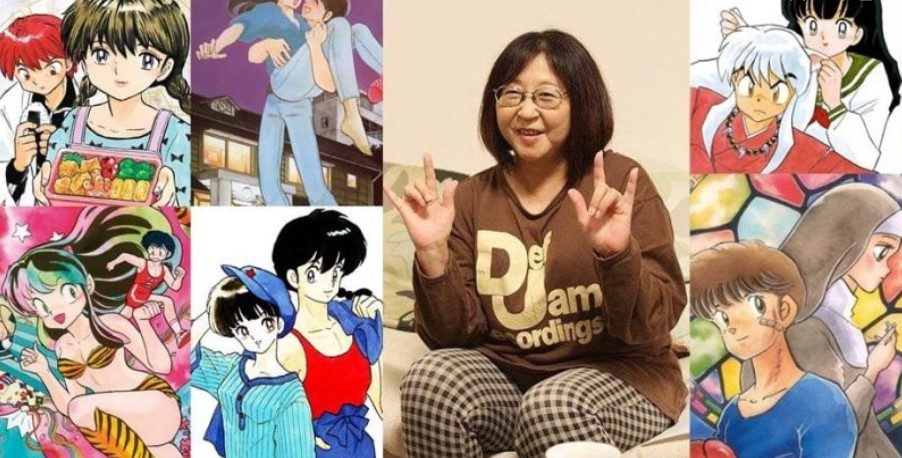
Before creating Inuyasha, Takahashi Rumiko had already established a solid reputation through renowned works such as Urusei Yatsura, a groundbreaking science fiction comedy; Maison Ikkoku, which explores everyday life and mature psychology; and Ranma ½, a creative fusion of martial arts, action, and gender-based comedy. These works reveal her rare ability to balance mass entertainment with character depth.
A consistent feature of Takahashi Rumiko’s style is her focus on interpersonal relationships and the development of internal conflict shaped by lived circumstances. Her characters are often portrayed as “imperfect,” influenced by memory, desire, and social constraints. This stylistic foundation laid the groundwork for Inuyasha, a work more ambitious in both world-building and ideological scope.
1.2. The Work Inuyasha
Inuyasha (original title: Inuyasha) was serialized by Takahashi Rumiko in Weekly Shōnen Sunday from 1996 to 2008. The series consists of a total of 56 volumes and represents a long-form, integrative phase in the author’s career. From its debut, Inuyasha attracted attention for its choice of the Sengoku period as its historical setting – a turbulent era that was relatively underexplored in mainstream manga at the time.
In terms of genre, Inuyasha combines action, adventure, fantasy, romance, and Japanese folklore. The use of the time-travel motif serves as a narrative bridge between the modern era and the past, expanding the storytelling space and enabling a comparison of differing value systems. This approach allows Inuyasha to transcend a single target demographic and appeal to both shōnen and shōjo audiences.
Visually, the work bears Takahashi Rumiko’s signature artistic style: clean lines, clear panel composition, and nuanced emotional expression through characters’ eyes and gestures. The balance between action sequences and dialogue maintains narrative stability and prevents the story from becoming either excessively rushed or overly prolonged.
Beyond its success as a manga, Inuyasha has been adapted into multiple anime television series, feature films, and sequel projects, thereby extending its influence beyond the medium of comics. The success of these adaptations highlights the story’s adaptability and the enduring appeal of its character system.
Overall, Inuyasha can be regarded as a work that encapsulates the most distinctive features of Takahashi Rumiko’s creative style: a folklore-rich fantasy world, multidimensional characters, and a long-form narrative structure marked by coherence and continuity. These elements laid a solid foundation for the work’s lasting position in the history of Japanese manga.
2. Summary of the Plot of Inuyasha
The story of Inuyasha begins in modern Japan, centering on Kagome Higurashi, an ordinary high school girl living at her family’s shrine. Her everyday life is abruptly disrupted when she is pulled into an ancient well on the shrine grounds and transported back to the Sengoku period – a world where humans and demons coexist in constant conflict. From this starting point, Inuyasha establishes a dual-world structure that generates not only physical confrontation but also clashes of values.
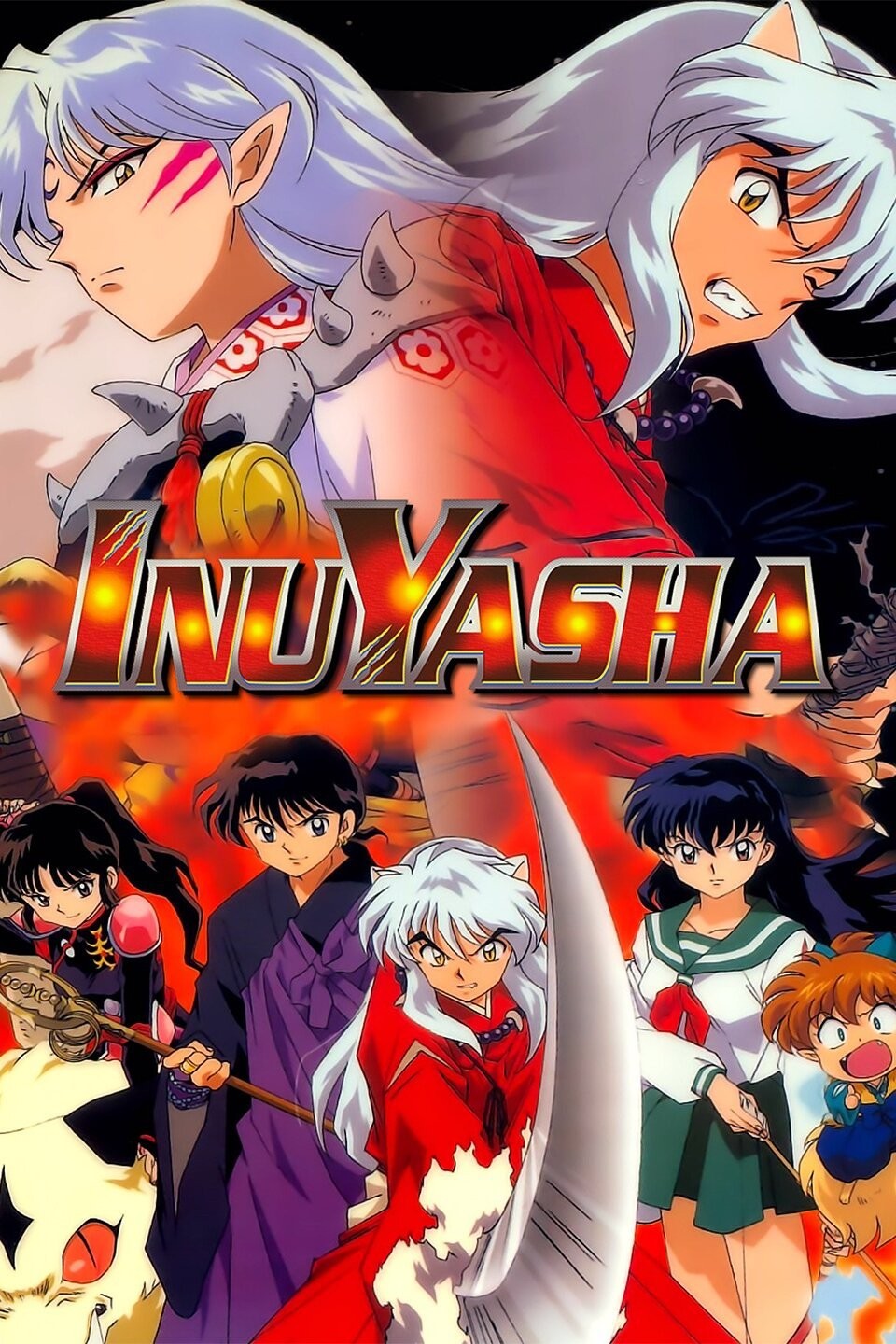
In the Sengoku era, Kagome encounters Inuyasha, a half-demon dog who has been sealed away for fifty years by the spiritual priestess Kikyo. Inuyasha’s identity is inherently ambiguous: he belongs neither fully to the human world nor to that of full-blooded demons. His existence is closely tied to the Shikon Jewel, a powerful artifact capable of amplifying the strength and desires of its possessor, and a central source of tragedy throughout Inuyasha.
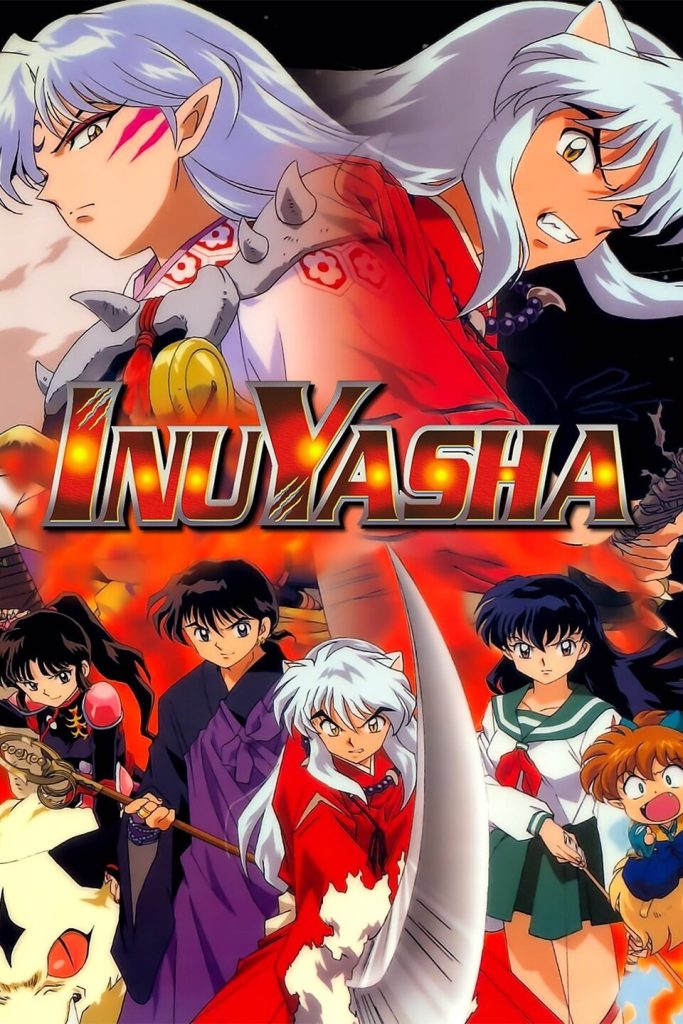
In a pivotal incident, the Shikon Jewel is shattered into countless fragments scattered across the land and seized by various demonic forces. This event becomes the primary driving force of the narrative, compelling Kagome and Inuyasha to embark on a journey to recover the fragments and prevent their power from being abused. Along the way, they are joined by companions, each carrying their own past and motivations.
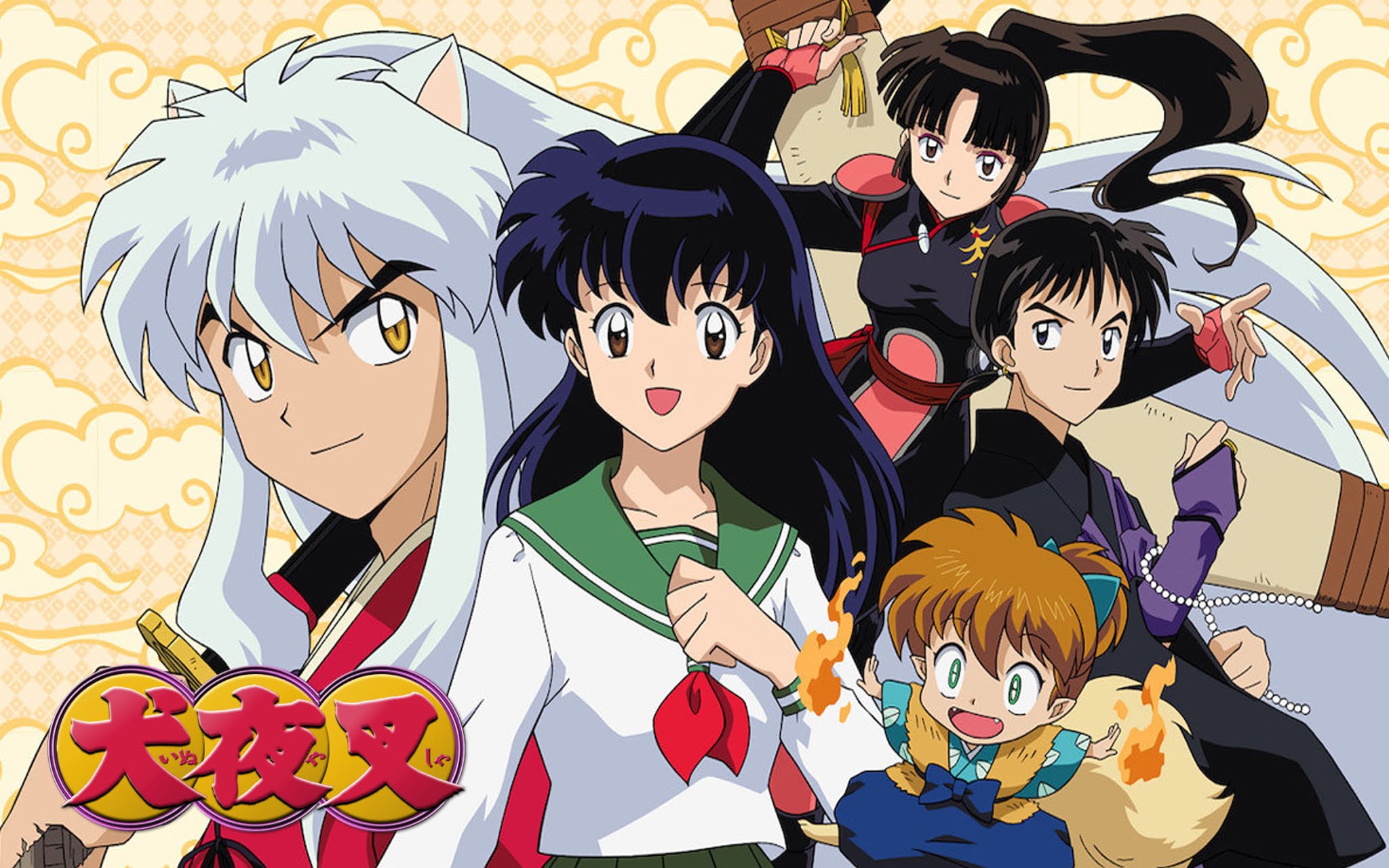
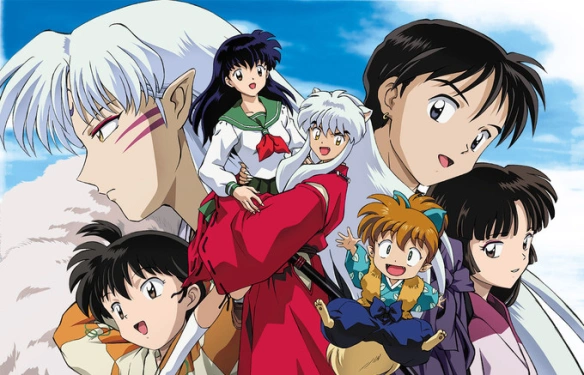
Miroku, a young monk afflicted by a hereditary Wind Tunnel curse, represents the tragedy of inherited fate and powerlessness before destiny. Sango, a demon slayer, embodies loss and grief after her clan is manipulated and destroyed. Shippo, a young fox demon, adds rhythmic balance to the group while reflecting the vulnerability inherent in the demon world. Together, these characters form a familiar “traveling party” structure, yet one developed with depth and closely integrated into the central narrative of Inuyasha.
Parallel to the quest for the Shikon Jewel is the emergence and evolution of the central antagonist, Naraku. More than a direct adversary, Naraku is the indirect cause of numerous past tragedies, particularly those involving Inuyasha and Kikyo. He is constructed as a fragmented entity in constant transformation, symbolizing the accumulation of hatred, desire, and fear. His presence elevates the conflict of Inuyasha beyond the personal level into a series of fate-driven confrontations.
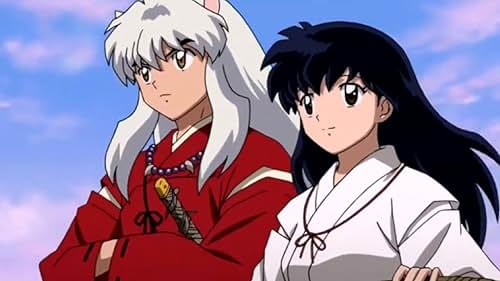
One of the most distinctive features of Inuyasha is its continuous interweaving of past and present, especially through the relationship between Inuyasha, Kikyo, and Kagome. Kikyo, though deceased, remains a vital narrative presence, representing unresolved history and emotions preserved as memory and resentment. The coexistence of Kagome and Kikyo generates psychological tension while foregrounding themes of choice and the possibility of breaking free from cyclical tragedy.
Overall, the plot of Inuyasha unfolds as a long-form journey in which each stage expands the world, clarifies character motivations, and deepens narrative complexity. Battles against demons function not merely as tests of strength, but as ethical and existential trials. Through this structure, Inuyasha sustains its appeal throughout its length and lays a firm foundation for the exploration of its ideological themes.
3. Themes and Ideology in Inuyasha
One of the key factors that allows Inuyasha to transcend the limits of a conventional action–fantasy manga is its consistently developed and thematically rich framework. Through the characters’ journeys, the work not only depicts conflicts between humans and demons, but also addresses universal issues of identity, selfhood, love, and the cyclical nature of hatred. These themes are interwoven throughout the narrative, forming a solid ideological foundation for Inuyasha.
3.1. Identity, Boundaries, and the Crisis of Self
The theme of identity occupies a central position in the ideological system of Inuyasha, most clearly embodied in the character of Inuyasha. As a half-demon, Inuyasha exists at the boundary between two worlds – human and demon. This hybridity prevents him from being fully accepted by either side, resulting in a prolonged crisis of self.
Through Inuyasha, Inuyasha raises questions about the relative importance of essence versus appearance: whether strength, lineage, or personal choice determines where one truly belongs. The work suggests that rejection and discrimination from society, rather than inherent nature, are the deeper causes of inner conflict.
This theme extends beyond Inuyasha, as many other characters in Inuyasha also possess “deviant” identities within their respective societies. Together, they form a network of characters united by shared alienation, expanding the theme of identity from the individual to the universal.
3.2. Love, Memory, and Irreplaceability
Love in Inuyasha is constructed as a complex structure intertwined with memory, loss, and choice. The relationship between Inuyasha, Kikyo, and Kagome transcends a simple love triangle, instead representing the tension between past and present.
Kikyo embodies unresolved memory and emotions frozen at the moment of tragedy, while Kagome represents the present and the possibility of continued life and choice. Inuyasha demonstrates that memory cannot be erased, but neither can it become a chain binding the future. Confronting the past is depicted as a prerequisite for breaking free from tragic cycles.
Through this structure, the work affirms a crucial idea: each individual exists as an independent entity and cannot be replaced or replicated, even when similarities of origin or fate exist.
3.3. Hatred, Desire, and the Cycle of Tragedy
Naraku serves as the central embodiment of hatred and desire in Inuyasha. Born from accumulated resentment and unfulfilled longing, Naraku is not merely a powerful antagonist, but a symbol of moral corruption driven by unchecked hatred.
His fragmented and constantly reconstituted form reflects the notion that hatred does not generate sustainable strength, but instead leads to disintegration and isolation. The tragedies Naraku inflicts upon others illustrate how hatred propagates and multiplies, creating a self-perpetuating cycle of suffering.
Through this antagonist, Inuyasha asserts that violence and resentment cannot end on their own without conscious confrontation and resolution at their source.
3.4. Choice and the Possibility of Transcending Fate
Another overarching idea in Inuyasha concerns the role of personal choice in the face of seemingly predetermined fate. Many characters live under the shadow of curses, lineage, or past tragedy. However, the work does not present fate as immutable, but as a condition that can be challenged through action and will.
Kagome’s journey from an ordinary student to an individual making life-altering decisions illustrates maturity forged through the acceptance of responsibility. Inuyasha emphasizes that transcending fate arises not from raw power, but from conscious choice and the courage to face its consequences.
3.5. Humans and Demons: Fragile Moral Boundaries
Another foundational theme of Inuyasha is the blurred moral boundary between humans and demons. The work repeatedly shows humans acting with cruelty, selfishness, and unchecked desire, while certain demons demonstrate compassion and self-sacrifice.
By doing so, Inuyasha reexamines the concepts of “good” and “evil,” suggesting that they are not fixed to species or form, but depend on individual choices and actions. This ideological stance contributes significantly to the work’s enduring relevance, despite its fantastical setting.
4. The Value and Influence of Inuyasha
Beyond being recognized as a commercially successful entertainment work, Inuyasha possesses enduring artistic, narrative, and cultural value. This multilayered value system has enabled the series to sustain its vitality across time and taste, while exerting considerable influence on the development of Japanese manga and anime.

4.1. Artistic Value and Narrative Structure
From a storytelling perspective, Inuyasha exemplifies the effective execution of a long-form narrative without sacrificing coherence. Takahashi Rumiko avoids relentless escalation of climaxes, instead constructing a rhythm that alternates between action, memory, and dialogue. This structure allows characters to develop psychological depth and provides space for ideological themes to emerge organically.
The journey motif functions as the narrative axis, with each confrontation serving not only as a test of strength but also as an ethical and existential trial. Consequently, action sequences in Inuyasha are inseparable from thematic development.
Visually, the series is highly recognizable, featuring clear line work, expressive characters, and readable panel composition – qualities well suited to sustaining long-term reader engagement.
4.2. Cultural Value and the Use of Japanese Folklore
Inuyasha makes a significant contribution to the popularization of Japanese folklore among mass audiences. Its portrayal of yokai, spiritual practitioners, charms, and the Sengoku period is not presented as rigid historical exposition, but as an organic component of an adventurous narrative.
By combining folklore with the time-travel motif, Inuyasha bridges past and present, highlighting the continuity of cultural values in contemporary life. For many international readers, the work functions as a cultural gateway to Japanese mythological and spiritual traditions.
4.3. Influence on Contemporary Manga and Anime
The influence of Inuyasha on manga and anime is evident at multiple levels. The work helped shape the trend of combining action, fantasy, and romance within extended narrative structures, laying the groundwork for many subsequent series. The model of a traveling group of characters, each bearing personal tragedy, became a widely adopted template.
Additionally, Inuyasha expanded the reach of shōnen manga by attracting a large female readership through emotional depth and carefully developed relationships. This contributed to the blurring of traditional genre boundaries within the manga industry.
The success of anime adaptations and related media further demonstrates the work’s adaptability across platforms, underscoring the strength of its narrative foundation.
4.4. Enduring Value Across Generations of Readers
One of the most significant values of Inuyasha lies in its capacity to resonate across generations. Despite its fantastical and historical setting, the issues it addresses – identity crises, the desire for acceptance, and the tension between past and present – are universally relevant.
By balancing entertainment with philosophical inquiry, Inuyasha transcends its time of origin. It can be experienced as an engaging adventure by younger readers, and as a rich humanistic narrative by more mature audiences.
5. Conclusion
Throughout its narrative development, Inuyasha demonstrates that it is not merely an action – fantasy manga designed for entertainment, but a carefully constructed narrative system rich in ideological depth. Through the quest for the Shikon Jewel and the conflicts among humans, demons, and fate, the work gradually illuminates universal concerns such as identity, selfhood, hatred, and the power of individual choice.
Takahashi Rumiko succeeds in harmonizing seemingly opposing elements: epic scope and inner life, dynamic action and reflective inquiry, folklore tradition and modern context. This balance enables Inuyasha to sustain narrative stability within a long-form structure while fostering deep character development beyond mere plot mechanics.
In terms of value, Inuyasha has left a distinct mark on the history of Japanese manga by expanding genre boundaries, attracting diverse readerships, and disseminating traditional cultural elements through modern storytelling. The work also demonstrates the capacity of manga to convey complex humanistic issues without sacrificing accessibility.
From a broader perspective, Inuyasha stands as one of the representative works of late twentieth – and early twenty-first-century manga, reflecting both Takahashi Rumiko’s creative identity and the maturation of Japanese comics as a fully realized narrative form. Though its journey has concluded, Inuyasha continues to serve as a lasting point of reference for readers and scholars alike – a testament to the enduring power of stories grounded in solid cultural and ideological foundations.