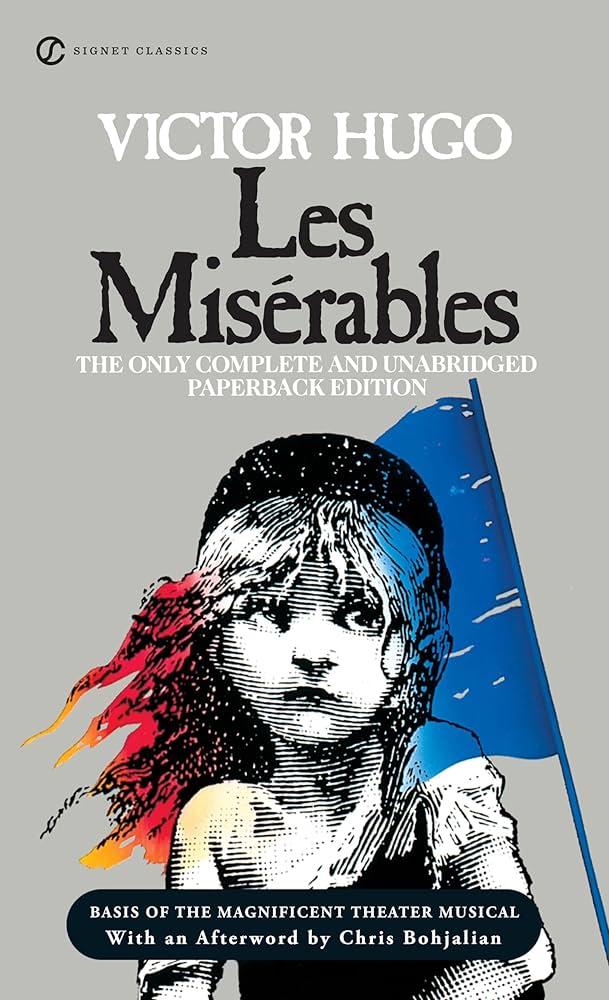
There are books that are not merely meant to be read, but to be lived with. There are works which, once the final page is closed, leave the reader realizing that they are no longer the same person as before. Les Misérables is such a book. It is not simply a monumental novel, but a vast spiritual world where human beings are pushed to the very limits of suffering, injustice, and despair, while at the same time being illuminated by the enduring light of love, compassion, and an unyielding faith in human dignity.
When I first read Les Misérables, I did not approach it with the analytical mindset of a literary critic, but with the open heart of a reader who loves books. I read it with pure emotional sensitivity to human fate. Yet the deeper I read and the longer I reflected, the more I realized that this work far exceeds the boundaries of a personal emotional experience. It is a powerful voice addressing society, a relentless indictment of injustice, and at the same time a firm affirmation that even in the darkest moments of history and human life, people always retain the right – and the ability – to choose the light.
With its immense length, complex structure, and wide-ranging cast of characters across many social classes, Les Misérables is not an easy book to read. It demands patience, concentration, and even courage from the reader – the courage to confront difficult and painful issues. Yet once one steps into its world, it becomes nearly impossible to leave, because every page raises fundamental questions about morality, law, justice, and compassion – questions that remain profoundly relevant, even in modern society today.
1. Introduction to the Author and the Work
Les Misérables is the greatest masterpiece of Victor Hugo, the great French literary figure of the nineteenth century and one of the most prominent representatives of French Romanticism. Victor Hugo was not only an outstanding novelist, poet, and playwright, but also a major intellectual and a figure of significant influence in the political and social life of France. His life was closely intertwined with the turbulent transformations of his era, which explains why his writing consistently carries a strong historical awareness, a spirit of resistance, and a powerful humanitarian ideal.
Victor Hugo’s literature is unified by a single belief: that human beings, even when pushed to the lowest depths of society, still possess dignity and the capacity for moral goodness. He did not write to entertain, nor to pursue beauty for its own sake, but to awaken the conscience of society. Each of his works stands as a direct dialogue with the age in which he lived.
The novel was first published in 1862, at a time when France had experienced the French Revolution, periods of monarchical restoration, repeated uprisings, and prolonged political instability. Les Misérables was born not merely as a novel, but as a social manifesto. Victor Hugo famously declared: “As long as poverty and ignorance remain on earth, books such as this cannot be useless.” This statement serves as the key to understanding the entire spirit of the work.
What is particularly remarkable about Victor Hugo is that he did not write from an intellectual “ivory tower.” He wrote with deep empathy for the lives of those at the bottom of society: prisoners, workers, prostitutes, orphaned children, and those rejected by the social order. In his view, they were not “evil people” or “inferior classes,” but victims of circumstance – of poverty, of harsh laws, and of a society lacking compassion.
2. Summary of the Plot
At the center of Les Misérables is the turbulent life of Jean Valjean – a man marked by a tragic fate and, at the same time, a profound symbol of moral transformation, rebirth, and human resilience within an unjust society.
Jean Valjean begins as a poor laborer. Driven by extreme hunger, he steals a loaf of bread to save his starving nephew and is sentenced to hard labor. What begins as a short sentence becomes nineteen years of imprisonment due to repeated failed escape attempts. Prison not only confines his body but also transforms him into a bitter, resentful man who completely loses faith in humanity.
Upon his release, Jean Valjean carries a “yellow passport,” marking him as a former convict and causing him to be rejected wherever he goes. In his despair, he is taken in by Bishop Myriel. Yet Valjean’s survival instincts and deep-seated resentment lead him to steal the bishop’s silver and flee. When he is caught, the bishop’s extraordinary act of forgiveness – claiming the silver as a gift and adding two silver candlesticks – becomes a decisive moral turning point. For the first time in his life, Jean Valjean is treated as a human being. That moment awakens a conscience long buried and opens the path to his moral rebirth.
From then on, Jean Valjean resolves to live honestly. Under the assumed name Madeleine, he settles in a small town, invents a new manufacturing method, creates jobs for the poor, and quickly becomes prosperous. Thanks to his compassion and integrity, he is elected mayor. In this role, Valjean consistently places human life above personal safety, willingly sacrificing his reputation and security to help others.
However, his past continually threatens his present. Javert, a police inspector who believes absolutely in the authority of the law, begins to suspect the true identity of Mayor Madeleine. In Javert’s view, the law is the sole truth, and a former criminal can never truly become a good man.
Parallel to Jean Valjean’s story is the tragedy of Fantine – a poor factory worker who is deceived, becomes pregnant out of wedlock, and is cast out by society. Unable to raise her child, Fantine leaves her daughter Cosette with the Thénardiers, who cruelly exploit the child and treat her like a slave throughout her childhood.
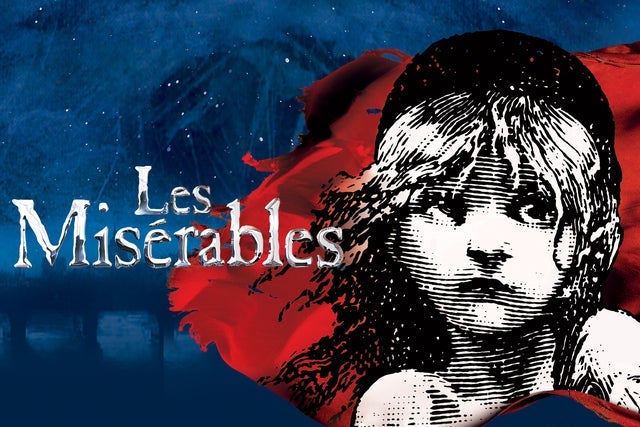
Fantine goes to Paris to work in Valjean’s factory, but when her past is revealed, she is dismissed. To send money for her daughter, she is driven to desperation – selling her hair, selling her teeth, and ultimately falling into prostitution. She dies in poverty and illness, her final wish being to see her daughter again.
When Jean Valjean learns the truth, he rescues Fantine from Javert’s oppression and promises to find Cosette. He goes to the Thénardiers’ inn, redeems Cosette, and takes her away from that living hell. From that moment on, Valjean becomes Cosette’s spiritual father, giving her unconditional love and raising her through silent sacrifice and protection.
Cosette grows into a gentle, pure young woman, embodying hope and renewal. As she matures, she falls in love with Marius, an idealistic young intellectual involved in revolutionary movements. Their love introduces a new conflict: Jean Valjean must face the fear of losing the most precious thing in his life.
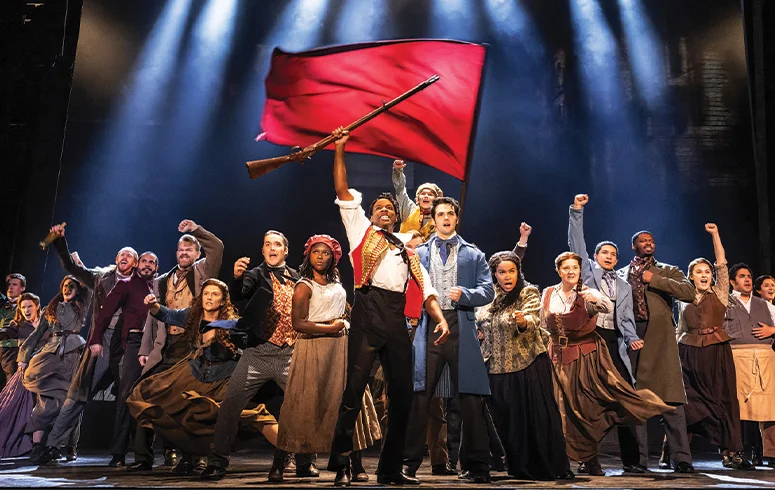
The climax of the novel unfolds during the June Uprising of 1832 in Paris. Marius fights at the barricades alongside young revolutionaries driven by dreams of freedom and social justice. Motivated by his love for Cosette, Jean Valjean secretly joins the uprising to protect Marius. Amid the chaos, he rescues Marius from death and carries him through the Paris sewers – one of the most powerful symbolic images in the novel.
The moral conflict reaches its peak when Jean Valjean has the chance to kill Javert but chooses instead to spare his life. This act shatters the rigid moral system in which Javert has placed absolute faith. Unable to reconcile the conflict between inflexible law and human compassion, Javert falls into a profound existential crisis and ultimately takes his own life.
In his final years, Jean Valjean lives quietly, accepting misunderstanding and loneliness so that Cosette may be happy. He dies peacefully, holding the two silver candlesticks – the symbol of the compassionate light that guided his entire life. The story ends, but its questions about justice, law, and humanity continue to resonate deeply within the reader.
3. Thematic and Artistic Value
Thematic Value: A Humanitarian Epic in an Unjust Society
The core thematic value of Les Misérables lies in the profound and comprehensive humanitarian vision conveyed by Victor Hugo. The novel does not merely recount the fates of a few individuals, but presents a vast social panorama in which those at the bottom of society are crushed by poverty, prejudice, and an inhumane legal system.
First and foremost, the novel raises the question of the origins of evil. Victor Hugo does not view evil as an inherent human trait, but as an inevitable product of social conditions. Jean Valjean becomes a criminal not because of innate wickedness, but because of hunger and despair. Fantine falls not due to moral corruption, but because society drives her to the brink. Through these stories, Hugo directly challenges society’s responsibility toward those it condemns.
One of the novel’s greatest ideas is its faith in the human capacity for moral transformation. Jean Valjean stands as living proof of this belief. Through a single act of unconditional compassion by Bishop Myriel, a man deemed irredeemable by society is morally reborn. Hugo asserts that people do not need more punishment to become better; they need understanding and trust.
The novel also engages in a deep dialogue about the relationship between law and morality. Javert represents absolute, unyielding law – cold and mechanical, leaving no room for compassion. Jean Valjean represents humanistic morality, in which individuals are judged within their circumstances and granted the possibility of redemption. Hugo does not deny the necessity of law, but warns that when law is separated from humanity, it becomes an instrument of destruction rather than justice.
Another significant value of the novel lies in its universal humanism. Victor Hugo does not divide people simplistically into “good” and “evil.” Even negative figures like the Thénardiers are placed within a social context that reveals their moral decay as a result of environment and unchecked greed. This perspective elevates the novel beyond moral judgment into a profound meditation on the human condition.
Ultimately, the work affirms an unwavering belief in human dignity. No matter how cruel society may be, Victor Hugo insists that within every person exists a seed of light – and given the slightest chance, that light can shine.
Artistic Value: Epic Style and Masterful Novelistic Craft
Artistically, Les Misérables stands as a pinnacle of nineteenth-century fiction, clearly embodying Victor Hugo’s distinctive romantic epic style.
The novel is notable for its vast epic structure. The narrative spans many years, locations, and social strata. From prisons and factories to convents, Parisian slums, revolutionary barricades, and sewers, each setting carries symbolic meaning, highlighting the inseparable connection between individual destiny and historical forces.
Another defining feature is Hugo’s philosophically rich narrative style. He frequently interrupts the plot to reflect on history, politics, religion, education, and human nature. These seemingly digressive passages actually form the novel’s ideological foundation, revealing that personal tragedy is not accidental but rooted in deep social problems.
Character construction is one of the novel’s greatest artistic achievements. Hugo’s characters are not one-dimensional types but individuals marked by profound inner conflict. Jean Valjean struggles endlessly with his past and his conscience. Javert is not simply a villain, but the tragedy of a man trapped within a rigid belief system. Fantine embodies the suffering of women abandoned by society. Each character is both symbolic and psychologically convincing.
Victor Hugo’s language is another highlight. His prose is rich in imagery and musicality, seamlessly blending lyricism with realism. He can describe brutal poverty with stark restraint, then shift immediately to passages filled with emotion, hope, and moral conviction. This contrast creates a lasting emotional impact.
Finally, the novel’s powerful symbolism cannot be overlooked. The silver candlesticks, the Paris sewers, the revolutionary barricades, and the recurring imagery of light and darkness transcend realism to symbolize moral journeys, the struggle between good and evil, and the tension between hope and despair in human life.
4. Memorable Quotations
One of the greatest strengths of Les Misérables lies not only in its vast narrative or complex characters, but also in its sentences of exceptional philosophical weight. Victor Hugo does not write merely to describe events or advance the plot; he writes to raise questions, awaken conscience, and compel readers to pause and reflect on humanity, society, and themselves.
Throughout the reading experience, certain lines do not pass lightly, but strike deeply into the mind. They express the novel’s humanitarian spirit and convey timeless reflections that resonate with readers across generations.
On compassion and redemption
“Loving another person is seeing the face of God.”
“A soul illuminated by compassion can change an entire life.”
“Forgiveness is the highest form of human strength.”
On law, justice, and moral conflict
“When compassion and law collide, human tragedy begins.”
“There are legal judgments that are not always just.”
“The law may punish actions, but it cannot fully judge a human being.”
On human fate and social injustice
“There are no weeds or bad people, only bad gardeners.”
“Society creates the wretched, then punishes them.”
“Poverty takes not only bread, but dignity.”
On suffering and erasure
“The greatest suffering is not pain, but being forgotten.”
“Long despised, a person learns to doubt their own worth.”
“Nothing is more terrifying than being erased from society’s memory.”
On hope and human light
“Even the darkest night will end, and the sun will rise again.”
“In the deepest darkness, a single ray of light can guide the way.”
“Hope is the last thing to leave the human heart.”
These sentences are not only beautiful in language, but heavy with historical experience and philosophical reflection. They transform Les Misérables from a story of suffering into a book of awakening—one in which every reader, at any stage of life, may find a line that feels written especially for them.
5. Conclusion
Les Misérables is not a book to be read hastily. It is a long and demanding journey – one that requires patience, reflection, and the courage to confront uncomfortable truths. Yet this very weight is what gives the novel its lasting value.
Through the fate of Jean Valjean and countless marginalized individuals, Victor Hugo delivers a powerful message: human beings may be crushed by circumstance, but they never entirely lose their capacity for goodness. Evil is not an origin nor a destiny; it is often the result of poverty, ignorance, and social indifference. With even a single act of compassion, a person seemingly condemned forever may still be redeemed.
The greatness of Les Misérables does not lie in offering definitive answers about justice or morality, but in compelling readers to question themselves. Between cold law and warm humanity, between punishment and understanding, between judgment and empathy – which side would we choose? And more importantly, do we have the courage to believe that human beings deserve a second chance?
For me, Les Misérables is a book that strengthens faith in compassion while refusing to allow escape from reality. It moves, unsettles, and challenges readers to confront the injustices that persist in society today. With each rereading, the novel does not grow old; instead, it becomes more urgent, because the questions Victor Hugo raised remain unresolved.
It is this power to awaken conscience that secures the eternal value of Les Misérables – a book not only to be read, but to be lived with; not only to feel, but to reflect upon; and not only to remember the suffering of fictional characters, but to reconsider how we treat human beings in real life.