
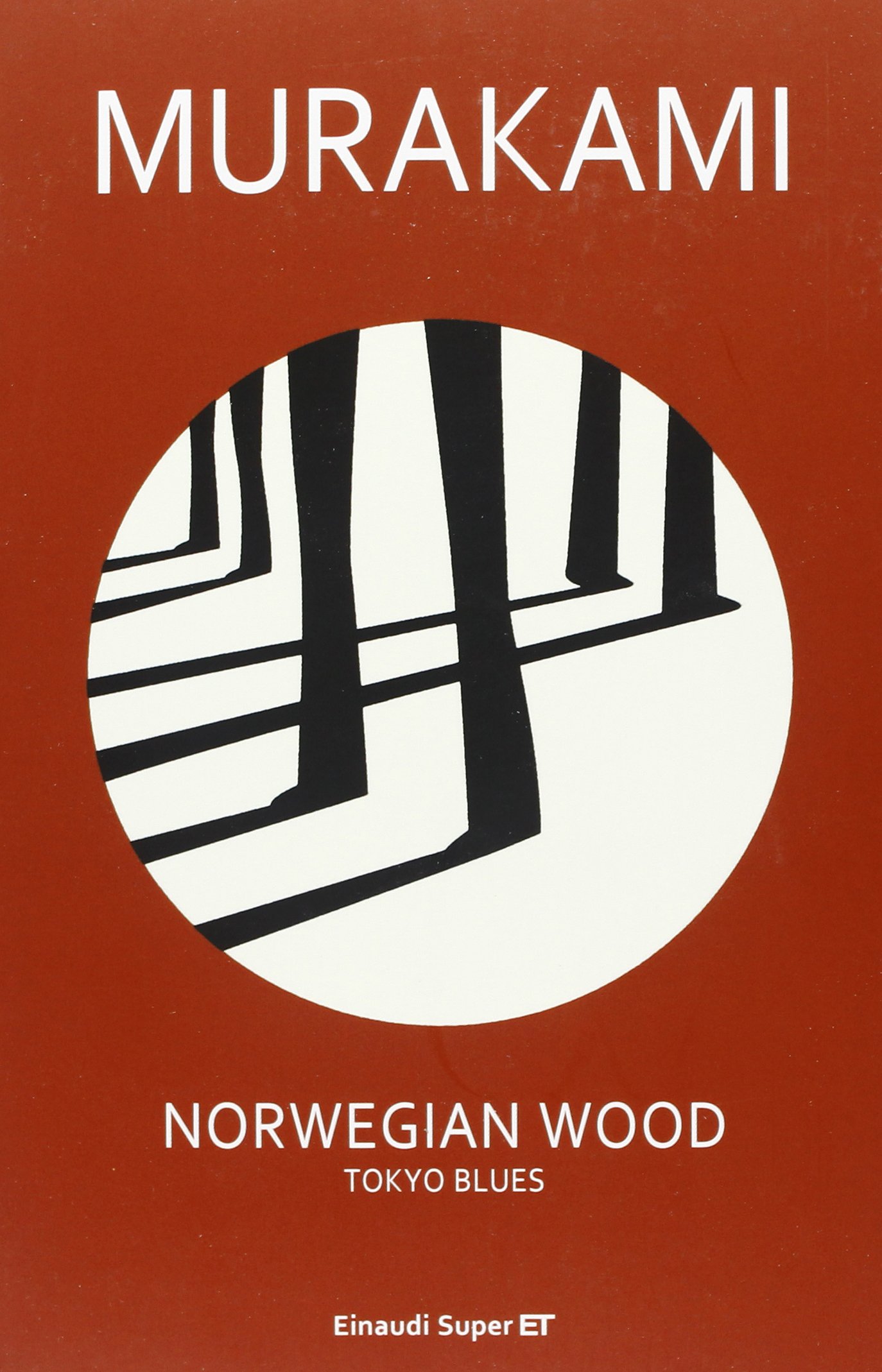
There are novels that do not seek to captivate readers through dramatic climaxes or a series of intense events, but instead quietly place before them a fundamental question: how should human beings live when confronted with loss, loneliness, and the irreparable voids of youth? Norwegian Wood is such a work. The novel does not impress through the complexity of its plot, but through the depth of emotion and the genuine, human quality of its inner vibrations.
Rather than telling a “grand” story in the conventional sense, Norwegian Wood focuses on the inner lives of young people suspended between past and present, between the desire to be loved and the fear of emotional attachment. In this world, love does not always bring salvation; memory is not merely a place of return, but at times a burden that pulls individuals deeper into solitude.
Set in Japan in the late 1960s, Norwegian Wood does not delve into social upheavals or the conflicts of the era. Instead, the novel adopts a quieter yet more haunting approach: observing human beings in their most vulnerable moments. Through this lens, the work raises universal questions – about loss, about death, and about the capacity to love and continue living when psychological wounds never fully disappear.
It is precisely this simplicity in form combined with depth in content that has made Norwegian Wood one of Haruki Murakami’s most widely read works. The novel does not impose emotions or offer advice, but allows readers to reflect upon themselves in the silences of the text, where each person may encounter a fragment of their own youth.
1. Introduction to the Author and the Work
Haruki Murakami is one of the most representative figures of contemporary Japanese literature, and also one of the rare writers whose influence has extended far beyond national borders in a lasting way. His writing has not only been well received in Japan, but has also resonated strongly worldwide, especially among young readers – those who readily find in his works a sense of loneliness, alienation, and uncertainty closely aligned with modern lived experience.

Born into a family with a traditional literary background, Murakami was nonetheless strongly influenced early on by Western culture, particularly jazz music and existentialist literature. This intersection shaped his distinctive literary style: simple in language, restrained and cool in narrative tone, yet containing deep and complex emotional undercurrents. Murakami’s characters are often not decisive actors, but observers of the world, individuals who live largely through memory and engage in constant inner dialogue.
Within his extensive body of work, Norwegian Wood occupies a special position. Unlike many of Murakami’s other novels, which are rich in surreal and fantastical elements, Norwegian Wood is a realist novel that almost entirely abandons the surreal in order to focus on the psychological life of human beings. This seemingly “countercurrent” choice made the novel more accessible to a broad readership and marked an important turning point in the author’s career.
First published in 1987, Norwegian Wood quickly became a publishing phenomenon in Japan. The novel resonated with the shared mindset of a generation of young people unsettled by the erosion of traditional values and a growing sense of spiritual disorientation. Without presenting grand declarations, Murakami tells an intensely private story, yet it is precisely this intimacy that gives the novel its universal appeal, enabling readers from diverse cultural backgrounds to empathize with it.
The title Norwegian Wood, inspired by the famous song by The Beatles, carries symbolic significance and reflects the novel’s underlying spirit: a world of memory, nostalgia, and unnamed emotions. From the title onward, Murakami signals that this is not merely a love story, but an inward journey of human beings as they pass through youth, confront loss, and learn to coexist with the emptiness within their souls.
2. Summary of the Plot
Norwegian Wood is constructed as a recollection, beginning when the protagonist, Toru Watanabe, now in middle age, is suddenly pulled back into the past by a familiar piece of music. From this narrative point of view, the story unfolds as a continuous stream of memory – quiet, lacking clear climaxes, yet deeply saturated with the losses and inner conflicts of youth.
These memories begin with the death of Kizuki, Toru’s closest friend. This event becomes the first fracture in the psychological world of the characters, particularly Toru and Naoko, Kizuki’s girlfriend. The death is not thoroughly explained or rationalized; it exists as a raw and irrational fact, forcing those left behind to continue living in confusion and emotional emptiness.
Toru and Naoko are drawn to each other not through passionate love, but through the mutual understanding of shared pain. Their relationship is quiet, cautious, and constantly overshadowed by the past. Naoko cannot escape the psychological trauma caused by the deaths of Kizuki and her sister. She grows increasingly fragile and unbalanced, gradually realizing that she is unable to live a “normal” life like others.
When Naoko decides to enter a remote mountain sanatorium for psychological treatment, Toru is pushed into an even deeper sense of loneliness. He continues his life as a university student in Tokyo, surrounded by superficial social relationships and a persistent feeling of alienation. It is during this period that Midori appears – a character entirely opposite to Naoko. Midori is lively, direct, full of vitality, and unafraid to express her very human desires.

Midori’s presence allows Toru to clearly feel the pull of the present for the first time. While Naoko is associated with memory, loss, and silence, Midori represents movement, life, and the desire to love and live fully. Toru is caught in a state of inner conflict: on one side is his deep emotional bond with Naoko, toward whom he feels a sense of responsibility; on the other is Midori, who brings back a sense of vitality he had long lost.
The tragedy reaches its peak when Naoko is unable to overcome her inner wounds and chooses to end her life. Her death is not portrayed as a dramatic shock, but as the inevitable result of a soul that has become utterly exhausted. For Toru, this is the ultimate loss, forcing him to confront the central question of the novel: how can one continue living after wounds that cannot be healed?
The ending of Norwegian Wood does not offer a clear resolution. Toru stands between the emptiness of memory and the demands of the present, between past pain and the choices he must make. Murakami does not provide a definitive conclusion, leaving the story suspended – reflecting the very nature of youth: always unstable, always uncertain, yet compelled to move forward.
3. Thematic and Artistic Value
At its deepest level, Norwegian Wood is not a love novel in the conventional sense, but a subtle examination of the inner life of young people confronted simultaneously with loss and the necessity of continuing to live. The novel does not focus on explaining the causes of pain, but rather on observing how individuals carry that pain with them, day after day, in silence.
The most notable thematic value of Norwegian Wood lies in Murakami’s direct confrontation with human fragility, without concealment or idealization. The characters are not portrayed as individuals capable of transcending tragedy through willpower or love. Instead, they are shown with all their psychological limitations: fear, confusion, and helplessness in the face of their own emotions. Naoko cannot be “saved” merely through care or love; Toru cannot become a reliable support for others when he himself is emotionally empty. Through this, the novel offers a sober recognition: love is not always a solution, and empathy does not equate to salvation.

Another distinctive aspect of the novel’s thematic value is its treatment of death. Murakami does not depict death as a dramatic or tragic climax, but as a quiet reality that accompanies life. The deaths of Kizuki and Naoko are not fully explained, because in human psychological experience, some losses simply have no clear cause. This very irrationality accurately reflects human existence: people must accept what cannot be understood and continue living without definitive answers.
Artistically, Norwegian Wood demonstrates a high degree of restraint in its style. Murakami adopts a cool, slow, and even narrative voice, largely free of judgment. The language is simple, with few complex metaphors, yet it creates a strong emotional resonance. The slow rhythm is not a lack of drama, but a deliberate artistic choice to mirror the characters’ psychological states – a weary inner life marked by loneliness and persistent reflection.
Space and memory also carry particular artistic significance. Tokyo is portrayed not as a vibrant metropolis, but as a cold environment where people can easily lose one another even when physically close. The mountain sanatorium where Naoko lives symbolizes separation from ordinary life – a place meant for healing, yet one that simultaneously isolates individuals from the world. These spaces function not merely as settings, but as direct reflections of the characters’ inner states.
Music, especially the song “Norwegian Wood,” serves as a thread linking memory and the present. In the novel, music is not only atmospheric, but becomes a vessel for preserving emotion. It appears precisely when characters reminisce, when memories resurface, reinforcing the novel’s central idea: human beings cannot escape the past, yet cannot live entirely within it.
Taken as a whole, the greatest value of Norwegian Wood does not lie in explicit messages or directly stated philosophies, but in the reading experience it offers. The novel forces readers to slow down, to face their own silences, and to recognize that maturity is not the process of becoming stronger, but of learning to live with wounds that never fully disappear.
4. Notable Quotations
One of the elements that gives Norwegian Wood its lasting resonance is its seemingly simple sentences that nonetheless reach the deepest layers of emotion. Murakami does not write loudly proclaimed philosophies; instead, he allows his characters to voice thoughts that are deeply human – things people often keep to themselves. As a result, many passages, when reread, seem to transcend the story itself and become a shared voice for those who have experienced loneliness and loss.
In the novel, death is not positioned as the opposite of life, but as an inseparable part of it. Murakami writes:
“Death is not the opposite of life, but a part of it.”
This brief sentence functions as a key to understanding the spirit of the entire work. The characters do not dwell on death in a melodramatic way, but are compelled to accept it as a quiet reality that accompanies existence.
In addition, Norwegian Wood repeatedly touches upon loneliness – a condition no longer unfamiliar in modern life. Murakami does not portray loneliness through dramatic imagery, but through a chilling stillness:
“What is truly frightening is not loneliness, but becoming accustomed to it.”
This is a form of loneliness that does not explode or cause acute pain, but gradually erodes the individual.
Memory in Norwegian Wood is both a refuge and a source of suffering. The characters cannot live without memory, yet cannot escape it:
“Memory is something that both comforts people and causes them pain without end.”
This sentence explains why the characters are continually pulled back into the past, even when they understand that it can no longer bring peace.
Murakami also presents a sober view of love. In Norwegian Wood, love does not equate to salvation, and care does not guarantee a positive outcome:
“Loving someone does not mean that you can save them.”
This is one of the most painful realizations Toru must learn on his path toward maturity.
Pain in the novel cannot always be shared or articulated. Some wounds can only exist in silence:
“There are pains that cannot be put into words, only carried for a lifetime.”
This sentence clearly reflects Naoko’s psychological state – a character who is not lacking in companionship, yet remains profoundly alone.
Norwegian Wood also persistently questions the nature of maturity. Murakami does not define maturity through success or stability, but through acceptance:
“Growing up sometimes simply means learning to accept that not everything has an answer.”
This perspective closely aligns with real-life experience, where individuals must continue living without fully understanding what has occurred.
Elsewhere, the novel evokes the distinctive emptiness of youth:
“Within every person there are spaces that cannot be filled, no matter how hard they try.”
These spaces are not meant to be filled, but to be lived with.
Finally, Murakami leaves a quiet yet haunting insight into human relationships:
“Some people enter our lives not to stay, but to teach us how to say goodbye.”
This sentence serves as a summation of the relationships depicted in Norwegian Wood: beautiful, sorrowful, and impossible to hold onto.
Placed within the context of the novel as a whole, these quotations not only enrich its artistic value, but also reveal that Norwegian Wood does not tell a distant story. It speaks to emotions that people in any era may experience.

5. Conclusion
Norwegian Wood is a representative novel of a literary tendency that explores the depth of human inner life in a modern context. Through a plot with few dramatic events, the work focuses on portraying the unstable psychological state of young people as they confront loss, loneliness, and the limits of love.
In terms of content, Norwegian Wood does not construct its characters according to a clear model of development or “growth.” Instead, it presents a universal reality: there are wounds that cannot be fully healed, and human beings must learn to exist alongside them. Death, memory, and love in the novel do not function as sources of salvation, but as parallel forces that strongly shape the characters’ inner lives.
Artistically, the value of Norwegian Wood lies in its restraint and neutral narrative voice. Murakami chooses a slow-paced style with minimal climaxes and limited judgment, creating space for readers to reflect. The organization of space, and the use of memory and music as temporal connectors, contribute to a narrative structure rich in psychological depth and well aligned with the novel’s themes.
Within Haruki Murakami’s broader literary career, Norwegian Wood occupies a distinctive position by temporarily setting aside surreal elements to focus on psychological realism. This choice enabled the novel to reach a wide readership and affirmed Murakami’s ability to depict spiritual concerns that are universal to modern humanity.
Overall, Norwegian Wood does not aim to deliver moral messages or definitive answers to existential questions, but functions as an open-ended text. Its enduring value lies in its honest reflection of elusive psychological states, allowing readers to more clearly recognize issues of loss, loneliness, and the continuation of human life.