In the course of the development of modern Japanese manga, the action–superhero genre has gradually formed a relatively stable system of motifs: the protagonist begins in a position of weakness, undergoes arduous training, repeatedly confronts increasingly powerful opponents, and gradually ascends to the pinnacle of strength. This structure not only creates narrative tension, but also reflects familiar cultural values associated with effort, willpower, and the aspiration for victory within popular culture. However, as such narrative models are repeated over an extended period, the need to innovate and to reflect critically on the very nature of the “hero” becomes an inevitable demand.
Within this context, One Punch Man emerges as a distinctive phenomenon. Rather than recounting a story centered on the gradual conquest of strength, the work poses a paradoxical premise: what would happen if the protagonist had already attained absolute power from the very beginning? When every battle ends with a single punch, how should the meaning of combat, of victory, and of the title “hero” be understood? From this seemingly simple and humorous premise, One Punch Man opens up a narrative space that extends beyond the conventional framework of action manga.
Beyond merely satirizing familiar motifs, One Punch Man delves deeply into issues fundamental to modern society: the obsession with fame, evaluation systems based on outward appearance, and the crisis of personal identity in a world where human value is often measured by rankings and public recognition. Through this approach, the work attracts readers not only with visually spectacular battles, but also with a level of intellectual depth that is rare within the superhero genre.
It is precisely this harmonious combination of entertainment, satire, and philosophical depth that allows One Punch Man to transcend the boundaries of a conventional action manga, becoming a work of enduring analytical and discursive value within the contemporary manga landscape.
1. Introduction to the Author and the Work One Punch Man
1.1. ONE – An Origin Outside the Mainstream of Japanese Manga
ONE is the pen name of the creator of One Punch Man, representing a distinctive case in the history of contemporary Japanese manga. Unlike many well-known mangaka who received formal training within the traditional magazine-based system, ONE began his career as an independent creator on the webcomic platform. In 2009, he published One Punch Man on his personal website as an experimental creative endeavor, without prioritizing commercial considerations or refined visual aesthetics.
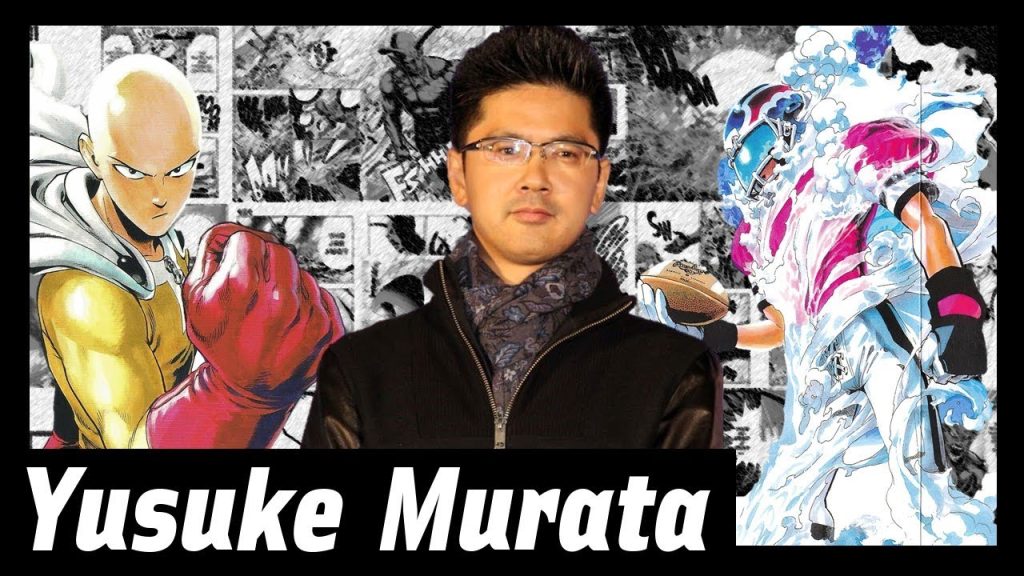
ONE’s early drawing style was often regarded as simple and rough, even deviating from the technical standards commonly associated with professional manga. However, this very minimalism served to highlight the author’s narrative thinking and conceptual strength. Rather than focusing on visual spectacle, ONE concentrated on story structure, narrative rhythm, and especially the inversion of familiar superhero genre conventions.
From a critical perspective, ONE represents a new generation of manga creators who utilize the creative freedom of the internet to experiment with nontraditional narrative forms. The success of the webcomic version of One Punch Man demonstrates that strong ideas and creative vision can transcend limitations in technical execution.
1.2. Murata Yusuke – Elevating the Artistic Form
A major turning point for One Punch Man came in 2012, when artist Murata Yusuke joined the project to illustrate and republish it as an official manga on Shueisha’s Tonari no Young Jump platform. Murata Yusuke is one of the leading artists in action manga, renowned for his detailed linework, dynamic compositions, and ability to depict large-scale battle scenes.
The collaboration between ONE and Murata Yusuke is widely regarded as one of the most successful partnerships in modern manga. ONE retained responsibility for story construction, themes, and ideological direction, while Murata translated those ideas into visually compelling imagery. As a result, the official manga version of One Punch Man not only preserved the satirical spirit of the original webcomic, but also significantly expanded its world-building, character depth, and the grandeur of its combat sequences.
From an artistic standpoint, One Punch Man stands as clear evidence that when content and form are properly aligned, they can mutually reinforce one another to produce a work that is both intellectually meaningful and widely accessible to a mass audience.
1.3. Publication History and Development of One Punch Man
Following its official publication, One Punch Man quickly attracted widespread attention from readers both in Japan and internationally. The manga consistently ranked highly in readership metrics, saw steady growth in tankōbon sales, and received positive evaluations from manga critics.
The success of the manga led to its anime adaptation, with the first season airing in 2015 and generating a strong global response. The anime significantly broadened One Punch Man’s audience, allowing the work to move beyond the traditional manga readership and reach a broader mainstream viewership.
In addition to the anime, One Punch Man has expanded into various other media formats, including games, novel adaptations, and supplementary publications, demonstrating the franchise’s lasting vitality within the ecosystem of popular culture.
1.4. The Position of One Punch Manwithin the Action–Superhero Manga Genre
Within the broader landscape of contemporary Japanese manga, One Punch Man occupies a distinctive position. The work not only inherits the traditions of action manga, but also actively dismantles and reconstructs its established conventions. The decision to create a protagonist who possesses absolute power from the outset is a bold narrative choice, allowing the story to focus on less commonly explored themes such as existential crisis, fame, and human value.
Through this approach, One Punch Man is often regarded as a “meta” work – one that is self-aware of its genre. Rather than merely telling a superhero story, the manga functions as a critical commentary on superhero culture within Japanese manga and anime.
It is this fusion of ONE’s independent creative vision and Murata Yusuke’s exceptional artistic skill that has positioned One Punch Man as one of the most representative manga works of the twenty-first century, combining broad popular appeal with enduring academic and analytical value.
2. Summary of the Plot of One Punch Man
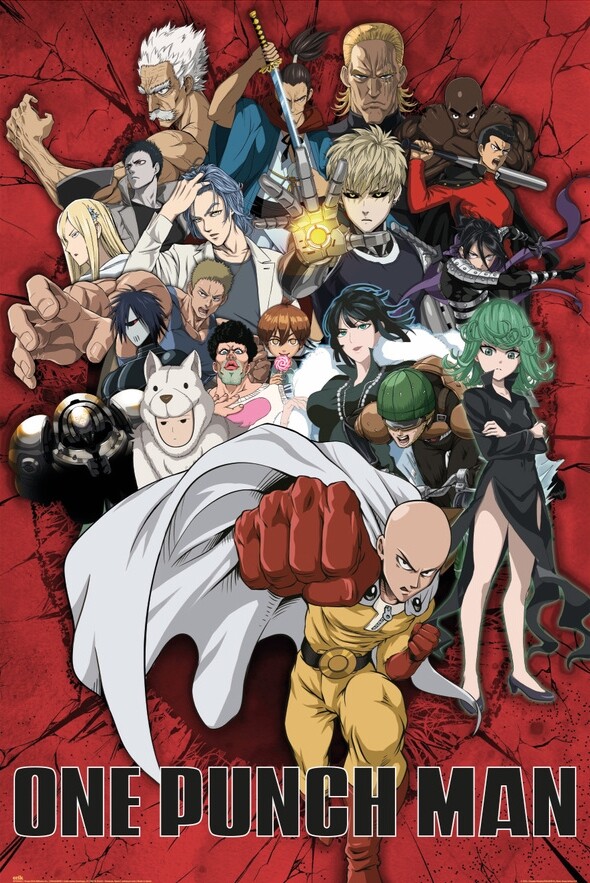
One Punch Man is set in a fictional modern world where the existence of monsters, mutants, and supernatural threats has become a constant part of everyday life. Cities are frequently attacked, forcing humanity to establish institutional mechanisms of defense. As a result, the Hero Association is created as a centralized organization responsible for recruiting, evaluating, ranking, and deploying heroes to protect society.
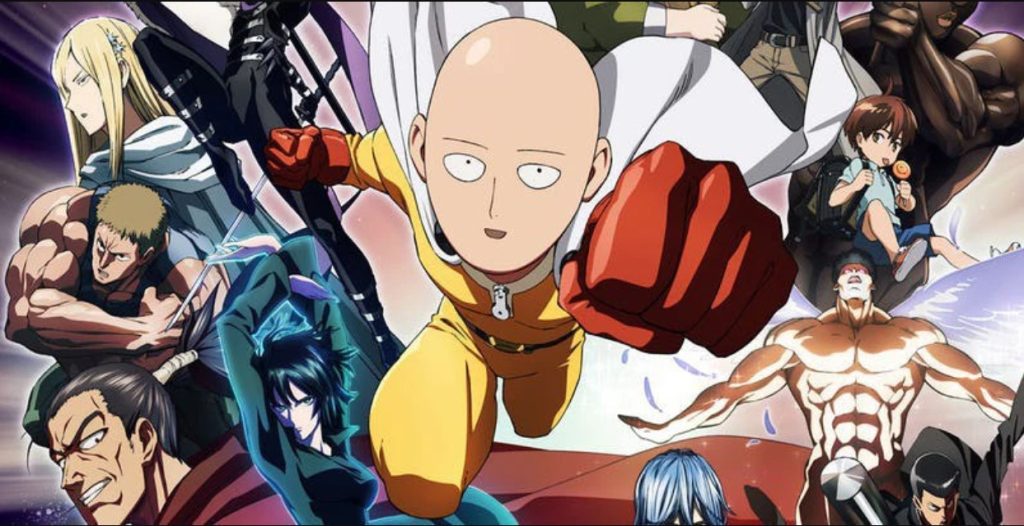
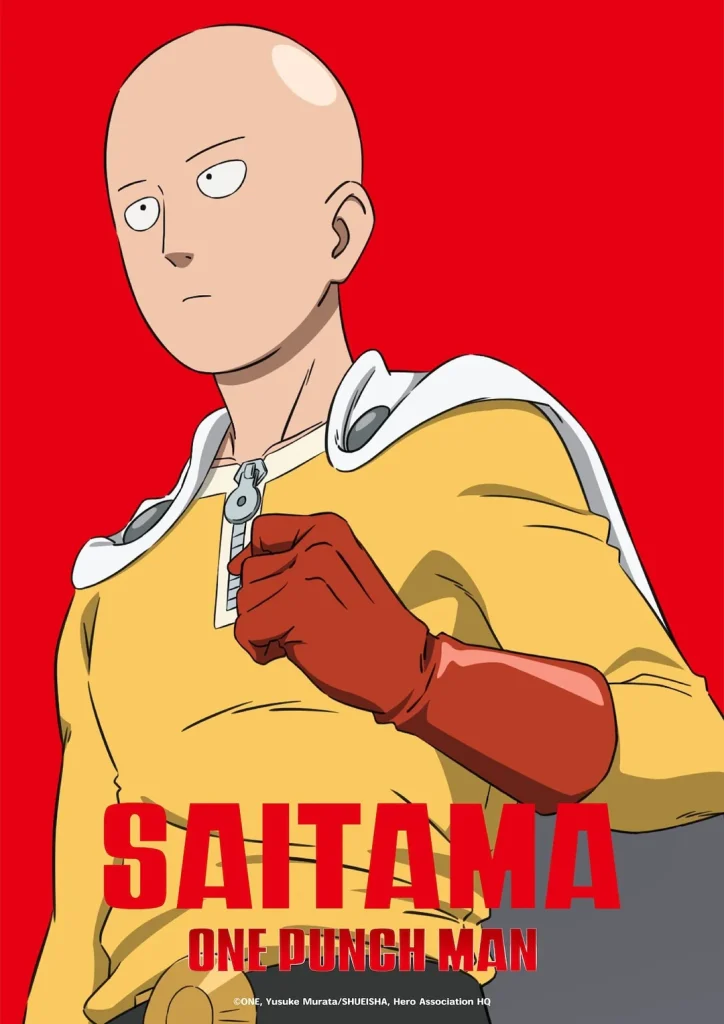
The story centers on Saitama, an entirely ordinary man living in City Z – an area often struck by disasters yet largely neglected by society. With no tragic backstory or grand destiny, Saitama decides to become a hero simply because his life feels empty and lacking in purpose. He undergoes a three-year training regimen that is deceptively simple in form but demands absolute mental endurance.
The outcome of this training is an unprecedented paradox: Saitama achieves absolute power, capable of defeating any opponent with a single punch. This immediately dismantles the traditional narrative framework of action manga, which typically relies on escalating power levels, prolonged battles, and life-or-death struggles.
Rather than portraying triumph and glory, One Punch Man focuses on the psychological consequences of overwhelming strength. Having no worthy opponents, Saitama gradually loses the thrill of combat. Every battle – no matter how catastrophic the threat is portrayed – ends almost instantly, rendering victory hollow and meaningless. As a result, the narrative shifts away from the question of whether the hero will win, and instead asks why victory matters at all when challenge no longer exists.
As he joins the Hero Association, Saitama is placed within a rigid ranking system that categorizes heroes from Class C to Class S. Due to his lack of concern for reputation, poor public presentation, and tendency to appear after battles are seemingly over, Saitama remains consistently underrated, despite being the one who resolves the most severe crises.
Running parallel to Saitama is Genos, a young cyborg driven by a relentless desire for power and haunted by vengeance. Genos becomes Saitama’s disciple, embodying the archetypal action-manga hero: constantly striving forward, yet repeatedly confronting his own limitations. Their relationship forms a crucial contrast between absolute power and the ongoing search for meaning within power.
Beyond the central characters, One Punch Man constructs a broad narrative world populated by a diverse cast of heroes and villains, each representing different interpretations of justice, fame, and heroism. Major arcs – including alien invasions, the rise of the Monster Association, and internal conflicts within the Hero Association – expand the scope of the story while exposing the flaws of a society governed by rankings and superficial recognition.
Overall, the plot of One Punch Man unfolds through a series of deliberate contrasts: between strength and meaning, genuine action and social acknowledgment, heroic ideals and institutional reality. These contrasts form the foundation of the work’s distinctive humor and set the stage for the deeper thematic exploration developed in subsequent sections.
3. Central Themes and Ideological Concerns of One Punch Man
3.1. Deconstructing the Hero Model and the Concept of “Absolute Power”
One of the most significant contributions of One Punch Man to action manga lies in its thorough deconstruction of the traditional hero model. In most works within the genre, strength is treated as the ultimate goal of the protagonist’s journey and as the primary measure of personal worth and status. Protagonists typically endure arduous training, repeated failures, and eventual triumph only after surpassing their own limits.
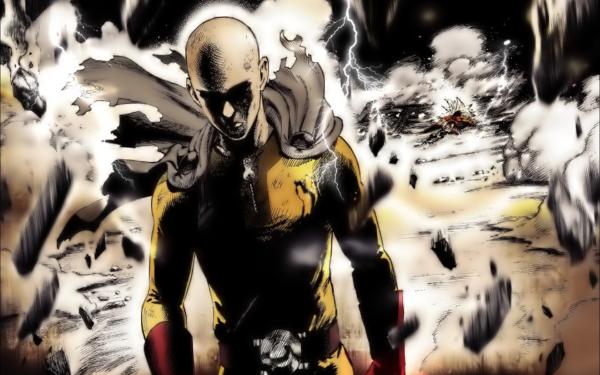
One Punch Man deliberately reverses this structure. Saitama does not evolve in terms of strength over the course of the narrative, as he has already attained an “omnipotent” state from the very beginning. The fact that every battle ends with a single punch removes strength as a driving force of the plot, transforming it into a static element and compelling the narrative to seek alternative focal points.
From an ideological perspective, the work raises a question rarely explored in action manga: when power reaches an absolute level, it ceases to be meaningful and instead becomes a source of emptiness and value crisis. In doing so, One Punch Man implicitly challenges the assumption that power alone can provide meaning to human existence.
3.2. Crisis of Meaning and Personal Identity in the Superhero World
Not only Saitama, but many characters in One Punch Man are constructed around issues of identity and life purpose. What they share is the tension between their original ideals and the harsh reality of a society organized by rankings, evaluations, and fame.
Saitama represents an extreme manifestation of existential crisis: he possesses everything a conventional action hero might desire, yet finds no spiritual fulfillment. Genos pursues power as a means of revenge and self-affirmation; Garou resists the hero system by positioning himself as a “monster”; while other high-ranking heroes are drawn into the vortex of fame and institutional responsibility.
These character arcs illustrate that One Punch Man does not treat identity crisis as an individual problem, but as a consequence of a social structure in which human value is reduced to titles, ranks, and public images.
3.3. Social Critique through the Hero Association System
The Hero Association in One Punch Man functions as a microcosm of modern society. Its ranking system, from Class C to Class S, reflects the way society organizes and controls individual value through quantitative evaluation. Within this system, actual strength does not always correspond to status, while image, visibility, and recognition often play decisive roles.
By consistently ranking Saitama at a low level despite his decisive contributions, One Punch Man critiques the distortion inherent in society’s valuation mechanisms. The work exposes the danger of placing absolute trust in rankings and reputations, which can obscure genuine ability and substantive contribution.
At a broader level, the Hero Association also reflects consumer society, in which individuals are compelled to “perform” their roles in order to gain recognition, rather than being evaluated based on their actual contributions.
3.4. The Fragile Boundary between Heroes and Monsters
Another key ideological theme of One Punch Man is the blurring boundary between heroes and monsters. Not all monsters represent pure evil, and not all heroes act out of noble ideals. Through characters such as Garou, the work questions the legitimacy of the concept of “hero” when it is defined by institutional authority rather than universal moral principles.
This approach allows One Punch Man to move beyond a simplistic good-versus-evil framework, toward a more complex discourse on humanity, where actions and motivations cannot be reduced to moral labels.
3.5. Meta-Narrative and Genre Self-Awareness
At a higher ideological level, One Punch Man functions as a “meta” work – one that is self-aware and reflective of its own genre. By continually subverting audience expectations, from battle pacing to the construction of climactic moments, the work becomes a form of dialogue with the history of action manga.
Through this mechanism, One Punch Man not only tells an entertaining story, but also serves as a critical commentary on formulaic repetition in popular culture, while suggesting new possibilities for the evolution of manga in a contemporary context.
4. Value and Influence of One Punch Man
4.1. Narrative Value and Structural Innovation in Action Manga
From a narrative perspective, One Punch Man offers a novel approach to the action–superhero genre. Instead of building tension through escalating power levels and prolonged battles, the work deliberately neutralizes traditional dramatic tension by allowing the protagonist to resolve conflicts instantly. This forces the narrative to shift its focus from the “outcome of battles” to the “meaning of heroic action.”
This shift enables One Punch Man to explore additional narrative layers, including the everyday lives of heroes, the relationship between individuals and institutions, and the social consequences of the existence of superpowered beings. As a result, the work transcends the limitations of conventional action manga and becomes a discourse on social structure and human value.
4.2. Visual Artistic Value and the Integration of Content and Form
One of the key factors behind the appeal of One Punch Man lies in its exceptional visual artistry, particularly in the manga version illustrated by Murata Yusuke. Battle scenes are composed with dynamic layouts, detailed linework, and a strong sense of spatial depth, significantly enhancing the reading experience.
Notably, the deliberate contrast between visually grand imagery and satirical narrative content stands out. Large-scale battles often end abruptly and anticlimactically when Saitama appears. This contrast reinforces the work’s ideological message and establishes a distinctive aesthetic identity for One Punch Man within the action manga ecosystem.
4.3. Influence on Contemporary Manga and Anime
The success of One Punch Man has exerted a significant influence on contemporary manga and anime. The work has contributed to the rise of self-aware genre narratives, in which creators not only tell stories but also consciously engage with and critique established genre formulas.
Many subsequent works exhibit traces of this approach, whether through the use of humor to subvert expectations or through protagonists who function as anti-heroes or non-heroes. In this context, One Punch Man is frequently cited as a key reference point in discussions of genre innovation.
4.4. Impact on Global Popular Culture and Readership
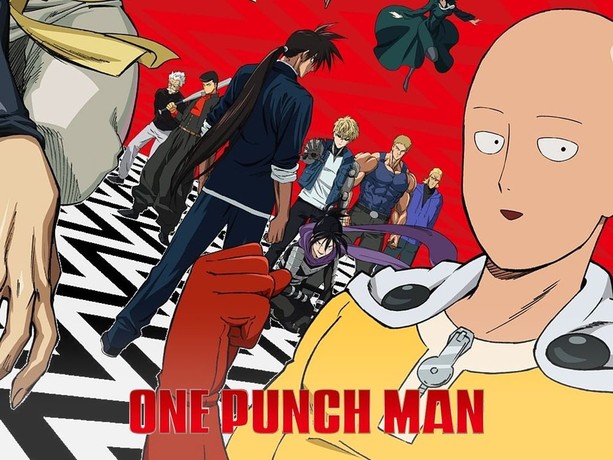
Beyond the realm of manga, One Punch Man has achieved wide-reaching influence within global popular culture. The anime adaptation transformed Saitama into a recognizable cultural icon, frequently appearing in discussions of character power scaling, internet memes, and various derivative products.
For readers, One Punch Man offers a new way of engaging with action manga: rather than focusing solely on spectacle, audiences are invited to reflect on fundamental questions concerning personal value, life purpose, and the role of individuals within social systems. This reflective dimension contributes significantly to the work’s enduring appeal.
4.5. Academic Value and Long-Term Analytical Potential
From an academic perspective, One Punch Man provides rich material for analyzing genre deconstruction, social critique within popular culture, and the relationship between individuals and systems of power. The work supports multiple levels of interpretation, ranging from mainstream entertainment to cultural and media studies.
It is precisely this capacity to reconcile mass appeal with intellectual depth that has enabled One Punch Man to become one of the rare manga works that possess both broad influence and sustained analytical relevance within literary and comics criticism.
5. Conclusion
One Punch Man stands as a representative example of the self-renewing capacity of Japanese manga in an era when action – superhero motifs have become familiar and show signs of saturation. By positioning its protagonist as an individual who possesses absolute power from the outset, the work not only disrupts traditional narrative structures, but also compels readers to reconsider values that have long been taken for granted within the genre.
Throughout the narrative, One Punch Man demonstrates that power, when detached from purpose and social meaning, can no longer function as the ultimate measure of human worth. Through the figure of Saitama and the structure of the Hero Association, the work critiques the way modern society operates through rankings, fame, and public image, while highlighting the discrepancy between genuine ability and external recognition. The diversity of character arcs, marked by crises of identity and conflicting motivations, further expands the discourse beyond the confines of action storytelling.
Artistically, the combination of ONE’s critically driven narrative vision and Murata Yusuke’s high-level illustrative skill has produced a work that is both broadly appealing and intellectually substantial. One Punch Man succeeds not merely as entertainment, but as a testament to manga’s capacity to reflect upon and critique fundamental issues of contemporary society.
Taken as a whole, One Punch Man deserves recognition as a significant milestone in twenty-first-century manga: a work that employs a popular entertainment form to pose serious questions about power, value, and human identity. It is this balance between mass accessibility and philosophical depth that has enabled One Punch Man to maintain lasting influence and to remain a subject of sustained discussion within comics studies and modern popular culture.