

In the flow of world detective literature,Sherlock Holmes is not merely remembered as a famous series of crime-solving stories, but is widely regarded as a foundational work in the formation of modern detective reasoning. The series marks a decisive moment when detective fiction moved beyond chance, coincidence, or subjective intuition, entering a new era in which every mystery must be explained through observation, logical reasoning, and concrete evidence.
Emerging in late nineteenth-century England, at a time when science and rationalism were increasingly occupying a central position in social life, Sherlock Home clearly reflects the spirit of its age: a belief in human intellect and in the capacity to comprehend and control the world through reason. The cases presented in the stories are not merely intellectual games, but processes of uncovering the essence of events through the smallest details – where every trace carries meaning, and every conclusion must be rigorously proven.
Going beyond the framework of popular entertainment, Sherlock Holmes raises profound questions concerning perception, morality, and society. Through the portrayal of a detective who consistently maintains distance from personal emotions, the work affirms the value of logical thinking in confronting the complexity of human nature and the modern world. It is precisely this depth that has allowed Sherlock Home to be continuously reprinted, studied, and reread as a classic whose influence transcends time and genre.
1. Introduction to the Author and the Work Sherlock Home
Sherlock Holmes is the most representative creation of Arthur Conan Doyle, a British writer born in 1859 in Edinburgh, Scotland. Before becoming a professional author, Conan Doyle was trained as a physician and practiced medicine. This scientific and medical background had a direct impact on his literary thinking, particularly in the construction of logical reasoning methods – the core element that distinguishes Sherlock Holmes.
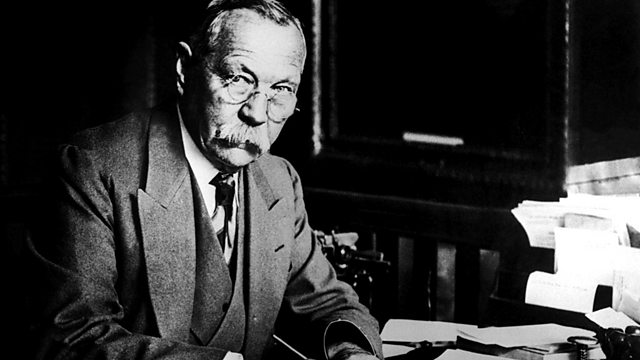
The character Sherlock Home first appeared in the novel A Study in Scarlet (1887), marking the birth of an entirely new detective archetype in literature. Prior to this, investigative stories often relied heavily on coincidence, intuition, or sheer luck. With Sherlock Holmes, Conan Doyle established a different principle: every mystery can be solved through scientific observation, data analysis, and rigorous deduction. From this starting point, the Sherlock Holmes series rapidly expanded to include four novels and fifty-six short stories, most of which were published in The Strand Magazine, one of the most influential British periodicals of the late nineteenth century.
The emergence of Sherlock Holmes is closely linked to Victorian England, a period marked by rapid advances in science, industrialization, and urbanization. London in the series appears as a complex city: modern yet chaotic, civilized yet riddled with injustice and crime. This setting provides an ideal environment for Sherlock Home to demonstrate his powers of observation and deduction, while simultaneously reflecting contemporary social issues such as class disparity, moral decay, and the limitations of the legal system.
Another crucial factor in the success of Sherlock Holmes lies in Conan Doyle’s construction of the central character pairing. Sherlock Home is portrayed as an exceptional intellect – rational, withdrawn, and somewhat eccentric. In contrast, Dr. John Watson, his companion and the narrator of the stories, serves as a counterbalance, representing the perspective of the general public. Watson’s role as storyteller not only makes the narrative more accessible to readers, but also highlights the cognitive gap between a genius and ordinary individuals.
In terms of genre, Sherlock Holmes is widely considered a foundational work of classical detective fiction. Many conventions of the genre – from case structure and clue gathering to the final explanation – were established or standardized through Conan Doyle’s stories. The influence of Sherlock Home extends far beyond literature into film, television, theater, and popular culture, making Sherlock Home one of the most frequently adapted fictional characters in history.
From a serialized entertainment published in magazines, Sherlock Holmes rose to become a symbol of rational thinking in modern literature. Its value lies not only in its thrilling cases, but in its affirmation of faith in science, logic, and human cognition in an increasingly complex world.
2. Summary of the Plot of Sherlock Home
Sherlock Home is not constructed as a single, continuous novel following a unified timeline, but rather as a series of independent cases connected loosely through a central character and a consistent worldview. The entire narrative is primarily conveyed through the perspective of Dr. John Watson – Sherlock Home’s companion, collaborator, and eyewitness to his investigative achievements.
The main setting of the series is late nineteenth – century London, a rapidly developing metropolis characterized by stark contrasts: scientific progress alongside sophisticated crime, social order coexisting with injustice and disorder. Within this context, the apartment at 221B Baker Street becomes a focal point for mysteries, a place where people from various social strata seek Sherlock Holmes’s help when conventional policing proves insufficient.

Each case in Sherlock Holmes typically begins with a seemingly straightforward situation: a disappearance, an unexplained death, an anonymous letter, or an unusual behavior that defies easy explanation. However, as the investigation deepens, layers of complexity emerge, involving psychological motives, conflicts of interest, personal vendettas, or long-concealed secrets.
Sherlock Holmes’s investigative process follows a rigorously logical sequence. He begins with precise observation – examining crime scenes, clothing, habits, and minute details such as mud on shoes, tobacco ash, or patterns of speech. These elements, often overlooked by others, become crucial data points in his deductive system.
He then situates these observations within a vast network of accumulated knowledge, including chemistry, medicine, anatomy, geology, currency, criminal history, and human psychology. Rather than rushing to conclusions, Sherlock Holmes systematically eliminates implausible possibilities until only one explanation remains. This method of “eliminating the impossible” distinguishes Sherlock Holmes sharply from detective works driven by intuition or coincidence.
A notable aspect of the narrative is Sherlock Home’s relationship with the police, particularly Inspector Lestrade. In many cases, the police represent traditional investigative methods based on precedent, testimony, and initial assumptions. Sherlock Holmes, by contrast, operates outside institutional constraints, relying on independent and scientific reasoning. This contrast not only creates dramatic tension but also reflects the work’s perspective on the limits of authority and the role of individual intellect in administering justice.
Beyond standalone cases, Sherlock Holmes develops a long-term conflict through the antagonist Professor Moriarty. Unlike ordinary criminals, Moriarty is portrayed as an organized criminal mastermind with an intellect equal to Sherlock Holmes’s. Their confrontation elevates the series from simple detective stories to a philosophical duel – reason in the service of justice versus reason corrupted by power and ambition.
At a deeper level, the plot of Sherlock Holmes is not solely concerned with identifying perpetrators, but with understanding the causes of crime. Many stories depict criminals not as embodiments of pure evil, but as products of social conditions, class pressure, injustice, or prolonged psychological trauma. Through this lens, the work raises questions about the boundary between law and morality, punishment and understanding.
Overall, the narrative of Sherlock Holmes forms a multi-layered portrait of an emerging modern society, where every mystery has a cause, every action leaves a trace, and human intellect – when properly applied – can illuminate even the darkest corners. This logical and coherent structure has established Sherlock Holmes as a benchmark of classical detective fiction, maintaining its appeal across generations.
3. Thematic and Artistic Values of Sherlock Home
The greatest value of Sherlock Holmes lies in its affirmation of rational thinking as the central tool for understanding and solving problems. In Sherlock Holmes’s world, there are no solutions derived from vague intuition or supernatural intervention. Every phenomenon, no matter how complex, is treated as the result of specific causes that can be traced through observation and scientific deduction. This outlook reflects the rationalist spirit of late nineteenth – century Western society and lays the foundation for modern detective literature.
On a thematic level, Sherlock Holmes is not merely about identifying criminals, but about depicting the process of reaching truth. The series emphasizes that knowledge is not emotional accumulation, but the product of disciplined thinking. Sherlock Holmes views the world as a system of interconnected signs, where each detail matters if placed correctly within a chain of reasoning. This approach elevates the work beyond entertainment, transforming it into a literary lesson in critical thinking.

In addition to its emphasis on rationality, Sherlock Holmes offers a sharp portrayal of Victorian English society. The crimes addressed often stem from class conflict, economic pressure, moral decay, or systemic injustice. Crime is rarely depicted as an isolated act, but as a consequence of broader social structures where legal frameworks struggle to keep pace with reality.
Another significant thematic value lies in the work’s treatment of morality and justice. Sherlock Home does not always act strictly within legal boundaries. In certain cases, he chooses to conceal the truth or allow offenders to evade legal punishment when he believes the issue is more moral than criminal in nature. This approach raises questions about the limits of legal justice and highlights a flexible, human-centered ethical perspective.
Artistically, Sherlock Holmes achieves a high level of refinement in detective structure. Each story is carefully organized into three phases: the initial situation, the investigation, and the final explanation. The key strength lies not in the outcome, but in the deliberate distribution of information. Readers are given all necessary clues, yet are not instructed on how to connect them, compelling intellectual participation and sustaining long – term engagement.
Character construction also carries symbolic significance. Sherlock Holmes is not idealized as a flawless hero, but portrayed as eccentric, emotionally distant, and socially detached. This emotional restraint accentuates his intellectual brilliance and reinforces the message that rational thinking requires discipline and control. Watson, in contrast, provides emotional balance and a more humane, empathetic viewpoint.
In terms of language and tone, Sherlock Holmes employs a clear, precise, and restrained style. Descriptions focus on action, detail, and reasoning, minimizing emotional excess. This stylistic choice aligns with the scientific and rational spirit of the work, ensuring clarity while preserving depth.
Ultimately, the value of Sherlock Home lies not merely in the suspense of its cases, but in its construction of an epistemological framework: the world is intelligible, order can be restored, and truth – no matter how well concealed – always leaves traces. This synthesis of intellectual depth and rigorous detective artistry has secured Sherlock Home’s enduring status as a literary classic.
4. Memorable Quotations from Sherlock Home
One of the elements that elevates Sherlock Holmes beyond conventional detective fiction is the philosophical depth conveyed through the concise yet profound statements of its central character. These quotations serve not only narrative purposes but also function as declarations of a method of thinking and a way of approaching truth.
First, Sherlock Holmes repeatedly emphasizes the importance of logical reasoning and elimination, the foundation of his investigative practice:
“When you have eliminated the impossible, whatever remains, however improbable, must be the truth.”
This statement serves as both a guiding principle for Sherlock Home and a clear expression of the work’s rationalist spirit.
Continuing this line of thought, Sherlock Holmes draws a distinction between seeing and observing:
“You see, but you do not observe.”
The quote highlights humanity’s tendency toward passive perception and the neglect of meaningful details.
Another quotation addresses the danger of hasty conclusions:
“There is nothing more deceptive than an obvious fact.”
Here, Sherlock Holmes warns that apparent clarity often discourages deeper inquiry.
On a broader level, the series presents a sober view of knowledge and reality:
“The world is full of obvious things which nobody by any chance ever observes.”
This underscores the idea that ignorance stems not from lack of information, but from inadequate analytical thinking.
Sherlock Holmes also expresses caution toward emotional interference in reasoning:
“Emotion clouds judgment.”
Emotion is not denied, but must be controlled to preserve objectivity.
One of the most famous metaphors in the series concerns the human mind:
“The brain is like a little empty attic, and you should stock it with such furniture as you choose.”
This metaphor emphasizes selective and functional knowledge.
Sherlock Home also warns of minor observational errors:
“A slight error in observation can lead to grave mistakes in reasoning.”
This reflects the rigorous precision demanded by deductive thinking.
Finally, a succinct declaration captures the essence of the character:
“I never guess. I infer.”
This statement encapsulates the worldview of Sherlock Holmes, where logic and evidence supersede subjective intuition.
Through these quotations, it becomes clear that Sherlock Holmes captivates not only through its mysteries, but through its intellectual depth. These statements have shaped a distinctive way of thinking that continues to be cited, studied, and applied beyond literature.

5. Conclusion
Overall, Sherlock Holmes is a work of enduring value, not only because of its compelling detective cases, but also because of the coherent and disciplined rational philosophy that permeates the entire series. Through the figure of Sherlock Holmes , the work affirms faith in human cognition, science, logic, and deductive methodology as effective means of approaching truth.
Thematically, Sherlock Holmes extends beyond crime-solving to explore the nature of humanity and society. Its cases reflect latent tensions of modern life – class inequality, conflicting interests, moral decay, and the limits of law – demonstrating that crime is not an isolated phenomenon, but the outcome of complex social structures.
Artistically, Sherlock Holmes laid the foundation for classical detective fiction through logical structure, deliberate information control, and symbolic character construction. Watson’s role as narrator preserves necessary distance between genius and reader, while highlighting the value of analytical thinking. The restrained style, prioritizing logic and detail, has influenced generations of writers.
From a comprehensive evaluative perspective, Sherlock Holmes is not merely a work to be read, but one to be contemplated. Its lasting significance lies in its ability to encourage careful observation, slower judgment, and critical questioning of what appears obvious. In an age of information overload and hasty conclusions, the rational spirit upheld by Sherlock Holmes remains profoundly relevant.