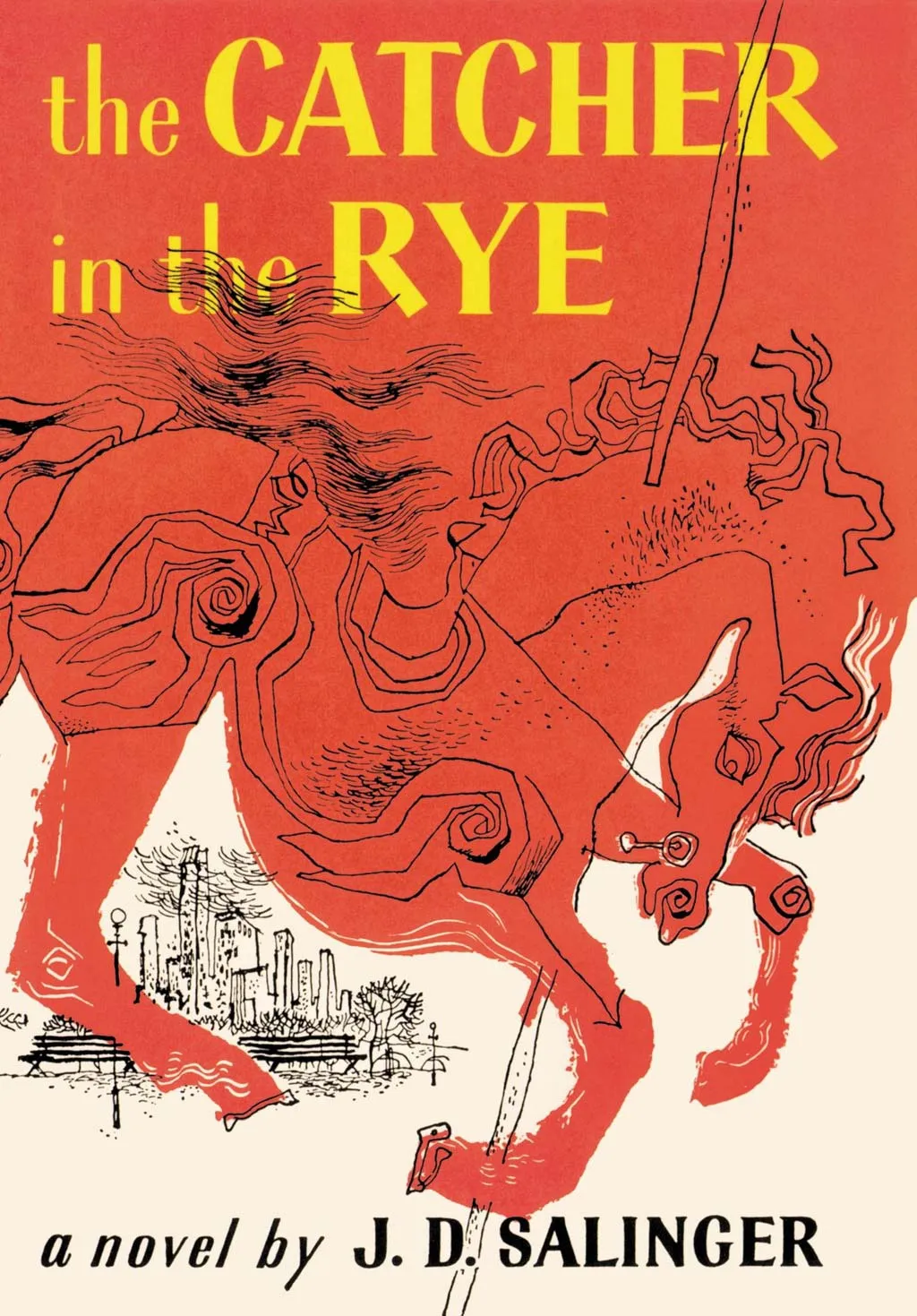
In the history of twentieth-century world literature, few works have sparked such prolonged controversy while maintaining lasting vitality across generations as The Catcher in the Rye. Rather than attracting readers through dramatic events or complex narrative structures, the novel by J. D. Salinger chooses a different path: it goes straight to the raw, defiant, yet deeply authentic inner voice of a young soul lost in the adult world.
The Catcher in the Rye does not tell a story of war, does not construct heroic figures, nor does it place its characters within grand, epic tragedies. The entire novel revolves around only a few wandering days in the life of a teenage boy in New York. Yet it is precisely this apparent “smallness” that opens up a vast psychological space, where fundamental issues of modern youth are laid bare: loneliness, disorientation, and skepticism toward social values assumed to be unquestionably correct.
Reading The Catcher in the Rye, one does not simply follow a story, but confronts oneself at the most fragile stage of life – when a person desperately longs to be understood while simultaneously fearing the necessity of growing up. Perhaps for this reason, despite having been published more than half a century ago, the novel continues to be reread, debated, and interpreted from multiple perspectives.
1. Introduction to the Author and the Work
The Catcher in the Rye is the most famous novel by the American writer J. D. Salinger, first published in 1951. Upon its release, the book caused a major shock in American literary life and provoked intense controversy due to its colloquial, sometimes rough language, its explicit anti-social attitude, and its direct engagement with sensitive psychological issues faced by adolescents.
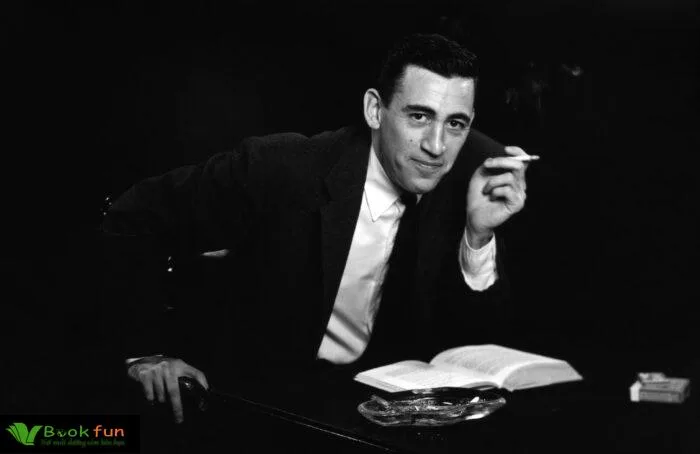
Salinger was born in 1919 in New York into a middle-class family. His experiences during World War II – especially his exposure to violence and death – left a profound imprint on his inner world. These experiences helped shape the skeptical, somber, yet deeply humane perspective evident in his writing. In contrast to the fame brought by The Catcher in the Rye, Salinger chose a reclusive life, avoiding the media and the public, and nearly “disappeared” from literary life after the novel’s immense success.
Despite a relatively limited body of work, Salinger is regarded as one of the most influential voices in modern American literature. The Catcher in the Rye has not only become a literary classic taught in schools, but also a bedside book for generations of young people around the world – those who find within it a rare sense of understanding and empathy.
2. Summary of the Plot
The Catcher in the Rye is told entirely from the first-person perspective of Holden Caulfield, a sixteen-year-old student who has just been expelled from Pencey Prep due to poor academic performance. The story opens on a cold autumn day – a symbolic setting of decay and transition – when Holden stands alone on a hill overlooking a school football game, feeling both indifferent and alienated. His decision to leave school earlier than planned is not merely impulsive; it marks his initial attempt to escape expectations and social structures he cannot assimilate into.
From there, Holden begins several aimless days wandering through New York, a vast yet emotionally cold urban space that mirrors his inner loneliness. Throughout this journey, Holden constantly observes, judges, and mocks the world around him. He is particularly disgusted by the hypocrisy of adults, repeatedly using the word “phony” to describe people who live according to formulas and express emotions they do not truly feel. The paradox, however, lies in the fact that the more Holden condemns falsehood, the more he realizes his own lack of honesty, as he frequently lies, hides, and avoids confronting his true emotions.
After leaving Pencey, Holden stays at the Edmont Hotel – a dark, morally decayed space where he witnesses the adult world’s darker aspects: cheap desire, emotional isolation, and spiritual emptiness. These experiences do not lead to positive maturity; instead, they deepen his confusion and fear of becoming part of such a world.
In his search for connection, Holden repeatedly calls old acquaintances, including friends, teachers, and half-formed relationships. Yet nearly all these encounters end in disappointment, as he fails to find genuine understanding. Seemingly ordinary conversations reveal a profound gap between Holden and those around him – a society in which no one truly listens to him, and in which he himself cannot fully open up.

His date with Sally Hayes becomes a significant turning point. Sally represents a type of young person who has already begun to accept social values such as stability, practicality, and predefined life paths. When Holden expresses his desire to run away, abandon conventional education and career routes, and seek an alternative way of living, Sally dismisses it as impulsive and unrealistic. Their conflict is not merely personal but ideological: a clash between the desire to escape and preserve purity, and the willingness to compromise with reality.
The most emotionally significant relationship in the novel is between Holden and his younger sister, Phoebe Caulfield. Phoebe serves not only as family but as Holden’s rare emotional anchor. She embodies everything he deeply values: innocence, sincerity, intelligence, and authenticity. In his conversation with Phoebe, Holden articulates his deepest dream – to be the “catcher in the rye,” standing in a field to prevent children from falling into a cliff. This metaphor reflects Holden’s central obsession: protecting innocence from the cruelty and falseness of the adult world.
The climax occurs when Holden reaches a severe mental breakdown. Exhausted both physically and psychologically, he becomes obsessed with thoughts of death and disappearance as forms of escape. In this state, the moment he watches Phoebe ride the carousel in the rain becomes an awakening. For the first time, Holden realizes that children cannot – and should not – be protected from every risk. Growing up is inevitable, and love does not mean freezing others at the edge of safety forever.
The story concludes with Holden recounting his experiences from a psychiatric facility. The ending offers no definitive resolution but opens a fragile hope: that by confronting his trauma and accepting growth, Holden may gradually find his own path.
3. Thematic and Artistic Values
The greatest value of The Catcher in the Rye does not lie in delivering a clear moral lesson or guiding readers toward a predetermined conclusion. Rather, it compels readers to face uncomfortable, fundamental questions about youth, maturity, and the possibility of living truthfully in a contradictory society. Instead of explaining or judging, Salinger allows his character to reveal confusion, contradiction, and vulnerability, thereby granting interpretive authority to the reader.
Thematic Value
The novel can be seen as a profound self-narrative of adolescent identity crisis in modern society. Holden Caulfield is not merely a rebellious or undisciplined student; he is the product of prolonged emotional trauma: the loss of his brother Allie, emotional disconnection within his family, and alienation in a society where relationships have become increasingly formal and cold. Holden’s resistance stems not from a desire to destroy order, but from his inability to find a place within it.
The novel powerfully exposes adult hypocrisy through the perspective of a young person not yet fully “domesticated” by social norms. Holden sees compromise, role-playing, and obsession with superficial success. Yet what elevates The Catcher in the Rye beyond simple social criticism is that Salinger never idealizes his protagonist. Holden despises dishonesty, yet he himself lies, exaggerates, avoids, and denies his true emotions. This inner contradiction reflects a deeper truth: in the process of growing up, absolute purity is difficult to preserve without self-inflicted pain.
At a deeper level, the novel questions the cost of maturity. Holden recognizes that entering adulthood requires sacrificing innocence, but he cannot accept this exchange. His tragedy lies not in refusing to grow up, but in failing to find a humane path toward adulthood.

Artistic Value
Artistically, The Catcher in the Rye represents a major innovation in modern narrative form. The use of first-person narration transforms the novel into a continuous inner monologue, where all events are filtered through the subjective, unstable, and sometimes irrational mind of the protagonist. This approach creates strong psychological realism, even when factual reliability is uncertain.
The language is colloquial and occasionally rough, yet rhythmically natural, accurately reflecting adolescent thought patterns. Holden’s voice is sarcastic, bitter, yet fragile and vulnerable, creating a unique narrative style in which irony functions not as humor but as a defense mechanism against loneliness and fear.
The symbol of the “catcher in the rye” stands at the artistic and ideological center of the novel. The field and the cliff represent the boundary between childhood and adulthood, as well as humanity’s impossible desire to freeze time and preserve innocence before it is eroded by experience and loss. Holden’s eventual realization that he cannot – and should not -stop children from falling reflects a subtle, fragile shift in his understanding of life’s inevitabilities.
Historically, The Catcher in the Rye paved the way for later works that directly address adolescent psychology, treating emotional trauma as a serious human concern rather than a sign of weakness or deviance.
4. Memorable Quotations
The following passages not only capture the rebellious spirit and pervasive loneliness of youth, but also reveal the sensitive, conflicted inner life of the central character, highlighting the novel’s distinctive narrative voice and philosophical depth:
- “The thing that makes me saddest is when somebody isn’t really there where they’re supposed to be.”
- “Don’t ever tell anybody anything. If you do, you start missing everybody.”
- “I keep picturing myself standing in a field of rye, catching kids before they fall off the cliff.”
- “Adults always think they know everything.”
- “You never really know what you love until you lose it.”
- “There are times when you feel so lonely you don’t want to talk to anyone.”
- “I don’t like it when things change too fast and nobody explains why.”
- “What drives me crazy is when people pretend to care, but really don’t.”
- “I like people who make you feel like they’re really listening.”
- “If you really want to hear the truth, it’s usually not very pleasant.”
- “Some people shouldn’t grow up. They really shouldn’t.”
- “Sometimes I wish I could disappear, just to see if anyone would really miss me.”
5. Conclusion
The Catcher in the Rye is not an easy novel, nor was it written to please the majority. It can make readers uncomfortable, confused, or even resistant, because it forces direct confrontation with the fragile, unpolished emotions of youth. Yet this discomfort is precisely the foundation of the novel’s enduring value.
Through Holden Caulfield, the novel presents an honest, unflinching portrait of the transitional space between childhood and adulthood – where the longing for love coexists with fear of assimilation, and rebellion conceals a deep need for protection. Holden is neither ideal nor likable, but he remains one of the most authentic and haunting characters in modern literature, because he carries deeply human wounds that many readers across generations have experienced.
Closing the book, The Catcher in the Rye offers no closed message or clear moral resolution. Instead, it leaves readers with a reflective silence – a space to reconsider their own early losses, hidden loneliness, and the cost of growing up. Perhaps this is why, despite the passage of time and changing social contexts, the novel retains its vitality: as a reminder that in a noisy and often hypocritical world, remaining honest with oneself is profoundly difficult, yet deeply worthwhile.