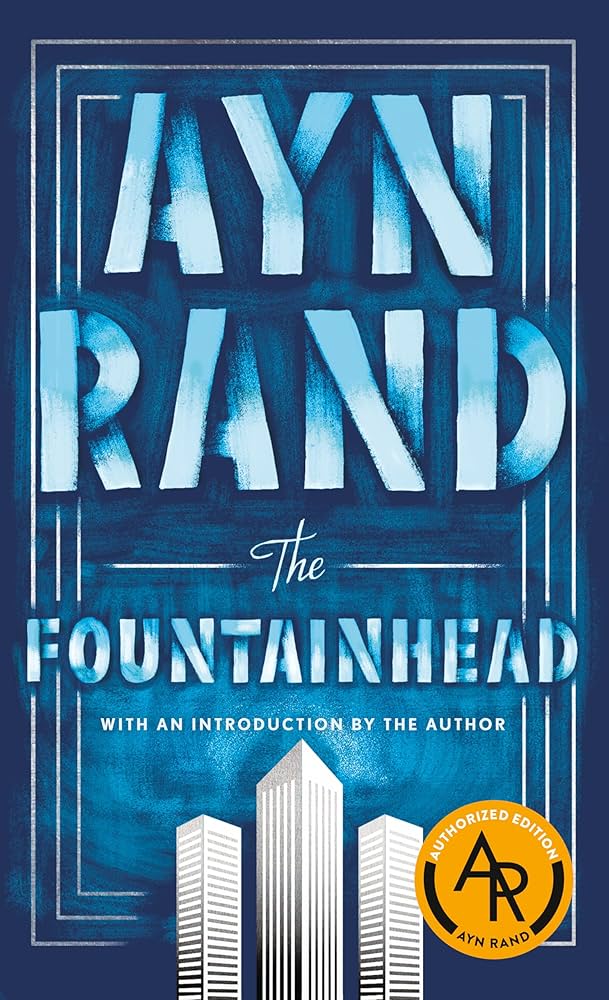
In the history of world literature, only a very small number of works transcend the mere function of storytelling to become ideological manifestos – texts that directly challenge how human beings perceive themselves, society, and the fundamental values of life. The Fountainhead is one such rare work. It is not a novel written to please the majority, nor is it an easy or agreeable read. On the contrary, The Fountainhead demands from its readers patience, independent thought, and above all, the courage to confront deeply unsettling foundational questions: What do we live for? For whom do we create? And does an individual have the right to place their ideals above all pressures imposed by the collective?
On first encounter, what leaves the strongest impression is not dramatic plot twists or conventional narrative momentum, but rather a dense philosophical atmosphere conveyed through a forceful and conflict-driven literary form. The novel resembles an underground spring: at first it appears quiet, even austere, yet the further one reads, the more one feels its powerful current, steadily eroding familiar assumptions about success, morality, social duty, and compromise. It is precisely this relentless demand for self-examination that has given The Fountainhead its enduring vitality in modern cultural life.
1. Introduction to the Author and the Work
The Fountainhead is the most important and influential novel by Ayn Rand, a Russian-born American novelist and philosopher, and the founder of the philosophical system known as Objectivism. Far from being merely a literary work, The Fountainhead is often regarded as the first comprehensive declaration of Rand’s thought – presented in fictional form – laying out the core principles that would later define her philosophy.
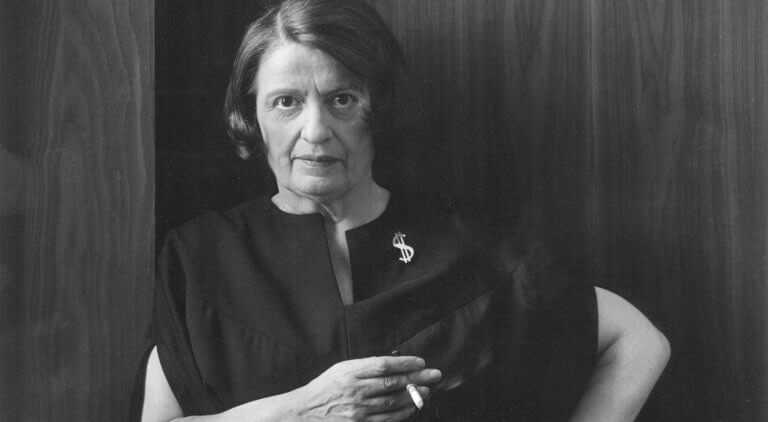
Ayn Rand was born in 1905 in Saint Petersburg into a middle-class intellectual family and came of age amid the seismic historical upheavals of early twentieth-century Russia. Her firsthand experience of the Russian Revolution, the confiscation of private property, and the imposition of collectivist ideology left a profound imprint on her worldview. To Rand, collectivism was not merely a political error but a direct threat to human dignity, reason, and creative capacity. From this historical experience emerged the guiding ideas of her entire intellectual career: opposition to all forms of coercion imposed on the individual in the name of society, rejection of blind self-sacrifice as a moral ideal, and the defense of creative freedom as a core value of human existence.
First published in 1943, The Fountainhead appeared at a time when the world was strongly inclined toward collectivist models of thought, from socialism to forms of altruism elevated as universal moral standards. Precisely because it ran counter to the spirit of its age, the novel did not achieve immediate success and was met with fierce criticism from many reviewers. It was accused of extremism, impracticality, and even of being overt philosophical propaganda. Yet these reactions also revealed that The Fountainhead had struck at particularly sensitive fault lines in contemporary moral and social thinking.
Over time, as collectivist ideologies revealed their internal contradictions and limitations, The Fountainhead came to be reread with a different perspective. The novel gradually secured its status not only as a classic of twentieth-century American literature, but also as a work with wide-ranging influence in fields such as architecture, art, business, and leadership thinking. More importantly, it marked a shift from conventional storytelling to the novel of ideas, in which plot, character, and conflict are all subordinated to the articulation of a coherent philosophical system.
With The Fountainhead, Ayn Rand does not simply recount the journey of a talented individual within a pressurized society; she constructs an intellectual arena in which each character represents a distinct philosophical stance, a mode of existence, and a conception of human value. This is what allows the work to transcend the boundaries of entertainment literature and become a text that continues to provoke sustained debate in modern intellectual life.
2. Summary of the Core Plot
The central character of The Fountainhead is Howard Roark, a young architect of extraordinary talent who is nonetheless deemed “unmanageable” by prevailing social standards. From his student days, Roark exhibits a radically independent mindset: he resolutely refuses to imitate classical architectural styles that are revered as the sole measure of professional worth. For Roark, architecture is not the repetition of tradition but an act of creation grounded in function, materials, and the rational needs of contemporary human life.
This refusal leads to his expulsion from architectural school – an event that symbolically encapsulates the conflict between the creative individual and a conservative educational and professional system. Yet exclusion from institutional approval does not weaken Roark’s resolve. Instead, he enters the world with unwavering faith in his creative ideals, willingly accepting the harshest conditions of existence, even manual labor, so long as he does not betray his principles. Roark’s journey is not a quest for recognition, but a sustained effort to exist as himself, regardless of the social cost.
Standing in complete opposition to Roark is Peter Keating, a former classmate who embodies conventional social success. Keating is not devoid of technical skill, but he lacks an internal value axis. From the outset, he chooses the safe path: pleasing professors, flattering superiors, chasing public taste, and conforming to fashionable architectural trends. Thanks to his adaptability, he rapidly attains fame, status, and wealth – the outward markers of success.
Behind this polished façade, however, lies an increasingly hollow individual. Keating gradually loses all capacity for independent creation and becomes entirely dependent on the approval of others, ultimately turning to Roark for ideas when his career collapses. Through Keating, the novel exposes the psychological cost of compromise: social success achieved at the expense of personal integrity ultimately leads to inner disintegration.
A crucial figure in the novel’s ideological conflict is Ellsworth Toohey, a highly influential architectural critic. Toohey does not create, but he wields power through discourse. He aggressively promotes an extreme form of altruism, constantly calling for individual sacrifice in the name of the collective, while in reality seeking to control and paralyze independent minds. To Toohey, individuals like Roark are dangerous precisely because their existence negates the need for the kind of ideological authority he seeks. Toohey thus embodies soft power – dangerous not because of overt violence, but because of its ability to shape public opinion and legitimize mediocrity under the guise of morality.
Running parallel to these conflicts is Dominique Francon, an intelligent, incisive woman whose inner life is marked by profound contradiction. Dominique recognizes from the beginning the purity and greatness of Roark’s talent, yet she is deeply convinced that society will never tolerate such individuals. As a result, her love for Roark is both passionate and self-destructive: she loves him, yet deliberately pushes him toward failure as a way of proving that the world is unworthy of genuine values. Dominique embodies the spiritual tragedy of those who perceive the truth but no longer believe in its survival.
The climax of the novel occurs when Roark accepts a commission to design a public housing project on the condition that his design remain intact. When the building is distorted in the name of “public interest” and collective compromise, Roark dynamites his own creation. This act places him on trial before the court and the harsh judgment of society. The courtroom, however, becomes not merely a venue for legal adjudication, but a stage for the public articulation of the novel’s core philosophy. In his famous speech, Roark asserts the individual’s right to live, to create, and to exist as values that require no permission from the majority – a declaration that crystallizes the entire philosophical spirit of The Fountainhead.
3. Ideological and Artistic Value of the Work
Ideological Value
The core value of The Fountainhead lies in its establishment of creative individualism as a moral principle, not merely as a legal or psychological freedom. Ayn Rand does not advocate instinctual selfishness, opportunism, or irresponsibility; what she defends is the individual’s right to live, think, and create by their own reason and capacity, without being reduced to a means for others’ ends.
Within this logic, Howard Roark is neither an antisocial figure nor a nihilistic rebel. He does not act to negate society; he simply refuses to allow society to define his value. His unwavering commitment to creative integrity stems not from arrogance, but from the conviction that creation is meaningful only when it is honest to its own nature. In Rand’s conception, society is not an independent moral entity with authority over individuals; it is merely the sum of specific individuals and their choices. To demand that an individual sacrifice their creative essence to an abstract “society” is therefore a moral contradiction.
The novel also poses a deliberately provocative question: is self-sacrifice for others always noble? Or is it, in many cases, a moral veneer masking mediocrity, impotence, and fear of exceptional ability? Through Ellsworth Toohey, Rand exposes the dark side of altruism when detached from reason and concrete individuals. Toohey does not love the collective; he loves the power gained by eroding people’s confidence in themselves. In his hands, altruism becomes a mechanism of domination, where sacrifice is celebrated not to elevate humanity, but to drag exceptional individuals down to the level of the crowd.
At the same time, The Fountainhead stands as a sharp indictment of compromise as a way of life. Peter Keating is not a villain in the traditional moral sense; he is neither cruel nor malicious, and he consistently tries to do what is considered “right” by social standards. Yet his total dependence on external approval causes him to lose all internal orientation. The novel thus delivers a stark warning: the greatest human failure lies not in external circumstances, but in the voluntary surrender of one’s spiritual sovereignty. Poverty, rejection, and social failure may be endured; the loss of self cannot.
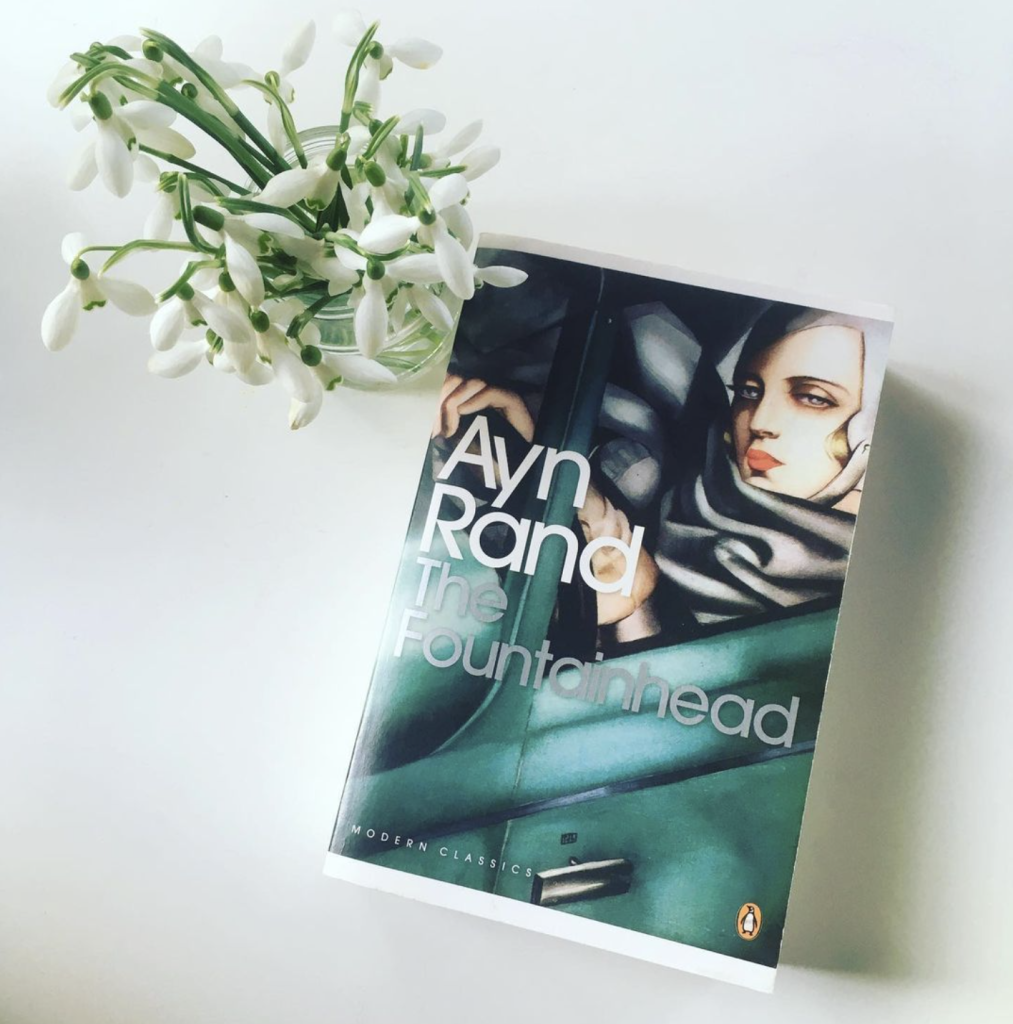
Artistic Value
Artistically, The Fountainhead is constructed as a novel of ideas, in which form serves the direct articulation of philosophy. The structure is rigorous, and the character arcs are organized into clear oppositional pairs, not for the sake of conventional drama, but to illuminate clashing philosophical positions. Each character functions not merely as a psychological individual, but as a possible mode of human existence in modern society.
Ayn Rand’s prose is marked by a strong, direct argumentative quality, sometimes criticized as dry. Yet this “dryness” is not an artistic flaw but a deliberate choice. Rand does not soften her ideas with sentimentality or aesthetic ornamentation; she compels language to be precise, unequivocal, and uncompromising. Dialogues – especially philosophical debates – do not merely advance the plot, but operate as intellectual propositions tested through the lives of the characters, lending the novel a rare conceptual weight.
Architecture, in particular, functions as the central metaphor of the novel. It is not merely Roark’s profession, but a symbol of the relationship between form, function, and truth, as well as between human beings, action, and values. Roark’s buildings are honest to purpose and material, free of superfluous ornamentation and historical imitation. They mirror his character: a man who does not imitate, does not live on praise, and does not bow to transient taste. Through architecture, Rand transforms creative work into a language of philosophy, where beauty is inseparable from honesty and reason rather than from crowd-pleasing conformity.
4. Memorable Quotations from The Fountainhead
In The Fountainhead, quotations do not function as decorative aphorisms or sentimental highlights. They operate as condensed philosophical propositions, placed in the mouths of characters not to persuade gently, but to directly challenge entrenched moral assumptions. Each line is an intellectual incision, compelling readers to take a position on fundamental issues: the individual and society, creation and obedience, reason and mass consensus.
- “Man lives for himself, not as a means to the ends of others.”
- “Creation does not require the permission of the majority.”
- “The world moves forward through those who refuse to bow.”
- “I do not build in order to have clients. I have clients in order to build.”
- “The worst tragedy is not to be hated, but to live a life that is not your own.”
- “When you live by the opinions of others, you hand them your right to live.”
- “There is no nobility in abandoning one’s own reason.”
- “I do not exist to please others, nor do I ask others to exist for me.”
- “Independence is not isolation, but the refusal to let one’s mind be owned.”
- “Creators do not ask for permission. They act, and the world is forced to follow.”
5. Conclusion
The Fountainhead is not a novel designed to offer comfort or consensus. On the contrary, it is a work that deliberately provokes intellectual conflict, forcing readers to reexamine beliefs often accepted as self-evident truths: about morality, success, personal responsibility, and the role of society. For this reason, The Fountainhead tends to inspire either intense admiration or strong opposition, but rarely indifference.
The enduring value of the novel lies in its refusal to provide easy answers. Instead, it places individuals before a fundamental choice: to live as sovereign beings or as products of collective compromise. Through the figure of Howard Roark, Ayn Rand affirms that creativity and human dignity can exist only when individuals remain absolutely faithful to their ideals and their reason. Any form of success achieved by abandoning one’s inner identity, even if socially celebrated, ultimately results in spiritual emptiness.
In a world increasingly oriented toward conformity, consensus, and adaptation, The Fountainhead emerges as a dissenting yet necessary voice. The novel does not deny the value of society, but it decisively rejects the authority of the majority to define human worth. Difference, in this vision, is not a threat but a prerequisite for progress; independence is not selfishness, but the foundation of genuine creativity.
Thus, The Fountainhead may unsettle or even alienate its readers, yet it is precisely this capacity to destabilize intellectual certainties that secures its distinctive place in twentieth -century literature. It is not a book to be read once and forgotten, but one that compels repeated return, dialogue, and self-interrogation throughout the course of intellectual maturation. In this sense, The Fountainhead continues to flow – an unceasing current of thought questioning how human beings choose to live and to become themselves.