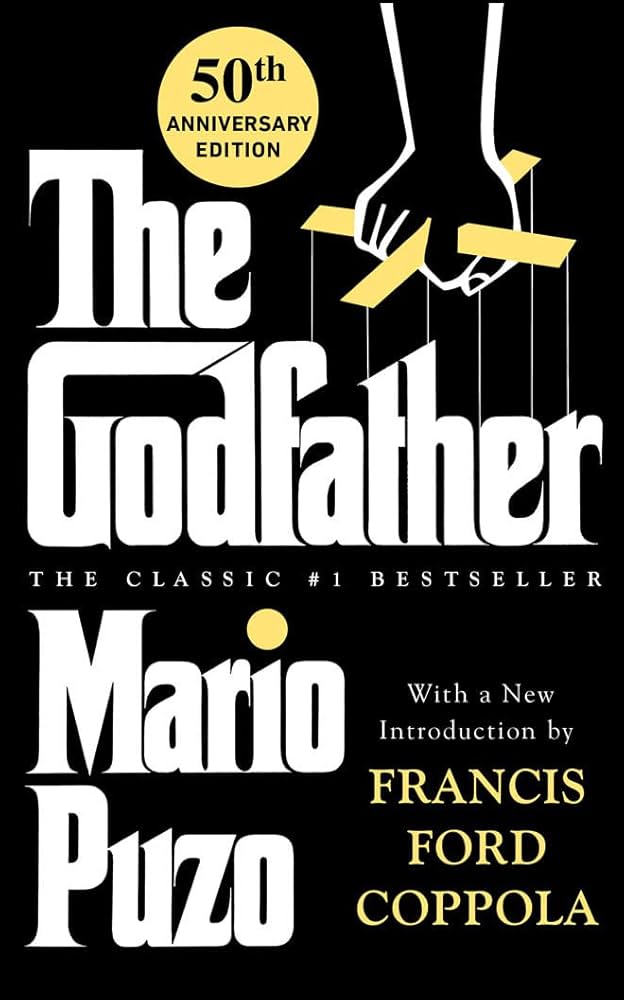
There are books that do not merely tell a story, but instead build an entire world. The Godfather by Mario Puzo is one such work. From the moment it was released, the novel quickly became a global phenomenon, transcending the boundaries of a conventional crime story to establish itself as an icon of popular culture.
When mentioning The Godfather, people often immediately think of the mafia, violence, brutal vendettas, and infamous crime bosses. However, if the novel is read only from that perspective, its deepest essence will be overlooked: a story about family, power, loyalty, and the price of ambition. The Godfather not only captivates readers with its underworld conspiracies, but also compels them to reflect on morality, humanity, and the choices people make in the harshest circumstances.
1. Introduction to the Author Mario Puzo
Mario Puzo (1920 – 1999) was an American writer of Italian descent, born and raised in a poor immigrant family in New York. His childhood was closely tied to working-class neighborhoods, where the boundary between an honest life and the criminal underworld was often fragile. This environment nurtured Puzo’s deep understanding of human psychology, especially within the Italian – American community.
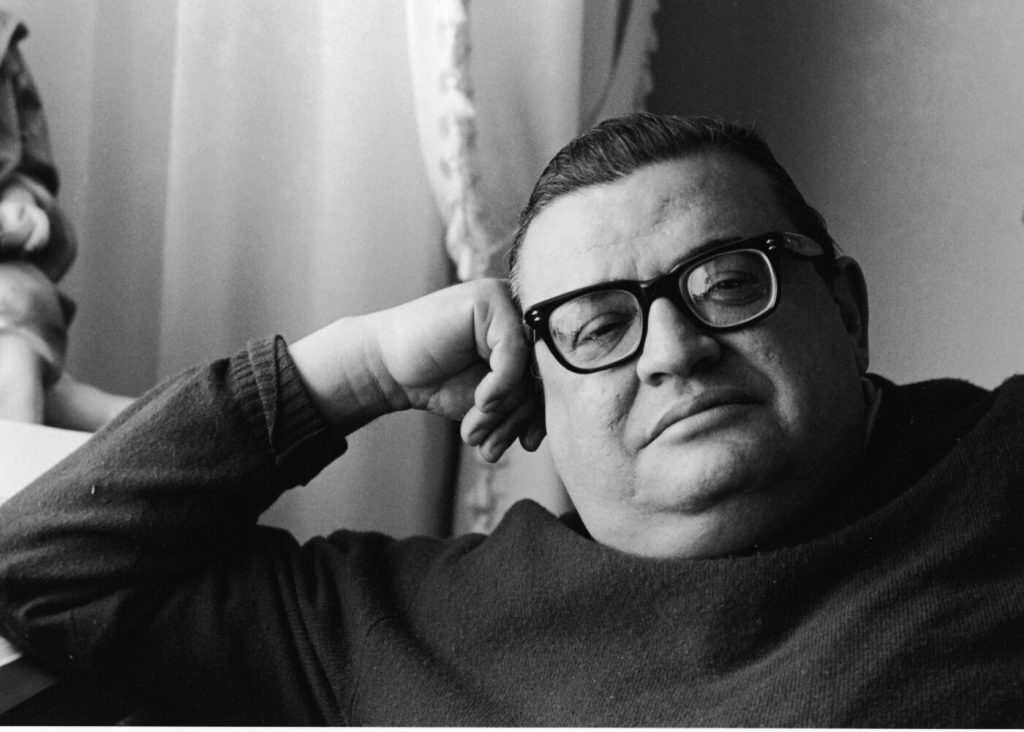
Before The Godfather, Mario Puzo was not a prominent name in the literary world. He struggled with writing and fell heavily into debt. In that difficult period, Puzo decided to write a novel that was both commercially viable and rooted in a subject he knew best: the Italian mafia in America. Unexpectedly, that decision resulted in a masterpiece, elevating Mario Puzo to the ranks of the most influential writers of the twentieth century.
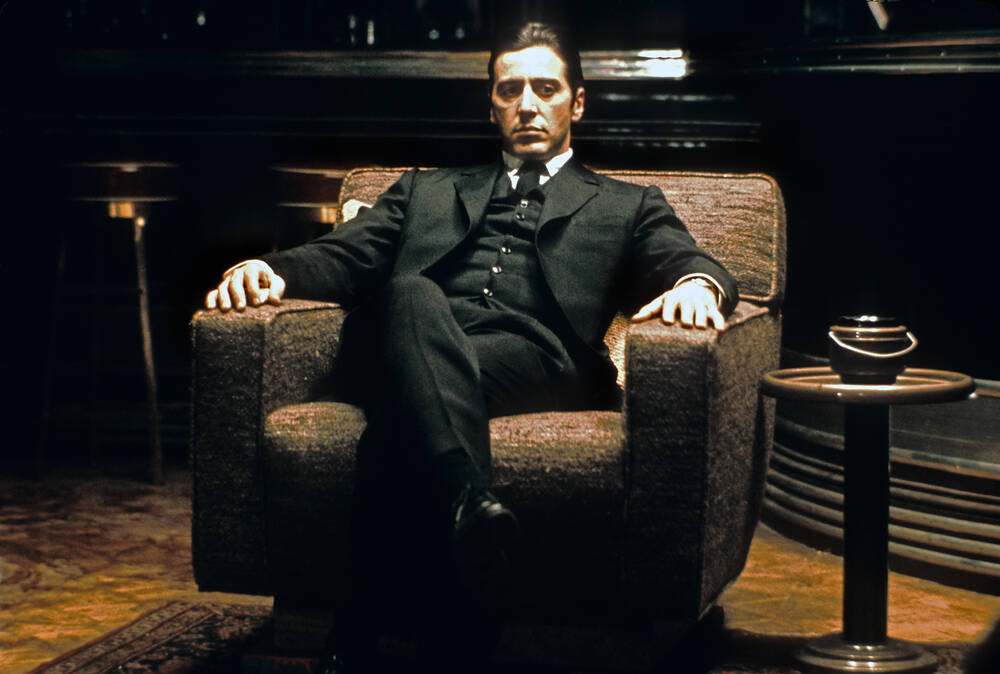
The success of The Godfather lies not only in its enormous sales, but also in its iconic film adaptations, which helped shape the image of the mafia in popular culture for decades.
2. Summary of the Plot
The Godfather opens with the wedding of Connie Corleone, the daughter of Don Vito Corleone, head of one of the most powerful mafia families in the United States. Beneath the seemingly warm and joyful atmosphere, readers are gradually drawn into a calculating underworld, where Don Vito is both a devoted father and a “godfather” who holds the lives and fates of many in his hands.
Don Vito Corleone builds his power not solely through violence, but through favors, loyalty, and “offers that cannot be refused.” However, this fragile order begins to collapse when he refuses to participate in the drug trade – a highly profitable yet extremely dangerous enterprise. This decision turns the Corleone family into a target for rival factions.
An assassination attempt leaves Don Vito seriously wounded, pushing the Corleone family into a precarious situation. Sonny Corleone, the hot-tempered and impulsive eldest son, temporarily takes control. His lack of restraint soon leads to fatal mistakes, escalating the war between mafia families and causing devastating losses.
Meanwhile, Michael Corleone – the youngest son, who once tried to live outside the law and dreamed of an honest life – is forced to enter the criminal world to protect his family. From an outsider, Michael gradually becomes involved in life-and-death decisions, carrying out actions from which there is no return.
After Sonny’s death and Don Vito’s recovery, power is temporarily stabilized. Yet Don Vito understands that his time is coming to an end. Quietly, he prepares Michael to become his successor, passing down not only authority but also the harsh principles of the underworld.
When Don Vito dies, Michael officially becomes the new “Godfather.” He executes a series of cold and calculated purges, eliminating all enemies and consolidating absolute power for the Corleone family. However, victory brings no happiness. Michael gradually loses love, trust from his wife and children, and the remaining traces of his humanity.
The story closes with the image of a young crime boss holding ultimate power, yet isolated within the very family he once sought to protect. The Godfather thus becomes not only the story of the rise of a mafia empire, but also a tragedy about the cost of power and the fate of human beings.
3. Thematic and Artistic Values
Thematic Value: The Tragedy of Power and Family
The greatest value of The Godfather lies in its profound portrayal of the relationship between power and family. The Corleone family is not merely a criminal organization, but a family in the truest sense, where affection, honor, and responsibility intertwine in complex ways.
Don Vito Corleone is a distinctive figure: ruthless toward his enemies, yet deeply devoted to his family. He believes that power only has meaning when it serves to protect those he loves. However, the very world he creates becomes a trap from which later generations cannot escape.
Michael Corleone stands at the center of the novel’s tragedy. From a young man who rejects violence, Michael gradually transforms into a cold-blooded crime boss, willing to sacrifice everything to preserve power. This psychological transformation is depicted with remarkable subtlety, evoking both understanding and sorrow from the reader.
Through this, The Godfather raises a fundamental question: can power coexist with morality, and how much must one sacrifice to protect what they call “family”?
Artistic Value: Masterful Storytelling
Artistically, The Godfather is a testament to Mario Puzo’s mastery of storytelling. The novel features a tight structure and flexible pacing, skillfully alternating between tense scenes of violence and deeply human, everyday moments.
Puzo’s language is simple yet sharp, avoiding lengthy philosophical exposition and allowing actions and dialogue to speak for themselves. Supporting characters are also developed with depth, contributing to a vivid and believable mafia world.
Notably, Puzo’s portrayal of power is never exaggerated. In The Godfather, power is invisible – it exists in glances, tones of voice, and promises that appear deceptively gentle.
4. Memorable Quotations
Throughout the novel, Mario Puzo allows his characters to express the essence of power, family, and the underworld through concise yet haunting lines.
- “I’m going to make him an offer he can’t refuse.”
- “A man who doesn’t spend time with his family can never be a real man.”
- “Friends and money come and go, but family lasts forever.”
- “Never let anyone know what you are thinking.”
- “Revenge is a dish best served cold.”
- “Behind every great fortune there is a crime.”
- “The law does not protect the weak, so they need people like me.”
- “A smart man sometimes has to pretend to be stupid to survive.”
- “In this world, either you are the hunter, or you become the prey.”
- “Power doesn’t have to be loud. It just needs to be acknowledged.”
5. Suitable Readers and Effective Reading Advice
The Godfather is suitable for mature readers, especially those who enjoy psychological and social novels that explore the dark side of power. The book is also appropriate for readers interested in understanding power structures, strategy, and leadership psychology, even within a fictional context.
To read The Godfather effectively, readers should not rush. Take time to observe the psychological development of characters and the dynamics within the family. Rather than focusing solely on scenes of violence, look deeper into the choices made and the prices each character must pay.
6. Conclusion
The Godfather is not merely a mafia novel. It is a tragic elegy of power, family, and human destiny. Through the story of the Corleone family, Mario Puzo exposes a harsh truth: power may grant wealth, influence, and control, but it can never offer peace or inner salvation. The higher one rises in the pursuit of authority, the further one drifts from innocence, trust, and genuine human connection.
Reading The Godfather, readers are not only drawn into a world of conspiracies, betrayals, and violent purges, but are also compelled to confront profound questions about their own choices in life. The novel forces us to reflect on the meaning of loyalty, the weight of responsibility, and the moral compromises people make in the name of protection and ambition. Perhaps that is precisely why, despite the passage of decades, The Godfather continues to resonate with generations of readers, retaining its enduring appeal and standing firmly as one of the greatest classics of world literature.