
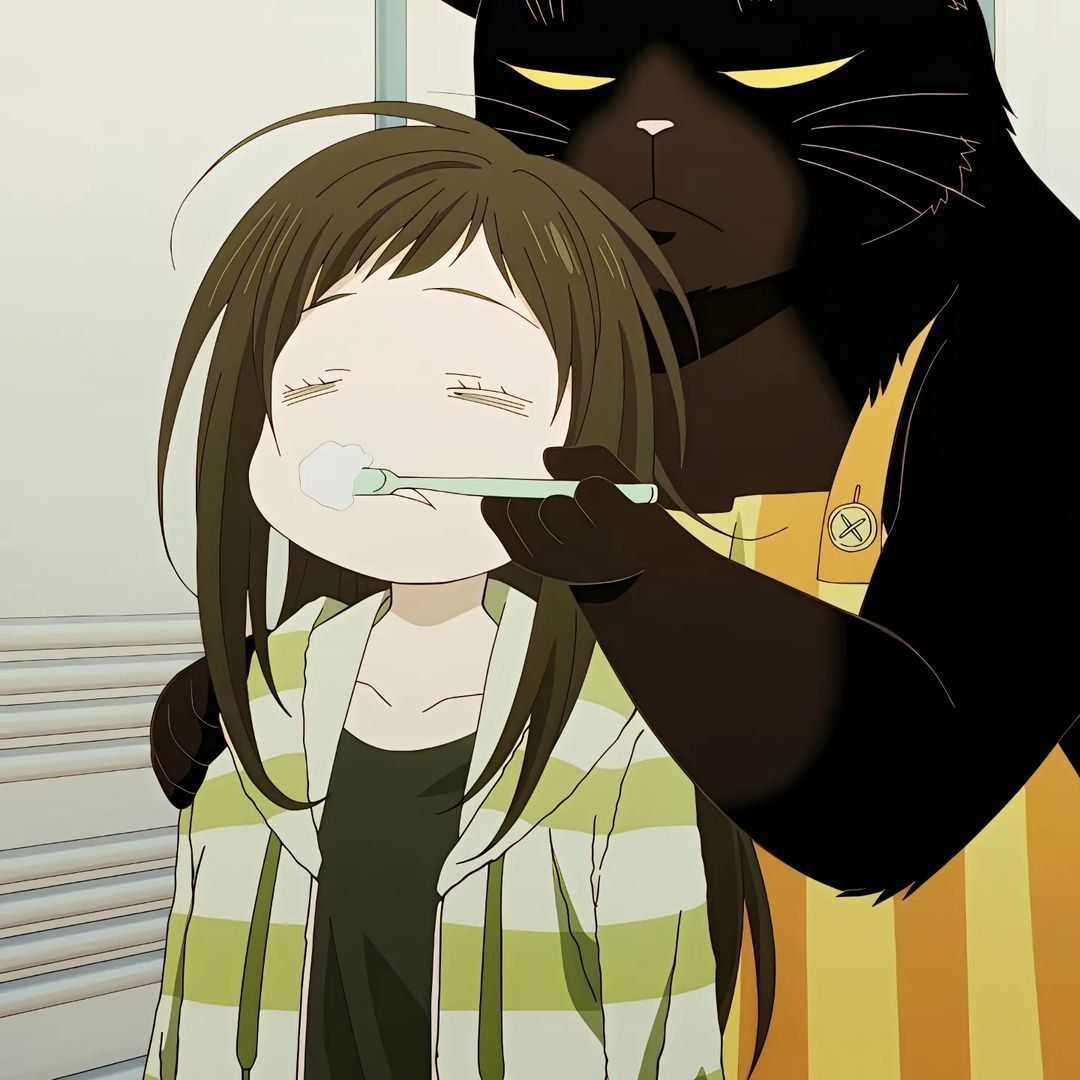
In the contemporary flow of Japanese manga, while many works choose intense drama, strong conflicts, or complex world-building to attract readers, The Masterful Cat Is Depressed Again Today follows a completely different path: quiet, slow-paced, and almost devoid of any explicit climax. The work does not place its focus on major events or narrative turning points, but instead concentrates on very small details of daily life – seemingly trivial moments that nevertheless reflect with remarkable accuracy the psychological state of adults living in modern society.
What distinguishes The Masterful Cat Is Depressed Again Today is the way it combines a fantastical premise – the image of a cat capable of performing household tasks flawlessly – with an intensely realistic life setting: office work, a steady yet exhausting urban rhythm, and the silent loneliness of individuals living alone. This contrast is not employed merely for comedic effect, but functions as a narrative device that allows the work to approach more subtle issues, such as the desire to be cared for, imbalance in personal life, and the prolonged exhaustion experienced by adults.
Rather than exposing overt tragedy or delivering direct social commentary, The Masterful Cat Is Depressed Again Today adopts a gentle and restrained storytelling attitude. This deliberate simplicity creates space for readers to observe, reflect, and relate the narrative to their own lives, instead of being led by heightened emotional drama. In this context, the manga does not merely serve as light entertainment, but becomes a slice of contemporary life that truthfully reflects the modern human condition – where fatigue, loneliness, and the longing for care exist as ordinary states of everyday living.
1. Introduction to the Author and the Work
The Masterful Cat Is Depressed Again Today is a manga created by Yamada Hitsuzi, a manga representative of a trend that explores everyday life and modern human psychology through small – scale narratives with restrained dramatic tension. Rather than pursuing action-driven themes, fantasy, or complex plots, Yamada Hitsuzi focuses on depicting fragments of daily life, where social and psychological issues are expressed indirectly through rhythms of living, habits, and interpersonal relationships.
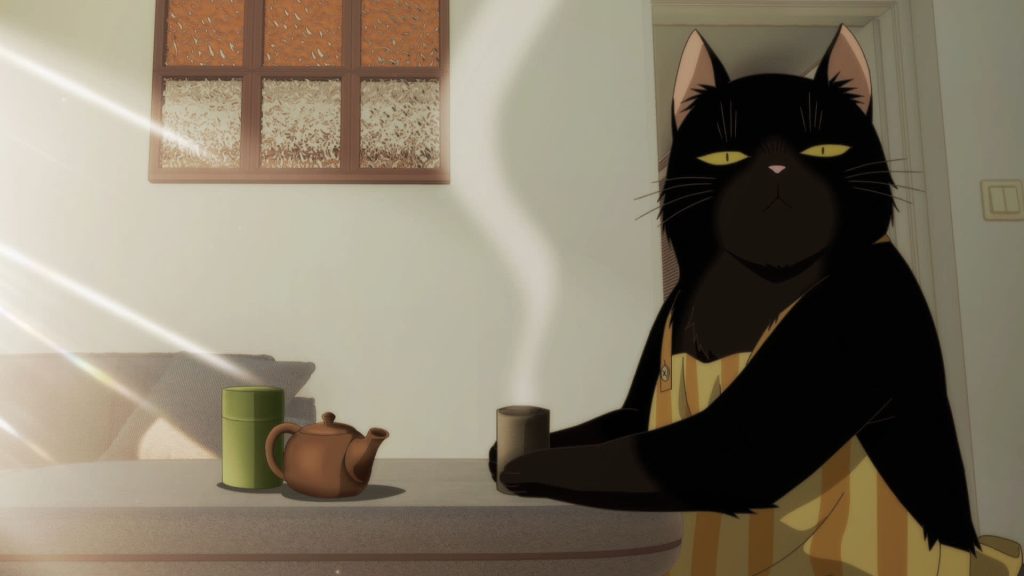
Yamada Hitsuzi’s creative style is distinctly aligned with contemporary slice-of-life manga: an open narrative structure, minimal climactic development, and little emphasis on dramatic conflict, allowing the story to unfold naturally through everyday routines. Instead of placing characters in extreme or extraordinary situations, the author chooses to explore repetition, regularity, and the occasional monotony of adult life – elements that are familiar yet often overlooked in popular storytelling.
The Masterful Cat Is Depressed Again Today was initially published on an online manga platform, where it quickly gained attention due to its premise that is both unusual and relatable: a giant cat capable of cooking, cleaning, and caring for its owner perfectly. Unlike many works that use fantastical elements to construct imaginary worlds, Yamada Hitsuzi treats this aspect merely as a means of expression. The true focus of the manga remains firmly on human life – specifically, the experience of single adults in urban Japanese society.
Visually, the manga employs a simple art style, avoiding excessive detail or technical embellishment. Character expressions are conveyed with restraint rather than exaggeration, maintaining a sense of everyday realism and intimacy. The panel composition is spacious, with generous use of visual breathing room, allowing for a slow narrative rhythm and providing readers with time to observe and contemplate rather than being driven by rapid plot progression.
Within the broader context of modern Japanese manga, The Masterful Cat Is Depressed Again Today represents an increasingly evident trend: works that seek to engage readers not through grand narratives, but through their ability to subtly reflect the psychological states of individuals in daily life. This creative direction has enabled the manga to establish a distinct identity and to expand into other media forms, particularly anime, thereby affirming the enduring vitality of a seemingly small yet socially meaningful story.
2. Summary of the Plot
The narrative of The Masterful Cat Is Depressed Again Today centers on the everyday life of Saku Fukuzawa, a single office worker living in an urban environment. Saku embodies a typical modern adult: she has a stable job and functions well within society, yet frequently finds herself exhausted by repetitive routines and prolonged work-related pressure. Her ability to manage her personal life is relatively limited, manifested in irregular eating habits, a cluttered living space, and accumulated fatigue over time.
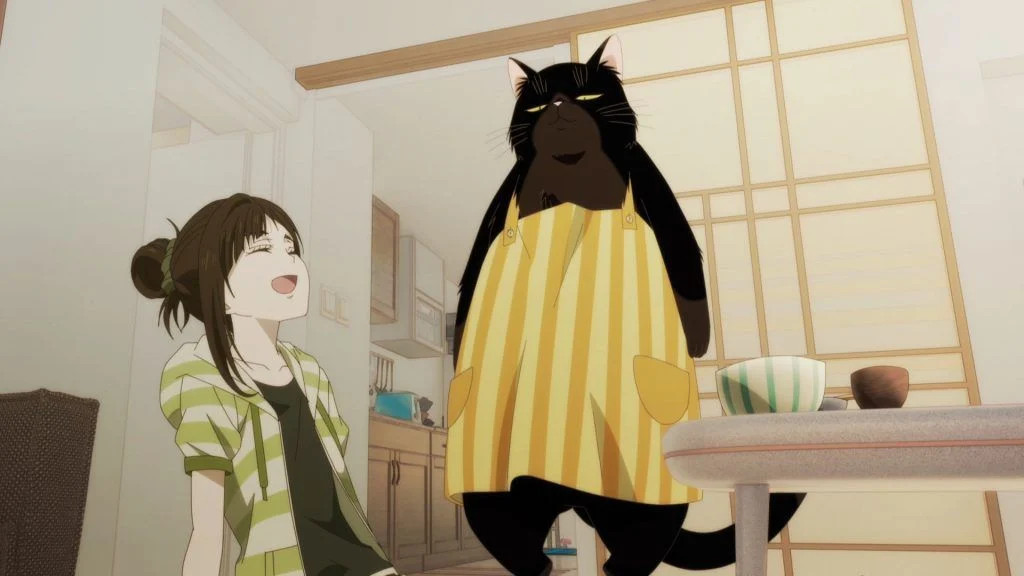
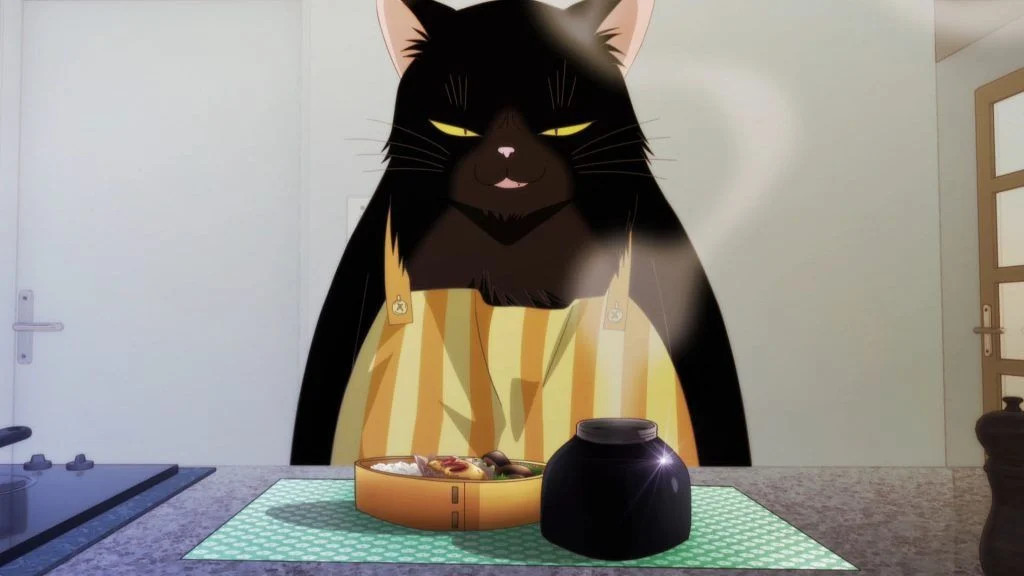
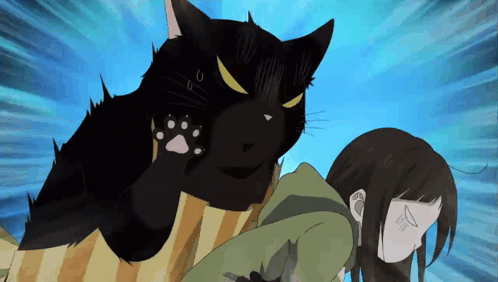
A turning point in Saku’s life occurs when she takes in Yukichi, a cat that initially appears entirely ordinary. Over time, however, Yukichi grows to an unusually large size and gradually assumes a central role in the household. Unlike a conventional pet, Yukichi possesses the ability to cook expertly, clean the house meticulously, prepare nutritionally balanced meals, and even regulate Saku’s daily routine.
The plot structure of The Masterful Cat Is Depressed Again Today does not rely on linear conflict or long-term narrative objectives. Instead, the manga is composed of a series of everyday vignettes, each chapter focusing on familiar situations: Saku returning home after work while Yukichi prepares dinner; weekends spent cleaning; rushed mornings before heading to the office; or moments when Saku experiences mental fatigue due to sustained pressure. Each episode unfolds at a slow pace, without dramatic peaks, yet together they create a consistent and coherent portrayal of the characters’ lives.
A notable aspect of the storytelling is that the relationship between Saku and Yukichi is neither idealized nor dramatized. Yukichi provides care quietly and consistently, while Saku gradually adapts to being cared for without fully overcoming her exhaustion or internal struggles. The work deliberately avoids constructing a complete or miraculous “rescue,” allowing changes to occur slowly and almost imperceptibly.
Alongside domestic life, the manga incorporates familiar social settings such as the workplace, relationships with colleagues, and routine social interactions. These elements expand the narrative world and emphasize the contrast between public space – where Saku maintains the image of a competent adult – and private space – where her fatigue and reliance on Yukichi become apparent.
Through a sequence of seemingly insignificant events, The Masterful Cat Is Depressed Again Today gradually paints a representative portrait of adult life: devoid of major upheavals or clear conflicts, yet shaped by subtle pressures and prolonged repetition. This narrative approach lays the foundation for deeper analyses of character psychology and the thematic concerns pursued by the work.
3. Themes and Ideas
3.1. Adult Life and Chronic Fatigue
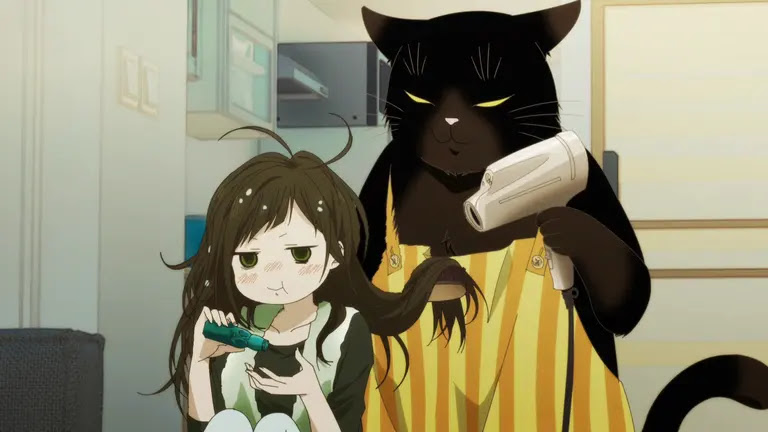
One of the central thematic axes of The Masterful Cat Is Depressed Again Today is its portrayal of structural fatigue inherent in adult life within modern urban society. Saku does not face dramatic crises or explicit tragedies; instead, she exists within a stable yet repetitive routine where work pressure, social responsibilities, and invisible expectations accumulate over time.
The manga demonstrates that fatigue does not necessarily manifest as intense suffering, but may appear as mental stagnation, lack of motivation, and diminished capacity for self-care. This approach makes The Masterful Cat Is Depressed Again Today particularly relatable to many adults, especially those living alone in urban environments where external stability does not guarantee internal balance.
3.2. The Desire to Be Cared For and the Reversal of Roles
The figure of Yukichi – the capable cat – plays a crucial role in articulating the work’s ideas. A cat becoming the caregiver of a human not only introduces gentle humor, but also represents a symbolic reversal of traditional roles. In conventional social structures, adults are expected to be autonomous, self-controlled, and fully responsible for their own lives.
The Masterful Cat Is Depressed Again Today poses an implicit question: what happens when adults no longer have the energy to fulfill these expectations? Yukichi emerges as a symbol of the desire to be cared for, to have one’s life organized, and to be relieved of everyday burdens. Importantly, the manga does not frame this desire as weakness or failure, but presents it as a common – and even inevitable – condition in modern life.

3.3. Private Space as a Revelation of Human Nature
Another notable theme in The Masterful Cat Is Depressed Again Today is the clear division between public and private spaces. In the workplace, Saku maintains the image of a capable adult who adheres to social norms and fulfills her professional role. At home, however, she reveals her exhaustion, disorganization, and dependence on Yukichi’s care.
This contrast reflects a widespread reality of modern society, where private space becomes the only realm in which individuals can temporarily shed their social roles. By emphasizing life within Saku’s small apartment, the manga asserts that what occurs in private – even if repetitive and mundane – plays a decisive role in an individual’s mental well-being.
3.4. Gentleness as a Deliberate Ideological Choice
Unlike many manga that address fatigue and psychological crisis through dark or pessimistic tones, The Masterful Cat Is Depressed Again Today adopts a gentle narrative world. Problems are not resolved decisively, but are softened through repeated acts of care in daily life.
This gentleness is not merely comforting, but represents a consistent ideological stance. It allows individuals to exist in an imperfect state, accepting fatigue as a part of life rather than viewing it as personal failure. This choice enables The Masterful Cat Is Depressed Again Today to avoid melodrama and to open a space for quiet yet profound reflection.
3.5. Everyday Life as a Meaningful Discourse
On a deeper level, The Masterful Cat Is Depressed Again Today affirms that everyday life – with all its repetition and ordinariness – can serve as a serious subject of narrative. By focusing on small actions such as cooking, cleaning, and resting after work, the manga grants these details expressive value, transforming them into vehicles for reflecting psychological states and social structures.
This perspective expands the scope of slice-of-life manga, demonstrating that thematic depth does not require major conflict, but can emerge from slow rhythms and seemingly ordinary moments.
4. Value and Influence
4.1. Artistic Value within Contemporary Slice-of-Life Manga
Within the increasingly diverse landscape of Japanese manga, The Masterful Cat Is Depressed Again Today stands as a representative example of the maturation of the slice-of-life genre. Rather than relying on shock, climax, or dramatic tension, the work asserts its artistic value through a carefully structured slow pace, restraint, and consistency.
Building a narrative from repetitive daily activities requires refined observation and selective detail. Yamada Hitsuzi successfully transforms ordinary actions – cooking, cleaning, resting – into meaningful narrative units. This achievement allows The Masterful Cat Is Depressed Again Today to transcend the role of light entertainment and establish itself as a work of lasting artistic value.
4.2. A Faithful Reflection of Contemporary Social Mentality
One of the most significant contributions of The Masterful Cat Is Depressed Again Today lies in its accurate portrayal of the contemporary adult mindset. The manga does not address macro-level social issues directly, but approaches them through micro-level experiences: personal life, private living spaces, and unnamed psychological pressures.
Saku, as a socially competent yet personally unbalanced adult, represents a familiar figure to many readers. Through her, the manga raises a universal question: in a society that emphasizes efficiency and self-reliance, who takes care of the individual’s inner life? This question remains unanswered explicitly, functioning instead as an underlying ideological current throughout the work.
4.3. The Symbolic Significance of Yukichi
On an ideological level, Yukichi is not merely a memorable character, but the symbolic core of The Masterful Cat Is Depressed Again Today. He represents the desire for care, order, and protection from the chaos of everyday life. At another level, Yukichi reflects the absence of emotional support networks in modern urban society.
Choosing a cat – rather than a human – as the caregiver emphasizes the work’s intentional absurdity. This fantastical element allows the manga to avoid didacticism or melodrama while providing interpretive flexibility. Yukichi thus functions simultaneously as a character, a symbol, and a highly abstract narrative device.
4.4. Influence on Readers and the Manga Market
The positive reception of The Masterful Cat Is Depressed Again Today indicates a growing demand for works that portray life gently yet thoughtfully. The manga does not primarily target traditional shōnen or shōjo audiences, but resonates with a more mature readership seeking empathy rather than excitement.
Its adaptation into anime further reinforces the influence of this narrative model. The adaptation not only broadens the work’s reach, but also demonstrates that everyday stories, when supported by strong thematic foundations and pacing, can sustain long-term presence within a competitive entertainment market.
4.5. The Position of The Masterful Cat Is Depressed Again Today in Modern Manga
From a broader perspective, The Masterful Cat Is Depressed Again Today belongs to a group of works that help redefine the value of slice-of-life manga in the modern era. It illustrates that thematic depth does not require dramatic conflict or explicit tragedy, but can arise from slow rhythms, repetition, and small moments of personal life.
Through this approach, the manga has established a distinct position: understated, non-controversial, yet enduring and widely resonant. This is precisely why The Masterful Cat Is Depressed Again Today is regarded as a noteworthy work within the contemporary landscape of Japanese manga.
5. Conclusion
The Masterful Cat Is Depressed Again Today is not a work that leaves a strong impression through dramatic twists or complex narrative structures. Its core value lies in its persistent commitment to a restrained and simple mode of storytelling, through which it offers a profound reflection on the mental life of adults in modern society. By focusing on repetitive daily routines and seemingly minor details, the manga constructs a meaningful discourse on fatigue, loneliness, and the desire for care – states that are widespread yet often overlooked.
Through the deliberate combination of fantastical elements and realistic life settings, The Masterful Cat Is Depressed Again Today creates a narrative space that is distant enough for observation yet close enough for empathy. The figure of Yukichi serves not only as a central character but as a symbol of the longing for order and protection amid urban chaos. Crucially, the work neither idealizes nor provides definitive solutions, instead accepting imperfection as an inherent aspect of adult life.
Within the broader context of contemporary Japanese manga, The Masterful Cat Is Depressed Again Today reinforces the value of everyday narratives, where thematic depth emerges from slow pacing and careful observation rather than from grand conflict or tragedy. This creative choice has enabled the work to establish a unique position: quiet, uncontroversial, yet enduring in its resonance with readers. From a critical perspective, The Masterful Cat Is Depressed Again Today stands as a persuasive example of manga’s capacity to address contemporary psychological issues through gentle and restrained narrative forms. The work not only fulfills its role as entertainment, but also opens a serious space for reflection on personal life – where gentleness and small, everyday acts are recognized as meaningful values within modern living.