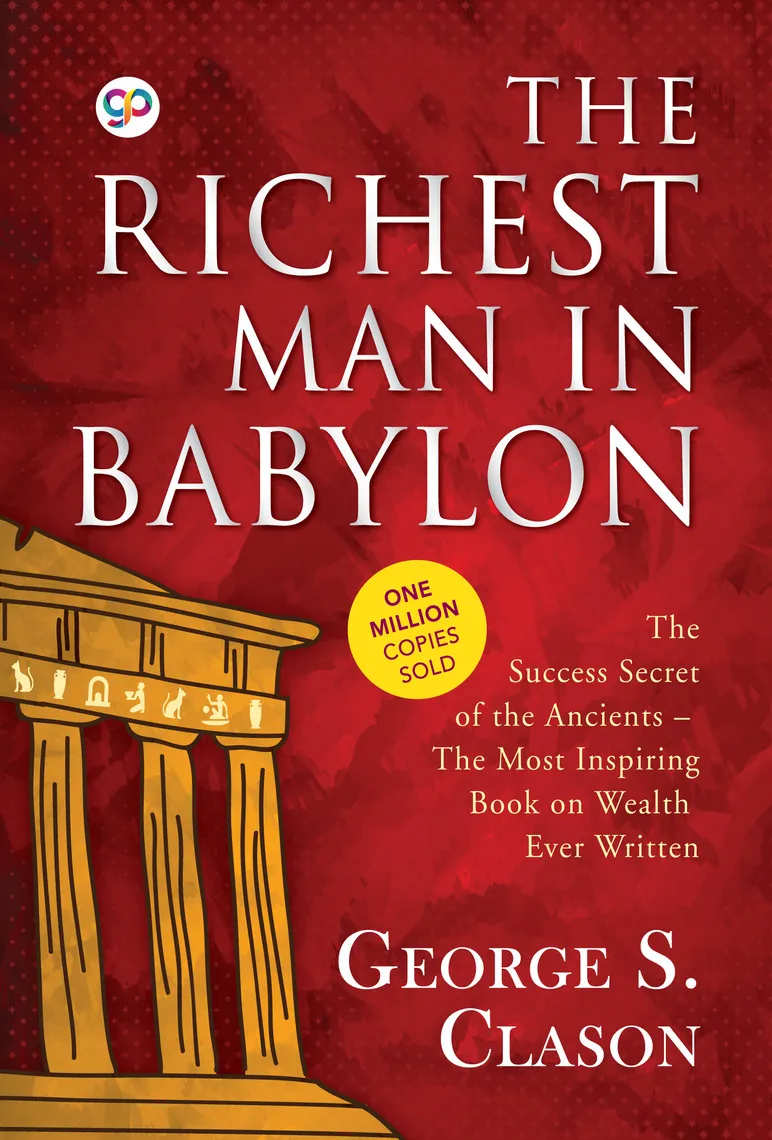
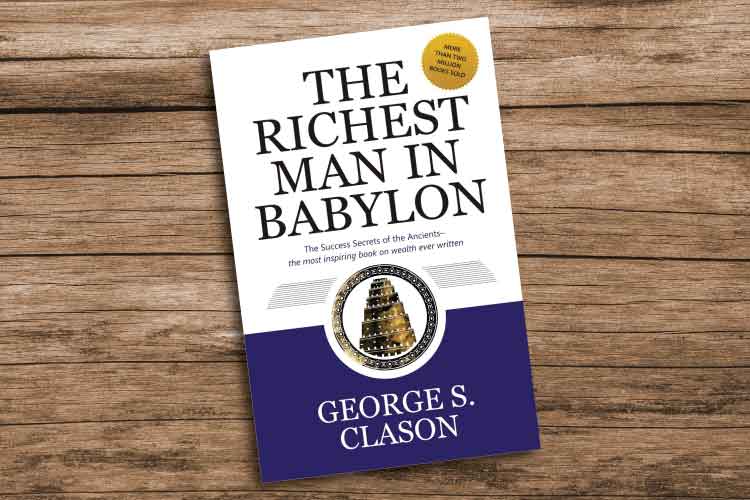
In the field of personal finance, few books have managed to maintain a lasting influence over several decades while preserving their core values. The Richest Man in Babylon is a representative example. Instead of approaching money management through complex formulas or modern economic models, the work chooses a simpler yet more effective path: conveying fundamental financial principles through allegorical storytelling.
Set in ancient Babylon – a symbol of prosperity and commercial development – the book constructs a financial mindset based on discipline, accumulation, and informed investment. Notably, although it was written in the early twentieth century, the lessons presented in The Richest Man in Babylon are not constrained by historical period or geographical context. The principles outlined in the book remain relevant in today’s economic environment, where individuals face consumer pressure, investment risks, and the need for long-term financial security.
This combination of foundational content and simple narrative form has helped The Richest Man in Babylon become a classic in personal finance literature, frequently cited as an essential starting point for anyone seeking to develop a systematic and sustainable approach to money management.
1. Introduction to the Author and the Work
The author of The Richest Man in Babylon is George S. Clason, an American writer, businessman, and lecturer who was active primarily in the early twentieth century. Before gaining widespread recognition as a financial author, George S. Clason served as an officer in the United States Army and later founded the Clason Map Company, a pioneering enterprise in the publication of road maps in the United States. This practical background in business and management had a direct influence on his financial thinking when he turned to writing.
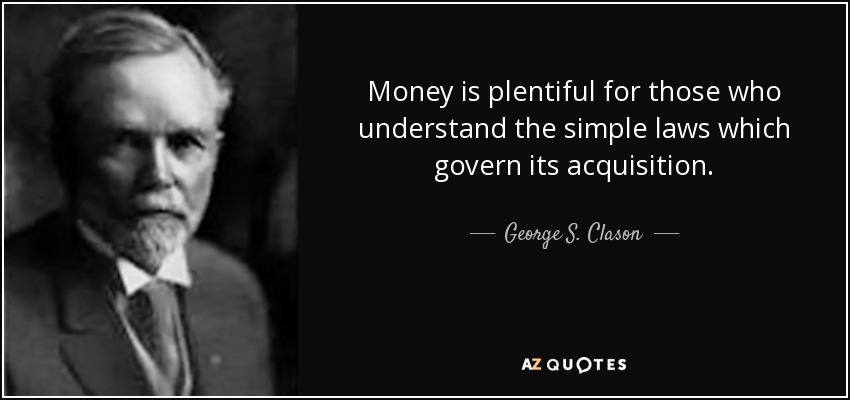
A distinctive feature of George S. Clason’s career is his approach to financial education for the general public. Rather than presenting knowledge through dry economic concepts, he adopted the form of historical allegory, using fictional stories set in ancient Babylon to convey universal financial principles. Initially, these stories were published as pamphlets and distributed free of charge by banks and financial institutions as a means of community financial education.
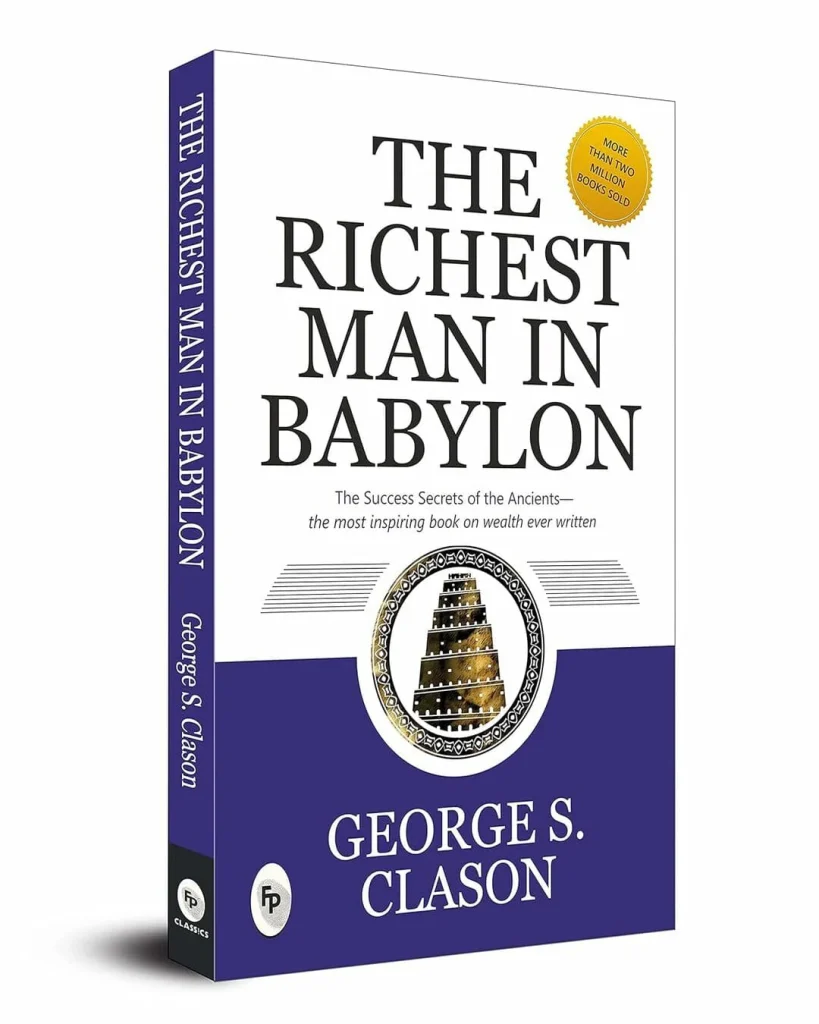
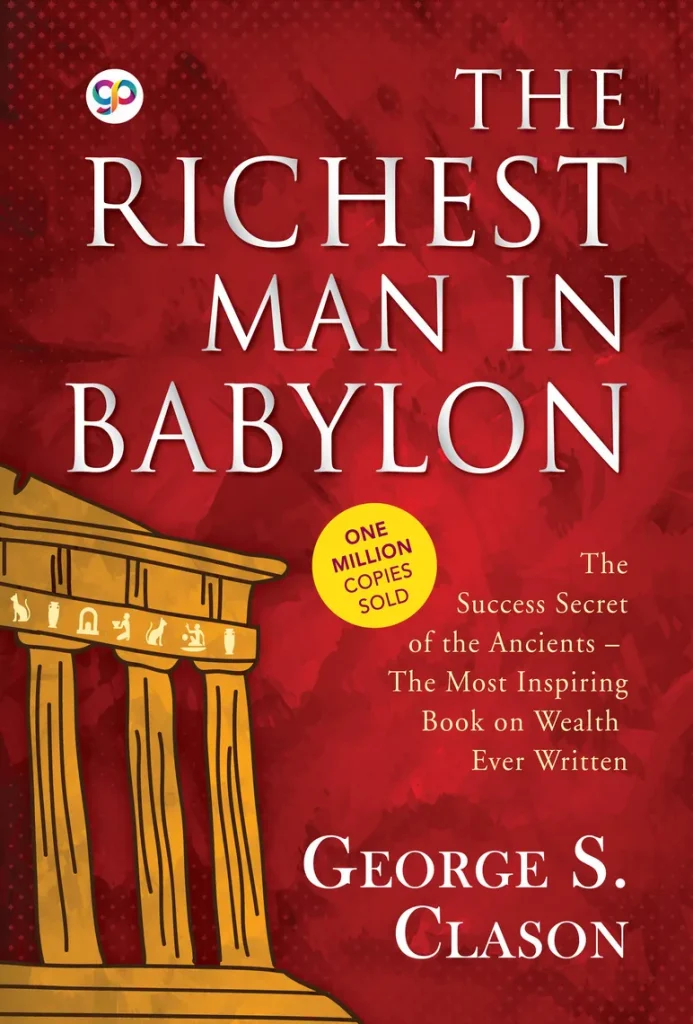
In 1926, these stories were compiled and published as a book under the title The Richest Man in Babylon. The work was later translated into numerous languages and gained widespread international circulation. In Vietnam, The Richest Man in Babylon is regarded as a classic personal finance book and frequently appears on recommended reading lists for beginners interested in money management, saving, and investing.
In terms of content, the book does not reflect a specific economic period of early twentieth – century America. Instead, it deliberately distances itself from contemporary contexts to focus on financial laws of a timeless nature. Babylon – one of the major commercial and financial centers of the ancient world – is chosen as a symbol of prosperity achieved through discipline, wisdom, and effective asset management.
This choice of setting allows The Richest Man in Babylon to transcend the limits of an ordinary financial guide. The work does not merely discuss ways of earning money; it addresses more fundamental issues, including the relationship between individuals and money, the role of financial habits, and personal responsibility in building long-term economic stability.
Within George S. Clason’s body of work, The Richest Man in Babylon stands as his most representative achievement, clearly reflecting his writing philosophy: simplifying complex financial knowledge into principles that are easy to understand, easy to remember, and applicable over the long term in real life.
2. Summary of the Core Narrative
Rather than following a linear novel structure with dramatic climaxes and turning points, The Richest Man in Babylon unfolds through a series of interconnected allegorical stories. Each story represents a particular aspect of economic life in ancient Babylon, thereby highlighting financial rules that are both fundamental and universal.
Babylon: Prosperity and the Paradox of Poverty
The book opens with Babylon depicted as one of the wealthiest cities of the ancient world, where gold circulates abundantly, commerce flourishes, and opportunities for wealth creation are everywhere. However, alongside this prosperity exists a paradox: the majority of citizens live in financial hardship, burdened by debt and constant anxiety about money, despite working tirelessly.
From this contradiction arises the central question of the narrative: why, within the same wealthy city, do some people grow increasingly prosperous while others remain trapped in struggle? The answer, the book suggests, lies not in income levels but in how money is managed and used.
Arkad: A Model of Sound Financial Thinking
The central figure of the book is Arkad, known as the richest man in Babylon. Contrary to common assumptions, Arkad does not come from a noble background nor inherit great wealth. He begins his life as a humble scribe, living on modest wages and experiencing poverty like many others.
The turning point in Arkad’s life comes when he realizes a fundamental truth: hard work alone does not guarantee wealth. From this realization, he actively seeks financial knowledge, learning how to save, invest, and manage assets systematically. Arkad’s rise is neither sudden nor dependent on luck; it is built upon personal discipline and financial decisions repeated consistently over time.
The Seven Cures for a Lean Purse
A major pillar of the book’s content is the set of “seven cures” that Arkad teaches to Babylon’s citizens who are struggling financially. These cures are presented through lessons, dialogues, and practical experiences, creating a natural and persuasive narrative rhythm.
Notably, the cures do not focus on increasing income in the short term. Instead, they emphasize the formation of sound financial habits. The book stresses setting aside a portion of income for oneself, controlling expenses, investing prudently, and protecting assets from risk. Through this approach, readers come to understand that wealth is not the result of a single decision but the cumulative outcome of many small, consistent choices.
Lessons from Failure and Mistakes
Alongside Arkad’s success story, The Richest Man in Babylon devotes significant attention to the failures of other characters: those who invest based on rumors, borrow irresponsibly, or spend beyond their means. These stories are not judgmental; rather, they function as cautionary lessons.
Through these failures, the book clarifies a crucial argument: lack of financial knowledge is the greatest risk facing any individual. Losses in the book do not arise from unforeseen disasters, but from decisions driven by emotion, greed, or blind trust.
Knowledge, Discipline, and Time as Enduring Themes
Throughout the narrative, three elements are repeatedly emphasized: knowledge, discipline, and time. Arkad teaches not only how to earn money, but also the importance of learning from experienced individuals, cultivating patience, and accepting that sustainable wealth grows only over time.
Thanks to its structure as a series of interconnected stories, The Richest Man in Babylon avoids a didactic tone. Instead, each lesson emerges naturally from the narrative, encouraging readers to reflect on and reassess their own financial habits.
3. Content Value and Artistic Value of the Work
Content Value: Building a Sustainable Personal Financial Mindset
The core value of The Richest Man in Babylon lies not in offering short-term wealth strategies, but in shaping a foundational and long-term personal financial mindset. The book approaches money not as an ultimate goal, but as a tool that requires understanding, discipline, and personal responsibility.
First, the work places emphasis on financial habits rather than income. Through its stories, the book demonstrates that the difference between wealth and poverty does not stem from salary or profession, but from how individuals treat the money they earn. The principle of “paying yourself first” – setting aside a fixed portion of income – is presented as an essential step in breaking the cycle of spending, shortage, and debt. This structural way of thinking enables individuals to move from a passive to an active position in financial management.
In addition, The Richest Man in Babylon highlights the relationship between financial knowledge and risk. The book repeatedly warns against investing based on emotional advice, blind trust, or the desire to get rich quickly. This perspective conveys a progressive idea: risk does not originate from investment itself, but from the investor’s lack of understanding. In the modern context, where new investment forms continually emerge, this mindset remains highly relevant.
Another notable aspect is the way the book connects personal development with income-generating capacity. Labor is viewed not merely as a means of survival, but as a process of increasing one’s value through learning, skill development, and expanding knowledge. This perspective allows the book to move beyond purely financial concerns and address life philosophy and long-term orientation.
At a deeper level, the work constructs a value system that emphasizes personal responsibility. There is no tendency to blame circumstances, background, or society. Each character is responsible for their own financial choices, whether successful or unsuccessful. This is precisely what gives the book its universal applicability.
Artistic Value: Allegorical Form and Effectiveness of Message Delivery
From an artistic standpoint, The Richest Man in Babylon employs historical allegory as a strategic choice for conveying financial knowledge. Rather than situating the narrative in a modern setting that might quickly become outdated, the book selects ancient Babylon – a timeless symbol of prosperity and commerce – as its storytelling space. As a result, the lessons are not bound to a specific economic context and maintain a high level of abstraction.
The language of the work is restrained and classical in tone, with a slow and clear rhythm. This style creates a sense of gravity while making financial messages easier to remember. Complex principles are transformed into concrete images, everyday situations, and concise dialogues, significantly lowering the barrier for general readers.
The structure of the book as a series of independent yet ideologically connected stories is another artistic strength. Each story serves a specific function in clarifying one aspect of financial thinking, while remaining unified within a coherent logical framework. This allows readers to approach the work in segments without losing the overall conceptual thread.
Notably, the construction of Arkad as an ideal yet realistic figure helps the book avoid mythologizing success. Arkad becomes wealthy not through miracles or luck, but through prolonged learning and discipline. This approach lends credibility to the message and makes it easier for readers to relate the lessons to real life.
Overall Significance of Content and Artistic Value
The combination of foundational content and simple narrative form has created the enduring vitality of The Richest Man in Babylon. The book does not merely provide financial knowledge; it shapes a systematic perspective on money, labor, and personal economic futures. For this reason, the work is not limited to readers interested in finance, but is accessible to anyone seeking stability and autonomy in life.
4. Notable Quotations
One of the factors contributing to the lasting influence of The Richest Man in Babylon is its system of concise, highly generalizable statements embedded naturally within the narrative. These quotations function not as slogans, but as conceptual anchors that help readers reshape their understanding of money, labor, and personal responsibility. The following quotations clearly reflect the core spirit of the work.
“A part of all you earn is yours to keep.”
→ This quotation lays the foundation for the book’s entire financial framework. The message lies not in a specific percentage, but in affirming the priority of one’s future financial security over immediate spending.
“Your expenses must be controlled, or they will control you.”
→ This statement illustrates the two-way relationship between individuals and money. When control is lacking, spending not only depletes assets but also governs behavior and life decisions.
“Money works diligently for the wise man who knows how to use it.”
→ The quotation emphasizes the role of financial knowledge. Money does not grow on its own; understanding and proper strategy determine asset growth.
“Guard thy treasures from loss.”
→ This serves as a direct warning against blind investment. The book identifies lack of understanding as the root cause of most financial failures.
“Opportunity is a haughty goddess who wastes no time with those who are unprepared.”
→ This quotation clarifies the relationship between discipline, accumulation, and the ability to seize opportunities, including both financial readiness and personal competence.
“The more wisdom we know, the more we may earn.”
→ This statement expands the concept of wealth to include personal development, showing that sustainable income is closely tied to individual value.
“Seek the counsel of wise men.”
→ The book promotes discernment in receiving financial advice and criticizes herd mentality in economic decision-making.
“Wealth grows wherever men exercise energy.”
→ This quotation summarizes the book’s philosophy that wealth is not an event, but the outcome of disciplined habits maintained over time.
“Those who delay learning how to manage money pay the price in insecurity.”
→ This highlights the consequences of neglecting financial education, affecting not only wealth but also life stability.
5. Conclusion
Through allegorical storytelling set in ancient Babylon, The Richest Man in Babylon successfully constructs a foundational and sustainable system of personal financial thinking. The work does not focus on short-term wealth techniques, but instead examines the core principles governing the relationship between individuals and money: discipline, understanding, and personal responsibility.
Throughout its content, the book demonstrates that wealth is not the result of luck or starting conditions, but the inevitable outcome of sound financial habits maintained over time. Deliberate saving, controlled spending, informed investing, and continuous self-improvement are integrated into a unified mindset applicable across diverse economic contexts.
From an academic perspective, The Richest Man in Babylon can be regarded as one of the foundational works of modern personal finance literature. Despite being written in the early twentieth century, its principles remain highly relevant, particularly in an era characterized by consumerism and increasing financial pressure.
Considering both content and form, the book demonstrates enduring value through its ability to simplify complex financial issues into accessible lessons without oversimplifying thought. This quality allows The Richest Man in Babylon to transcend the role of a conventional money management guide and stand as a valuable reference for anyone seeking to build a stable financial foundation and a long-term economic direction.