
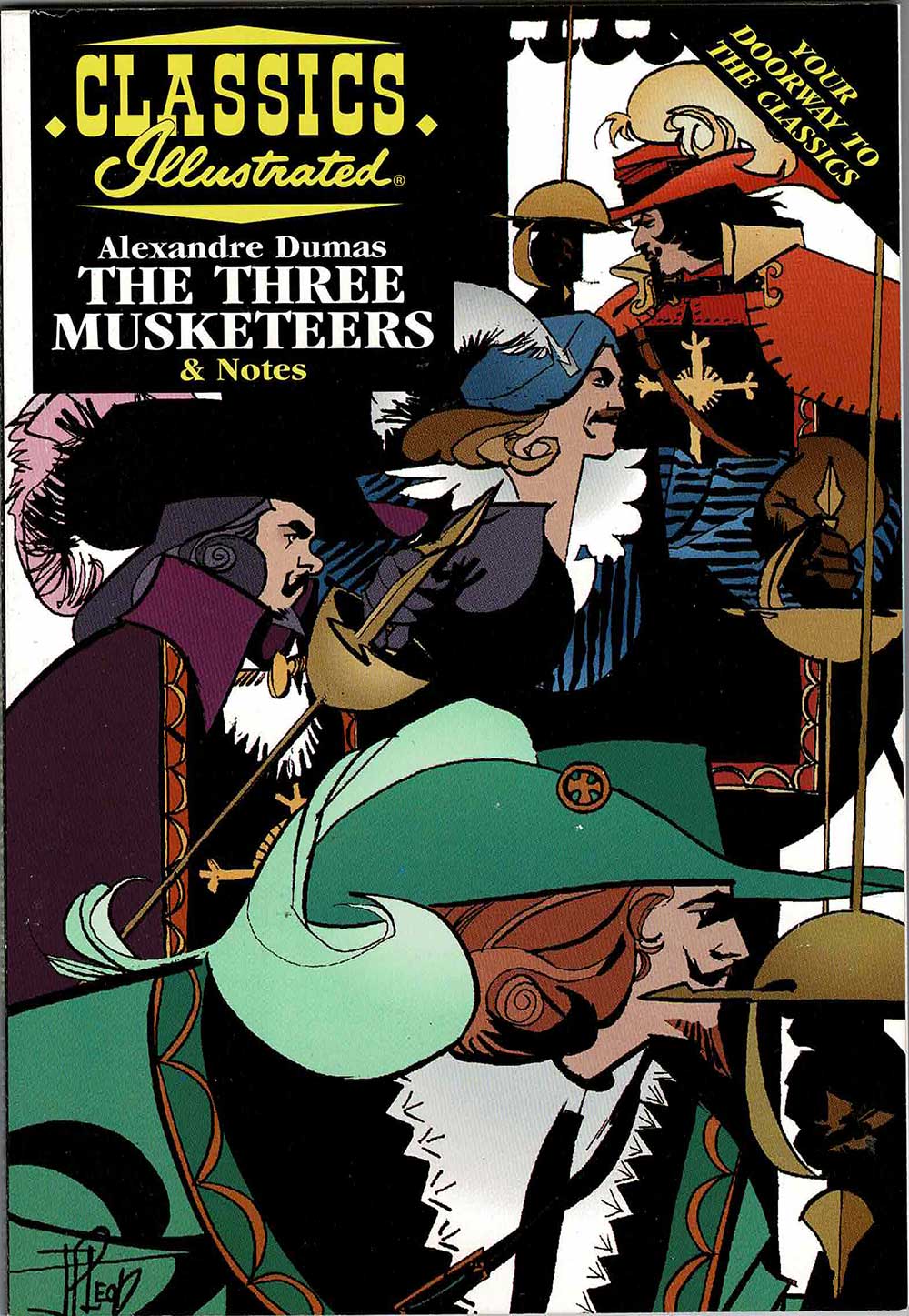
The Three Musketeers is the most famous work of Alexandre Dumas, a major writer of 19th-century French literature. He is often referred to as the “master of adventure novels,” renowned for his gripping storytelling, rich imagination, and highly dramatic narrative style. Dumas’s works – including The Three Musketeers, The Count of Monte Cristo, and Queen Margot – share a common characteristic: the seamless blending of history and fiction, of documentary fact and artistic invention.
The Three Musketeers was first published in 1844 in serialized form in newspapers. The novel is set in France during the reign of King Louis XIII, a period marked by a complex balance of cooperation and conflict among royal authority, the nobility, and the Church. At the center of the story is the young man d’Artagnan, alongside the three musketeers Athos, Porthos, and Aramis – figures who embody the ideals of chivalry, loyalty, and friendship.
Not only did The Three Musketeers achieve immediate success upon its release, but it also inaugurated an entire series of novels that continue to follow these characters through major historical upheavals in France. This demonstrates that the stature of the work lies not merely in a single narrative, but in the vast fictional universe that Dumas created.
1. Introduction to the Author and the Work
The Three Musketeers is one of the most representative and celebrated works of Alexandre Dumas, one of the most outstanding figures in 19th-century French literature. He was not only a remarkably prolific writer, but also a key figure in shaping and popularizing the adventure-historical novel for a broad European and global readership.
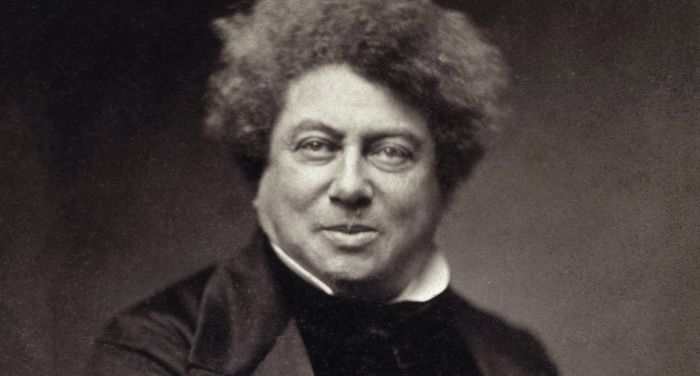
Alexandre Dumas was born in 1802 into a family with a strong military tradition. His father, General Thomas-Alexandre Dumas, had a significant influence on the writer’s later artistic thinking, particularly in the construction of heroic figures characterized by honor, courage, and integrity. Dumas embarked on his literary career early, initially writing plays before reaching the height of his fame through serialized novels – a highly popular form in the 19th century.
The Three Musketeers was first published in 1844 as a feuilleton, or serialized novel. This format directly influenced the structure of the work: a plot dense with events, a fast narrative pace, and a succession of dramatic climaxes designed to sustain readers’ interest. Nevertheless, beyond its immediate entertainment value, the novel maintains substantial thematic depth and careful construction of characters and historical setting.
The story is set in 17th-century France, during the reign of King Louis XIII – a turbulent historical period in which royal power, the nobility, and the Catholic Church were constantly in tension. Cardinal Richelieu, though portrayed as an opposing force to the musketeers, is based on a real historical figure, illustrating Dumas’s flexible combination of historical documentation and literary imagination.
Structurally, The Three Musketeers is not merely a standalone story but the opening installment of a serialized novel cycle that follows the main characters across different phases of French history. This allows the work to achieve long-term narrative depth, enabling readers to observe the growth, transformation, and even the tragedies of the characters over time.
Within the context of Alexandre Dumas’s entire career, The Three Musketeers is regarded as the foundational work that established his distinctive creative style: highly dramatic, rich in adventure, yet consistently anchored in moral values such as honor, friendship, loyalty, and ideals of life. This balance between popular appeal and intellectual depth has enabled the novel to transcend its era and become one of the most widely read classics in world literature.
2. Summary of the Plot
The Three Musketeers opens with the departure of the young man d’Artagnan from his home in Gascony. He carries with him the ambition of becoming a musketeer in the service of the king. Armed with a letter of introduction from his father and an untested chivalric spirit, d’Artagnan arrives in Paris—the center of power and a place where political conflicts, personal honor, and hidden intrigues unfold daily.
Almost immediately upon his arrival, d’Artagnan becomes entangled in a series of misunderstandings that lead him to challenge three famous musketeers – Athos, Porthos, and Aramis – to duels. Each challenge reveals the distinct personality of its recipient: Athos is calm yet distant, Porthos proud and pragmatic, Aramis refined and discreet. However, before the duels can take place, the four men are attacked by the guards of Cardinal Richelieu for violating the ban on dueling. In this situation, d’Artagnan chooses to stand with the three musketeers, fighting alongside them against a numerically superior force.

This incident becomes a crucial turning point, binding four strangers into a unified group. From that moment, they become companions, swearing the famous oath of solidarity: “One for all, and all for one.” D’Artagnan, once a provincial youth, begins his initiation into the complex world of court politics and intrigue in Paris.
The plot expands as the musketeers are drawn into the covert yet fierce conflict between Queen Anne of Austria and Cardinal Richelieu, who holds the real power at court. Richelieu seeks to undermine the queen’s standing with King Louis XIII. One of his most intricate schemes involves a set of diamond studs that the queen had previously given to the Duke of Buckingham.
When Richelieu persuades the king to demand that the queen wear the diamonds at a royal ball, she faces the risk of having her secret relationship with Buckingham exposed, thereby losing her honor and position. In this urgent situation, d’Artagnan and the three musketeers are tasked with traveling to England to retrieve the diamonds within an extremely limited time frame.
The journey becomes a series of life-threatening trials. Along the way, the group is gradually separated by pursuits, ambushes, and carefully laid traps. Ultimately, only d’Artagnan continues the mission alone. Through determination and adaptability, he overcomes every obstacle, reaches London, and returns the diamonds to Paris just in time, saving the queen’s honor and thwarting Richelieu’s plot.
Parallel to the main storyline is the appearance of Milady de Winter – a beautiful, intelligent, and extremely dangerous woman. Milady is Richelieu’s loyal agent, specializing in secret missions ranging from espionage and psychological manipulation to assassination. She quickly becomes a formidable adversary to d’Artagnan and the musketeers.
The narrative gradually darkens as Milady’s past is revealed, particularly her tragic connection to Athos. She is not merely a conventional villain, but a character shaped by guilt, psychological trauma, and deep resentment toward society. As a result, the conflicts in the novel extend beyond physical confrontation into moral and psychological struggle.
The climax occurs when Milady commits a series of grave crimes that exceed the boundaries of political orders. The musketeers are compelled to capture her and subject her to their own form of “justice” – a punishment reflecting the moral code and sense of honor of the era. The secret trial and Milady’s sentence become among the most controversial episodes of the novel.
At the conclusion of The Three Musketeers, d’Artagnan is officially appointed a musketeer, marking his maturation in both status and awareness. Athos, Porthos, and Aramis each follow separate paths, carrying with them losses and experiences that have permanently changed them. The story ends not with absolute triumph, but with the sense of a world in which ideals, honor, and reality coexist and constantly conflict.
3. Thematic and Artistic Value
From an overall perspective, The Three Musketeers is not merely an entertaining adventure novel but a work of clear intellectual depth. Its enduring value lies in Alexandre Dumas’s successful construction of a narrative world in which action, ideals, and morality coexist, reflecting fundamental human concerns across eras.
First and foremost, the most prominent thematic value of The Three Musketeers is its elevation of friendship as a central moral foundation. The bond among d’Artagnan, Athos, Porthos, and Aramis is not based on shared origins or interests, but on trust and a willingness to sacrifice for one another. In a society rife with intrigue, betrayal, and power struggles, this relationship becomes a moral refuge in contrast to the cold political world outside. Through this, the novel asserts that genuine friendship is not merely a personal emotion, but a conscious choice that demands responsibility and loyalty.

Alongside friendship, the novel strongly emphasizes the concept of honor – a core value of the chivalric spirit. Honor in the work is not tied to social status or political power, but to personal conduct and individual choice. The characters are willing to face danger, even death, to defend their own honor and that of others. This reveals Dumas’s view of individuals as morally autonomous agents, not entirely governed by power structures.
Another significant layer of meaning lies in the novel’s depiction of the complex relationship between individuals and power. Cardinal Richelieu is portrayed as a symbol of centralized political authority, operating through strategy, intrigue, and control. Opposing him are the musketeers, who act according to ideals, emotions, and personal moral standards. This confrontation represents not only a personal conflict, but a clash between two value systems: pragmatic power and chivalric honor. Through this opposition, The Three Musketeers raises questions about the ethical limits of power and the cost of placing political objectives above human values.
Artistically, Alexandre Dumas demonstrates his distinctive narrative style. He successfully combines historical elements with fiction, transforming historical events and figures into material for a dramatic yet convincing story. History in The Three Musketeers does not function as rigid illustration, but as a living backdrop in which fictional characters act, choose, and leave their mark.
Character construction is another notable strength of the novel. Athos, Porthos, and Aramis are not merely symbolic “three musketeers,” but each represents a distinct personality type. Athos embodies tragic depth and moral leadership; Porthos represents material aspiration and straightforwardness; Aramis stands between religious ideals and secular life. D’Artagnan, as the central figure, symbolizes growth – from an impulsive rural youth to a man who understands the complex nature of the world.
The portrayal of the antagonist Milady de Winter further demonstrates Dumas’s mastery of psychological characterization. Milady is not simply an embodiment of evil, but the product of trauma, past mistakes, and manipulation by power. This elevates the novel’s conflicts beyond a simple good-versus-evil framework into a multilayered moral confrontation that invites reflection.
Structurally, the novel maintains a fast pace with successive climaxes, while preserving strong cohesion among its narrative threads. Scenes of combat, duels, and pursuits are never isolated, but always linked to political objectives or moral choices. This integration allows The Three Musketeers to be both gripping in plot and enduring in intellectual depth.
Taken together, these elements show that The Three Musketeers succeeds not only through its engaging storytelling, but also through its transmission of universal human values. This is the foundation that enables the work to transcend its historical context and remain relevant for reading, study, and reinterpretation across cultures.
4. Memorable Quotations
Unlike many adventure novels that focus solely on action, The Three Musketeers leaves a lasting impression through its system of declarative statements. The quotations in the novel not only define character traits, but also directly express Alexandre Dumas’s views on life, chivalric ideals, and the relationship between individuals, power, and morality. These statements contribute significantly to the timeless stature of the work.
- “One for all, and all for one.”
→ This iconic phrase encapsulates the entire spirit of the novel. It is not only the oath that unites the four main characters, but also the moral principle governing all of their actions. - “The honor of a soldier is worth more than his own life.”
→ This quotation clearly expresses the chivalric ideal upheld by the novel, in which honor serves as the ultimate measure of human worth in a world filled with temptation and violence. - “In a court full of intrigue, honesty is the bravest act.”
→ The statement reflects the novel’s view of power as a corrupting environment, where basic moral values become rare and therefore all the more precious. - “People do not betray because they are weak, but because they choose interest over honor.”
→ This quotation frames betrayal as a conscious moral choice, emphasizing personal responsibility for ethical actions. - “It is not the strength of the sword, but the strength of faith that keeps a person standing.”
→ Here, Dumas shifts the focus from physical action to spiritual foundations, deepening the meaning of the novel’s many battles. - “The greater the power, the easier it is to forget that one is also subject to judgment.”
→ This line directly critiques power, particularly as embodied by Cardinal Richelieu and the political machinery surrounding him. - “Some crimes are born not of evil, but of fear and despair.”
→ This quotation offers a more nuanced view of evil, especially when applied to the character of Milady, preventing a simplistic moral dichotomy. - “The young need ideals to move forward, but experience to understand the world.”
→ Closely tied to d’Artagnan’s journey, this statement reflects the tension between youthful idealism and harsh reality. - “Justice does not always walk hand in hand with the law.”
→ One of the most controversial lines in the novel, it raises enduring questions about the boundary between justice and violence.
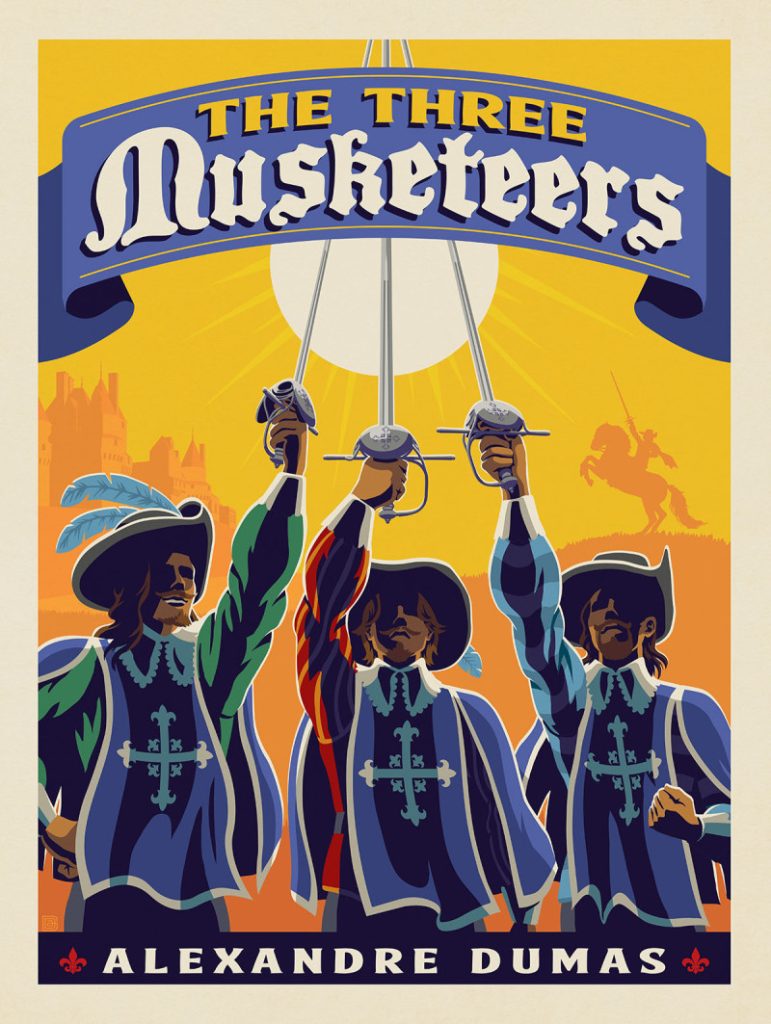
5. Conclusion
In closing The Three Musketeers, what remains is not only thrilling adventures or sword fights imbued with chivalric spirit, but a coherent and enduring system of humanistic values. Through d’Artagnan’s journey of maturation and his friendship with Athos, Porthos, and Aramis, Alexandre Dumas portrays a world in which individuals must constantly choose between honor and self-interest, loyalty and betrayal, personal ideals and political reality.
On a thematic level, The Three Musketeers demonstrates the power of friendship as a moral foundation that enables individuals to withstand political upheaval and personal temptation. Honor and loyalty, though rooted in medieval chivalric ideals, retain their relevance in modern society, where people continue to face complex ethical choices.
Artistically, the novel confirms Alexandre Dumas’s mastery of storytelling through his integration of history and fiction, action and psychological depth. Its multidimensional characters, compelling narrative rhythm, and ideologically charged conflicts elevate The Three Musketeers beyond a conventional adventure novel, making it a classic worthy of repeated reading.From a personal perspective, The Three Musketeers is a book that captivates not only on first reading, but reveals increasing intellectual depth as readers mature. Each return to the novel invites renewed reflection on honor, justice, and individual responsibility. It is precisely this capacity for sustained dialogue with readers that ensures the lasting vitality of The Three Musketeers and secures its place in the canon of world literature.