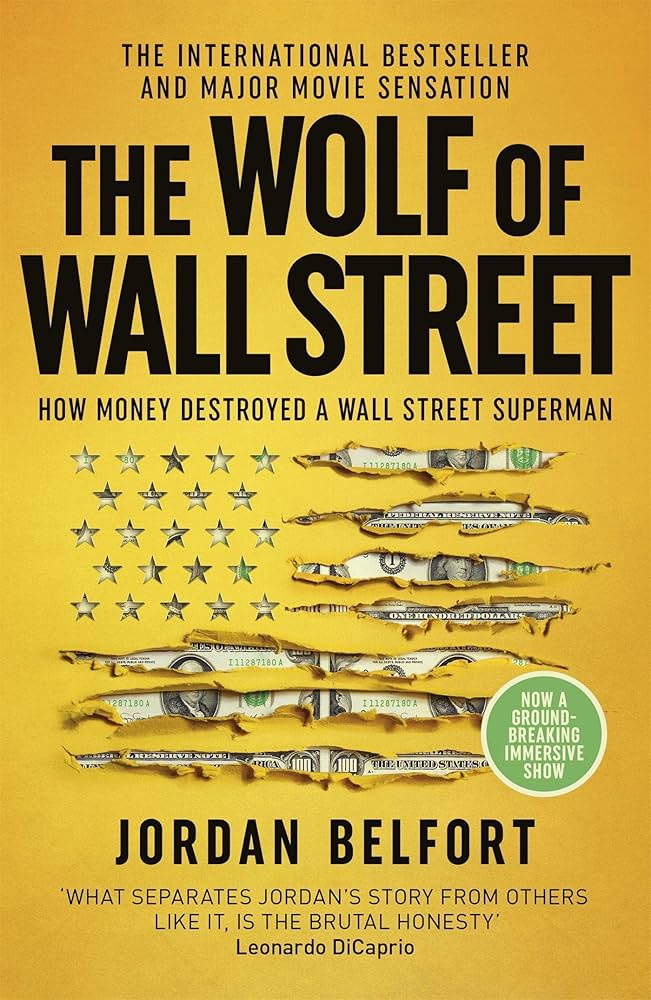
Within the ever-evolving stream of nonfiction literature on economics and finance, The Wolf of Wall Street stands out as a distinctive work – one that both intrigues readers and provokes intense debate. Rather than recounting a conventional success story in the familiar mold of the “self-made entrepreneur,” the book opens a different gateway into the world of American finance: raw, aggressive, and uncompromising in its portrayal of reality. Here, money is not merely a goal but becomes a measure of human worth; ambition no longer serves as a constructive driving force, instead transforming into a pull toward moral decay and eventual collapse.
The Wolf of Wall Street is not simply the personal memoir of Jordan Belfort – a stockbroker who once dominated Wall Street during the 1990s – but also a broad portrait of an era in which financial capitalism operated with almost no restraints. Through the narrative of his own life, Belfort exposes how a system can tolerate, and even encourage, unethical behavior as long as it generates profit. What makes the book particularly compelling is not the enormous sums of money or the lavish lifestyle depicted, but the fundamental question it forces readers to confront: what does success truly mean when it is built upon deception and harm to others?
With a fast – paced, direct, and detail-rich narrative voice, The Wolf of Wall Street delivers a reading experience that is both gripping and unsettling. The book neither conceals the darker aspects of its central figure nor attempts to justify his wrongful choices, allowing the story itself to reveal its underlying truths. This very candor enables The Wolf of Wall Street to transcend the boundaries of a conventional financial memoir and emerge as a text that deeply reflects the complex relationship between money, power, and morality in modern society.
1. Introduction to the Author and the Work
Author Jordan Belfort – From Stockbroker to a Globally Controversial Figure
Jordan Belfort was born in 1962 in Queens, New York, into a middle – class Jewish family. He graduated with a degree in biology from American University but soon abandoned an academic path to pursue business and finance – a field he believed could bring rapid wealth and social status. His decision to enter Wall Street in the late 1980s marked the beginning of a turbulent chapter in his life, placing him at the center of one of the most notorious financial scandals in American history.

Belfort was the founder and leader of the brokerage firm Stratton Oakmont, a company infamous for market manipulation, the sale of worthless “penny stocks,” and systematic fraud against investors. Under his leadership, Stratton Oakmont generated hundreds of millions of dollars in revenue, but it also quickly became the target of investigations by the U.S. Securities and Exchange Commission (SEC) and the Federal Bureau of Investigation (FBI). In 1999, Jordan Belfort was convicted on charges related to securities fraud and money laundering, marking the complete downfall of the “wolf” who once ruled Wall Street.
After serving his prison sentence, Belfort turned to writing and public speaking. It was during this period that he published The Wolf of Wall Street, a work that returned his name to public attention – no longer as a powerful broker, but as a firsthand witness to the dark underbelly of the financial industry.
The Wolf of Wall Street – A Personal Memoir and a Panoramic Portrait of Wall Street
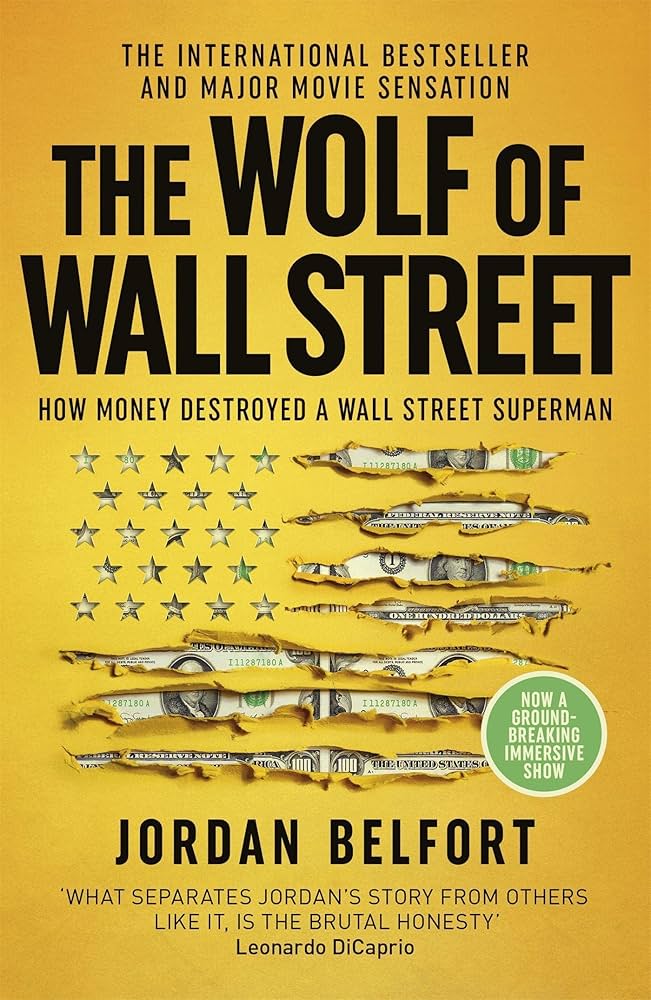
First published in 2007, The Wolf of Wall Street belongs to the memoir genre but extends far beyond a simple personal narrative. The book retraces the entire rise-and-fall journey of Jordan Belfort, from his early days as a novice stockbroker, to the peak of wealth and power, and finally to legal and moral ruin.
What distinguishes The Wolf of Wall Street is its refusal to soften or conceal the protagonist’s wrongdoing. Belfort adopts a blunt, direct, and at times shocking narrative style as a way of truthfully reflecting the environment in which he once operated. As a result, the book functions not only as a personal memoir but also as a vivid document of Wall Street culture during the explosive growth of American financial capitalism in the late twentieth century.
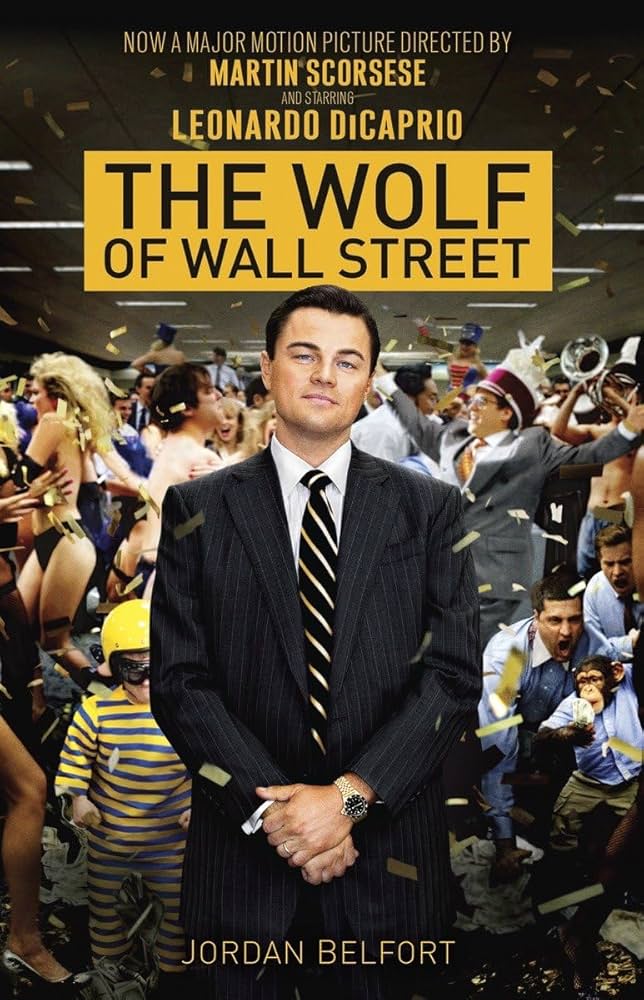
The influence of The Wolf of Wall Street expanded significantly when it was adapted into a film in 2013, directed by Martin Scorsese and starring Leonardo DiCaprio. The cinematic adaptation brought Belfort’s story to a global audience and further solidified the book’s status as a representative work addressing ambition, money, and morality in the modern world.
From the perspective of nonfiction literature, The Wolf of Wall Street can be seen as a hybrid of memoir, financial reportage, and social chronicle. This blend has enabled the book to maintain lasting appeal – not only among readers interested in economics and finance, but also among those seeking deeper insight into how power and greed operate within capitalist society.
2. Summary of the Plot
The Wolf of Wall Street unfolds as a continuous autobiographical narrative, following a chronological structure that traces Jordan Belfort’s rise, expansion, and eventual downfall within the American financial world. Rather than adhering to a conventional plot arc of buildup – climax–resolution, the story resembles an ever-accelerating ascent, where each new success brings greater risk and deeper moral corruption.
Early Days on Wall Street
The story begins with a young Jordan Belfort, driven by a desire for rapid wealth and an almost absolute belief in the American Dream. Wall Street appears as a seductive realm: money circulates at breathtaking speed, successful figures are glorified, and nearly everything seems convertible into profit. From this early stage, the book highlights the initial collision between youthful ideals and the harsh reality of the financial market – where ethics are rarely prioritized.
Belfort quickly learns that the most crucial skill of a stockbroker lies not in financial expertise, but in persuasion and psychological manipulation. This realization becomes the ideological foundation for his entire future trajectory.
The Formation and Expansion of Stratton Oakmont
Following early setbacks, Jordan Belfort establishes Stratton Oakmont, the brokerage firm that becomes the central institution of The Wolf of Wall Street. Here, Belfort constructs a business model based on selling low – value, speculative stocks to small investors through highly manipulative sales techniques.
The book vividly depicts how Stratton Oakmont functions as a “money-making machine”: from aggressive sales training sessions that verge on indoctrination to a corporate culture that elevates profit above all else. Belfort emerges not merely as a manager, but as a symbol – a true “wolf” who motivates employees through his extravagant lifestyle and extraordinary earning power.
At this stage, money in The Wolf of Wall Street ceases to be a means and becomes an end in itself. The speed and scale of wealth accumulation erode all boundaries: law, social norms, and personal responsibility gradually fade into irrelevance.
The Peak of Power and Total Moral Decay
As Stratton Oakmont reaches its peak, The Wolf of Wall Street shifts to portray a world saturated with excess – lavish parties, drug abuse, and extreme hedonism. Belfort and his associates live in a state of near – total detachment from reality, convinced that money can solve any problem and shield them from legal consequences.
One of the most striking aspects of this section is how the book depicts moral decay as a gradual process. Rather than resulting from a single catastrophic decision, corruption unfolds through countless small compromises. Each unpunished transgression reinforces the belief that the system can continue indefinitely.
Legal Scrutiny and the Process of Collapse
Parallel to the unchecked expansion of Stratton Oakmont is the increasing attention of law enforcement agencies. The Wolf of Wall Street details how the FBI and SEC methodically gather evidence, peeling back layers of glamour to expose the fraudulent core of Belfort’s enterprise.
The collapse does not arrive as a dramatic instant but as a series of mounting pressures: financial investigations, internal betrayals, and plea bargains. Belfort gradually loses control – not only of his company, but of his own life. At this point, the narrative tone shifts from flamboyant to somber, underscoring the inevitable cost of a success built on false foundations.
The Ending and Its Aftermath
The final chapters of The Wolf of Wall Street depict Jordan Belfort confronting prison, the loss of wealth, and the destruction of his reputation. Yet the book does not end with personal punishment alone. It leaves behind a broader resonance: questions about the responsibility of a financial system that allowed “wolves” like Belfort to thrive for so long.
Through its complete narrative arc, The Wolf of Wall Street transcends individual biography and becomes a portrait of an era in which ambition and greed were legitimized through the language of success. This is what elevates the plot beyond a mere life story, transforming it into a haunting social cross-section of Wall Street and the American Dream.
3. Key Highlights and Values of the Work
Content Value: When Ambition Becomes an Ideology
One of the core values that elevates The Wolf of Wall Street beyond a personal memoir lies in its depiction of ambition as a comprehensive operating ideology. In the world Belfort portrays, the pursuit of wealth is no longer an individual motivation but a shared norm, tacitly endorsed by financial systems and corporate culture. Money thus becomes not only a symbol of success but proof of competence, status, and power.
Significantly, the book does not construct Belfort as a solitary villain. He appears not as a moral anomaly, but as a logical product of an environment that places profit above all other values. Through his personal story, The Wolf of Wall Street raises a broader question: does the problem lie with individuals, or with the system that enables unethical behavior to flourish?
A Cautionary Value on Business Ethics and Personal Responsibility
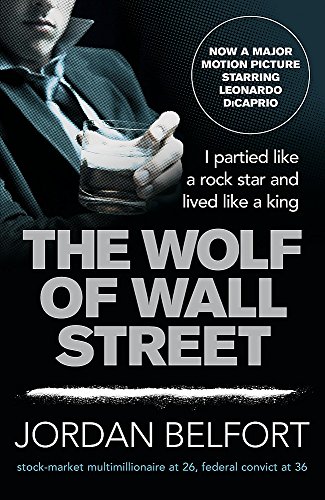
The Wolf of Wall Street carries a strong cautionary message, particularly for readers interested in business, finance, and sales culture. It reveals how thin the line is between persuasion and manipulation, especially in contexts marked by information asymmetry and human greed.
Rather than delivering explicit moral lessons, the book allows consequences to speak for themselves. Belfort’s downfall results not from a single catastrophic mistake, but from a chain of small choices, repeated and legitimized by short – term success. This approach makes the narrative especially persuasive: it neither condemns nor excuses, neither preaches nor absolves, but compels reflection.
Documentary Value on Wall Street and American Financial Culture
From a nonfiction perspective, The Wolf of Wall Street serves as a vivid document of Wall Street during the financial boom of the late twentieth century. It offers concrete insights into how brokerage firms operate, how sales teams are trained, and how legal loopholes are systematically exploited.
The value of this documentation lies not in technical data or financial jargon, but in its exposure of an internal culture: one in which unethical practices are normalized, success obscures consequences, and the law intervenes only when matters spiral out of control. Through this lens, The Wolf of Wall Street captures not just one individual’s story, but an entire era.
Artistic Value in Narrative Style and Structure
Artistically, The Wolf of Wall Street stands out for its direct, high-tempo narrative style and compelling rhythm. Belfort’s language is not polished in a literary sense, but its rawness enhances authenticity. The accelerated storytelling mirrors the frantic, chaotic pace of the world it depicts.
Structurally, the book avoids dramatic climaxes and instead emphasizes accumulation. Success, power, and wrongdoing pile up until collapse becomes inevitable rather than surprising. This narrative choice strengthens thematic consistency and depth.
The Timeless Significance of the Work
Although rooted in the specific context of Wall Street in the 1990s, The Wolf of Wall Street remains highly relevant today. The issues it raises – greed, business ethics, information manipulation, and social responsibility – continue to surface in modern financial crises and debates surrounding capitalism.
Its ability to transcend historical context and address universal questions is what gives The Wolf of Wall Street enduring appeal. The book is not merely the story of a fallen “wolf,” but a lasting reminder of what can occur when success is pursued without a stable ethical foundation.
4. Memorable Quotations
One of the elements that gives The Wolf of Wall Street its lasting impact is its collection of highly distilled quotations. These statements reflect not only Jordan Belfort’s personal mindset, but also the underlying logic of the financial world he inhabited. From an analytical perspective, they function as discursive keys, helping readers grasp the relationship between money, power, and morality throughout the work.
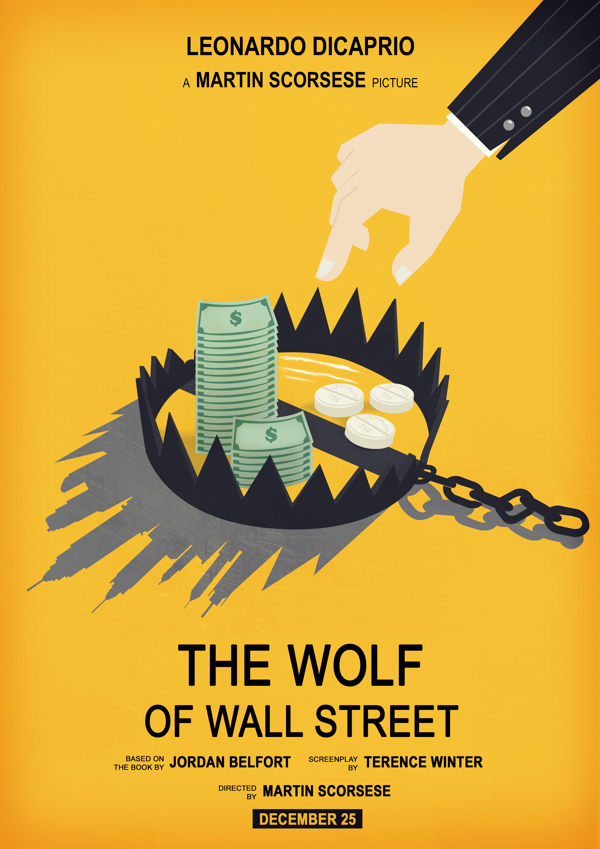
“When the law shows up, every party has to end.”
→ A concluding observation that encapsulates the inevitable rule governing the narrative of The Wolf of Wall Street.
“The only thing that mattered on Wall Street was making money – lots of it.”
→ This quotation establishes the ideological foundation of The Wolf of Wall Street, illustrating how profit is elevated above all other values in the financial environment.
“I wasn’t selling stocks; I was selling dreams.”
→ This line captures the essence of brokerage activity in the book: the actual product matters less than the manipulation of expectations and emotions.
“No one asks where the money comes from when it flows into their account too fast.”
→ The quote highlights the mechanism of self-justification in the face of material gain, explaining why unethical practices can persist unchallenged.
“When success comes early, people start to believe they’re above the law.”
→ A key insight into the psychology of power, shedding light on the gradual moral erosion of the protagonist.
“Ethics don’t disappear; they’re simply put on hold to make room for profit.”
→ This line suggests that morality is not denied outright, but deferred whenever it conflicts with financial gain.
“Wall Street doesn’t create bad people; it just gives them the tools.”
→ A system-level observation that expands Belfort’s personal story into a structural critique of the financial environment.
“Collapse doesn’t come from one big mistake, but from hundreds of small permissions.”
→ This quotation frames failure as an accumulative process rather than a sudden event.
“Money makes people believe they’re in control of everything.”
→ A statement exposing the illusion of power created by wealth, one of the direct causes of the final downfall.
5. Conclusion
The Wolf of Wall Street is neither a book that glorifies wealth at any cost nor merely a self-narrated account of an individual’s rise and fall. Its enduring value lies in its unflinching depiction of how the modern financial world operates – where ambition, money, and power can easily override ethical boundaries in the absence of restraint and self – examination.
Through the story of Jordan Belfort, The Wolf of Wall Street demonstrates that collapse does not stem from a single error, but from an entire sequence of choices legitimized by short-term success. The book thus serves not only as a warning to individuals pursuing financial careers, but also as a meaningful reflection on systemic responsibility – where flawed practices can persist and expand over time.
From a nonfiction literary standpoint, The Wolf of Wall Street maintains its appeal through its direct narrative voice, dynamic rhythm, and vivid portrayal of a turbulent era on Wall Street. It offers no formula for success and no simplistic moral conclusions, instead confronting readers with profound questions about values, limits, and the true cost of success in modern society.
For these reasons, The Wolf of Wall Street deserves recognition as a worthwhile read – not as an object of admiration for its protagonist’s path to wealth, but as a lens through which to understand the darker realities concealed behind the glittering façade of money and power. In today’s financial and economic context, the questions raised by the book remain timely and deeply relevant.