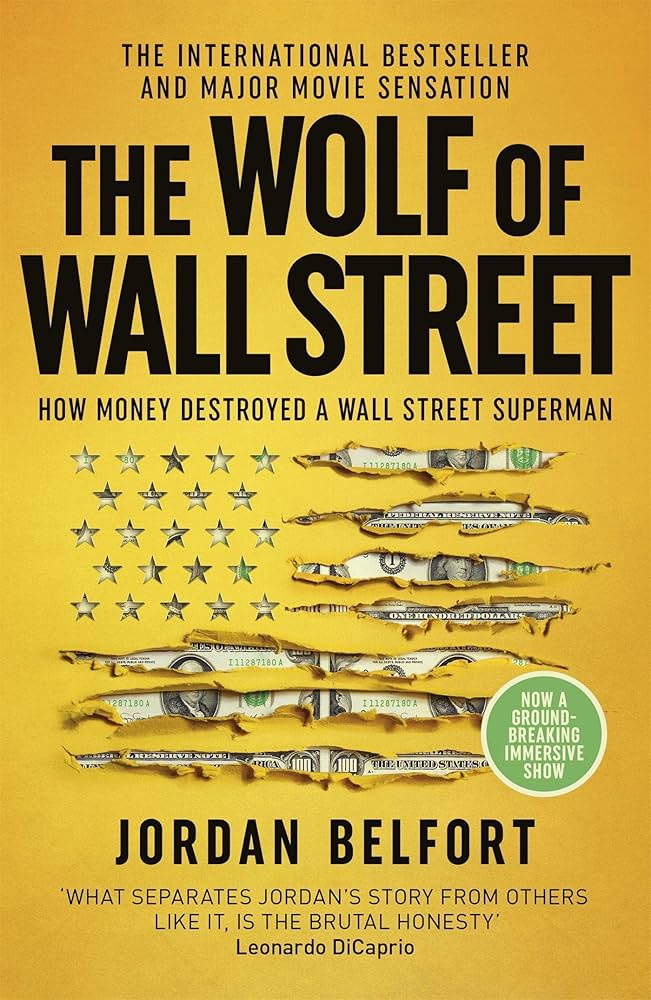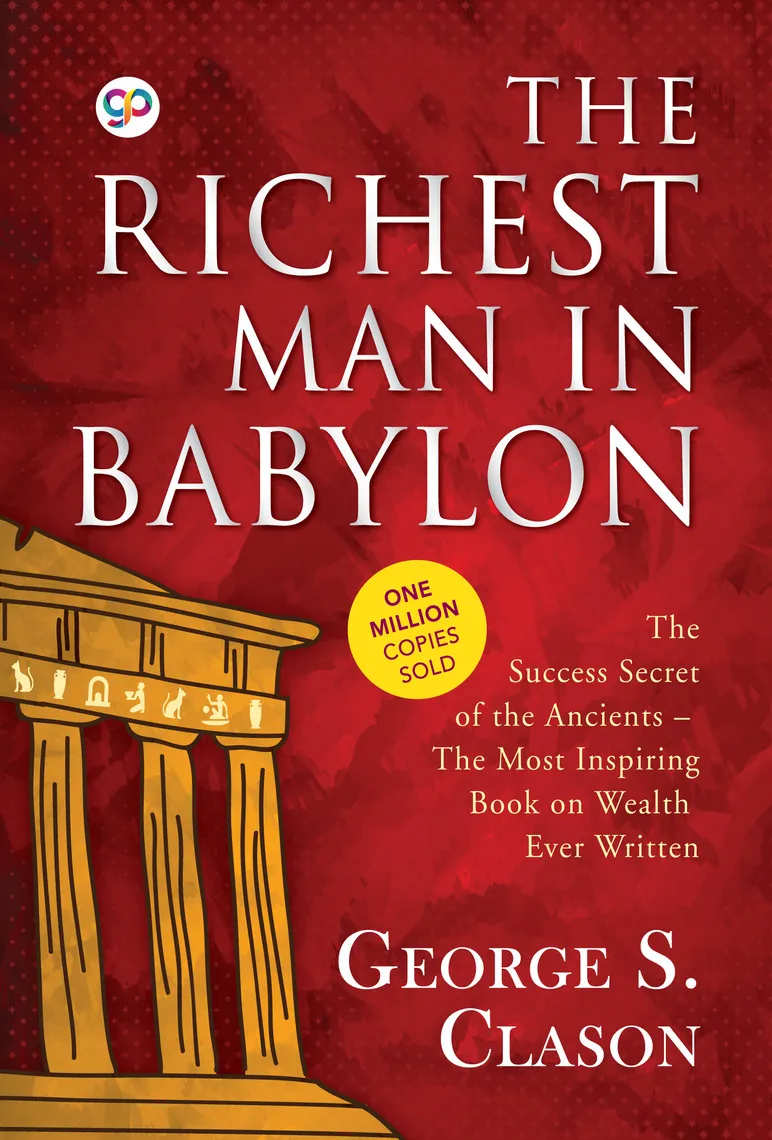
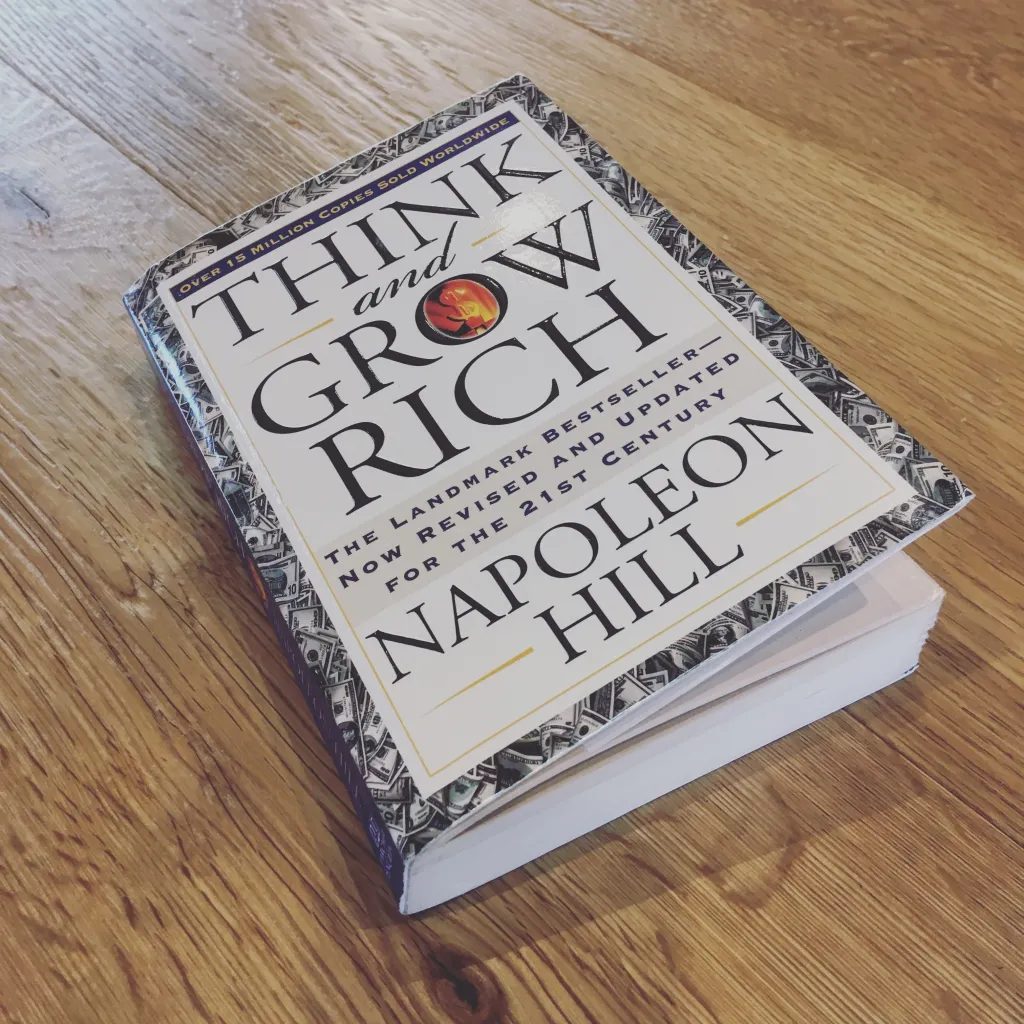
In the continuous flow of modern society, where success is often measured by money, status, and speed of advancement, people increasingly find themselves caught in a vortex of ambition and gradually forget a fundamental question: what truly determines the wealth and sustainability of a human life? It is precisely in this context that Think and Grow Rich by Napoleon Hill emerges as a foundational guide, not merely addressing money, but delving into the very source of all achievement – the human mind.
Rather than offering get-rich-quick formulas or easy promises, Think and Grow Rich approaches the issue from its roots: the way people think, nurture desire, and build belief in themselves. The work advances a consistent central argument: wealth is not the result of luck, but the inevitable outcome of a sound system of thinking maintained persistently over time.
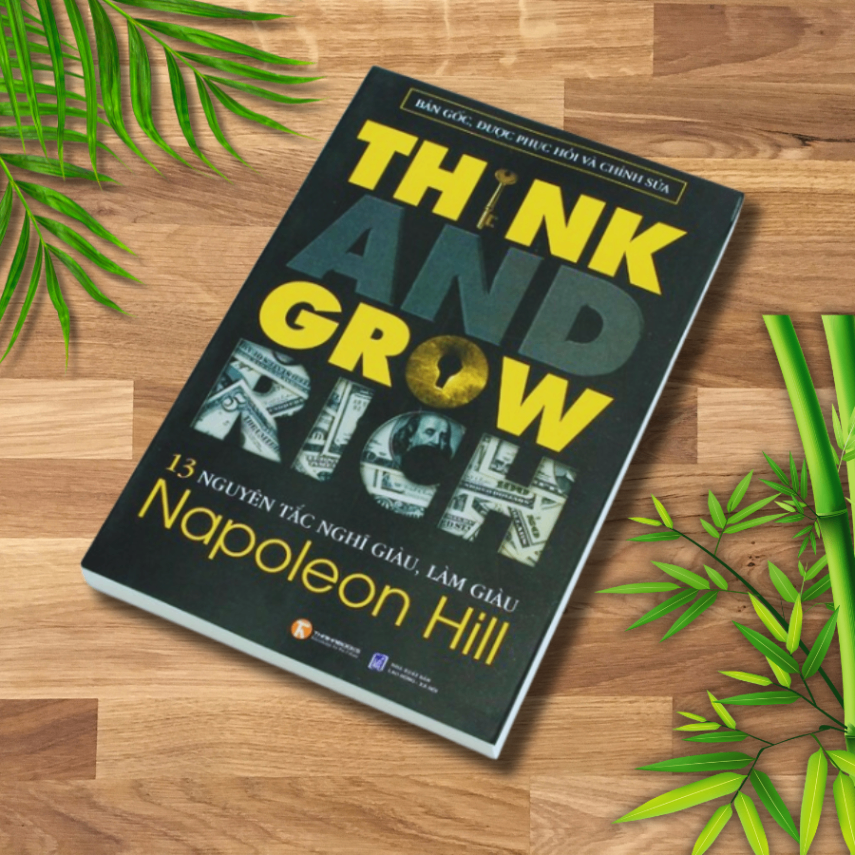
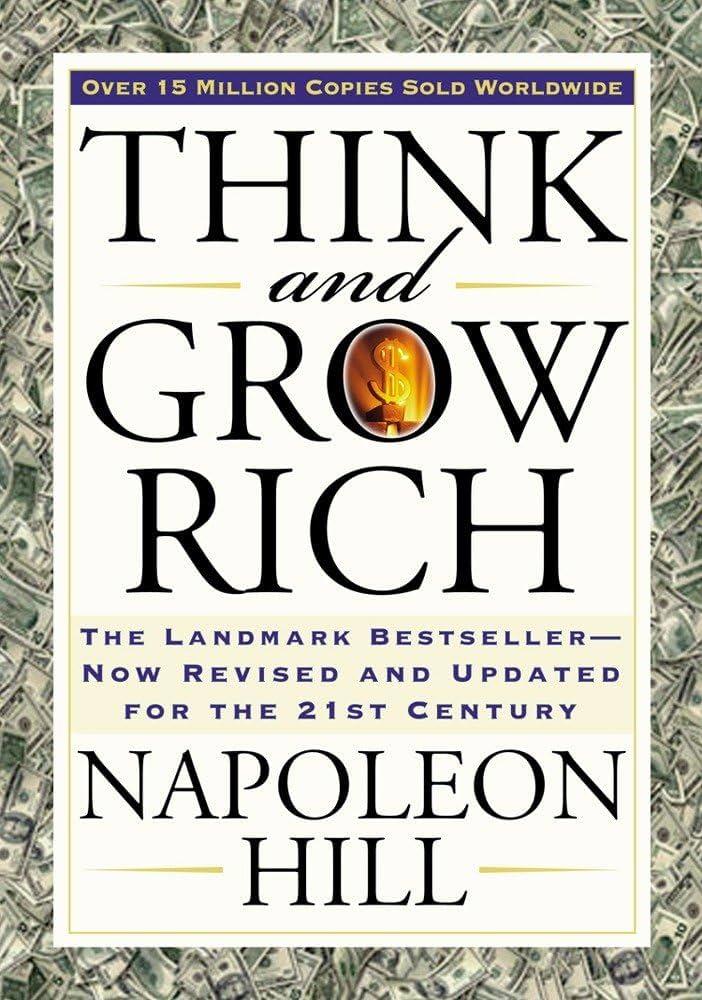
First published in 1937, amid a period of significant economic upheaval in the United States, Think and Grow Rich has retained its influence and contemporary relevance to this day. The book is not only regarded as a classic in the field of personal development, but also as a source of inspiration for millions of people worldwide on their journey toward success and self-improvement. It is precisely this intellectual depth and universal applicability that has allowed Think and Grow Rich to transcend the limits of an ordinary wealth-building book and become a work with long-term guiding value for life.
1. Introduction to the Author and the Work
In modern society, as the concept of success is increasingly reduced to tangible measures such as income, assets, or social status, people seem to be drawn into an endless race. Many work tirelessly, accumulate resources, and compete relentlessly, yet still find themselves confused, lacking direction, or even disappointed when the outcomes they achieve do not match the effort they invest. This reality raises a fundamental question: is wealth truly dependent only on circumstances, opportunities, and external resources, or does it originate from deeper elements within human thinking itself?
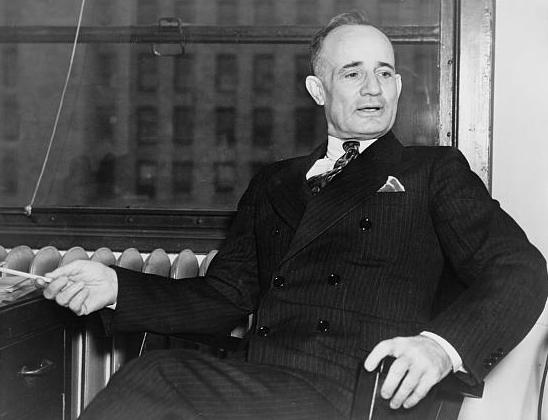
It is within this context that Think and Grow Rich by Napoleon Hill appears as a work of intellectual orientation rather than a conventional wealth-building book. The work does not approach the issue from the perspective of financial techniques or specific business strategies, but instead goes directly to the root of all achievement: how people think, set goals, and cultivate belief in their own abilities. By emphasizing the role of mindset, desire, and mental discipline, Think and Grow Rich lays the foundation for a different understanding of wealth – viewing it as the inevitable result of a long-term process of inner cultivation.
Published in 1937, in the aftermath of the Great Depression in the United States, Think and Grow Rich not only reflects the individual aspiration to rise above adversity, but also expresses the social need to rebuild faith in the power of will and positive thinking. Rather than focusing on random instances of success, Napoleon Hill adopted a systematic approach: studying the lives of outstanding individuals to identify shared principles, thereby affirming that success is not a privilege reserved for a select few, but the result of principles that can be learned and applied.
Thanks to this approach, Think and Grow Rich has transcended its historical moment to become a classic in the field of personal development. Nearly a century later, Napoleon Hill’s core arguments remain актуal in modern society, where people continue to face competitive pressure, economic instability, and the need for self-affirmation. The book is therefore read not merely as a guide to money, but as a mental map that helps individuals reexamine how they think, choose goals, and shape their long-term path of development.
2. Summary of the Core Content
Not structured as a narrative with characters like a novel, Think and Grow Rich is a work with an intellectual framework, in which Napoleon Hill presents a system of principles leading to success based on more than two decades of research. The entire book revolves around a central thesis: all material achievements originate in thought, and wealth can only emerge when individuals are first “rich” in their thinking.
At the outset, Napoleon Hill lays the foundation for his entire system by emphasizing the role of burning desire. According to him, desire is not a vague wish or fleeting dream, but a concrete goal clearly defined in terms of content, time, and value. Hill argues that only when individuals possess a sufficiently strong desire are they willing to focus their energy, accept sacrifice, and persist in pursuing their goals despite obstacles. Desire is therefore seen as the primal force that drives all actions leading to success.
From desire, the work moves on to the element of belief, which Napoleon Hill regards as the bridge between thought and action. Hill analyzes how belief is formed through the process of autosuggestion – that is, repeatedly reinforcing positive ideas until they become embedded in the subconscious. When belief is strong enough, individuals no longer act in hesitation or fear, but tend to make consistent, proactive, and well-directed decisions. In Think and Grow Rich, belief is not mystical in nature, but is understood as a psychological mechanism capable of shaping behavior and attitudes toward life.
Another major theme to which Napoleon Hill devotes considerable attention is the role of knowledge and selective learning. He clearly distinguishes between general knowledge and specialized knowledge, and affirms that knowledge only becomes valuable when it is organized, directed, and applied in practice. Hill argues that successful individuals are not necessarily those who know the most, but those who know how to use knowledge effectively in service of their chosen goals.
Notably, Think and Grow Rich emphasizes the concept of collective intelligence through the model of the “master mind group.” Napoleon Hill maintains that no individual can achieve sustainable success relying solely on personal ability. Connecting with people who share the same aspirations and objectives, and who complement one another in skills and experience, creates a superior combined force. This perspective shows that Hill views success as the result of cooperation and synergy, rather than purely individual triumph.
Alongside these constructive elements, the book devotes many chapters to analyzing the internal barriers that hinder people on their path to success. Napoleon Hill points out that common fears – such as fear of poverty, fear of failure, fear of criticism, or fear of insecurity – often do not stem from objective reality, but from negative beliefs deeply embedded in the subconscious. If not recognized and controlled, these fears quietly influence decisions, weaken determination, and cause individuals to limit themselves.
In its later sections, Think and Grow Rich further clarifies the role of personal qualities such as decisiveness, persistence, self-discipline, and emotional control. Napoleon Hill argues that indecision and the habit of procrastination are the primary reasons many people miss opportunities, even when they possess sufficient ability and resources. Success, in his view, is not the outcome of impulsive actions, but the result of a series of sound choices maintained consistently over time.
In conclusion, the entire content of Think and Grow Rich is closely interconnected into a unified system of thinking, in which thoughts, emotions, and actions interact and determine the final outcome. The book does not promise instant wealth, but guides readers toward building a solid mental foundation, from which they can gradually realize their goals and shape a long-term path to success.
3. Content Value and Artistic Value
The enduring value of Think and Grow Rich does not lie in short-term wealth-building advice, but in the way Napoleon Hill redefines the concept of success from a mental perspective. The work asserts that material wealth is merely the final consequence of a long process in which individuals continuously refine their awareness, adjust their beliefs, and maintain mental discipline. This root-oriented approach has enabled the book to transcend its era and become an intellectual foundation for generations of readers.
In terms of content value, Think and Grow Rich clearly reflects Napoleon Hill’s consistent viewpoint: mindset determines the quality of action and the results of life. Rather than focusing on external factors such as capital, background, or economic conditions, the work places emphasis on internal factors that each individual can control. Through this perspective, Hill affirms that people are not entirely determined by their starting conditions, but can actively shape their developmental path by cultivating a sound mindset.
Another significant contribution of the book is its systematization of success into principles that can be learned and applied. In Think and Grow Rich, success is not idealized as an isolated phenomenon or random luck, but analyzed as the result of recurring patterns. This approach helps readers shift from a passive mindset of waiting for opportunities to an active stance of building goals, plans, and methods of action. This practical value is a core reason why the work is highly regarded in the field of personal development.
In addition, Think and Grow Rich carries profound value in terms of its worldview. Napoleon Hill does not advocate the pursuit of money at any cost, but emphasizes the harmonious relationship between individual success and collective benefit. His emphasis on collective intelligence and cooperation shows that Hill views success as a social process, in which individual development is linked to the value one contributes to the community. This perspective helps the book avoid the tendency toward extreme individualism often found in works of a similar genre.
From the standpoint of artistic value and argumentative technique, Think and Grow Rich is built upon a tightly structured logical framework, in which core concepts are repeatedly introduced and expanded in different contexts. This deliberate repetition does not aim to lengthen the content, but serves as a method of mental training, helping readers gradually memorize and internalize the principles proposed by the author. This is also why the book is not suitable for superficial reading, but requires careful reflection and multiple readings.
The language of Think and Grow Rich is direct, clear, and action-oriented. Napoleon Hill minimizes the use of abstract and inaccessible concepts, instead employing expressions close to everyday life, combining theoretical analysis with practical examples. This style allows the work to maintain intellectual depth while remaining accessible, making it suitable for readers of varying backgrounds and levels of understanding.
Placed within the context of modern society, the value of Think and Grow Rich becomes even more evident. In a world characterized by constant change, where people frequently face career instability, intense competition, and pressure to succeed, the principles of mindset, belief, and self-discipline proposed by Napoleon Hill remain highly relevant. The book therefore functions not only as a guide to wealth, but also as a framework for thinking that helps individuals adapt and develop sustainably in the long term.
In summary, Think and Grow Rich holds value as a work of applied thought, bridging life philosophy and practical action. It is precisely this harmonious combination of profound content and coherent argumentation that has secured the book’s status as a classic and laid the groundwork for the subsequent development of the success-mindset genre.

4. Notable Quotations
One of the factors contributing to the lasting vitality of Think and Grow Rich is its system of concise quotations rich in intellectual depth. Napoleon Hill’s statements are not merely motivational slogans, but clearly reflect the core thinking structure that runs throughout the work. Each quotation is associated with a foundational principle, helping readers recognize the relationship between thought, belief, and action in the process of creating success.
Below are representative quotations that most clearly express the spirit and intellectual value of Think and Grow Rich:
- “Whatever the mind of man can conceive and believe, it can achieve.”
This statement is regarded as the central declaration of the entire work, affirming that thought and belief are not merely mental states, but the starting point that determines direction and outcome. - “Desire is the starting point of all achievement.”
Hill emphasizes that no success arises from indifference or vague wishes; only a strong and clearly defined desire provides the motivation for sustained action. - “Riches begin in the form of a state of mind.”
This quotation clarifies a core idea of Think and Grow Rich: money is not the cause, but the result. Wealth must first be formed in thinking before it manifests materially. - “Faith is the chemical that changes the thought impulses into their spiritual equivalent.”
Napoleon Hill views faith as a catalyst capable of transforming thoughts into concrete actions, enabling consistency and decisiveness. - “Knowledge will not attract money unless it is organized and intelligently directed.”
Hill distinguishes between possessing knowledge and being able to use it, emphasizing practical application and goal orientation. - “Persistence is an essential factor in the procedure of transmuting desire into its monetary equivalent.”
Success, according to Hill, is not the result of short-term effort, but of maintaining correct actions over time, even in the face of failure. - “Fear is the most destructive of all mental states.”
This quotation reflects Hill’s view that failure often stems not from external circumstances, but from internal psychological barriers, especially fear. - “Successful people make decisions quickly and change them slowly.”
Hill argues that hesitation and indecision cause many people to miss opportunities, highlighting the importance of clarity in thinking and stance. - “No individual may have great power without availing himself of the Master Mind.”
This statement clearly expresses the concept of collective intelligence in Think and Grow Rich, viewing success as the result of synergy rather than individual effort alone. - “The imagination is literally the workshop wherein are fashioned all plans.”
Hill sees imagination as the bridge between ideas and reality, where goals are envisioned, strategies are formed, and action is prepared.
5. Conclusion
Overall, Think and Grow Rich is not merely a book about money or success in a narrow sense, but an intellectual work that lays the foundation for how people understand the relationship between thinking, action, and life outcomes. By analyzing principles such as desire, belief, persistence, self-discipline, and collective intelligence, Napoleon Hill constructs a coherent theoretical system in which material wealth is viewed as the natural consequence of long-term mental cultivation.
The true value of Think and Grow Rich lies in the sustainability of the principles it proposes. Although the book was born in the specific historical context of the twentieth century, it continues to hold reference value in modern society, where individuals face competitive pressure, economic uncertainty, and the need for self-affirmation. Hill’s arguments do not depend on fleeting trends, but focus on foundational elements that are universal to human nature.
From a personal perspective, Think and Grow Rich can be regarded as a book that should be read slowly and revisited. Its value does not lie in delivering new information, but in its capacity to prompt readers to reflect, reassess, and adjust their ways of thinking and acting. At different stages of life, readers may discover different points of resonance that align with their circumstances and goals.
In closing, Think and Grow Rich does not promise a quick or easy path to success. Instead, it provides a solid mental foundation that enables individuals to proactively set goals, persist in their chosen direction, and gradually realize their own value in life. It is precisely this intellectual depth and long-term applicability that has secured Think and Grow Rich a lasting position as one of the most influential classics in the field of success-oriented thinking.