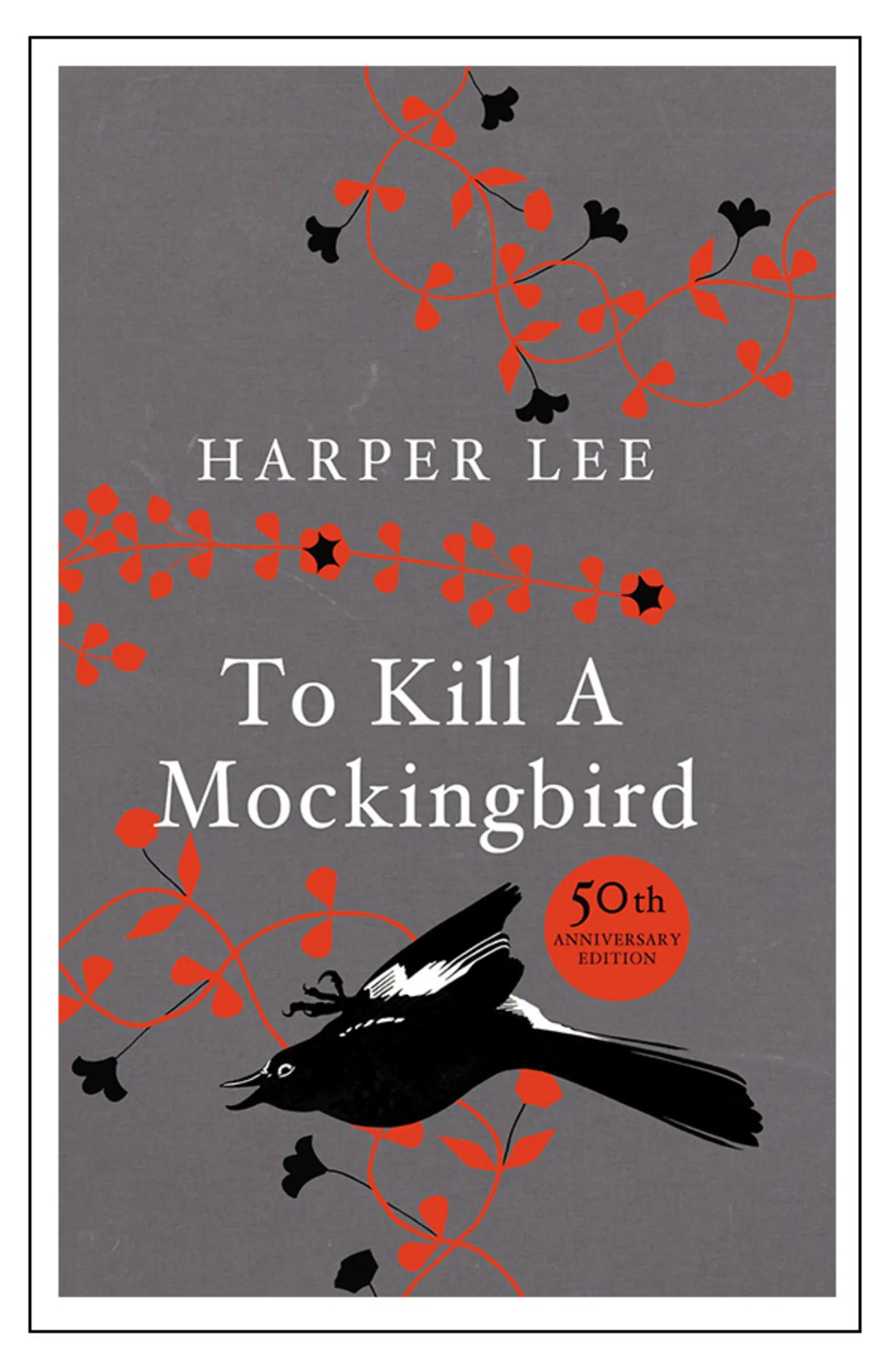
There are books that are not meant only to be read, but to be listened to – to listen to the quiet yet steadfast voice of conscience, of justice, and of compassion amid a world made loud by prejudice and fear. To Kill a Mockingbird is such a work. Rather than relying on dramatic twists or sensational conflicts, Harper Lee’s novel enters the reader’s mind through a quieter path: ordinary stories, seemingly simple details, yet carrying a persistent moral weight that lingers long after the final page.
First published in 1960, To Kill a Mockingbird quickly became a literary phenomenon in the United States and later across the world. The novel not only won the Pulitzer Prize for Fiction, but was also incorporated into official curricula in many countries as a “must-read” text on justice, human rights, social ethics, and the process of human maturation. More than six decades later, the issues it raises – racial discrimination, social prejudice, and individual responsibility in the face of evil – remain strikingly relevant, perhaps even more urgent in the modern world.
1. The Author and the Work
Harper Lee was born in 1926 in Monroeville, Alabama, a small town in the southern United States, where social life was close – knit, conservative, and deeply influenced by racial prejudices passed down through generations. Monroeville later became the model for the fictional town of Maycomb in To Kill a Mockingbird, not only in terms of geography but also in its social atmosphere and moral structure.
Born into a middle-class family, Harper Lee’s father was a respected local lawyer, known for his integrity and strong moral standing within the community. He is widely regarded as the real-life inspiration for the character of Atticus Finch – a symbol of justice, reason, and compassion in twentieth-century American literature. From an early age, Harper Lee witnessed legal cases, social conflicts, and systemic injustices embedded in Southern life, particularly racial discrimination against African Americans. These experiences did not produce rage-filled writing, but instead crystallized into a calm, thoughtful, and deeply reflective perspective.
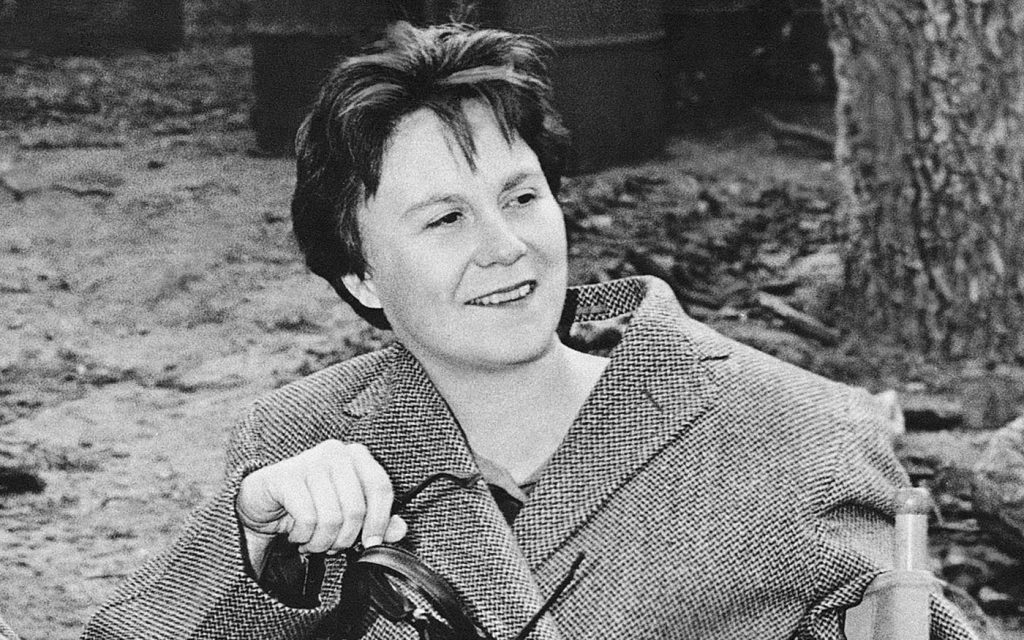
In terms of personality, Harper Lee was famously private and reserved, largely avoiding public attention. After the overwhelming success of To Kill a Mockingbird, she did not capitalize on fame through prolific publication or active participation in literary circles, but instead retreated into a quiet personal life. Her decades-long silence intrigued critics, yet also shaped a unique image: a writer who valued moral integrity and artistic honesty over personal renown.
Harper Lee’s literary output is therefore modest in quantity but immense in significance. Throughout her lifetime, she published only two novels, with To Kill a Mockingbird standing as her defining work and a major milestone in modern American literature. The novel does not belong to a specific literary movement or stylistic school, but exists as an independent moral voice – enduring, steady, and irreplaceable.
Stylistically, Harper Lee avoided complex formal experimentation or elaborate narrative techniques. Her prose is restrained, observational, and deeply attentive to psychological nuance. The power of To Kill a Mockingbird lies not in plot-driven suspense, but in its capacity to raise fundamental ethical questions: What is justice? How should one act in the face of evil? And can silence itself become a form of complicity?
The novel is written in the form of a retrospective narrative, told through the perspective of a young girl, Scout Finch. This child’s viewpoint lends the story an air of innocence and sincerity, while also serving as a powerful artistic strategy: adult hypocrisy, injustice, and prejudice appear more starkly when reflected through the honest, unfiltered eyes of a child. This contrast gives the novel its enduring emotional and philosophical depth.
2. Summary of the Plot (Detailed and In-Depth)
The setting of To Kill a Mockingbird is the town of Maycomb, Alabama, during the 1930s, the era of the Great Depression. It is a small, closed society governed by unspoken rules, where social order is rigidly divided by race, class, and family reputation. Poverty here is not merely an economic condition but a catalyst that exposes deeply entrenched injustice and prejudice.
At the center of the story is Scout Finch (Jean Louise Finch), who narrates the events through the reflective voice of adulthood looking back on childhood. Scout lives with her brother Jem Finch and their widowed father, Atticus Finch – a lawyer who raises his children with reason, tolerance, and an unwavering belief in justice. Though not wealthy, the Finch family is respected, as Atticus represents a rare moral standard within conservative Maycomb.
Childhood, Prejudice, and Inherited Fear
The first half of the novel focuses on Scout and Jem’s childhood world – innocent games, long summer days, and a constant curiosity about their surroundings. A recurring and haunting figure during this period is Boo Radley, a reclusive man living in an old house at the end of the street. To Maycomb’s children, Boo Radley embodies fear, transformed into a “monster” through rumor and imagination rather than fact.
Through the myths surrounding Boo Radley, Harper Lee illustrates how prejudice is formed and sustained: truth is unnecessary; repetition is enough. Children inherit fear from adults and reinforce it through their own imaginations. This narrative layer prepares readers to understand how racial prejudice in Maycomb operates according to the same logic.
The Trial of Tom Robinson – The Moral Core of the Novel
The central conflict emerges when Atticus Finch agrees to defend Tom Robinson, a Black man falsely accused of raping Mayella Ewell, the daughter of Bob Ewell – a man despised in Maycomb for his cruelty, violence, and irresponsibility. From the outset, the verdict is predetermined in public opinion: the word of a white person, however flawed, outweighs the truth of a Black man.
Atticus fully understands that defending Tom Robinson will expose himself and his children to hostility and scorn. Nevertheless, he accepts the case, believing that refusing to defend an innocent man under social pressure would mean betraying his own conscience. This decision is not merely professional; it is a living moral lesson for Scout and Jem.
The courtroom trial represents the ideological climax of the novel. Atticus methodically exposes contradictions in the Ewells’ testimony, highlights the physical impossibility of the alleged crime, and emphasizes the crucial fact that Tom Robinson’s left arm is disabled – rendering the accusation implausible. He also reveals Mayella’s tragedy: a lonely, impoverished young woman trapped in abuse and rigid social norms.
Yet reason and evidence are powerless against prejudice. The all-white jury convicts Tom Robinson. This verdict does not result from a lack of facts, but from a collective belief that a Black man cannot be innocent when accused by a white woman. Harper Lee thus portrays the failure of justice not as an individual flaw, but as a systemic collapse.
Tom Robinson’s Death and the Shattering of Innocence
Following the trial, Tom Robinson is shot and killed while attempting to escape prison. His death is both tragic and inevitable within Maycomb’s social reality – a place where an innocent Black man has no true safety. For Scout and Jem, this is a profound emotional shock. Jem, in particular, experiences the collapse of his youthful belief in fairness and justice, marking a crucial step in his maturation.
Harper Lee does not dramatize this pain with sentimentality. Instead, she conveys it through silence, confusion, and quiet disappointment – accurately reflecting a child’s first realization that the adult world does not operate according to moral clarity.
Boo Radley and the Completion of Understanding
In the final section, the narrative returns to Boo Radley. When Bob Ewell attempts to take revenge by attacking Jem and Scout at night, Boo Radley emerges from the shadows to save the children, killing Bob Ewell in self-defense. The community then chooses to conceal the truth in order to protect Boo Radley from public scrutiny.
The moment when Scout stands on Boo Radley’s porch and views Maycomb from his perspective is one of the novel’s most powerful symbolic scenes. For the first time, Scout truly “stands in someone else’s shoes,” fulfilling the moral lesson Atticus once taught her. This moment represents not only personal growth, but the completion of a journey toward empathy and understanding.
Through the entire narrative, Harper Lee demonstrates that To Kill a Mockingbird is not simply a novel about a court case, but a social portrait in which evil often takes the form of silence, compromise, and socially accepted falsehoods rather than overt violence.
3. Thematic and Artistic Value of the Novel
3.1. Thematic Value: A Humanistic Voice and a Moral Indictment of a Prejudiced Society
The most prominent thematic value of To Kill a Mockingbird lies in its profound humanism and its engagement with fundamental ethical questions. Harper Lee does not present her novel as a loud accusation, but allows injustice to reveal itself through individual human fates, compelling readers to confront issues of justice, responsibility, and conscience.
Above all, the novel offers a powerful condemnation of racial discrimination as a structural problem in the early twentieth-century American South. Through Tom Robinson’s trial, Harper Lee exposes the danger of prejudice when it is legitimized by collective belief. Tom is convicted not because of weak evidence, but because he is Black in a society that assumes Black guilt. Justice fails not due to flawed logic, but because it confronts a deeply ingrained false belief.
Importantly, Harper Lee extends this critique beyond race to prejudice in all its forms. Bias in Maycomb affects not only Black citizens, but also Boo Radley, the Ewell family, and even the Finch family. Prejudice targets anyone who is different, vulnerable, or unwilling to conform to dominant norms.
The novel also raises the issue of individual moral responsibility in the face of systemic evil. Atticus Finch is not portrayed as a flawless hero capable of transforming society overnight. He knows he will lose, yet he still chooses to act. Through him, Harper Lee affirms that the value of justice lies not in immediate victory, but in maintaining one’s conscience under social pressure. Moral courage, in this sense, is doing what is right even when defeat is certain.
Another essential theme is human growth. To Kill a Mockingbird is not only about social injustice, but also about the painful process of maturation. Scout and Jem grow not through accumulated knowledge, but through encounters with injustice, disappointment, and moral complexity. True maturity, the novel suggests, lies not in accepting injustice, but in confronting it without losing compassion.
3.2. Artistic Value: Simplicity of Form and Depth of Expression
Artistically, the novel’s success lies in its deceptively simple narrative structure. The first-person perspective through Scout Finch allows the story to maintain a sincere, childlike tone while creating a powerful contrast with the harsh social reality it depicts. This contrast sharpens the moral impact without the need for explicit condemnation.
The language is colloquial, restrained, and grounded in everyday life. Harper Lee avoids ornate prose, allowing philosophical depth to emerge organically through dialogue, situations, and small details. This accessibility enables the novel to resonate with a wide audience while retaining intellectual substance.
Character construction is another strength. The characters are not divided into simplistic categories of good and evil. Even figures like Bob Ewell and the broader Maycomb community are portrayed as products of poverty, ignorance, and inherited prejudice. This approach avoids one-dimensional moral judgment and instead raises more challenging questions about the origins of evil.
The symbol of the “mockingbird” functions as the novel’s central artistic motif. A mockingbird harms no one and only brings beauty through song; to kill it is considered a sin. This image becomes a metaphor for innocent individuals like Tom Robinson and Boo Radley, destroyed or endangered by fear and prejudice. The symbol unifies the narrative and crystallizes the novel’s ethical message.
Finally, the tightly woven structure – from everyday childhood episodes to the courtroom climax and the quiet resolution through understanding – creates a cohesive whole. The novel ends not with social transformation, but with moral awareness, a quiet yet deeply resonant conclusion aligned with Harper Lee’s humanistic vision.
4. Memorable Quotations from To Kill a Mockingbird
One of the enduring strengths of To Kill a Mockingbird lies not only in its plot and characters, but in its simple yet morally profound statements. The novel does not rely on grand declarations, but places key lines precisely where they carry maximum ethical weight.
Below are some of the most representative quotations, often regarded as the novel’s moral backbone:
“You never really understand a person until you consider things from his point of view… until you climb into his skin and walk around in it.”
→ This statement encapsulates the novel’s core moral principle: understanding arises from empathy, not judgment.
“Courage is not a man with a gun in his hand. It’s when you know you’re licked before you begin but you begin anyway and see it through no matter what.”
→ Courage is redefined as moral commitment rather than physical force.
“The one thing that doesn’t abide by majority rule is a person’s conscience.”
→ This line affirms the supremacy of individual moral responsibility over collective opinion.
“It’s a sin to kill a mockingbird.”
→ A brief sentence carrying deep symbolic meaning, representing the destruction of innocence.
“People generally see what they look for, and hear what they listen for.”
→ A clear explanation of how prejudice distorts truth.
“In our courts, all men are created equal.”
→ An idealistic belief that stands in painful contrast to the reality of Tom Robinson’s trial.
“In this country our courts are the great levelers.”
→ A declaration of faith in justice, and simultaneously, an exposure of its betrayal.
“Most people are nice, when you finally see them.”
→ A hopeful statement advocating understanding over cynicism.
“There’s a lot of ugly things in this world, son. I wish I could keep ‘em all away from you. That’s never possible.”
→ A recognition of reality without surrendering hope.
Silence in the face of injustice is also a choice.
→ Though implicit, this idea permeates the entire novel.
5. Conclusion – Personal Reflection and Evaluation
To Kill a Mockingbird is not a novel that offers easy comfort. It provides no just resolution, no triumph of righteousness, and no assurance that evil will be punished. Instead, Harper Lee confronts readers with an unsettling truth: justice can fail, innocence can be destroyed, and prejudice can overpower reason. This refusal to compromise is precisely what gives the novel its lasting power.
Beneath its surface as a childhood narrative and legal drama, the novel is fundamentally a moral journey. Atticus Finch is not portrayed as a savior, but as an ordinary man who chooses integrity not because success is guaranteed, but because he cannot live otherwise. The novel thus asserts that ethical value lies in commitment, not outcome.
At the same time, the story is one of growth – growth marked by loss and disillusionment. Scout and Jem mature through confrontation with injustice, learning to see humanity in all its complexity. This is also the reader’s journey: from naïve belief in absolute fairness to a deeper, more demanding moral awareness.
The enduring value of To Kill a Mockingbird lies in the questions it continues to pose: When faced with injustice, will we remain silent or speak out? When confronted by majority prejudice, will we defend truth at personal cost? The novel offers no easy answers, but reminds us that silence, indifference, and compromise are themselves moral choices.
For this reason, To Kill a Mockingbird is not a book to be read only once. It is a novel to be revisited across different stages of life. Each return reveals new layers of meaning – deeper, more unsettling – mirroring the ongoing moral growth of human beings in an imperfect world.