
In the flow of world literature, there are works that not only reflect social reality but also directly engage with the core ethical and human rights issues of their time. Uncle Tom’s Cabin by Harriet Beecher Stowe is one such exemplary case. Published in the mid-nineteenth century, when the United States was deeply divided over the issue of slavery, the novel quickly transcended the boundaries of literature to become a powerful voice in contemporary social and intellectual life.
Rather than choosing the path of direct political argument, Uncle Tom’s Cabin approaches the issue of slavery through everyday stories and individual destinies caught within an inhumane legal and economic system. By placing human beings – with their suffering, faith, and dignity – at the center of the narrative, Harriet Beecher Stowe exposes the brutal nature of slavery in a compelling and emotionally resonant manner. This artistic choice allowed the novel to reach a broad readership and generate profound influence on public opinion in the United States and beyond.
More than a century and a half later, Uncle Tom’s Cabin remains a significant text for examining the relationship between literature and society. The novel not only offers a direct portrayal of nineteenth -century American reality but also raises universal questions about human dignity, justice, and moral responsibility in the face of institutionalized injustice. It is precisely this intellectual depth and enduring humanistic value that have secured Uncle Tom’s Cabin its status as a classic, continually read and discussed in diverse academic contexts.
1. Introduction to the Author and the Work Uncle Tom’s Cabin
Harriet Beecher Stowe (1811–1896) was one of the most influential American writers of the nineteenth century. She was born into an intellectually and religiously active family with a strong tradition of social reform: her father, Lyman Beecher, was a prominent minister, and her brother, Henry Ward Beecher, was a leading abolitionist and public speaker. This familial and educational environment fostered in Stowe a profound moral consciousness and a sustained concern for social justice.
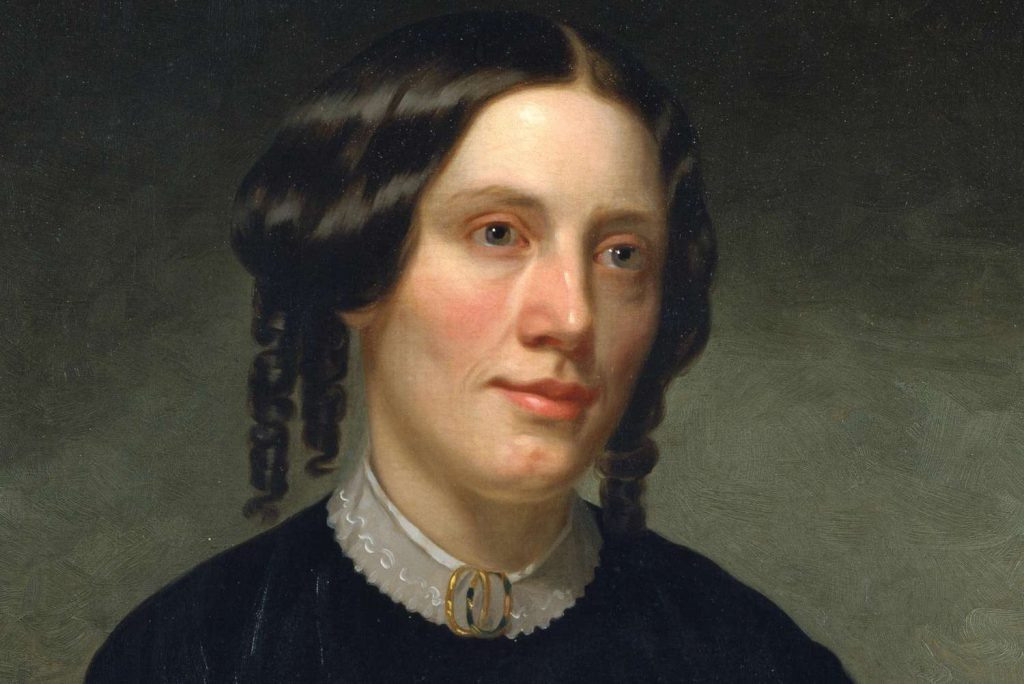
Stowe’s personal experiences played a crucial role in shaping her literary vision. During her years living in Ohio – a state bordering slave states – she directly encountered stories of escaped slaves, separated families, and violence sanctioned by law. Furthermore, the Fugitive Slave Act of 1850, which required citizens of free states to assist in the capture of runaway slaves, served as a decisive catalyst, prompting her to use literature as a means of moral and social critique.
Within this context, Uncle Tom’s Cabin was first serialized in the abolitionist newspaper The National Era between 1851 and 1852, before being published as a book in 1852. Upon its release, the novel became an unprecedented publishing phenomenon in American history, selling hundreds of thousands of copies in its first year and igniting intense debate between supporters and opponents of slavery. Far from being merely a bestselling novel, Uncle Tom’s Cabin quickly emerged as a cultural and political symbol of the abolitionist movement.
In terms of genre, Uncle Tom’s Cabin is a social realist novel that combines domestic narrative, Christian morality, and humanitarian ideals. Harriet Beecher Stowe did not construct the work as a legal indictment but instead chose storytelling as her primary vehicle, portraying the lives and fates of ordinary individuals. This fusion of dramatic plotlines, symbolic characters, and clear moral reasoning enabled the novel to reach a wide audience, from women and children to contemporary intellectuals.
The position of Uncle Tom’s Cabin in American literary and social history is particularly significant. It is not only one of the most influential novels of the nineteenth century but is also frequently cited as a literary work that contributed to transforming public perception of slavery and laying the moral groundwork for the events leading to the American Civil War. Despite varied interpretations throughout its critical history, it is undeniable that Uncle Tom’s Cabin established Harriet Beecher Stowe as a writer whose literary voice was inseparable from social responsibility.
2. Summary of the Plot of Uncle Tom’s Cabin
Uncle Tom’s Cabin opens in the American South of the nineteenth century, where slavery was deeply embedded in the social and economic order. The story begins on the plantation of Arthur Shelby, a relatively benevolent slave owner. However, due to financial debts, Shelby is forced to sell two slaves: Uncle Tom – a middle – aged, gentle, deeply religious Black man – and young Harry, the son of Eliza, a young enslaved woman. This decision sets in motion the chain of tragedies that unfolds throughout the novel.
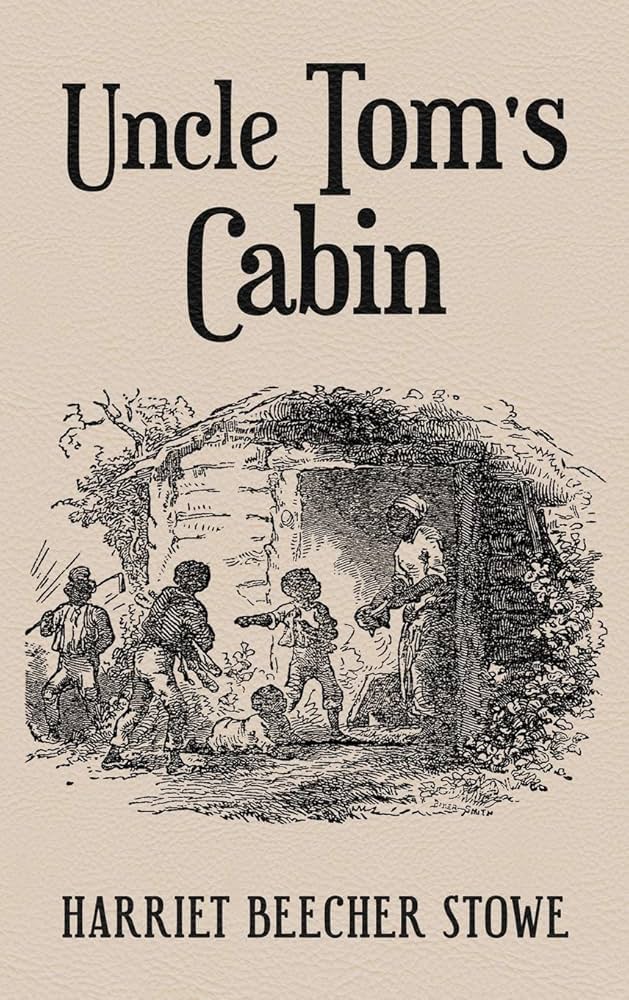
Upon learning that her son is to be sold and separated from her, Eliza risks her life to escape with Harry under cover of night, embarking on a perilous journey toward freedom. Eliza’s story, alongside that of her husband George Harris – a highly intelligent slave with a strong spirit of resistance – forms a parallel narrative line that embodies the yearning for freedom and the struggle against imposed destiny. Scenes such as Eliza’s escape across the frozen Ohio River have become iconic, vividly illustrating the cruelty of slavery toward Black families.
In contrast to Eliza and George’s active resistance, Uncle Tom accepts his fate of being sold southward with apparent submission, though not with moral weakness. During his journey down the Mississippi River, Tom meets Eva St. Clare, the young daughter of a wealthy Southern family. The relationship between Tom and Eva becomes a beacon of humanity within the narrative. Eva’s innocence, compassion, and faith resonate deeply with Tom and highlight the moral nobility of a man deemed inferior by social standards.
Following Eva’s death, Tom’s life enters a darker phase when he is sold to Simon Legree, a brutally cruel plantation owner who represents the most inhumane aspects of slavery. Under Legree’s ownership, Tom endures harsh labor, physical violence, and moral coercion, including being ordered to punish fellow slaves. Yet he remains steadfast in his faith and human dignity, refusing to submit to evil even at the cost of his life.
The novel reaches its climax when Uncle Tom is savagely beaten for refusing to reveal the whereabouts of escaped slaves. His death is not portrayed as defeat but as a morally profound act of sacrifice. Tom’s passing becomes a powerful indictment of slavery and awakens the conscience of those around him, including George Shelby – the son of his former master – who later frees the slaves on his plantation in Tom’s memory.
Parallel to Tom’s tragedy, Eliza and George’s story concludes with their successful escape to Canada, where they finally attain freedom and the chance to live as full human beings. By juxtaposing these two narrative paths – one of sacrificial endurance and the other of determined resistance – Harriet Beecher Stowe presents a multidimensional view of enslaved life while underscoring the inherent inhumanity of a system that forces such choices.
Through its tightly constructed and emotionally charged plot, Uncle Tom’s Cabin transcends the story of an individual to depict the broader reality of American society under slavery. Each turning point reinforces the central message: when human beings are reduced to property, all moral and ethical values are placed at risk.
3. Distinctive Features and Values of Uncle Tom’s Cabin
The core value of Uncle Tom’s Cabin lies in Harriet Beecher Stowe’s transformation of a complex political and legal issue – slavery – into a profoundly human narrative capable of awakening moral consciousness. Rather than arguing through theory or slogans, the novel uses storytelling to present concrete lives and everyday tragedies, compelling readers to confront the ethical consequences of an inhumane social system.
At the level of thematic content, Uncle Tom’s Cabin raises fundamental questions about human dignity. In the world of the novel, the law permits the buying and selling of people, the separation of families, and the legalization of violence. Yet Stowe consistently emphasizes that legal authority does not equate to moral legitimacy. Through the figure of Uncle Tom – a man stripped of freedom yet rich in moral integrity – the novel exposes a striking paradox: those deemed “property” often possess greater humanity than their oppressors.
The novel also offers a nuanced depiction of nineteenth – century American society. Slavery is shown not only through overtly brutal figures like Simon Legree but also through “benevolent” slave owners who nonetheless compromise with the system. This perspective reveals that inhumanity arises not only from direct violence but also from silence, hesitation, and passive acceptance of injustice. Consequently, the novel transcends its historical moment to become a broader moral warning against societies that tolerate systemic oppression.
Another notable aspect is the moral depth derived from Christian ethics. Stowe employs religious faith not as propaganda but as an ethical framework through which to critique society. Uncle Tom’s faith does not render him weak; rather, it provides spiritual strength and moral clarity under extreme suffering. This contrast between Christian ideals of love and a society that denies them intensifies the novel’s ethical force.
Artistically, Uncle Tom’s Cabin is distinguished by its symbolic yet complex characters. Uncle Tom represents oppressed dignity; Eliza and George Harris embody resistance and the pursuit of freedom; Simon Legree personifies unchecked power divorced from morality. These contrasts generate narrative tension and illuminate core social conflicts.
Stowe’s emotionally resonant storytelling further enhances the novel’s impact. By focusing on family relationships and intimate human bonds, she cultivates empathy and moral engagement. This approach enabled the novel to reach a broad readership and play a vital role in shaping public opinion.
Taken together, these elements affirm Uncle Tom’s Cabin as not merely a social realist novel but a work of enduring moral and historical significance, demonstrating literature’s power to influence collective consciousness.

4. Memorable Quotations in Uncle Tom’s Cabin
One of the key factors behind the enduring vitality of Uncle Tom’s Cabin lies in its emotionally resonant language guided by a clear moral orientation. Harriet Beecher Stowe does not employ quotations as mere ornamental expressions; rather, she treats them as vehicles for conveying humanitarian ideals, religious faith, and a forceful critique of slavery. Through dialogue and the inner monologues of her characters, the novel places readers in situations that compel them to confront fundamental questions of conscience, justice, and human responsibility.
“If I must suffer, then let that suffering have meaning for others.”
→ This line clearly presents Uncle Tom as a symbol of self – sacrifice and Christian faith. He does not resist through violence, but through the belief that suffering itself can become a moral testimony more powerful than any act of physical rebellion.
“No one has the right to turn a human being into the property of another.”
→ This statement functions as the core moral declaration of Uncle Tom’s Cabin. Harriet Beecher Stowe directly rejects the ethical foundations of slavery, affirming that human dignity is a value that cannot be bought, sold, or determined by inhumane laws.
“The human heart cannot remain silent forever in the face of another’s suffering.”
→ This quotation reflects the author’s faith in the capacity of society’s conscience to awaken. In Stowe’s view, literature serves as a means of stirring empathy – the fundamental condition for any meaningful social reform.
“The law may permit evil, but that does not make it right.”
→ This sentence establishes a direct opposition between legality and morality. It is also a crucial point that allows Uncle Tom’s Cabin to transcend the boundaries of a sentimental novel and emerge as a work of social critique.
“We are taught to obey men, but conscience compels us to obey God.”
→ This quotation reveals the deep religious dimension of the novel’s moral framework. Harriet Beecher Stowe invokes faith as a foundation for rejecting blind obedience to laws that violate fundamental human values.
“Maternal love is a chain that no power can break.”
→ Through the portrayal of enslaved mothers – especially Eliza – this line captures the instinctive and moral strength of familial love, while simultaneously exposing the cruelty of slavery in tearing apart the most sacred human bonds.
“Cruelty is born not of pure evil, but of the habit of treating people as objects.”
→ This is one of the novel’s most broadly applicable insights. Stowe suggests that systemic violence often arises from dehumanization rather than from individual malice alone.
“A society cannot call itself civilized if it builds its prosperity on the suffering of others.”
→ This quotation serves as a concluding moral reflection, expanding the issue of slavery into a broader question about the ethical foundations of society as a whole. It is precisely this universal scope that gives Uncle Tom’s Cabin its lasting influence beyond the historical context of nineteenth – century America.
5. Conclusion
Uncle Tom’s Cabin stands as a compelling testament to the enduring power of literature when it is closely engaged with fundamental moral and social issues. Through the portrayal of enslaved lives – most notably the figure of Uncle Tom – Harriet Beecher Stowe offers a persuasive depiction of the inhuman nature of slavery while affirming the inviolable value of human dignity. The novel demonstrates that literature does not merely reflect reality; it also possesses the capacity to pose foundational questions about justice, conscience, and social responsibility.
The significance of Uncle Tom’s Cabin extends far beyond the historical context of nineteenth – century America to convey a message of universal relevance. Issues such as institutionalized injustice, moral compromise in the face of evil, and the role of the individual in choosing between obedience and resistance remain deeply meaningful in the modern world. It is precisely this intellectual depth that allows the work to transcend the limits of a topical novel and become a classic text in world literature.
Viewed as a whole, Uncle Tom’s Cabin is worth reading not only for its historical importance but also for its ability to cultivate humanistic awareness and critical social reflection in readers. Through simple yet profoundly persuasive language, Harriet Beecher Stowe demonstrates that a story told with moral responsibility can contribute to transforming collective consciousness. It is this enduring capacity that has secured – and will continue to secure – Uncle Tom’s Cabin a distinctive place in the flow of world literature.