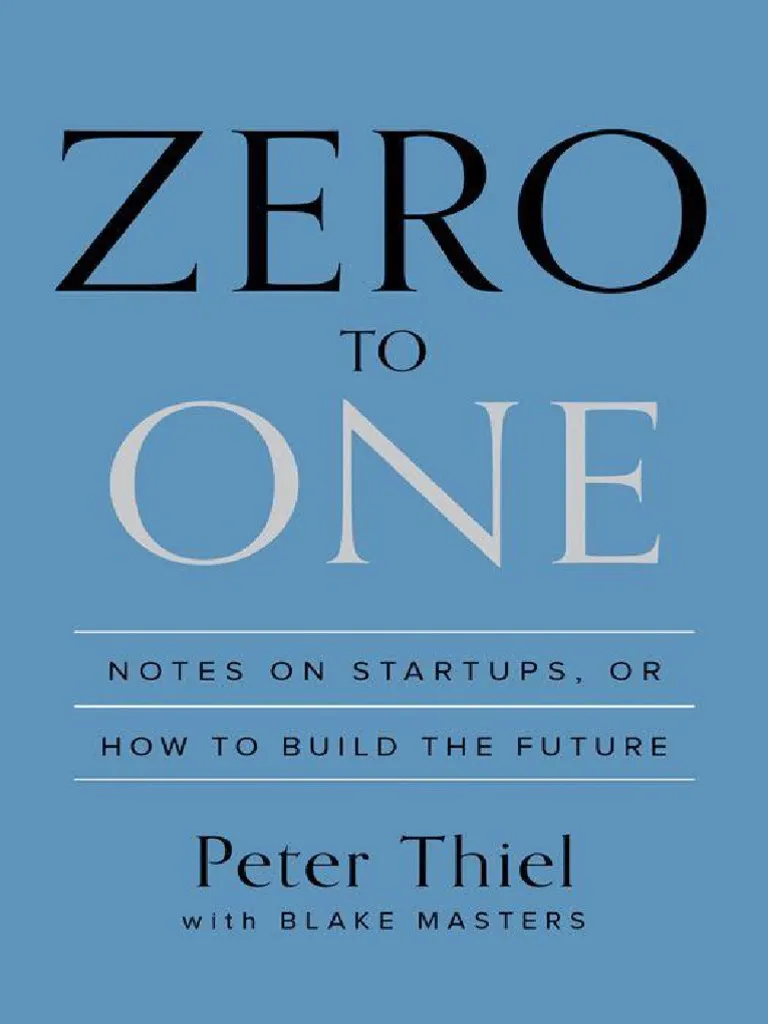
In the fields of business and technology, most prevailing theories revolve around optimization: improving existing products, scaling operations, increasing efficiency, and competing for market share. This approach implicitly assumes that value already exists, and that the role of a business is merely to distribute or exploit it more effectively. Zero to One emerges as a direct challenge to this assumption.
Rather than discussing how to win within an already established game, Zero to One raises a more fundamental question: how is new value created, and what distinguishes genuine innovation from incremental improvement. The book does not focus on short-term tactics or so-called “success formulas,” but instead constructs a foundational framework of thinking about creativity, technology, and the future of business.
With sharp arguments, a rigorous structure, and a principle – driven approach, Zero to One encourages readers to reconsider the entire process of value creation in the modern economy. This is not merely a book about startups; it is a work that examines the nature of progress, the role of human agency in shaping the future, and the limitations of traditional competitive thinking.
1. Introduction to the Author and the Work
The Author
Zero to One was written by Peter Thiel, one of the most influential figures in the technology and startup ecosystem of Silicon Valley over the past two decades. He is the co-founder of PayPal – a digital payments platform that laid the foundation for the modern fintech movement – and an early investor in several breakthrough technology companies such as Facebook, LinkedIn, and SpaceX through Founders Fund.

Beyond his role as an entrepreneur and venture capitalist, Peter Thiel is also known as a thinker with clearly defined, and at times controversial, positions on technology, competition, and the future of society. His views often run counter to popular startup slogans, such as glorifying intense competition or pursuing growth at all costs. This independent intellectual foundation gives Zero to One its distinctive voice.
More importantly, Peter Thiel writes not as a detached observer, but from direct experience in building, scaling, and defending competitive advantages in technology companies. As a result, the arguments presented in the book are not purely theoretical; they are closely tied to the real-world operations of innovative companies on a global scale.
The Work
Zero to One originated from a series of lectures delivered by Peter Thiel at Stanford University, recorded, edited, and systematized by Blake Masters. From its release, the book was recognized not simply as a “startup guide,” but as a theoretical exploration of the nature of innovation and economic progress in the technological age.
The book was published at a time when the global startup movement was rapidly expanding, and when business models based on replication, scaling, and optimization had become widespread. In contrast to this trend, Zero to One focuses on a more fundamental issue: how to create entirely new value, rather than merely improving what already exists. The title “Zero to One” is not a vague metaphor, but a direct expression of the book’s central thesis – that the most important creative leap is always from nothing.
Structurally, Zero to One is not designed as a step-by-step manual, but as a sequence of tightly connected logical arguments. Each chapter addresses a foundational principle: from technology and globalization, monopoly and competition, to the role of founders, corporate culture, and long-term vision. This structure allows the book to be read multiple times, with each reading revealing new layers of meaning depending on the reader’s experience and context.
Overall, Zero to One does not promise quick success formulas. Instead, it offers a framework that enables readers to reassess how they think about business, innovation, and the future – an approach that accounts for the book’s enduring value and long-term influence.
2. Summary of the Core Content
In essence, Zero to One is not constructed as a linear narrative, but as a system of arguments centered on a fundamental question: where does real progress in business and technology come from? The entire book can be understood as a process of dissecting, challenging, and redefining the concept of “innovation” in the context of the modern economy.
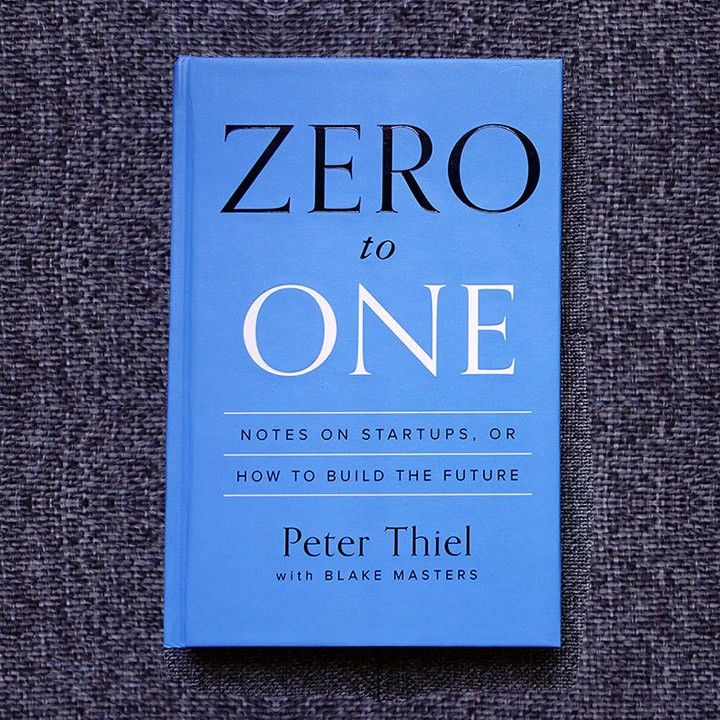
From Globalization to Technology: Distinguishing Two Forms of Progress
In the opening chapters, the author lays the foundation for the book’s argument by clearly distinguishing between two types of progress. On one side is globalization – the process of copying and expanding proven models from one place to another. On the other side is technology – the ability to create entirely new solutions that have never existed before.
According to Peter Thiel, most economic growth in the contemporary world comes from “doing more of what already works,” that is, moving from one to many. However, this form of growth inevitably reaches its limits. In contrast, progress from zero to one – creating something entirely new – is what drives true breakthroughs in society. From this perspective, innovation is defined not as continuous improvement, but as deliberate disruption.
Entrepreneurship as Discovery, Not Replication
Building on this distinction, Zero to One devotes significant attention to criticizing the popular belief that successful startups are those that “do the same thing faster” or “optimize better.” Thiel argues that this mindset traps companies in intense competition, where profits are eroded and genuine value is rarely created.
Instead, he defines a startup as an organization built around a critical truth that most people have not yet recognized. Entrepreneurship, therefore, is not about following trends, but about discovering unexplored gaps in markets, technologies, or human behavior.
Creative Monopoly and the Critique of Competition
One of the book’s most controversial and consistent arguments concerns monopoly. Contrary to the common negative interpretation, Peter Thiel argues that every truly successful business possesses some form of monopoly – not through market manipulation, but through unique value creation.
In his analysis, fierce competition often indicates that companies are offering similar products with no fundamental differentiation. By contrast, a company that creates a product so superior that it cannot be substituted naturally escapes direct competition. From this point, the author leads readers to reconsider familiar concepts such as competitive advantage, market share, and growth strategy.
Technology, Human Agency, and Long-Term Vision
In later chapters, the book expands to examine the relationship between technology and human agency. Peter Thiel rejects the assumption that the future will automatically improve through technological progress alone. According to him, technology creates value only when guided by clear vision and deliberate human choice.
He analyzes the role of the founder not merely as an operator, but as the architect of a long-term value system. Early decisions regarding team composition, corporate culture, ownership, and strategic direction have profound effects on a company’s capacity for future innovation. Consequently, building a business is not about short-term optimization, but about designing a structure capable of long – term survival and growth.
The Overall Intellectual Trajectory
Throughout Zero to One, the arguments do not exist in isolation, but interlock into a unified system of thought. From distinguishing replication and creation, to criticizing competition, emphasizing creative monopoly, and highlighting the human role in shaping the future, the book guides readers from conventional assumptions toward foundational questions.
As a result, the book’s “core narrative” lies not in events, but in the evolution of ideas. Each chapter functions as an additional layer of reasoning, gradually forming an alternative perspective on business, entrepreneurship, and the nature of progress in the modern world.
3. Content Value and Artistic Value
Content Value
The most significant strength of Zero to One lies in its ability to challenge assumptions that are often taken for granted in modern business thinking. Rather than encouraging surface-level improvement or incremental optimization, the book forces readers to reconsider what innovation actually means and where meaningful progress truly originates.
Peter Thiel does not approach innovation as a continuous process of refinement, but as a discontinuous leap that requires deliberate intent. In this framework, growth achieved through replication and scaling is fundamentally different from growth achieved through creation. By drawing a clear conceptual boundary between these two modes of progress, Zero to One provides readers with a rigorous lens through which to evaluate business ideas, technological development, and strategic decisions.
Another key contribution of the book is its critique of competition as an unquestioned ideal. Instead of presenting competition as inherently beneficial, Thiel exposes its limitations, particularly in markets where companies offer similar products and engage in zero-sum struggles for market share. By reframing monopoly as the result of unique value creation rather than unethical dominance, the book introduces a more nuanced understanding of sustainable success.
Importantly, Zero to One does not reduce entrepreneurship to execution alone. It emphasizes the role of vision, long-term thinking, and the courage to pursue ideas that lack immediate validation. In doing so, the book elevates entrepreneurship from a tactical activity to an intellectual endeavor grounded in foresight and conviction.
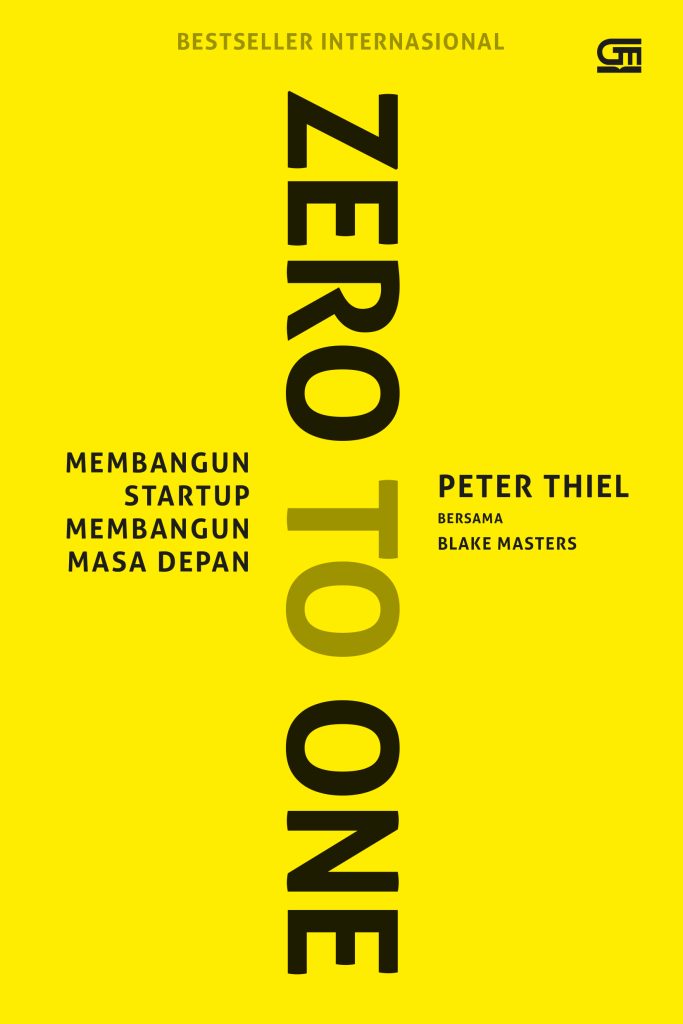
Artistic and Intellectual Form
From an intellectual and stylistic perspective, Zero to One is characterized by concision, clarity, and argumentative discipline. The book avoids narrative excess and emotional appeal, relying instead on tightly constructed reasoning and carefully chosen examples. This restraint gives the text a distinctly analytical tone, reinforcing its position as a work of ideas rather than a motivational manifesto.
The structure of the book further enhances its artistic coherence. Each chapter builds upon the previous one, not by repetition, but by expanding the conceptual framework established earlier. This cumulative structure allows the reader to follow the progression of thought while gradually deepening their understanding of the central thesis.
Moreover, the language of Zero to One is deliberately declarative. Many of its statements are framed as propositions rather than suggestions, compelling readers to confront them directly. This stylistic choice contributes to the book’s enduring influence, as its ideas are easily extracted, debated, and applied across different contexts.
Taken as a whole, the artistic value of Zero to One lies not in narrative richness, but in intellectual precision. The book succeeds in transforming abstract concepts about technology, business, and the future into a coherent system of thought – one that invites sustained engagement rather than passive consumption.
4. Notable Quotations
One reason Zero to One has had a lasting impact is that its arguments are distilled into concise statements that encapsulate foundational ideas. The quotations below are not merely memorable lines, but can be understood as philosophical propositions about innovation, business, and the future. When viewed within the broader framework of the book, they clearly illustrate how Peter Thiel guides readers away from imitative thinking toward creative thinking.
- “Doing what we already know how to do takes the world from 1 to n, but creating something new takes it from 0 to 1.”
→ This quotation lays the foundation for the entire book, clearly distinguishing between expansion and true creation. - “Every moment in business happens only once.”
→ Peter Thiel rejects the idea that success can be directly replicated, emphasizing the uniqueness of context, timing, and market conditions. - “Competition is for losers.”
→ This provocative statement reflects the view that intense competition is often the result of insufficient differentiation rather than strength. - “Monopoly is the condition of every successful business.”
→ The author redefines monopoly as the natural outcome of superior value, rather than the result of manipulation or exclusion. - “The most valuable businesses are built around secrets.”
→ Here, “secrets” refer to important truths that the market has not yet recognized, forming the foundation of long-term competitive advantage. - “A startup is the largest group of people you can convince of a plan to build a different future.”
→ This definition shifts the focus of startups from scale or speed to vision and persuasion. - “Technology is miraculous because it allows us to do more with less.”
→ This quotation clarifies Thiel’s view of technology as a means of expanding human capability, not merely optimizing costs. - “Founders should set the rules.”
→ The role of the founder is emphasized as the one who shapes structure, culture, and long-term direction. - “The best entrepreneurs know this: every great business is built around a secret that’s hidden from the outside.”
→ This statement reinforces the central argument that discovery matters more than following what the market already validates.
Taken together, these quotations demonstrate that Zero to One conveys its ideas not through storytelling or momentary inspiration, but through highly abstract propositions that compel readers to reassess familiar assumptions about competition, innovation, and success. This concise yet profound quality has made the book a key reference in discussions of entrepreneurship and technology.
5. Conclusion
Zero to One does not offer a fixed formula for success, nor does it promise safe entrepreneurial paths. The core value of the book lies in constructing a framework that enables readers to reexamine the entire process of value creation in business and technology. By clearly distinguishing replication from creation, critiquing traditional competitive thinking, and emphasizing the importance of long-term vision, the book sets a demanding standard for what “innovation” truly means.
Throughout its arguments, Peter Thiel demonstrates that genuine progress does not come from doing better what has already been proven, but from asking different questions and being willing to pursue paths with no precedent. This approach allows Zero to One to transcend the boundaries of a conventional startup book, becoming instead a reflection on how humans can actively shape the future rather than merely adapt to it.
From an overall evaluative perspective, Zero to One holds particular value for those seeking a durable intellectual foundation in business, technology, and innovation. The book does not require readers to agree with every argument, but it compels them to seriously question assumptions often taken for granted. This capacity to stimulate critical thinking constitutes the book’s most significant contribution.
At a broader level, Zero to One emphasizes that the future is not an inevitable outcome of trends or competition, but the result of deliberate choices. In a world increasingly expanding along the horizontal dimension, the message of “zero to one” remains relevant as a reminder that true innovation always begins with the courage to step beyond established patterns.