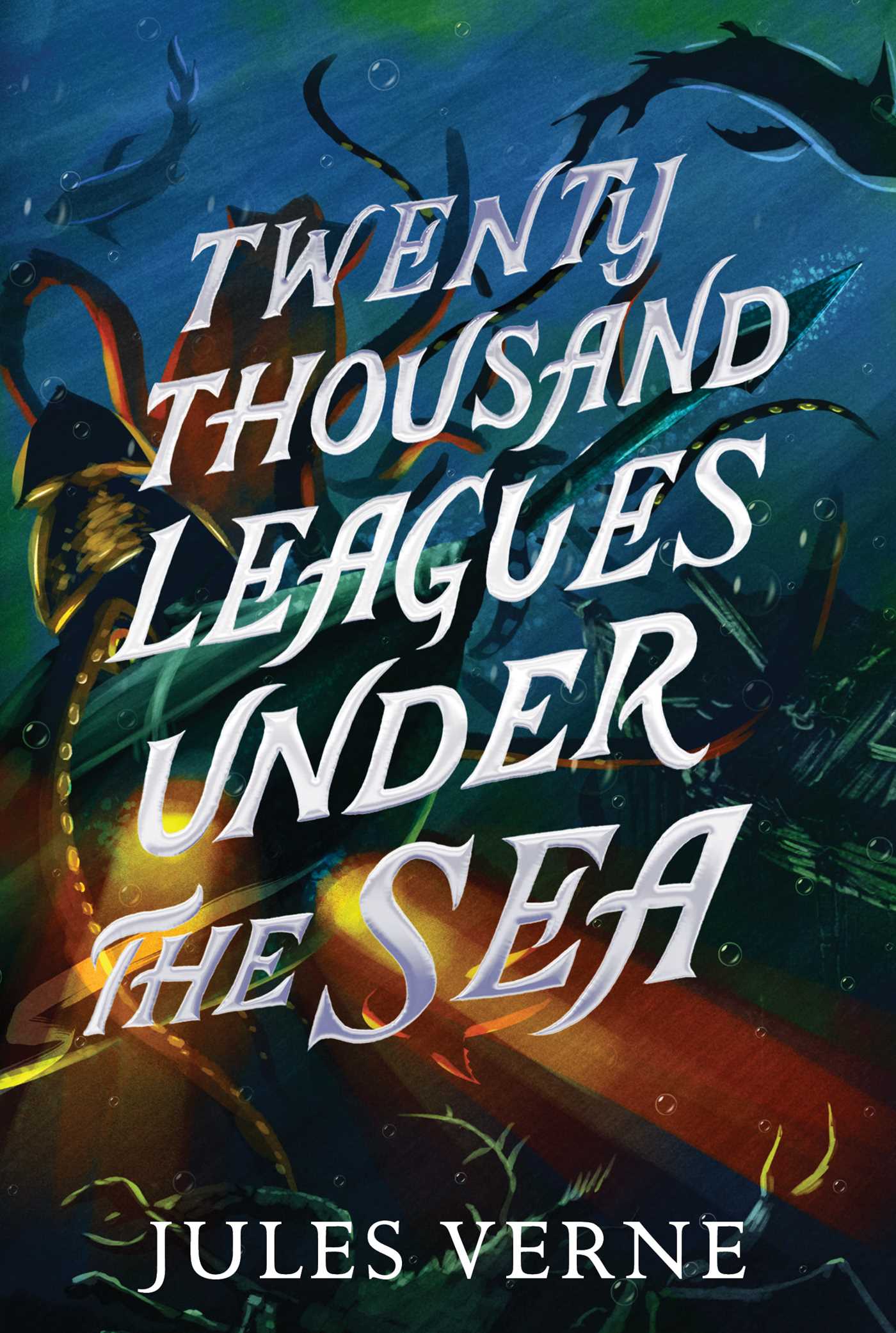
Not every book needs noise to be remembered for a long time. Twenty Thousand Leagues Under the Sea by Jules Verne is such a work. The novel opens up a strange world, where humanity leaves the familiar surface of the earth and enters the depths of the ocean, a realm where light gradually disappears and all familiar rules are put to the test. Beneath the surface of an adventure story lie serious reflections on the desire to explore, on freedom, and on the position of humankind in the face of vast nature. Although written in the nineteenth century, Twenty Thousand Leagues Under the Sea retains its full value, not only because of its imagination far ahead of its time, but also because it compels readers to slow down, observe, and reflect on the limits of humanity in its quest to conquer the world.
Jules Verne (1828–1905) was a French writer, regarded as one of the pioneers who laid the foundation for modern science fiction. He wrote in the context of the nineteenth century, a period when science and technology were making rapid advances, fostering a strong belief in humanity’s ability to explore and master nature. Verne’s literature emerged from this spirit of the age, where imagination was closely linked with scientific knowledge and rational thinking.

What distinguishes Jules Verne’s writing is not the exaggeration of fantasy, but the way he constructed scientifically grounded hypotheses, convincing enough for readers to believe they could become reality. His works such as Around the World in Eighty Days, Journey to the Center of the Earth, From the Earth to the Moon, and Twenty Thousand Leagues Under the Sea clearly reflect this characteristic: science is not merely a backdrop, but the backbone of the entire narrative.
First published in 1870, Twenty Thousand Leagues Under the Sea is one of Jules Verne’s most representative works. The novel impresses not only with the image of the submarine Nautilus, a technological invention far beyond the reality of its time, but also with the way the author places humanity in direct relation to the ocean, a vast, mysterious, and challenging space. Through the journey beneath the sea, Jules Verne not only expanded the boundaries of imagination, but also laid the groundwork for profound reflections on knowledge, power, and human freedom.
2. Plot summary
Twenty Thousand Leagues Under the Sea begins with global anxiety over rumors of a gigantic sea creature appearing in various oceans and repeatedly causing shipwrecks. This mysterious being is regarded as an unknown “monster,” attracting the attention of both the public and the scientific community. In this context, Professor Pierre Aronnax, a renowned marine biologist, is invited to join an expedition aboard the U.S. Navy ship Abraham Lincoln to hunt down the creature.
Accompanying Aronnax are Conseil, his loyal servant with extensive knowledge of biological classification, and Ned Land, an experienced whaler. These three individuals, each with distinct personalities and worldviews, represent three approaches to life: science, order, and the instinct for freedom. What initially appears to be a scientific expedition soon takes an unexpected turn when the ship encounters the mysterious creature in the middle of the ocean.
After a sudden accident, Aronnax, Conseil, and Ned Land are thrown into the sea and discover that the “monster” is not a living being, but a highly advanced submarine called the Nautilus. They are taken aboard and meet Captain Nemo, the designer, builder, and commander of the vessel. From this moment on, their fate becomes tied to the submarine and to an unprecedented journey, a voyage of twenty thousand leagues beneath the oceans of the world.
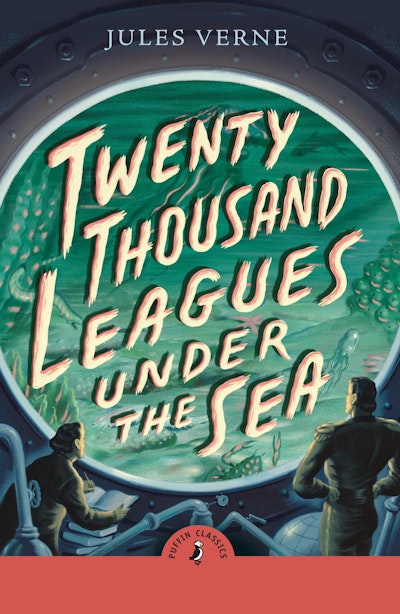
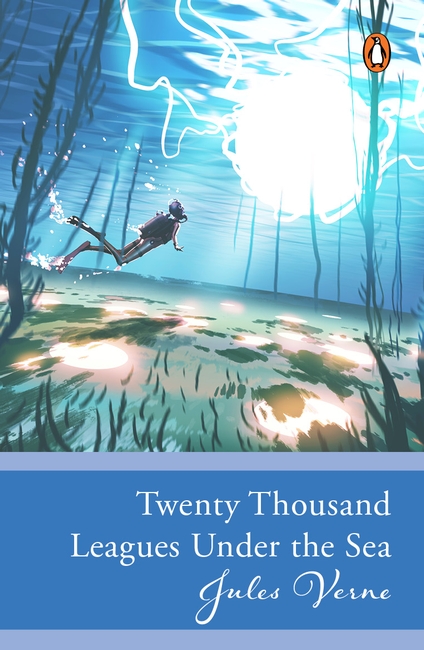
The Nautilus becomes a closed environment, completely separated from the world above the surface. Under Captain Nemo’s guidance, the submarine dives into regions of the sea never before explored by humans. Aronnax gains the opportunity to observe a rich marine ecosystem, from vast coral reefs and colorful schools of fish to strange creatures living in the eternal darkness of the deep. Alongside this beauty are constant dangers: storms, drifting ice, sea monsters, and fierce confrontations between the Nautilus and surface vessels.
Throughout the journey, Captain Nemo emerges as a central and enigmatic figure. He is a brilliant scientist who has mastered the ocean through the Nautilus, while at the same time severing all ties with human society. Nemo regards the sea as his only homeland, a place where he finds absolute freedom and submits to no authority. Yet behind his cold and decisive demeanor lies a painful past that has filled him with deep resentment toward the world above.
The three “captives” aboard the Nautilus respond differently to their situation. Aronnax is fascinated by the unprecedented scientific knowledge he encounters; Conseil accepts his fate with calm composure; while Ned Land constantly seeks escape, longing to return to life on land. These differences create subtle tensions, reflecting the conflict between knowledge, order, and the instinct for survival.
The journey across multiple oceans is not merely a sequence of adventurous events, but gradually reveals the inner conflicts of Captain Nemo. His decisive, sometimes ruthless actions expose the fragile boundary between freedom and extremism, between ideals and hatred. The climax of the story places the characters in life-and-death situations, forcing them to confront their own limits and the true value of freedom.
At the conclusion of the novel, Jules Verne offers no complete explanation of Captain Nemo’s fate, leaving many questions unresolved. The journey of twenty thousand leagues under the sea comes to an end, but the questions about humanity, knowledge, and the cost of freedom continue to resonate in the reader’s mind.
3. Thematic and artistic value
The desire for exploration and the scientific spirit
One of the core values of Twenty Thousand Leagues Under the Sea lies in its celebration of the desire to explore the world through knowledge and reason. Jules Verne does not construct the story as a series of random adventures, but grounds the entire underwater journey in a relatively rigorous scientific framework for his time. The descriptions of marine life, ocean geography, currents, and the structure of the Nautilus demonstrate serious research and reflect the nineteenth century’s faith in the power of science.
Through the character of Professor Aronnax, the novel portrays humanity’s engagement with nature through observation, documentation, and understanding, rather than mere conquest or exploitation. In the story, the ocean is not an entity to be subdued, but a vast world to be studied and respected. This approach allows the novel to transcend the limits of a purely adventurous tale.
Freedom and the cost of severance
Alongside its scientific spirit, Twenty Thousand Leagues Under the Sea raises the issue of freedom, an ideal that carries inherent contradictions. Captain Nemo embodies the desire to escape human society entirely and to exist in complete independence. For Nemo, the sea represents a realm free from oppression, political power, and social constraints.
However, the freedom Nemo pursues does not lead to true liberation. His complete break from the world above results in isolation and self-imposed confinement within the closed space of the Nautilus. Through this, Jules Verne suggests that freedom, when pushed to extremes, can become another form of imprisonment. Humanity cannot exist entirely apart from community without paying a price.
Humanity in the face of vast nature
The novel constantly places humanity in direct confrontation with the ocean, a space that is immense, mysterious, and beyond total control. Despite the Nautilus symbolizing technological progress, it repeatedly finds itself endangered by natural forces. This underscores the idea that, regardless of scientific advancement, humans remain only a small part of the natural order.
Through the underwater journey, Jules Verne emphasizes human limitations and warns against the illusion of dominating nature. This perspective retains lasting relevance, especially in the modern context, where humanity increasingly faces the consequences of excessive exploitation of the natural environment.
The art of description and spatial construction
One of the novel’s most notable artistic achievements is its vivid and convincing construction of the underwater world. Jules Verne employs precise, visually rich language to depict the ocean, where light, color, and movement are described in detail without becoming excessive. The sea appears both magnificent and dark, alluring yet dangerous.
The underwater setting serves not merely as a backdrop, but as a force that shapes the characters’ psychology. The confined space of the Nautilus and the increasing depth of the ocean heighten the sense of isolation, highlighting inner conflicts, especially within Captain Nemo.
Character construction with depth
In terms of character development, Jules Verne created one of the most memorable figures in world literature: Captain Nemo. This character is not portrayed in a simplistic manner, but is composed of multiple, conflicting layers. Nemo is both a rational scientist and a man deeply shaped by past trauma. This internal contradiction makes him vivid and resistant to reduction into a simple moral category.
The other characters, Aronnax, Conseil, and Ned Land, while less psychologically complex, play essential roles in balancing the narrative structure. Each represents a distinct attitude toward life, helping to clarify the novel’s central themes.
The fusion of science and literature
The artistic value of Twenty Thousand Leagues Under the Sea also lies in its harmonious fusion of science and literature. Jules Verne neither allows scientific detail to overwhelm artistic expression nor sacrifices plausibility for pure fantasy. This balance contributes to the novel’s enduring appeal and intellectual depth.
4. Notable quotations
“‘The sea is everything. It covers seven tenths of the terrestrial globe. Its breath is pure and healthy.’”
“‘The sea is a vast desert, where man is never truly alone, for life teems on every side.’”
“‘I no longer belong to the human world. I have severed all ties with it forever.’”
“‘The sea does not belong to the weak. It opens only to those who possess knowledge and patience.’”
“‘Man truly understands his limits only when standing before spaces beyond his control.’”
“‘Nature does not oppose man, but it never submits to him.’”
“‘Science is not meant to dominate, but to explore and to understand.’”
“‘In the depths of the ocean, all fame and power on land become meaningless.’”
“‘Man may master machines, but he can never fully master the sea.’”
“‘The silence of the ocean can sometimes be more terrifying than the fiercest storms.’”
5. Suitable readers and effective reading advice
Twenty Thousand Leagues Under the Sea can be approached by a wide range of readers, but it is particularly suitable for those who seek depth rather than merely fast-paced adventure. Students may read the novel as a means of expanding their knowledge of science, geography, and exploratory thinking. For adult readers, the book offers reflections on freedom, human limitations, and the relationship between individuals and society.
The novel is especially appealing to readers who enjoy classic literature, foundational science fiction, or works that place humanity in relation to the natural world. However, readers seeking rapid pacing and constant climaxes may find the book demanding, particularly in its detailed descriptions of marine life.
To read Twenty Thousand Leagues Under the Sea effectively, it is best to approach it slowly and selectively. Rather than rushing through the entire journey, readers should pay attention to how the author constructs space, character, and ideas. Reading in segments and reflecting on Captain Nemo’s actions and choices can help uncover the deeper layers of meaning. Placing the novel within its nineteenth-century scientific and historical context also enriches the reading experience.
6. Conclusion
Twenty Thousand Leagues Under the Sea is not merely an imaginative adventure, but a novel of enduring intellectual value. Through the underwater journey, Jules Verne creates a space in which humanity confronts knowledge, nature, and its own limitations. The sea in the novel functions both as an object of exploration and as a mirror reflecting humanity’s deepest aspirations and conflicts.
The novel’s lasting significance lies not in its visionary scientific predictions, but in the questions it continues to pose. How far can humanity go through knowledge? Does true freedom exist in complete severance? Where is the boundary between conquest and understanding? These questions allow Twenty Thousand Leagues Under the Sea to transcend its historical moment and remain a classic worthy of reading, reflection, and rereading.