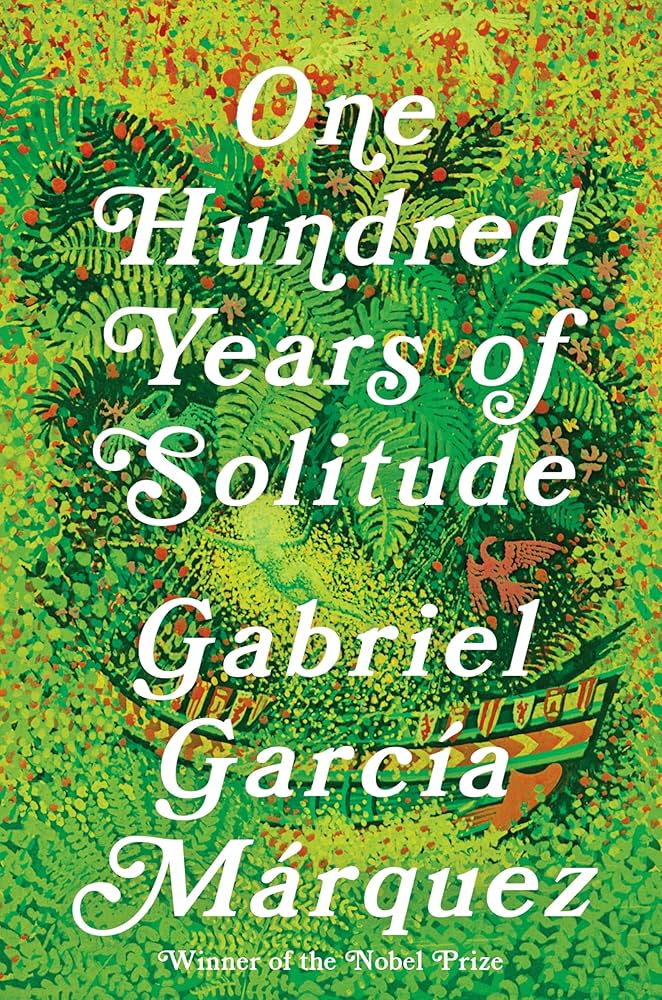
There are books that, once finished, leave readers remembering only the plot. But there are also works that feel like stepping out of a long dream, where reality and fantasy blend together until the boundary between them almost disappears. One Hundred Years of Solitude by Gabriel García Márquez is one of those rare novels.
Far more than a story about a family spanning multiple generations, the novel also feels like a condensed history of Latin America itself, where war, love, ambition, violence, memory, and solitude exist within an endless cycle. Since its publication in 1967, One Hundred Years of Solitude has become the defining masterpiece of magical realism and is widely regarded as one of the greatest novels of the twentieth century.
What makes the book extraordinary is not simply how strange or fantastical its events are, but the way Gabriel García Márquez makes the impossible feel completely natural. The dead return to speak with the living. A young woman ascends into the sky in broad daylight. An entire town suffers from insomnia so severe that people begin to lose their memories. Yet beneath all of these magical and surreal elements lies something deeply human: the loneliness that quietly exists within every person.
Perhaps that is why, even after nearly six decades, One Hundred Years of Solitude continues to captivate, unsettle, and haunt millions of readers around the world long after they turn the final page.
1. Gabriel García Márquez and the Journey Behind One Hundred Years of Solitude, the Novel That Changed World Literature
Gabriel García Márquez, the writer who transformed memory and reality into literary mythology
When discussing the most influential writers of the twentieth century, Gabriel García Márquez is almost always among the very first names mentioned. He was not only one of the greatest literary figures in Colombia and Latin America, but also an author who fundamentally changed the way the world viewed modern fiction.

Gabriel José de la Concordia García Márquez was born on March 6, 1927, in the small town of Aracataca, Colombia, and passed away in 2014 in Mexico City, Mexico. Readers around the world affectionately knew him by the nickname “Gabo.”
The experiences of García Márquez’s childhood deeply shaped his entire literary career. He grew up in his grandparents’ house, a place filled with folk tales, local legends, superstition, wandering spirits, and memories of the civil wars that had scarred Colombia.
His grandfather, a former colonel who had fought in war, often told him stories about politics, violence, and the turbulent history of the country. Meanwhile, his grandmother had a completely different storytelling style. She spoke about ghosts, omens, and supernatural events with absolute calmness, as though such things were part of everyday life.
Years later, García Márquez admitted that it was his grandmother’s way of telling stories that became the foundation for the magical realism that would later define his writing.
As he grew older, García Márquez initially studied law to satisfy his family’s expectations. However, he soon realized he did not belong on that path. He eventually abandoned his legal studies to pursue journalism and writing, despite the financial hardships that followed.
During the early years of his career, García Márquez worked many different jobs just to survive. There were periods when he lived in severe poverty, yet he continued writing with the belief that literature was not merely about telling stories, but about revealing the deepest truths of human nature and history.
What made Gabriel García Márquez unique was the way he portrayed reality. He created worlds where memory, history, superstition, love, and solitude blended together so naturally that readers could no longer distinguish between reality and myth.
In 1982, Gabriel García Márquez was awarded the Nobel Prize in Literature for his extraordinary contributions to world literature, particularly for pioneering magical realism as one of the most influential literary styles of the twentieth century.
A literary career shaped by magical realism and the unique voice of Gabriel García Márquez
Before One Hundred Years of Solitude was published, Gabriel García Márquez had already spent years quietly building his literary reputation through important works such as Leaf Storm, No One Writes to the Colonel, In Evil Hour, as well as his acclaimed journalistic writing.
However, during the early stages of his career, García Márquez was still relatively unknown outside Latin America. It was not until the publication of One Hundred Years of Solitude in 1967 that his writing truly exploded onto the international literary scene and became a major turning point in world literature.
What made García Márquez’s fiction so distinctive was his use of magical realism, a style in which the most extraordinary and impossible events are narrated with calmness and complete naturalness.
In his world, the dead return to speak with the living. A young woman ascends into the sky in broad daylight. An entire town loses its memory because of a plague of insomnia. Yet no one within the story treats these events as strange or unbelievable.
For García Márquez, magic was never meant to shock the reader. Instead, it existed as a natural extension of everyday life.
The magical realism in his work was also far more than a literary technique. It became a way for him to portray the social realities and historical experiences of Latin America, a region shaped by war, dictatorship, poverty, superstition, and centuries of political turmoil.
Many literary critics believe García Márquez achieved something very few writers ever could: he transformed history into myth while simultaneously making myth feel as real and human as ordinary life.
Beyond their artistic brilliance, García Márquez’s works have influenced generations of writers across the world. Even today, he is still widely regarded as the greatest symbol of modern Latin American literature and one of the most important authors of the twentieth century.
The Birth of One Hundred Years of Solitude and the Moment That Changed Literary History
The creation of One Hundred Years of Solitude has become almost legendary in the history of world literature, because the story behind the novel feels just as extraordinary as the world of Macondo that Gabriel García Márquez created.
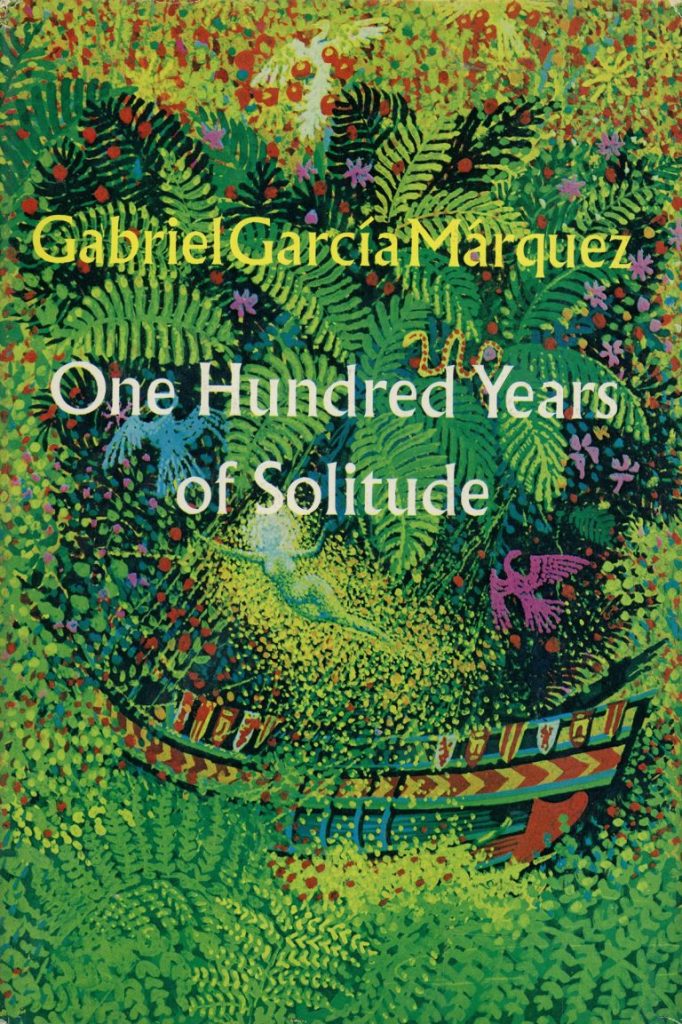
According to various accounts, including García Márquez’s own recollections, the idea for the novel came to him in 1965 while he was driving with his family to Acapulco. In the middle of the trip, he suddenly imagined the now-famous opening sentence of the novel, and in that instant, the entire world of Macondo appeared vividly in his mind. The inspiration struck him so powerfully that he immediately turned the car around and returned home to begin writing. Years later, García Márquez admitted that he had spent nearly twenty years unconsciously preparing for that book, but only in that moment did everything finally come together.
For the next eighteen months, Gabriel García Márquez almost completely withdrew from the outside world in order to finish the manuscript. He devoted himself entirely to writing, abandoning work opportunities and accepting severe financial hardship for his family. At one point, life became so difficult that his wife, Mercedes Barcha, reportedly sold household belongings, borrowed money, and did everything she could to allow him to continue writing until the final page was completed.
That quiet sacrifice ultimately helped give birth to one of the greatest literary masterpieces of the twentieth century.
In 1967, One Hundred Years of Solitude was officially published under its original Spanish title, Cien años de soledad. Almost immediately after its release, the novel created an enormous sensation in literary circles. Readers were drawn into Macondo, a place both magical and deeply human, where history, war, miracles, love, and tragedy blended together in a way that modern literature had rarely seen before.
The success of the novel far exceeded even García Márquez’s own expectations. Within a short time, One Hundred Years of Solitude became a global literary phenomenon, translated into dozens of languages and selling tens of millions of copies around the world. The novel not only established Gabriel García Márquez as one of the greatest writers of the twentieth century, but also helped bring Latin American literature onto the world literary stage.
Even today, One Hundred Years of Solitude remains the defining work of Gabriel García Márquez’s career and is widely regarded as one of the most influential novels ever written.
2. The Journey of the Buendía Family and the Tragedy of One Hundred Years of Solitude
One Hundred Years of Solitude follows the seven generations of the Buendía family in Macondo, a fictional town isolated from the rest of the world. Yet beyond the story of a single family, Gabriel García Márquez is in fact crafting a sweeping allegory of history, memory, time, and the repeating cycles of human tragedy that seem impossible to escape.
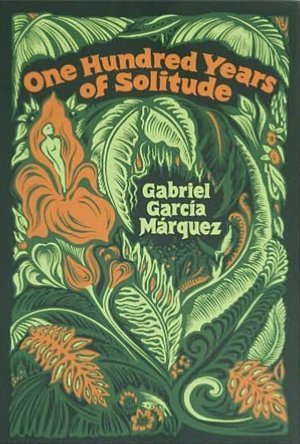
The story begins with José Arcadio Buendía and his wife Úrsula Iguarán, who leave their hometown after a murder related to family honor. Together with a group of settlers, they cross swamps, forests, and uncharted lands in search of a new place to live. After a long and arduous journey, they finally settle and found Macondo, a place that initially appears like a pure, untouched paradise, completely detached from the modern world. At this early stage, there is no war, no politics, and no struggle for power. Life unfolds slowly, peacefully, and with an almost mythical sense of innocence.
However, Macondo soon becomes the stage for José Arcadio Buendía’s growing obsession with knowledge and the secrets of the universe, especially after meeting Melquíades, a mysterious gypsy who brings strange inventions such as magnets, telescopes, alchemy, and blocks of ice. These seemingly magical discoveries open an entirely new world to him, and he gradually becomes consumed by experiments and intellectual pursuits that aim to uncover the mysteries of time and existence. Over time, this obsession isolates him from his family and ultimately drives him into madness.
From this founding generation onward, the Buendía family expands across multiple generations, marked by the recurring use of names such as José Arcadio, Aureliano, and Amaranta. This repetition is not accidental; it creates the sense that the family’s destiny is trapped in a circular pattern with no escape. Each new generation appears to inherit not only names, but also personality traits, mistakes, and tragedies, as if history is endlessly repeating itself in different forms.
One of the most prominent figures in the novel is Colonel Aureliano Buendía, the son of José Arcadio Buendía. Initially a quiet and introspective man, he becomes the leader of numerous uprisings during Colombia’s civil wars, driven by ideals of social change and resistance against injustice. Yet after years of endless conflict, Aureliano comes to realize that war brings no real meaning or resolution. Power, ideology, and violence ultimately leave him even more isolated, making him a symbol of the failure of political idealism and the profound solitude of human existence within history.
While the Buendía family is consumed by personal tragedies, Macondo itself also undergoes dramatic transformation. From an isolated settlement, it gradually becomes exposed to the modern world with the arrival of railways, technology, and commerce, followed by foreign companies exploiting labor and natural resources. One of the most significant turning points is the arrival of a banana company, a direct reflection of foreign capitalist intervention in Latin America during that era. The workers in Macondo suffer exploitation, leading to a massive strike that ends in a brutal massacre inspired by the real historical Banana Massacre in Colombia in 1928. What is most disturbing is not only the violence itself, but the way its memory gradually disappears, as if the event had never taken place.
Alongside war and social upheaval, the novel is filled with tragic love stories that span generations of the Buendía family. The characters constantly seek love, yet repeatedly fall into relationships marked by obsession, loneliness, or irreversible mistakes. The family is also haunted by the recurring fear that incestuous marriages will result in a child born with a pig’s tail, a symbolic curse representing decay and the inevitable decline of the bloodline. Despite this fear, successive generations continue to repeat the same choices as their ancestors, as though they are unable to escape a predetermined fate.
One of the most famous and symbolic episodes in the novel is the insomnia plague that spreads across Macondo. At first, the inhabitants simply lose the ability to sleep, but over time they begin to lose their memories and forget the names of everyday objects. To survive, they label everything around them in an attempt to preserve meaning. This image is often interpreted as a powerful metaphor for the erosion of historical memory and cultural identity over time.
In the final section of the novel, Aureliano, the last descendant of the Buendía family, finally deciphers the mysterious manuscripts left behind by Melquíades years earlier. He discovers that the entire history of the Buendía family, from its beginning to its downfall, had already been foretold and written in those manuscripts long before it unfolded. In the very moment this truth is revealed, Macondo is swept away by a violent wind, vanishing from the world as if it had never existed.
This ending elevates One Hundred Years of Solitude beyond the story of a single family. It becomes not only a lament for the collapse of a dynasty, but also a profound meditation on time, history, memory, and the inescapable solitude that defines the human condition.
3. Analysis of One Hundred Years of Solitude: A Masterpiece of Solitude, Memory, and the Cyclical History of Humanity
Some novels are remembered for their compelling plots. Others endure because of their unforgettable characters. Yet One Hundred Years of Solitude by Gabriel García Márquez operates on an entirely deeper literary level. It is not merely the story of the Buendía family or the fictional town of Macondo, but rather an epic meditation on history, memory, time, and the solitude that quietly defines human existence. As the reader moves deeper into the novel, it becomes increasingly clear that beneath its magical and surreal surface lies a painful truth about human nature: the way people love, lose, and endlessly repeat the same mistakes across generations.
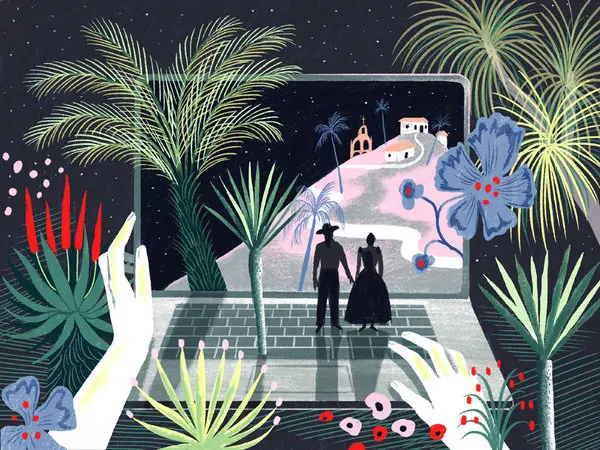
One of the most striking features of the novel is its use of magical realism, a literary mode that established García Márquez as one of the most influential writers of the twentieth century. In Macondo, the impossible is presented with complete naturalness. The dead return to speak with the living, a woman of extraordinary beauty ascends into the sky in broad daylight, and a town is struck by an insomnia plague so severe that its inhabitants begin to lose their memories. Yet none of these events are treated as extraordinary within the narrative. García Márquez recounts them in a calm, almost matter-of-fact tone, as if they are entirely ordinary occurrences.
This narrative approach is precisely what makes the novel so captivating. The reader does not feel as though they are entering a fantasy world, but rather witnessing reality through a different lens. The magical elements are not present merely to create wonder; instead, they reflect the lived reality of Latin America, where war, superstition, violence, religion, and politics have historically intertwined to the point where the boundary between the real and the unreal becomes blurred. García Márquez once explained that he simply told stories the way his grandmother used to tell them, which may explain why every strange event in Macondo feels so grounded, intimate, and emotionally convincing.
However, if magical realism forms the visible structure of the novel, solitude is its true emotional core. Across seven generations of the Buendía family, nearly every character is marked by a distinct form of isolation. José Arcadio Buendía becomes consumed by his obsession with scientific discovery and the secrets of the universe. Colonel Aureliano Buendía finds himself isolated amid endless wars, political ideals, and ultimately meaningless struggles. Amaranta lives in emotional solitude shaped by unfulfilled love and lifelong regret. Fernanda, meanwhile, is trapped within the rigid expectations of aristocratic identity, alienated from the changing world around her.
What is most tragic is that these characters constantly long for connection, yet gradually distance themselves from one another. They live together but fail to understand each other. They love one another but repeatedly cause harm. They attempt to escape their destinies, only to find themselves reenacting the same patterns as their ancestors. As the story progresses, solitude is no longer just an individual emotion but begins to feel like a generational curse embedded within the Buendía lineage.
Another defining aspect of the novel is its unique treatment of time. Unlike traditional narratives that follow a linear progression, time in Macondo functions more like a closed circle. Generations repeat not only names but also personalities, choices, and tragedies. Love, war, and death reappear in familiar forms, suggesting that history is predetermined and inescapable. This cyclical structure reinforces the idea that human experience is not a straight path forward, but rather a continuous return to familiar patterns.
This idea reaches its peak in the moment when Aureliano deciphers the final manuscripts left by Melquíades. He discovers that the entire history of the Buendía family, from its origin to its destruction, had already been written in advance. This revelation is not only shocking but deeply unsettling. It raises a profound question that echoes throughout the novel: can humanity truly learn from history, or are we doomed to repeat it in endlessly renewed forms?
Beyond its philosophical depth, Macondo also functions as a symbolic representation of Latin America as a whole. What begins as an isolated and innocent settlement is gradually drawn into war, politics, capitalism, and foreign exploitation. The arrival of the banana company mirrors the historical reality of early twentieth-century Colombia, particularly the 1928 Banana Massacre, in which thousands of striking workers were violently suppressed by the military.
Perhaps the most disturbing aspect is that, after such a tragedy, collective memory begins to fade. The inhabitants of Macondo slowly forget what has happened, as if history itself were being erased. This becomes one of the novel’s most powerful warnings: when memory disappears, history is destined to repeat itself in even more devastating forms.
More than six decades after its publication, One Hundred Years of Solitude remains one of the greatest novels in world literature. Its greatness does not lie in complexity or difficulty, but in its ability to reach the deepest layers of human experience: love, memory, time, family, and an inescapable sense of solitude. Macondo may be a fictional town in Latin America, but the feelings of alienation, disconnection, and helplessness in the face of time are universally recognizable.
Ultimately, the novel is not just something to be read, but something to be experienced, lingering in the mind long after the final page has been turned.
4. Memorable Quotes from One Hundred Years of Solitude: When Every Sentence Carries the Weight of Memory and Solitude
One of the reasons One Hundred Years of Solitude has become an immortal masterpiece of world literature is not only its vast and multi-generational storyline, but also the deeply poetic language of Gabriel García Márquez.
His writing style is uniquely delicate yet haunting, beautiful yet always touched by an undercurrent of sadness. Many sentences appear simple at first glance, but the more one reflects on them, the more they reveal emotional depth and philosophical weight that linger long after reading.
In One Hundred Years of Solitude, dialogues and monologues are not merely narrative tools. They often feel like prophecies about human destiny, time, memory, love, and the inescapable solitude that defines existence. This is why so many lines from the novel have been quoted and cherished by readers around the world for decades.
“There is always something left to love.”
This is one of the most tender and luminous lines in the novel. Amid the suffering, loss, and decay of Macondo, it stands like a quiet spark of hope. No matter how harsh life becomes, there is always something left within human existence that can still be loved or cherished.
“The secret of a good old age is simply an honorable pact with solitude.”
This line captures the emotional essence of the entire novel. García Márquez suggests that solitude is not only pain but also something that must eventually be accepted as part of life. The calmness of the statement makes it even more haunting, revealing the quiet resignation hidden beneath its surface.
“No matter what, nobody can take away the dances you’ve already had.”
A beautifully nostalgic reflection on memory and time. People may lose youth, love, or happiness, but what has been lived cannot be erased. It remains as part of who they are, carrying both warmth and a sense of irreversible longing.
“Things have a life of their own. It’s simply a matter of waking up their souls.”
This quote expresses the essence of magical realism in García Márquez’s writing. In his world, even objects seem to possess memory and spirit. This idea transforms Macondo into a place that feels both mythical and deeply real at the same time.
“Races condemned to one hundred years of solitude did not have a second opportunity on earth.”
This is one of the most famous and devastating closing lines of the novel. It is not only a conclusion to the Buendía family’s story but also a broader reflection on history, destiny, and human solitude. Even after finishing the book, its sense of finality continues to echo in the reader’s mind for a long time.
5. Personal Reflection on One Hundred Years of Solitude: A Novel That Draws Readers into a Labyrinth of Memory and Solitude
Reading One Hundred Years of Solitude is an experience that is difficult to capture in a few simple words. This is not the kind of novel that can be read quickly and fully understood at once. Gabriel García Márquez creates a world that feels like a labyrinth of memory, where the deeper the reader ventures, the more overwhelming and mesmerizing it becomes. From the very first chapters, I felt as though I had entered a place that was both unfamiliar and strangely intimate. The enormous cast of characters, along with names like José Arcadio and Aureliano repeating across generations, often forced me to pause and keep track of who was who. Yet the further I read, the more I realized that this repetition was entirely intentional.
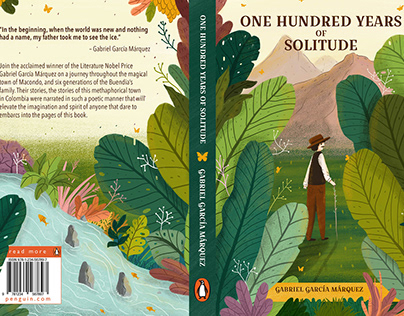
García Márquez deliberately constructs this sense of recurrence to make readers feel the cyclical nature of history and destiny. The generations of the Buendía family may appear different on the surface, but they are ultimately drawn toward the same familiar tragedies: solitude, obsession, unfulfilled love, and a painful disconnection from the world around them. Because of this, One Hundred Years of Solitude becomes far more than the story of a single family. It feels like a reflection of humanity itself, where people constantly try to escape the mistakes of the past, only to unconsciously repeat them in new forms.
What affected me most about the novel was not necessarily its famous magical realist moments, such as people ascending into the sky or ghosts returning to speak with the living. What stayed with me long after finishing the book was the quiet sadness flowing beneath the entire story. At the beginning of the novel, Macondo appears beautiful, untouched, and filled with hope, almost like a paradise isolated from the chaos of the outside world. But as the story progresses, everything slowly decays, disappears, and is swallowed by time as though it had never existed at all. The feeling is similar to watching a precious memory gradually fade while knowing there is no way to preserve it forever.
García Márquez writes about war, love, power, and history, but at its core, the novel is ultimately about human loneliness. The characters spend their lives searching for something to fill the emptiness within them. Some pursue knowledge, others chase power, while some seek salvation through love or desire. Yet almost none of them truly escape their sense of isolation. They live beside one another without truly understanding each other, love each other while continuing to inflict pain, and often become even more lonely the harder they try to connect.
There were passages in One Hundred Years of Solitude so beautiful that I had to stop reading simply to revisit them again. Not because the language was overly complex or philosophical, but because it felt deeply human and emotionally honest. García Márquez possesses a rare ability to transform enormous themes such as history, time, and fate into something intimate and profoundly personal. For that reason, the novel never feels “great” in a distant or intimidating way. Instead, it feels like a long and melancholic story about humanity, memory, and the fragile passage of time.
Perhaps this is what truly makes One Hundred Years of Solitude a masterpiece. Its greatness does not come from being difficult or famous, but from the way it reaches emotions that almost everyone has experienced: loneliness, regret, memory, love, and the fear that time will eventually erase everything. It is the kind of book that reveals different meanings each time it is read at a different stage of life. And that may be why One Hundred Years of Solitude is not simply a novel to be read once, but a work that lingers in the reader’s mind for years afterward.
6. Closing One Hundred Years of Solitude: A Masterpiece for Those Who Seek to Understand Humanity and Time More Deeply
One Hundred Years of Solitude is not only the most famous novel by Gabriel García Márquez, but also the work that transformed the way the world viewed Latin American literature and magical realism. Through the story of the Buendía family across seven generations in the fictional town of Macondo, García Márquez does far more than recount the rise and fall of a family dynasty. He writes about history, memory, time, and above all, the solitude that quietly exists within every human being.
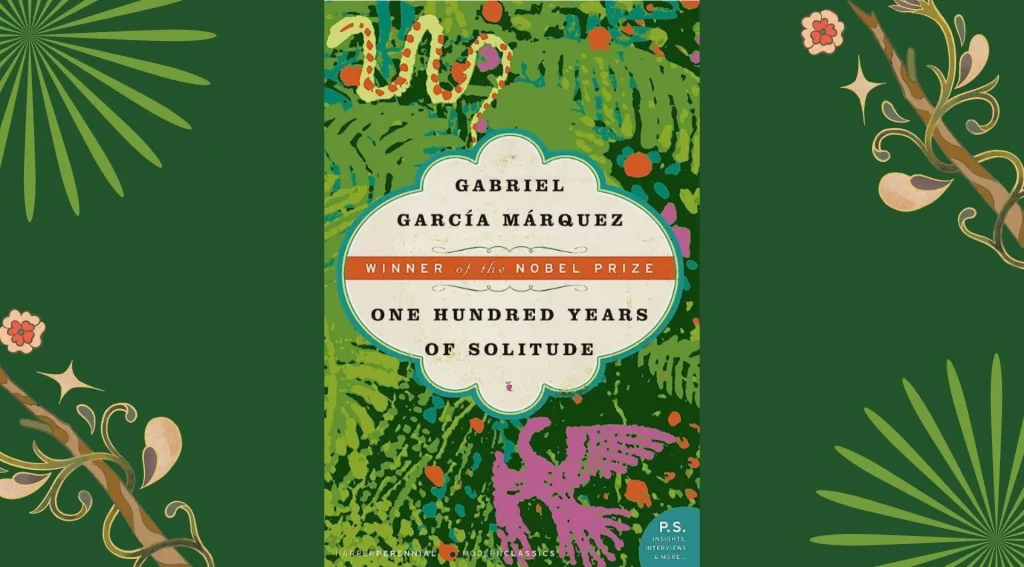
What makes One Hundred Years of Solitude truly extraordinary is the way it remains emotionally authentic despite being filled with magical and surreal elements. Human beings constantly long to love and be loved, yet they repeatedly lose one another. We believe we have learned from history, only to repeat the same mistakes in different forms. And in the end, time washes almost everything away, leaving behind only fragments of memory lingering in the mind.
This may not be an “easy” novel for every reader. Its vast multi-generational cast, nonlinear storytelling, and dense layers of symbolism require patience and concentration. Yet that is precisely what makes the experience so rewarding. The more slowly one reads and reflects on the novel, the more its extraordinary depth begins to reveal itself through every detail and every sentence García Márquez writes.
One Hundred Years of Solitude is especially suited for readers who appreciate literary fiction rich in psychological depth and philosophical reflection. If you enjoy novels filled with symbolism, magical realism, and ideas that continue to resonate long after the final page, this is undoubtedly a book worth reading. It is also an essential work for anyone interested in world literature, Latin American culture, or storytelling that feels entirely different from most contemporary novels.
Perhaps the most unforgettable thing García Márquez leaves behind after One Hundred Years of Solitude is the lingering awareness of time and human solitude. After all the wars, passions, ambitions, and historical upheavals within the novel, what ultimately remains is a quiet question that echoes in the reader’s mind:
Are human beings truly capable of escaping the cycles of history and solitude, or are we simply destined to relive the experiences of previous generations in different forms?
7. References
[1] One Hundred Years of Solitude, G. García Márquez, trans. G. Rabassa. New York, NY, USA: Harper Perennial Modern Classics, 2006.
[2] Gabriel García Márquez, Nobel Prize Biography. NobelPrize.org. [Online]. Available: Nobel Prize Official Website
[3] Leaf Storm, G. García Márquez, trans. G. Rabassa. New York, NY, USA: Harper Perennial, 2005.
[4] No One Writes to the Colonel, G. García Márquez, trans. J. S. Bernstein. New York, NY, USA: Harper Perennial Modern Classics, 2005.
[5] M. Bell-Villada, Gabriel García Márquez: The Man and His Work, revised ed. Chapel Hill, NC, USA: University of North Carolina Press, 2010.
[6] G. Martin, Gabriel García Márquez: A Life. New York, NY, USA: Vintage Books, 2009.
[7] Banana Massacre, Encyclopaedia Britannica. [Online]. Available: Encyclopaedia Britannica – Banana Massacre
[8] J. Franco, The Cambridge Introduction to Spanish-American Literature. Cambridge, U.K.: Cambridge University Press, 1994.