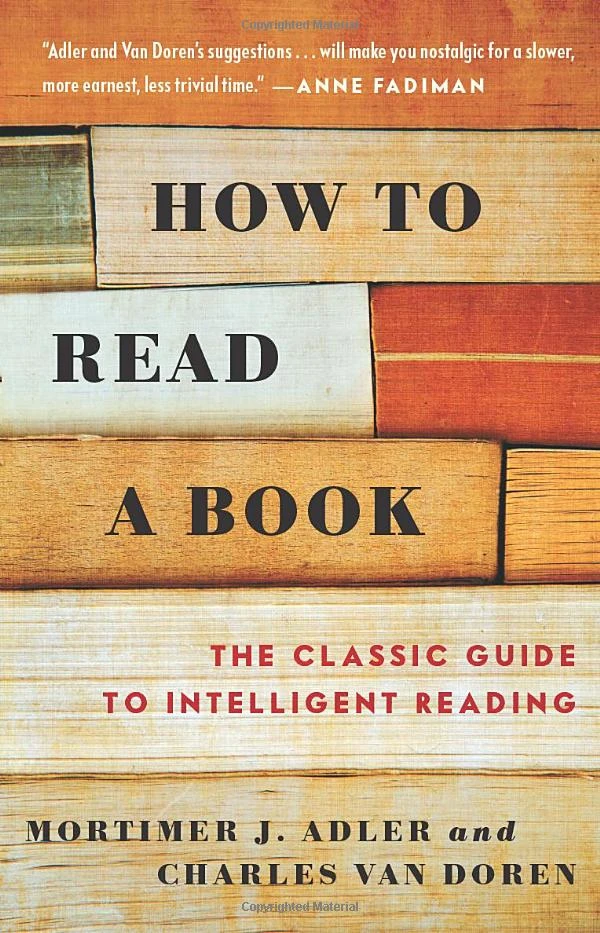
The proliferation of digital platforms has given rise to a notable phenomenon: content about books has never been more widespread or accessible. From personal blogs and short-form videos to podcasts and long-form social media essays, sharing reading experiences has become a mass activity. A single book, within a short span of time, can be “interpreted” through hundreds – if not thousands – of different perspectives.
However, an abundance of content does not guarantee quality. Within the same informational space, works of genuine intellectual depth and critical rigor coexist with content that is superficial, derivative, or driven by commercial intent. When every voice has an equal capacity for amplification, the boundary between knowledge and noise becomes increasingly blurred.
In such a context, the question is no longer whether one should read book reviews, but rather how to distinguish between what is worth reading and what is not. The need for a framework of verification is not merely a practical skill, but an intellectual imperative – one that requires readers to actively establish their own standards of evaluation instead of passively consuming information.
1. CONCEPTUAL FRAMEWORK – “TRASH” VS. “GOLD” IN BOOK WRITING
The classification of a piece of writing about books as either “trash” or “gold” is often reduced to a simplistic binary: right – wrong, good – bad, like – dislike. However, such a reduction is not only imprecise but also obscures the true nature of critical discourse. Within the domain of knowledge, the value of a text is not determined by whether it is “absolutely correct,” but by the extent to which it contributes to the process of understanding: does it enable the reader to think more deeply, to reconsider assumptions, or to perceive what was previously taken for granted?

Conversely, “trash” in book criticism does not necessarily manifest as obvious error. A piece of writing may be entirely “safe” in terms of information – containing no misquotations or factual inaccuracies – yet still be devoid of value if it fails to generate any meaningful increase in understanding. Texts that merely retell the plot, paraphrase the author’s ideas, or recycle widely circulated interpretations without any intellectual processing function, in essence, as redundant intermediaries. They are not incorrect, but neither are they necessary. In an already saturated information ecosystem, this condition of being “correct yet empty” produces a more subtle form of noise: it creates the illusion of knowledge acquisition while, in reality, offering only diluted versions of existing ideas.
It is important to draw a clear distinction: summarizing or paraphrasing is not inherently without value. The issue lies in whether these operations are elevated into analysis. When a piece of writing stops at describing “what happens” without addressing “why it matters” or “how it functions,” it relinquishes its cognitive role and becomes merely a substitute for the reading experience itself. At this level, the writer no longer acts as an interpreter of meaning, but as a selective reproducer.
By contrast, “gold” in book criticism does not equate to absolute correctness or superficial erudition. A valuable piece of writing is one that demonstrates the capacity to organize thought – not merely presenting opinions, but constructing a coherent argumentative structure capable of supporting them. The writer does not simply “talk about” the text, but actively “works with” it: selecting details, analyzing language, unpacking structure, and, crucially, situating these elements within a conscious frame of reference. This frame – whether historical, cultural, philosophical, or aesthetic – provides depth to the reading, transforming a personal response into a position that can be examined, challenged, and extended.
The value of such writing does not lie in delivering definitive answers, but in expanding the space of thought. It may reveal layers of meaning previously overlooked, or compel the reader to reconsider what once seemed self-evident. In this sense, “gold” is not about closure, but activation – it does not simplify the problem, but renders it more complex in a meaningful way.
Within this context, a common misconception must be addressed: the conflation of value with popularity. In digital environments, where algorithms privilege shareability, content that is accessible, emotionally resonant, and easily consumable tends to gain disproportionate visibility. This creates a paradox: the more a piece of writing simplifies an issue, the more likely it is to become “viral,” while texts that demand intellectual effort from the reader are more likely to be overlooked.
Therefore, virality is not evidence of quality, but rather an indicator of consumability. A widely shared piece of writing may be fulfilling a need for confirmation rather than a need for understanding. It reinforces what the reader already believes, instead of challenging them to think differently. In contrast, genuinely valuable texts – which require concentration and the capacity to process complexity – rarely align with the mechanisms of rapid dissemination.
From this perspective, distinguishing between “trash” and “gold” is no longer a superficial evaluation of content, but an epistemic act. It requires the reader to move beyond surface indicators such as length, stylistic polish, or popularity, and to confront the essential question: does this text meaningfully transform the way one understands the work in question? If the answer is no, then regardless of its form, it remains merely another variation of “trash” within an increasingly complex information ecosystem.
2. CORE CRITERIA FOR EVALUATING A PIECE OF WRITING
Distinguishing between valuable and valueless writing cannot rely solely on subjective impression. It requires a structured set of criteria – not as rigid rules, but as analytical axes through which a text can be “dissected.” When applied consistently, such a framework does more than enable evaluation; it also helps shape content standards for knowledge-sharing platforms, particularly open ecosystems such as OpenDocShare.

2.1 Accuracy – a non-negotiable foundation
Accuracy is the minimum requirement, yet one that cannot be compromised. A piece of writing about a book must, first and foremost, remain faithful to the source text: quotations must be correct, contexts must not be distorted, and meanings must not be imposed where they do not exist.
However, accuracy extends beyond surface-level correctness. A text may quote every word precisely and still be “wrong” at the level of interpretation if those details are placed within a distorted frame of reference. In such cases, the error is no longer technical, but epistemic.
For a platform like OpenDocShare – where users are free to publish and share content – accuracy becomes a central condition for maintaining collective trust. Without mechanisms of self-verification from both writers and readers, the platform risks drifting into a state of “accumulated distortion,” where repeated minor inaccuracies gradually solidify into a form of accepted but unreliable knowledge.
2.2 Depth of understanding – distinguishing knowing from understanding
One of the most common misconceptions is the conflation of “knowing the content” with “understanding the work.” It is therefore essential to distinguish between three levels:
- Summary – recounting what happens.
- Interpretation – explaining what it means.
- Criticism – evaluating, questioning, and taking a position.
Much of the content on open platforms remains at the level of summary, yet is presented in a declarative tone that creates the illusion of depth. This is one of the primary sources of “intellectual noise”: information is consumed as if it has been processed, when in fact it remains raw.
A valuable piece of writing must move beyond summary and engage with the internal structure of the work: how meaning is constructed through imagery, symbolism, language, or ideological frameworks. This marks a shift from “content” to the “mechanism of meaning-making.”
Within the context of OpenDocShare, encouraging summary-level content alone reduces the platform to a repository of information. In contrast, prioritizing interpretive depth transforms it into a space for knowledge production – where each text not only repeats, but extends the meaning of the original work.h tri thức – nơi mỗi bài viết không chỉ lặp lại, mà còn phát triển thêm ý nghĩa của văn bản gốc.
2.3 Argumentative structure – organized thinking or fragmented opinion
A valuable piece of writing is anchored by a clear central thesis. All analysis, evidence, and examples revolve around clarifying or defending this thesis, forming a coherent logical structure in which each component is interdependent.
By contrast, many texts consist merely of fragmented observations: isolated opinions, unexplained quotations, and generalized conclusions lacking foundation. This is not argumentation, but the accumulation of impressions.
A key criterion here is verifiability. Every claim should be traceable: what evidence supports it, where it can be located, and whether it is open to challenge. When a text does not permit verification, it moves the domain of criticism and becomes purely subjective opinion.
For OpenDocShare, cultivating a community capable of argumentation is essential for long-term quality. A platform where users merely “express thoughts” will quickly become saturated. One where users “construct arguments” can gradually accumulate layers of meaningful knowledge.

2.4 Frame of reference – situating the work within its context
No literary work exists in isolation. Every text emerges from a historical moment, a literary tradition, and an underlying system of thought. Ignoring these dimensions leads to partial, and often distorted, interpretations.
A frame of reference may include:
- Historical and social context
- Literary movements or traditions
- Philosophical or ideological influences
- Intertextual relationships with other works
A valuable piece of writing is one that can situate the text within this network. In doing so, it not only explains the work itself, but also clarifies its position within a broader system of meaning.
In environments like OpenDocShare, where content is often highly individualized, the greatest risk is the “isolation of interpretation” – each reader constructs meaning independently without a shared grounding. Introducing a frame of reference creates a common space for dialogue, where interpretations can be compared, challenged, and refined.ạo ra một nền tảng đối thoại, nơi các cách đọc có thể so sánh, phản biện và phát triển.
2.5 Language – where thought becomes visible
Language is not merely a medium of expression, but a direct manifestation of thought. A well-structured argument is typically accompanied by language that is precise, clear, and capable of distinguishing between concepts.
Conversely, vague language, excessive ornamentation, or reliance on emotional expressions often signal a lack of substantive content. Phrases such as “deeply profound,” “extremely meaningful,” or “emotionally moving” – if not specified – function as substitutes for analysis rather than contributions to it.
A notable pattern emerges: the weaker the underlying thought, the more language tends to become exaggerated. This operates as a compensatory mechanism – in the absence of content, rhetorical effect is used to simulate value.
For OpenDocShare, establishing a norm of analytical language is crucial to elevating content quality. When users are encouraged to write with precision, differentiate concepts, and avoid empty generalities, the platform can gradually evolve from a space of expression into a space of structured thinking.
3. SIGNALS OF “TRASH” – HOW TO IDENTIFY LOW-VALUE WRITING
If “trash” in book criticism is not simply defined by error, then identifying it requires looking beneath surface language into the underlying structure of how a text operates. The indicators below rarely appear in isolation; more often, they converge, forming what can be described as “pseudo-knowledge content” – writing that retains the outer form of criticism while being stripped of its cognitive substance.

One of the most common manifestations is disguised summarization. In this form, the text reconstructs the entire plot, or a significant portion of it, often in considerable detail, creating an impression of thoroughness. What is missing, however, is the essential function of criticism: interpretation. The writer does not question the significance of details, analyze how the work functions, or advance any argument beyond what is immediately apparent. The result is a text that serves as a substitute for the reading experience itself – useful at a basic informational level, but entirely devoid of analytical value. In such cases, the reader’s time is spent consuming a condensed version of the work, rather than being guided toward a deeper understanding.
Another systemic indicator is the overreliance on personal emotion. Statements such as “I found it very good,” “this book moved me,” or “I was deeply impressed” are presented as conclusions rather than starting points for analysis. The issue is not the presence of emotion – which is a natural part of reading – but the absence of its processing. When the writer fails to explain why a particular element produces a certain emotional response, or what mechanisms within the text generate that effect, emotion remains an unexamined datum. In criticism, emotion only acquires value when it is transformed into insight; otherwise, it remains an immediate reaction with no capacity for communication or verification.
Closely related to this is the use of cliché and formulaic language. This form of expression functions as a substitute for thinking, where familiar phrases are deployed as ready-made units of meaning: “a profound work,” “a must-read book,” “a life-changing journey.” While such statements appear affirmative, they are informationally empty because they fail to specify anything concrete about the text. Cliché operates as a cognitive shortcut – instead of analyzing, the writer activates socially accepted linguistic patterns. The result is writing that may sound convincing, but offers no content that can be tested, examined, or expanded.
A more subtle form is derivative writing or paraphrased reproduction. In digital environments, where information circulates rapidly, it is inevitable that texts draw from prior sources. However, the distinction between reference and reproduction lies in the degree of intellectual processing. When a text merely rephrases existing ideas – even in different wording – without introducing new perspectives, structures, or analyses, it ceases to be a contribution and becomes part of a chain of recycled content. More critically, repeated recycling can create an illusion of validity: an idea that appears frequently may be mistaken for truth, even if it has never been rigorously examined.
Finally, a crucial indicator is the dominance of commercial intent. Promotional writing is typically structured to maximize positive impressions while minimizing any elements that might introduce doubt. The language tends to be assertive and absolute, lacking critical distance, and often conflates the value of the work with the writer’s personal experience. When the function of criticism – which requires multidimensional evaluation – is replaced by the function of marketing, the purpose of the text shifts. It no longer aims to deepen understanding, but to influence behavior, particularly consumption. In such cases, information ceases to function as a medium of knowledge and becomes an instrument of external objectives.
Taken together, these indicators converge on a single underlying absence: the lack of independent thought and cognitive processing. A piece of writing may be lengthy, stylistically polished, and emotionally expressive, yet still fall into the category of “trash” if it fails to perform the core function of criticism – organizing and advancing understanding. Recognizing these patterns is not only a way to avoid wasted attention, but also a foundational step in developing a more deliberate and self-aware mode of reading.
4. SIGNALS OF “GOLD” – HOW TO IDENTIFY HIGH-VALUE WRITING
If “trash” is defined by the absence of thought, then “gold” in book criticism is determined by the presence of thought – not in a purely emotional or impressionistic sense, but as something structured, self-aware, and verifiable. A valuable piece of writing does not merely convey information; it participates in the production of knowledge, where the writer becomes an active agent of interpretation.

First and foremost, the foundational marker of high-value writing is an independent perspective. This does not mean being different for the sake of difference, but rather the ability to form a position grounded in careful reading and sustained reflection. The writer does not simply reproduce established conclusions as a matter of cognitive habit, but subjects them to scrutiny: why does this interpretation exist, what assumptions underpin it, and could the text be understood differently? An independent perspective may ultimately align with dominant views, but such alignment must be the result of deliberate choice rather than inertia. It is precisely this intentionality that defines intellectual individuality – the distinction between a passive receiver and an active interpreter.
Second, a valuable text demonstrates clear engagement with the primary work itself. This is evident in how details are used: quotations function not as decoration, but as evidence; imagery is not merely mentioned, but analyzed; structure is not only described, but explained. When arguments are anchored in the text, they become open to verification and dialogue. Readers can return to the source to confirm or challenge the claims being made, and this verifiability establishes a form of rigor, even outside formal academic contexts. By contrast, writing that operates only at a general level lacks grounding, leaving its arguments diffuse and difficult to evaluate.
Another essential characteristic is systematic thinking. A valuable piece of writing is not a collection of disconnected observations, but a structured argument organized around a central thesis. Each paragraph, each piece of evidence, serves a specific function in advancing that thesis. This creates a continuous line of reasoning in which the reader does not merely receive information, but follows the development of an idea. Systematic organization not only enhances clarity, but also reflects the writer’s cognitive capacity – the ability to connect, prioritize, and direct information within a coherent framework.
In addition, “gold” writing often possesses the capacity to extend the problem space. It does not stop at explaining “what the work says,” but moves further: why does it matter, how does it relate to broader questions, and what alternative interpretations might exist? Such writing does not close the reading experience, but prolongs it – compelling the reader to continue thinking, and perhaps to reexamine their own assumptions. Its value lies not in the quantity of information it delivers, but in its ability to activate cognition. It does not merely transmit knowledge, but creates the conditions under which knowledge can continue to evolve.
Finally – and most decisively – is intellectual honesty. A valuable text does not attempt to impose absolute conclusions, but remains aware of its own limitations. The writer is willing to acknowledge uncertainty, unresolved interpretations, or aspects of the work that resist complete explanation. At the same time, they do not avoid confronting the weaknesses of the text itself, even when doing so complicates their argument. This form of honesty generates credibility, as it demonstrates that the writer is guided not by the need to be “right,” but by the commitment to understand.
Within the context of an open platform such as OpenDocShare, these indicators serve not only as tools for identifying quality, but as normative standards that can shape the community itself. When writers are encouraged to develop independent perspectives, engage directly with texts, and construct systematic arguments, the platform can gradually evolve from a space of personal expression into one of intellectual dialogue. Conversely, if these criteria are neither recognized nor prioritized, high-value content will be overshadowed by writing that is more easily consumed but lacking in depth.
In the long term, the value of OpenDocShare – or any knowledge platform – lies not in the sheer volume of content produced, but in the quality of the thinking it accumulates. A “gold” text, in this sense, is not only valuable in itself, but also functions as a point of reference, contributing to the elevation of standards across the entire ecosystem.
5. METHODS OF INFORMATION VERIFICATION
Distinguishing between valuable and valueless writing cannot rely solely on intuition or fragmented experience. It requires a conscious verification process, in which the reader actively examines the text rather than passively receiving it. This process is not aimed at uncovering an absolute truth, but at minimizing distortion and increasing the reliability of one’s understanding.

The foundational step is cross-checking with the original text. Any serious argument about a book must, in principle, be traceable back to the primary source. When a piece of writing presents a quotation, interpretation, or claim about a key detail, the reader must ask: does this actually exist in the original work, and if so, in what context does it appear? Many distortions do not arise from incorrect quotations, but from the extraction of details out of context, assigning them meanings they do not originally carry. Direct comparison restores the relationship between detail and totality – a decisive factor in evaluating the accuracy of interpretation.
The next step is multi-source comparison, a critical operation for identifying repetition and assessing originality. When engaging with multiple texts about the same work, the reader can observe two patterns: convergence and divergence. Convergence – where multiple sources present similar interpretations – may indicate a widely accepted reading, but it may also result from uncritical replication. Divergence – where different interpretations emerge – is often a sign of independent thinking. The key is not to determine which position is “correct,” but to assess whether a given text contributes something new to the broader discourse or merely reproduces existing ideas.
Another essential step is analyzing the author’s intent. No piece of writing is produced in a state of complete neutrality; every text serves a purpose. The writer may aim to share knowledge, build personal authority, attract attention, or fulfill commercial objectives. These motivations directly shape how information is selected, emphasized, or omitted. For example, promotional content tends to highlight strengths while minimizing weaknesses, whereas more scholarly writing is often more balanced in its evaluation. Identifying intent does not invalidate a text, but situates it within the appropriate context for assessment.
Alongside this is the need to maintain a habit of critical questioning. Each claim within a text should be “tested” through a series of inquiries: what evidence supports it, is that evidence sufficient, and could the same detail be interpreted differently? More importantly, one must identify implicit assumptions – premises that remain unstated yet underpin the entire argument. A text may appear logically sound on the surface, but if its foundational assumptions are unexamined, the entire structure may be fragile. In this sense, critique is not an act of negation, but a method for stress-testing the robustness of thought.
Finally, it is crucial to recognize bias – an element that cannot be eliminated, but can be made visible and adjusted for. Bias may arise from personal experience, cultural background, ideological frameworks, or even market trends. A writer may unconsciously favor interpretations that align with their preexisting beliefs, or be influenced by dominant narratives within a community. When readers fail to detect these biases, they are more likely to accept information as objective truth. Conversely, once bias is recognized, readers can recalibrate their reception – not by eliminating its influence entirely, but by reducing its unconscious impact.
Taken as a whole, this verification process is not a rigid sequence of steps, but a cognitive habit that must be cultivated over time. In the modern information environment – where content is produced and disseminated at high speed – the absence of such a process leaves readers vulnerable to passive consumption, guided by surface-level signals. By contrast, when readers engage in active verification, each text ceases to be a mere source of information and becomes an object of analysis, comparison, and evaluation. At this point, reading moves beyond consumption and becomes an intellectual practice.
6. THE ROLE OF THE READER IN THE INFORMATION AGE
In an ecosystem where information is produced and distributed at a pace that exceeds the capacity of traditional control mechanisms, the role of the reader has undergone a fundamental transformation. In the past, content quality was largely safeguarded by institutional “gatekeepers” – publishers, academic journals, and critical establishments. In the digital environment, however, these mechanisms have become decentralized. The right to publish has been democratized, but at the same time, the responsibility for evaluation has been transferred. In this context, the reader is no longer the endpoint of information transmission, but the final filter that determines its value.

However, becoming a “filter” is not a natural state; it is a capacity that must be developed. This begins with the construction of independent evaluative standards. A reader cannot rely entirely on external indicators such as view counts, shares, or the superficial authority of the author, as these signals often reflect visibility rather than quality. Instead, readers must establish their own criteria: accuracy, analytical depth, logical coherence, and the ability of a text to expand understanding. More importantly, these criteria are not fixed; they must evolve in relation to the reader’s goals and level of comprehension. A piece of writing may be valuable within one context, yet insufficient as the reader’s standards become more refined.
Alongside the formation of standards is the cultivation of deep reading – a skill that is increasingly rare in an environment optimized for speed and convenience. Deep reading is not simply slow reading; it is processed reading: distinguishing between information and argument, identifying the structure of a text, comparing sources, and, most critically, maintaining a capacity for critique. A deep reader does not only ask “what does this text say,” but also “how does it say it,” “on what basis,” and “could it be understood differently?” This sequence of questions transforms reading from passive reception into an active engagement with the text.
At this level, the reader ceases to be a passive subject guided by content and becomes an active participant in the construction of meaning. This is particularly significant in open platforms such as OpenDocShare, where content is continuously produced without a clearly defined hierarchy of quality. When readers possess evaluative capacity, they not only protect themselves from low-value content, but also indirectly shape the informational ecosystem through their choices: what they read, what they trust, and what they share.
An important consequence follows: the quality of an information environment directly reflects the quality of its readers. If the majority of readers accept content that is easily consumable but lacking in depth, such content will continue to be produced and amplified. Conversely, if readers maintain high standards and clear discernment, valuable content gains the conditions necessary to survive and develop.
Thus, distinguishing between “trash” and “gold” is not merely an individual skill, but a constitutive element of a community’s intellectual culture. In this sense, readers do not simply consume knowledge; they participate in establishing its standards. When this role is carried out consciously, reading ceases to be an act of passive reception and becomes a form of intellectual practice – where each act of engagement carries with it a deliberate choice of value.
7. CONCLUSION – READING AS A CRITICAL ACT
Distinguishing between valueless and valuable writing is, ultimately, neither a matter of emotional reaction nor intuitive preference. It is the result of a structured evaluative process – one that requires the reader to mobilize multiple capacities simultaneously: comparison, cross-checking, analysis, and critique. In an environment where information is not only abundant but also rapidly circulating, this capacity is no longer supplementary; it becomes a foundational condition for engaging with knowledge in an effective and responsible manner.

What must be reestablished is this: the value of a piece of writing about books does not reside on the surface – not in its appealing presentation, polished language, or wide circulation. These elements may generate impression, but they do not guarantee depth. True value lies in the text’s ability to reorganize thought: does it enable the reader to understand an issue more clearly, uncover layers of meaning previously overlooked, or reconsider assumptions once taken for granted? When a text achieves this, it does not merely transmit information – it participates in the formation of understanding.
At this point, the act of reading itself must be redefined. Reading is no longer a form of consumption – a linear and passive reception of content – but becomes a conscious, interactive process. The reader does not simply “move through” a text, but actively “works with” it: testing claims, posing questions, and at times challenging the very arguments presented. This shift from reception to analysis marks the transition from an information consumer to a thinking subject.
On a broader level, the distinction between “trash” and “gold” extends beyond the domain of book criticism and reflects a structural challenge of the information age. As the cost of producing content approaches zero while the cost of verification increases significantly, the central risk is no longer scarcity of information, but an overabundance of unprocessed information. Within such an ecosystem, attempts to control supply – through filtering, removal, or restriction – address only the surface. The root of the issue lies on the side of reception: the reader’s capacity to distinguish, evaluate, and choose.
Therefore, the solution does not lie in making information “less,” but in making reading “better.” When readers are equipped with analytical and verification skills, they not only protect themselves from low-value content, but also contribute to reshaping the knowledge environment through their choices. High-quality content is sustained and disseminated not through imposed mechanisms, but through conscious selection within the community.
In this sense, reading is not merely an individual skill, but a cultural act. Each instance of distinguishing between “trash” and “gold” is not just a decision about content, but a contribution to the establishment of intellectual standards. Through these repeated, seemingly minor acts of selection, an information ecosystem – no matter how chaotic – retains the capacity to self-correct, gradually accumulating value rather than amplifying noise.