Throughout the development of human civilization, books have consistently occupied a central position as an institution of knowledge. From ancient handwritten manuscripts to modern printing technologies, books have not merely served as a means of storing information but have also functioned as instruments for shaping thought, constructing worldviews, and nurturing the intellectual and spiritual life of human beings. However, alongside the transformations of society – particularly in the contemporary context marked by an accelerating pace of life – the act of reading itself is undergoing fundamental changes.
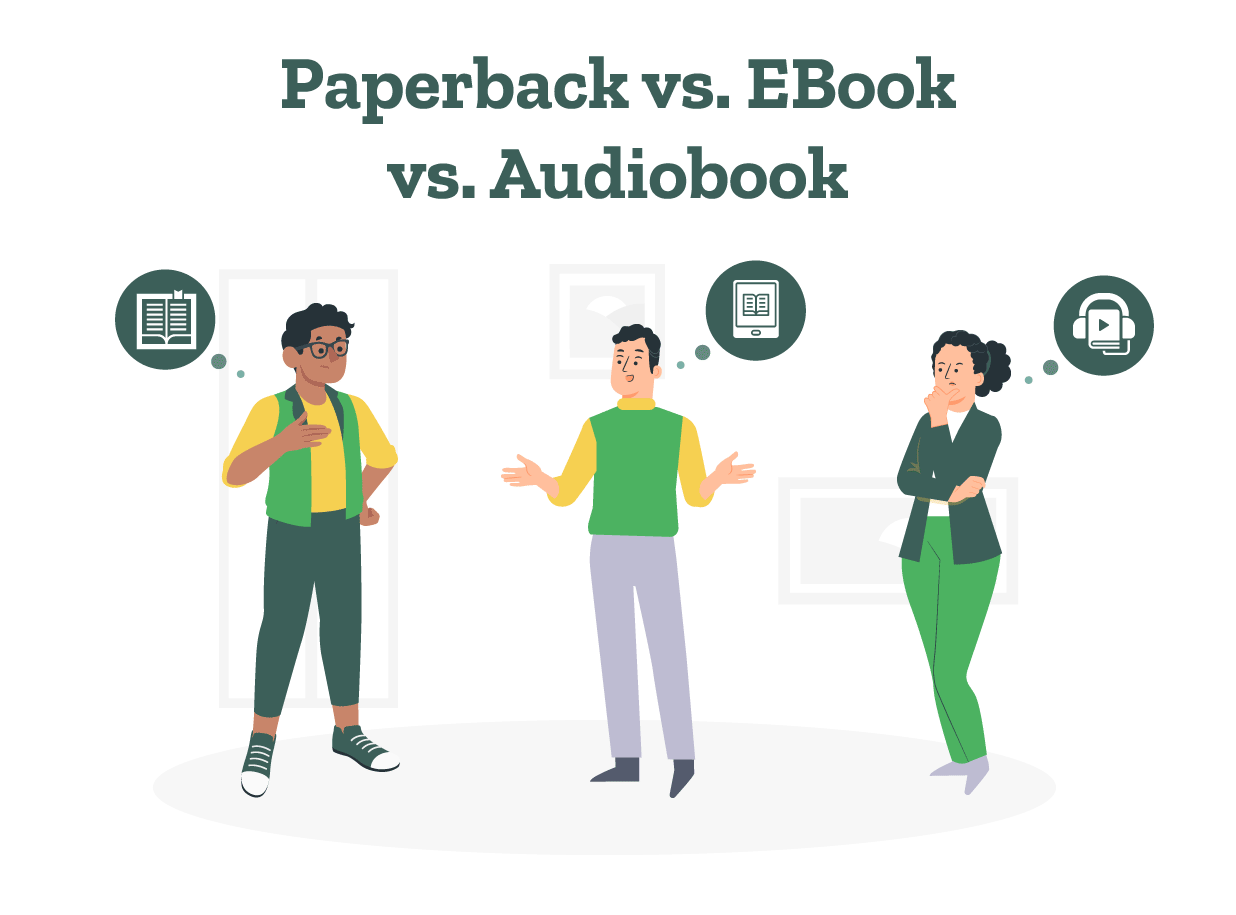
Where earlier concerns primarily revolved around the selection of content – what to read, whom to read, and for what purpose – today, an equally significant question has emerged: how to read. The advancement of technology has diversified the modes of accessing knowledge, ranging from traditional printed books to eBooks and audiobooks. Each format carries its own system of values, not only in technical terms but also in the way it shapes cognitive experience.
In the context of modern life, especially for individuals with demanding schedules, who must constantly navigate time constraints and fragmented attention, the choice of reading format becomes a strategic decision. The question “Printed books, eBooks, or audiobooks – which is the most suitable choice for busy people?” therefore extends beyond a purely technical concern; it constitutes a cultural and cognitive issue that requires comprehensive and nuanced analysis.
1. Printed Books – Traditional Value and Depth of Cognition
Printed books, as the oldest form of preserving and transmitting knowledge, exist not merely as informational tools but also as enduring cultural symbols. Over centuries – from handwritten manuscripts to modern printing technologies – printed books have shaped a ritualistic space of reading, where individuals enter a state of quiet reflection to engage in a dialogue with knowledge. Unlike digital media, the experience of reading a printed book is inherently multisensory: the tactile sensation of paper, the thickness of each page, the subtle sound of turning pages, and even the distinctive scent of ink and fresh paper. These seemingly minor elements collectively foster a profound connection between the reader and the book, transforming reading from a simple act of information intake into a deeply personalized experience.
The materiality and stability of printed books render them true “objects of knowledge,” where ideas are not abstract data but are anchored in a tangible form. Readers can highlight important passages, annotate margins, fold page corners, or simply remember the physical location of an idea within the book. Such traces not only facilitate comprehension but also reflect an individual’s cognitive journey, turning each book into a map of intellectual memory marked by personal engagement.
From a cognitive perspective, printed books are particularly well-suited for deep reading – a mode of engagement that demands sustained attention and continuous thought. Free from interruptions such as notifications, advertisements, or the temptations of multitasking, readers can maintain a steady flow of concentration over extended periods. This is especially crucial when engaging with complex texts, where the structure of arguments requires careful tracking and the ability to connect ideas at a deeper level. In disciplines such as philosophy, science, and critical theory, printed books remain nearly irreplaceable, as they facilitate slow, careful, and reflective reading – essential components of critical thinking.
However, when situated within the context of modern life, the very strengths of printed books also reveal certain limitations. Their physical nature – once the foundation of their experiential value – now poses constraints on mobility. Carrying multiple books while commuting or traveling is often impractical, particularly for individuals with demanding schedules or constantly shifting work environments. Moreover, printed reading typically requires a relatively uninterrupted span of time and a stable environment – conditions that are increasingly scarce in a world where time is fragmented into short intervals and daily life is in constant motion.
Furthermore, the habit of reading printed books demands a degree of discipline: the ability to detach from distractions and intentionally create moments of quiet for focused engagement. For many busy individuals, sustaining such conditions is not always feasible. As a result, despite their significant cognitive value, printed books are gradually becoming more limited in their practical use within contemporary lifestyles.
2. Ebooks – The Flexibility of the Digital Age
The emergence of ebooks represents not merely a technological improvement, but a structural shift in how human beings access and organize knowledge. While printed books are bound to physical space and constrained by storage limitations, ebooks liberate reading from these constraints, relocating knowledge into a digital environment that is both flexible and virtually limitless. With a compact device such as a smartphone, tablet, or dedicated e-reader, individuals can carry an entire “portable library,” accessible at any moment.
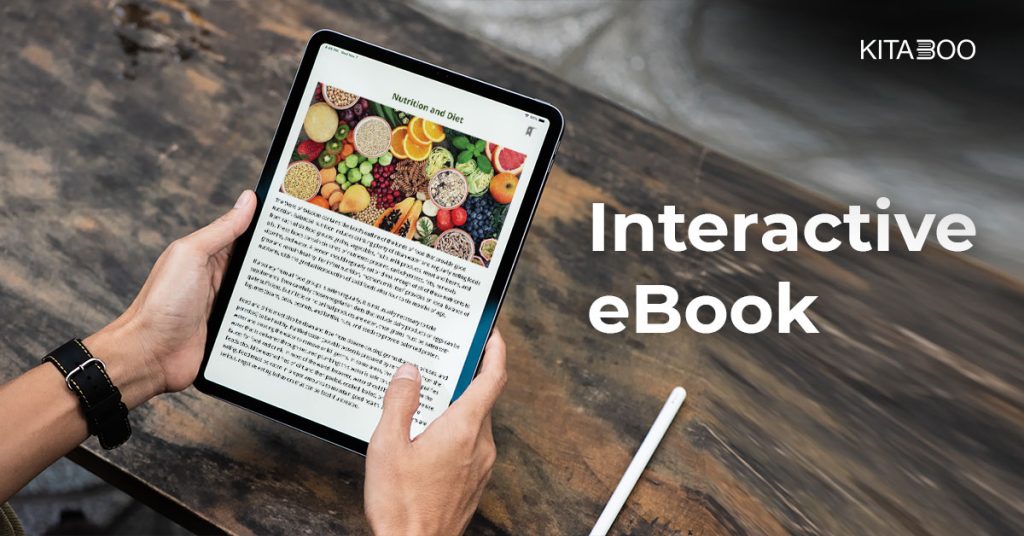
This capacity to “liberate space” makes ebooks particularly well-suited for busy individuals. In a mode of life where time no longer exists as long, uninterrupted stretches but is instead fragmented into brief intervals, ebooks enable users to make productive use of otherwise idle moments – a few minutes of waiting, a commute, or short breaks between tasks. Reading, therefore, is no longer an activity that requires deliberate preparation of time and space; it can be seamlessly integrated into the rhythms of everyday life.
Beyond mobility, one of the most significant advantages of ebooks lies in their capacity for customization. Unlike printed books – whose format is fixed – ebooks allow users to adjust nearly every aspect of the reading interface: font size and style, line spacing, screen brightness, and background color. This not only personalizes the reading experience but also accommodates readers with specific needs, such as those with visual impairments or sensitivity to light. At a deeper level, ebooks incorporate a range of tools that enhance learning and research, including instant dictionaries, digital annotations, highlighting functions, and quick search capabilities. These features fundamentally transform how readers interact with texts, shifting reading from a strictly linear process to a more dynamic one in which information can be retrieved, cross-referenced, and organized efficiently.
However, the digital environment – which constitutes the core advantage of ebooks – also introduces significant challenges. Reading on electronic devices, particularly multifunctional ones like smartphones, is frequently interrupted by external stimuli: social media notifications, messages, emails, and other applications. Such disruptions not only fragment the reading process but also continuously divide the reader’s attention, thereby weakening concentration and diminishing the potential for deep thinking. Constant switching between multiple streams of information can lead to a mode of “skimming,” where content is processed quickly but without sustained reflection or long-term retention.
In addition, prolonged exposure to screens raises concerns related to physical well-being. Blue light emitted by digital displays can cause eye strain, dryness, and may negatively affect sleep quality, especially when reading at night. Although modern devices have incorporated features such as blue light filters or e-ink displays to mitigate these effects, reading on screens still requires conscious regulation and disciplined usage on the part of the reader.
Another important consideration is the transformation in reading habits. With their speed of access and capacity for rapid content switching, ebooks may inadvertently encourage a form of “consumptive reading,” in which readers prioritize quantity over depth. Without deliberate control, ebook reading can become a surface-level activity, lacking the reflective dimension that constitutes the core value of meaningful reading.
3. Audiobooks – Reading in the Age of Multitasking
If ebooks mark the transition of text from physical space to the digital environment, audiobooks push this transformation further by converting written knowledge into sound. This shift is not merely technical; it fundamentally alters the way people receive and process content. With audiobooks, the act of “reading” is no longer dependent on visual engagement or a fixed setting, but becomes a flexible activity that can occur alongside various tasks in everyday life.

This characteristic makes audiobooks particularly well-suited to the multitasking rhythm of modern life. While traditional forms of reading require full attention and dedicated time, audiobooks allow users to make use of intervals that would otherwise remain unproductive – such as driving, exercising, cooking, or performing repetitive tasks. For individuals with demanding schedules, where free time is nearly nonexistent, the ability to integrate knowledge consumption into routine activities is a significant advantage. In this sense, audiobooks are not merely a reading medium, but a tool for restructuring how time is allocated.
Beyond convenience, audiobooks also offer a distinct, emotionally resonant mode of experiencing content through narration. Unlike written texts – where readers must construct rhythm and tone themselves – audiobooks provide an “interpreted” version of the text through the narrator’s voice, including intonation, pacing, and emphasis. In literary works, particularly novels and narrative-driven texts, this can significantly enhance expressiveness, allowing listeners to immerse themselves more easily and experience the story as if it were being told directly to them. To some extent, audiobooks revive the ancient tradition of oral storytelling – a mode of knowledge transmission that predates written language.
However, the very convenience and parallel nature of audiobooks also introduce notable cognitive limitations. When listening occurs simultaneously with other activities, attention is often divided, resulting in incomplete absorption of information. Unlike reading – where individuals can actively control the pace, pause for reflection, or revisit complex passages – audiobooks typically proceed in a continuous stream, rendering the processing of information more passive. This becomes particularly problematic for academic or complex materials, where comprehension and retention require deliberate analysis.
Furthermore, auditory memory tends to be less stable than visual memory, especially in the absence of note-taking or direct interaction with the text. Listeners may easily “drift past” important ideas without noticing, or struggle to locate specific information when needed. Although modern audiobook platforms offer features such as playback speed adjustment, rewinding, and bookmarking, the overall control remains less intuitive and flexible compared to reading written text.
Another important consideration is that not all types of content are equally suited to the audiobook format. Texts with complex structures, dense terminology, or intricate arguments are often difficult to process effectively through listening. In contrast, audiobooks demonstrate clear strengths in narrative-driven genres, where the content follows a linear progression and relies heavily on emotional engagement.
4. Comparison of the Three Formats – Three Approaches to Knowledge
When printed books, ebooks, and audiobooks are placed within the same frame of reference, what becomes evident is not a matter of absolute superiority or inferiority, but rather fundamental differences in how each medium shapes the process of engaging with knowledge. Each format is not merely a technical tool; it embodies a distinct “cognitive logic” – that is, a particular way of organizing attention, processing information, and interacting with content. Therefore, any meaningful comparison must move beyond surface-level criteria such as convenience or popularity, and instead examine the nature of the reading experience each format produces.
Printed books, first and foremost, represent a linear and stable model of reading. Within the space of a physical book, knowledge is presented in a fixed order, guiding the reader through a relatively continuous progression. This structure facilitates the development of deep thinking, where ideas are connected, elaborated, and accumulated over time. Sustained concentration, with minimal interruption, enables readers not only to absorb information but also to reflect, question, and construct their own systems of understanding. In this sense, printed books prioritize depth over speed, and quality over quantity.
In contrast, ebooks embody a more flexible and non-linear approach to knowledge. Supported by digital technology, readers can easily switch between texts, search for information instantly, or access multiple sources simultaneously. This enhances efficiency in information acquisition, particularly in contexts that demand speed or practical application. However, such flexibility may also weaken the continuity of thought, as the reading process becomes fragmented into shorter, disconnected segments. As a result, ebooks are often better suited to pragmatic reading purposes, where accessibility and efficiency take precedence.
Meanwhile, audiobooks introduce an approach that integrates knowledge consumption into the flow of everyday life. Rather than requiring dedicated time and space, audiobooks allow “reading” to occur alongside other activities, thereby expanding the opportunities for engaging with content. However, this integration also implies that attention is divided, shared between listening and concurrent tasks. Consequently, the process of comprehension tends to become more passive, with reduced capacity for analysis and critical reflection. Audiobooks are therefore particularly effective for narrative-driven or inspirational content, where emotional engagement may be as important as – or even more important than – analytical understanding.
From a comparative perspective, these three formats do not function as substitutes for one another, but rather as complementary tools suited to different contexts. Printed books provide a foundation for deep reading and systematic thinking; ebooks optimize accessibility and information processing; audiobooks extend the reach of reading into otherwise unusable periods of time. Each format, in this sense, addresses a distinct “problem” posed by modern life.
Therefore, evaluating one format as “better” than another is meaningful only within a specific context – including the purpose of reading, time availability, environment, and individual characteristics of the reader. An academic researcher will apply different criteria from a casual reader seeking entertainment; a person with ample uninterrupted time will make different choices from someone constantly on the move. It is precisely this diversity of circumstances and needs that prevents the establishment of any universal standard applicable to all readers.
5. How Should Busy People Choose?
In today’s context of diversified reading formats, one common misconception is the attempt to identify a single method capable of satisfying all needs of knowledge acquisition. Such an approach is inherently reductive and impractical, as each reading format is designed to suit specific conditions and purposes. Expecting one medium to simultaneously depth of thought, maximize speed, and fully adapt to a multitasking lifestyle is unrealistic. Similarly, equating the number of books read with the effectiveness of knowledge acquisition is a cognitive error: reading more does not necessarily mean understanding more deeply, nor does it guarantee the ability to apply what has been learned.
For busy individuals – those constantly confronted with time constraints and fragmented schedules – the issue is not about choosing the “best” format, but about constructing a reading strategy that is both flexible and adaptive. Rather than viewing different reading formats as mutually exclusive options, they should be understood as complementary components within an integrated system, where each medium fulfills a distinct function in the overall process of engaging with knowledge.
Within this framework, printed books retain a central role for content that demands high levels of concentration and intellectual depth. They are particularly suitable for theoretical works, academic studies, or texts that require careful reflection. Allocating even limited but dedicated time to reading printed books can be seen as a form of “intellectual investment,” where quality is prioritized over quantity.
Ebooks, on the other hand, prove most effective in contexts that require mobility and speed. With their capacity for instant access and integrated support tools, ebooks are well-suited for reading shorter materials, conducting quick research, or engaging with practical content such as skills and applied knowledge. For busy individuals, ebooks make it possible to utilize short intervals of time while maintaining a consistent flow of learning.
Audiobooks serve as a complementary solution, particularly in situations where visual reading is not feasible. Instead of allowing periods such as commuting or performing routine tasks to pass passively, users can transform them into opportunities for content consumption. However, the use of audiobooks should be accompanied by a clear awareness of their limitations – they are better suited to narrative, inspirational, or structurally simple content.
The key principle in choosing a reading format lies not in the format itself, but in its alignment with the intended purpose. An effective reader is one who clearly understands why they are reading – whether for study, research, entertainment, or self-development – and selects the appropriate medium accordingly. Building a “personal reading ecosystem,” in which different formats are strategically allocated to different contexts, not only optimizes time but also enhances the overall quality of knowledge acquisition.
At a deeper level, an individual’s reading strategy reflects how they organize their intellectual life. Being busy does not necessarily mean reading less; rather, it requires reading more strategically – knowing when to slow down for reflection, when to read quickly for updates, and when to “listen” in order to maintain a continuous connection with knowledge.
6. The Broader Significance of Choosing a Reading Format
The choice between printed books, ebooks, and audiobooks extends far beyond a purely technical decision; it reflects how individuals engage with knowledge in the contemporary era. Each format not only offers a different mode of access but also subtly shapes cognitive habits, patterns of attention, and the ways in which time is structured and utilized. In this sense, choosing a reading format is also choosing a particular relationship with knowledge – whether one prioritizes depth, efficiency, or integration into daily life.

In a society characterized by an overwhelming abundance of information and a constant fragmentation of attention, the primary risk is no longer the scarcity of knowledge, but the superficiality of its consumption. Information is readily available, often instantaneous, yet the capacity to process, internalize, and critically engage with that information is increasingly under strain. Reading, therefore, must be understood not as a passive act, but as a disciplined intellectual practice that requires intentionality, regardless of the format employed. Without such awareness, even the most advanced tools can lead to shallow engagement rather than meaningful understanding.
It is important to recognize that no single format offers a definitive or universally optimal solution. Printed books, ebooks, and audiobooks each possess distinct strengths while simultaneously carrying inherent limitations. Printed books foster deep concentration and sustained reflection but lack flexibility; ebooks provide accessibility and efficiency but risk encouraging fragmented attention; audiobooks maximize time usage but may reduce analytical engagement. For busy individuals, the essential task is not to identify the “best” format in absolute terms, but to develop a reading approach that aligns with their personal circumstances, objectives, and cognitive preferences.
Within the context of modern life, maintaining a consistent reading habit – in any form – is itself a meaningful achievement. The act of reading represents more than the acquisition of information; it is a means of preserving the capacity for deep thinking, resisting the pull of superficiality, and reaffirming the value of intellectual engagement in an increasingly fast-paced world. In this regard, reading becomes an act of resistance against the erosion of attention and a deliberate effort to cultivate depth in an environment that often rewards speed.
Ultimately, the way individuals choose to read reflects not only how they access knowledge, but also how they position themselves within the world. It reveals their priorities, their relationship with time, and their commitment to intellectual growth. To read thoughtfully – regardless of format – is to assert control over one’s cognitive life, to shape one’s understanding with intention, and to participate more consciously in the ongoing construction of meaning.