
In the context of modern society, where knowledge is no longer a scarce resource but has instead become a continuous flow, access to books has become easier than ever before. The number of published titles is rapidly increasing, digital reading platforms are developing strongly, and reading culture appears to be encouraged across many dimensions. However, behind this seemingly positive picture lies a paradox worth reflecting on: people are reading more, yet not necessarily understanding more deeply or living differently.
The image of the “bookworm” – once a symbol of diligence and intellect – is gradually becoming more complex today. Reading no longer automatically equates to inner development. An individual may read dozens of books each year, yet their real life shows little meaningful change. The gap between acquiring knowledge and the ability to apply it in life has become a core issue.
In this context, the question is no longer “how much do we read,” but rather “why do we read.” The true value of reading does not lie in the number of books consumed, but in the ability to transform what is read into action, into experience, and ultimately into sustainable change in both perception and life.
1. “BOOKWORM” – A DOUBLE-EDGED LABEL
1.1 Definition and Cultural Image
In the history of human culture, the term “bookworm” has long been associated with an almost idealized image – that of individuals who live in the world of knowledge, devoting most of their time to reading, reflecting, and accumulating understanding. Across many civilizations, from the examination-oriented traditions of the East to the philosophical schools of the West, reading has not merely been a personal activity but also an expression of a profound intellectual life. In its original sense, “bookworm” did not carry a negative connotation; on the contrary, it evoked persistence, discipline, and a steadfast belief in the value of knowledge.

This image is closely linked to scholars, philosophers, and thinkers – those who devoted their entire lives to reading, writing, and contemplation. In such cases, reading was not a mere act of consuming information, but a continuous dialogue with knowledge, a way of participating in the intellectual current of humanity. The “bookworm,” therefore, once symbolized depth and maturity of thought.
However, when placed in the modern context – where knowledge is mass-produced and distributed at an unprecedented speed – the meaning of this concept begins to shift. “Bookworm” no longer automatically implies intellectual depth. A person who reads a lot is not necessarily someone who understands deeply, nor someone capable of applying knowledge in life. In many cases, reading becomes a reflex – a habit maintained without clear direction.
Here, an important transition emerges: from reading as a process of contemplation to reading as an act of consumption. Readers no longer “live with” knowledge, but merely “skim through” it. In its modern sense, the “bookworm” thus carries a dual nature – both a sign of diligence and a potential risk of superficial knowledge acquisition.
1.2 The Positive Side
Despite the transformation of the concept, it cannot be denied that reading extensively still brings fundamental values. First and foremost, reading is one of the most effective ways to expand one’s worldview. Through books, individuals can access different systems of thought, unfamiliar cultures, and life experiences that they might not encounter directly. This helps break the limits of personal perception and move readers beyond their familiar frameworks.
In addition, reading plays a crucial role in shaping and developing cognitive abilities. When engaging with arguments and systems of ideas, readers are compelled to compare, contrast, and evaluate. If carried out seriously, this process fosters critical thinking – a core competency in identifying problems and making decisions.
Moreover, extensive reading helps accumulate a form of “intellectual capital” – not in the sense of storing information, but in the ability to connect ideas. New ideas rarely emerge from a vacuum; they are often the result of recombining existing knowledge. A widely read individual possesses more “raw material” for thinking, thereby enhancing creative capacity.
From this perspective, the “bookworm” still retains its positive meaning – as a necessary foundation for any intellectual development. The issue does not lie in reading a lot, but in reading a lot and stopping there.
1.3 The Negative Side – When Reading Becomes Passive Consumption
When reading is detached from thinking and action, it easily slips into a state of passive consumption. The reader continuously absorbs information without adequate processing. Without note-taking, without reflection, without comparison to reality, knowledge merely passes across the surface of consciousness without leaving a lasting imprint.

A direct consequence of this state is the “illusion of understanding.” This is a common psychological phenomenon in which exposure to information creates the feeling that one has mastered the content. However, when placed in a situation that requires explanation, application, or critique, this understanding quickly reveals its gaps.
An individual may read a book on time management and feel that they have “understood” how to work more effectively. Yet if there is no change in daily habits – no experimentation, no adjustment – then that understanding remains purely theoretical. Knowledge that is not “tested” cannot become competence.
At a deeper level, passive reading also creates a form of “knowledge consumption” similar to entertainment consumption. Readers turn to books not to change, but to maintain the feeling of self-improvement. This leads to a paradox: the more one reads, the more one feels progress is being made, yet in reality, there is no corresponding transformation in life.
1.4 A Critique of the Phenomenon
The phenomenon of the “bookworm” in the modern context cannot be separated from the characteristics of a knowledge-consuming society. The explosion of the publishing industry, especially in the self-help genre, has created a market where knowledge is “packaged” into products that are easy to access and easy to consume. Promises of rapid change and quick success make reading appealing, but also prone to oversimplification.
Alongside this, “must-read” lists, reading challenges based on quantity, and trends of speed reading have implicitly established a new standard: reading more is better. In such an environment, reading easily turns into a form of achievement – a number that can be measured and compared.
This pressure, combined with the fast pace of life and the influence of social media, has contributed to shaping a new type of reader: one who reads quickly, reads a lot, but does not read deeply. Knowledge is reduced to “key points,” “lessons,” and “quotes,” while more complex layers of meaning are overlooked.
In this context, reading is no longer a journey of exploration, but becomes a performative activity. People do not read solely for themselves, but also to demonstrate something – their knowledge, their effort, or their personal image. And in the process, the original purpose of reading – internal transformation – is gradually obscured.
This is precisely where the problem begins: when reading is no longer connected to action, knowledge becomes “frozen” on the page. Books, whether read or unread, remain “on the shelf” in a deeper sense – they do not enter life, do not create change, and do not truly become part of the reader.
2. WHY DO BOOKS “REMAIN ON THE SHELF”? – CORE CAUSES
2.1 The Gap Between Theory and Practice
One of the fundamental reasons why knowledge in books is not transformed into action lies in the very nature of that knowledge. Most content in books – especially those related to academia, skills, or thinking – is presented in a generalized, abstract, and principle-based form. These principles have universal value, yet they are not directly tied to the specific circumstances of each individual.

The issue arises in the following way: for a principle to become useful, it must be “translated” into the language of personal life. This requires the reader to carry out an intermediate process – from understanding the concept, identifying the context of application, to adjusting it to fit real-life conditions. This is not a simple operation, but a process that demands analytical ability, the capacity to relate, and lived experience.
However, most readers stop at the stage of reception. They understand the content as presented by the author, but do not go further to ask: “What does this mean for me?” or “Where can this be applied in my specific context?” Without this step of transformation, knowledge, no matter how accurate, remains at the level of theory.
The gap between theory and practice, therefore, is not a natural gap but a cognitive one. It exists not because knowledge cannot be applied, but because the reader has not completed the necessary steps to make it their own. As a result, knowledge remains at the level of “knowing,” without progressing to the level of “doing.”
2.2 Reading Without Processing Information
A common mistake in modern reading culture is equating reading with learning. In reality, reading is only the first step in a more complex chain of cognitive activities. The reception of information, if not accompanied by processing, leaves little lasting value.

Processing information operates at multiple levels: from taking notes on key ideas, questioning the content, to comparing it with existing knowledge and critically evaluating the author’s arguments. It is through this process that information is “digested” – that is, integrated into the reader’s system of thinking.
When these steps are absent, information remains only in short-term memory. The reader may recall certain ideas immediately after reading, but quickly forget them without reinforcement. This creates a familiar sensation: having read something before, having known it, yet being unable to recall it clearly or use it when needed.
At a deeper level, the lack of processing prevents knowledge from being “fixed” into structure. It exists as fragmented pieces, without connection. And when knowledge lacks structure, it cannot function as a tool for thinking or action.
Thus, the issue is not whether one reads little or much, but whether one reads without adequate processing. A book read quickly without careful thought may provide far less value than a book read slowly, but analyzed and reflected upon thoroughly.
2.3 The Psychology of Procrastination
Even when readers understand the content, many still do not move on to action. At this point, the cause is no longer purely cognitive, but psychological. Action is always accompanied by risk – the possibility of failure, mistakes, or outcomes that fall short of expectations. In contrast, reading offers a safe space: no pressure, no direct consequences.
This contrast leads many people, often unconsciously, to remain in the state of “understanding” rather than transitioning to the state of “doing.” They postpone application with seemingly reasonable justifications: not yet understanding enough, not yet being fully prepared, or waiting for a more appropriate time. However, in many cases, these reasons are merely expressions of an avoidance mechanism.
The fear of making mistakes plays a significant role in this process. When faced with the possibility of failure, individuals tend to protect their self-image by choosing not to act. Reading, in this context, becomes a way to maintain a sense of progress without confronting real-world risks.
In addition, the habit of procrastination – a common feature of modern life – further widens the gap between knowledge and action. Readers may continuously accumulate knowledge without ever truly beginning. Over time, inaction becomes the default state.
2.4 The Illusion of Progress
One of the most subtle mechanisms that keeps books “on the shelf” is the illusion of progress. When reading, the brain absorbs new information, triggering feelings of excitement and satisfaction. This creates the impression that one is developing, that one is making progress.
However, this feeling does not equate to real change. It merely reflects a temporary cognitive state and does not guarantee that knowledge has been transformed into capability. Without accompanying action, this “progress” quickly fades.
The problem becomes more serious when readers begin to depend on this feeling. They continue reading to sustain the sense of excitement, seeking new ideas and new “insights.” Yet, without application, each idea exists only briefly before being replaced by another.
As a result, a cycle forms: read – feel progress – do not act – lose the feeling – read again. Within this cycle, knowledge does not accumulate in depth, but instead flows past like a continuous stream of information.
The illusion of progress, therefore, is one of the greatest barriers to the transformation of knowledge. It convinces readers that they are moving forward, while in reality they remain in place.
2.5 The Lack of a Knowledge Transformation System
Finally, a structural cause lies in the absence of a clear system for transforming knowledge into action. Many people do not fail to act due to lack of motivation, but because they do not know where to begin. They absorb fragmented ideas, yet lack a method to organize and implement them.
Knowledge, if not placed within a system, easily becomes fragmented. Each book offers a perspective, a method, but without connection, these pieces of knowledge cannot support one another. In this case, the reader resembles someone who owns many tools but does not know how to use them in coordination.
A system for transforming knowledge typically includes clear steps: defining reading objectives, selecting relevant content, taking notes and summarizing, choosing specific actions to experiment with, and finally evaluating the results. If any of these steps is missing, the process is easily disrupted.
Moreover, the absence of a system makes it difficult for readers to maintain consistency. They may apply an idea for a short period, but not long enough for it to become a habit. As a result, knowledge does not have time to “take root” in life.
Thus, the problem lies not only in awareness or attitude, but also in method. Without a clear structure for transformation, even valuable knowledge struggles to move beyond the page. And once it fails to enter practice, it continues to “remain on the shelf” – not due to a lack of value, but due to the absence of a pathway to action.
3. FROM READER TO PRACTITIONER – A FUNDAMENTAL TRANSFORMATION
3.1 The Concept of the “Practitioner”
If the “reader” is the starting point of the journey toward knowledge, then the “practitioner” represents the stage at which knowledge begins to participate in life. This concept does not simply refer to someone who applies what they have read, but reflects an entirely different approach to knowledge: treating knowledge as a living tool rather than an object to be accumulated.

The “practitioner” receives information with a proactive attitude. They do not read to “know more,” but to seek possibilities for application. Every idea in a book, for them, is a hypothesis to be tested in reality. Therefore, the reading process does not end when the final page is turned; it truly begins afterward – when knowledge is put into experimentation.
This process typically unfolds in a continuous cycle: reception – application – observation – adjustment. When encountering a method, the practitioner does not automatically accept it as truth, but places it within their own specific context. They experiment on a small scale, monitor the results, and adjust their approach accordingly. If the method proves ineffective, they do not see it as a personal failure, but as data for further refinement.
It is through this process that knowledge gradually loses its initial abstraction. It no longer remains as concepts on the page, but becomes concrete actions, daily decisions, and repeated habits. In other words, knowledge is “embodied” in the life of the reader.
At a deeper level, the “practitioner” does not merely use knowledge, but also recreates it. Through personal experience, they uncover limitations, conditions of application, and even the incompleteness of certain theories. As a result, knowledge is no longer received in a one-way direction, but becomes a two-way interaction between the reader and the content.
3.2 The Core Difference
The difference between a “bookworm” and a “practitioner” does not lie in the number of books read, but in how knowledge is processed and used. This is a fundamental difference – not of degree, but of approach.
A “bookworm” typically approaches knowledge through accumulation. Each book becomes a unit of information added to a personal “database.” The value of reading, in this case, is often measured quantitatively – the number of books, ideas, or concepts encountered. However, when knowledge remains at the level of accumulation, it does not create real impact.
In contrast, the “practitioner” approaches knowledge through transformation. They are not concerned with how much they know, but with how much they can use. A single idea that can be applied and produce change holds far greater value than dozens of ideas that are merely remembered.
This difference leads to two entirely distinct developmental trajectories. The “bookworm” may possess a large body of knowledge, but much of it exists only as potential. Meanwhile, the “practitioner” may know less, but what they know has been tested and integrated into behavior. Their knowledge does not reside in memory alone, but in how they think and act.
Moreover, the “practitioner” possesses another crucial characteristic: the acceptance of imperfection. While many people delay action in pursuit of complete understanding, the practitioner is willing to begin with what they have. They understand that knowledge becomes clearer through action, not before it.
Thus, the core difference is not “reading more or less,” but “reading to accumulate or reading to transform.” And it is precisely this difference that determines whether knowledge moves beyond the page.
3.3 The Role of Experience
Experience is an indispensable intermediary in the process of transforming knowledge. If reading provides the raw material, then experience is the process of “refinement” – where knowledge is tested, adjusted, and personalized.
A principle, no matter how clearly presented in a book, remains only a possibility. It becomes reality only when placed within a specific context, with its own conditions, constraints, and variables. It is through this process of application that the reader begins to recognize what books cannot fully convey: the degree of suitability, the limits of application, and the factors that require adjustment.
Experience, therefore, functions as a form of testing. It distinguishes between knowledge that is “theoretically correct” and knowledge that is “practically effective.” A method may appear highly convincing on the page, yet prove unsuitable when applied to an individual’s circumstances. Conversely, an idea that seems simple may generate significant impact when implemented appropriately.
More importantly, experience enables knowledge to become personalized. When an idea is applied and refined through repeated trials, it gradually takes on the imprint of the user. Knowledge no longer belongs to the author, but becomes the reader’s own – shaped by context, goals, and individual approach.
Without experience, knowledge remains in a state of potential. It is like a blueprint that has not yet been constructed – valuable in concept, but without any real-world impact. Only when put into action does knowledge have the opportunity to become capability.
Therefore, it can be said that experience is not merely the next step after reading, but the condition that gives reading its meaning. Without experience, all knowledge remains at the level of “possibility.” Only through experience does it transform into “reality” – and from there, become part of genuine change.
4. HOW TO KEEP BOOKS FROM “REMAINING ON THE SHELF”? – PRACTICAL METHODS
4.1 Purposeful Reading
One of the most common mistakes in reading habits is approaching books in a random manner – reading because something seems interesting, because it is recommended, or simply to fill time. In contrast, reading only truly creates value when it is placed within a specific context and tied to a clear need.

Purposeful reading does not mean narrowing the scope of reading, but rather clearly defining the role of each book within one’s personal development journey. Before beginning, the reader needs to answer guiding questions: What am I looking for? A specific skill, a new perspective, or a solution to an existing problem? Once the objective is defined, reading becomes more focused, avoiding the scattered absorption of information.
More importantly, the purpose of reading functions as a filter. Not all content in a book holds equal value for every individual. With a clear objective, readers can selectively focus on parts with high applicability while disregarding less relevant sections. This helps save time and improve the efficiency of comprehension.
At a deeper level, purposeful reading creates an implicit commitment between the reader and knowledge. When reading to solve a specific problem, the reader becomes more concerned with application rather than mere understanding. As a result, knowledge gains the opportunity to move beyond the page from the very moment it is received.
4.2 Active Reading
If purposeful reading provides direction, then active reading is the method of execution. This approach requires the reader to move beyond passivity and actively participate in constructing meaning from the text.
Active reading begins with questioning. Instead of accepting information as a given truth, the reader continuously asks: What is the author saying? Why is this the case? Does this make sense within my own context? This process of questioning activates critical thinking, transforming reading into a dialogue rather than a one-way reception.
In addition, note-taking plays an essential role in retaining and organizing knowledge. However, note-taking is not merely copying content; it is the process of rearticulating ideas in one’s own words. When an idea is rewritten, it must pass through the reader’s understanding, making it clearer and more memorable.
Another key element of active reading is the ability to make connections. Each concept and argument needs to be related to personal experience or to existing knowledge. These connections allow new knowledge to “attach” to the current system of thinking, rather than existing as isolated fragments.
Through active reading, information is no longer something that is simply “received,” but something that is “constructed.” It is precisely within this constructive process that knowledge gains the potential to be transformed into action.
4.3 The “Read – Act – Reflect” Rule
One of the most effective methods to ensure that knowledge does not remain on the page is to establish a clear cycle between reading and action. The “Read – Act – Reflect” rule represents such a model, in which each step plays a critical role.
The first step – reading – is no longer the endpoint, but merely the beginning. After absorbing an idea, the reader must quickly move to the second step: action. What matters here is not waiting for perfect understanding. Instead, the reader should select a specific action that can be carried out immediately within the current context.
This action does not need to be large or complex. The key is that it creates a direct interaction between knowledge and reality. It is through this interaction that the strengths and limitations of the idea begin to emerge.
The third step – reflection – is where knowledge is “refined.” After taking action, the reader needs to step back and evaluate: What happened? What worked? What needs to be adjusted? Reflection not only improves application but also deepens the initial understanding.
When repeated continuously, this cycle creates a strong connection between knowledge and experience. Reading is no longer an isolated activity, but becomes part of an ongoing system of development.
4.4 Turning Knowledge into Small Actions
One of the greatest barriers to applying knowledge lies in its perceived scale. Many people, when encountering a theoretical system, tend to think in terms of applying it in its entirety. This often leads to a sense of overwhelm and, ultimately, inaction.
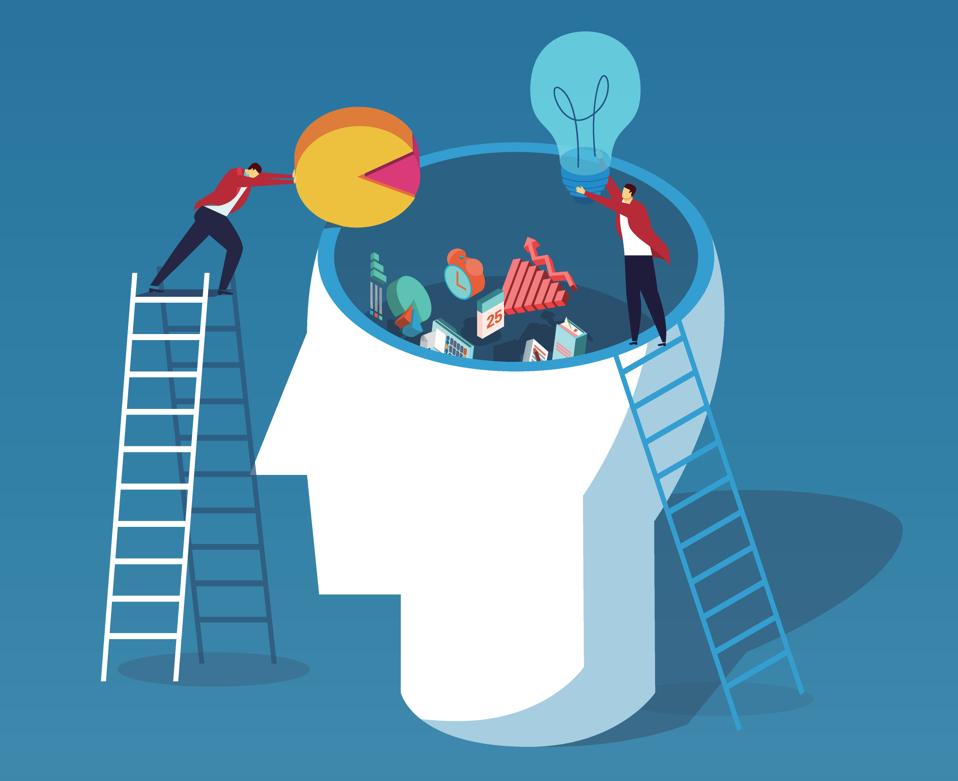
The solution is to reduce the unit of action. Instead of attempting comprehensive change, the reader needs to break down each idea into small, concrete, and manageable steps. A broad principle can be translated into a minor habit, a short-term experiment, or a subtle shift in thinking.
These small actions function as “starting points.” When carried out consistently, they generate cumulative momentum, allowing the reader to maintain an ongoing connection with knowledge. More importantly, they transform application from a difficult task into a natural process.
Over time, these small changes can accumulate into significant transformations. This reflects an essential principle: knowledge does not need to be applied perfectly from the outset, but rather implemented continuously and consistently.
4.5 Writing to Deepen Understanding
Writing is one of the most effective tools for transforming knowledge from a vague state into clarity. When reading, it is easy to feel that an idea has been understood. However, only when attempting to express that idea in one’s own words do the gaps in understanding truly become apparent.
The process of writing forces the reader to reorganize information: identifying key points, structuring logic, and expressing ideas coherently. This is not merely a technical activity, but a form of thinking. Through writing, knowledge is “restructured,” becoming deeper and more stable.
In addition, writing helps preserve knowledge in a systematic way. Notes, summaries, or analytical pieces not only support understanding in the present, but also serve as reference materials for the future. When revisiting them, the reader does not need to start from scratch, but can continue from what has already been built.
Therefore, writing is not a supplementary activity to reading, but an integral part of the learning process. It transforms reading from a temporary experience into a durable structure of knowledge.
4.6 Teaching Others
One of the most effective ways to test knowledge is through the ability to communicate it. When explaining a concept to others, the reader is compelled to clarify each step of the reasoning, eliminate ambiguity, and use accessible language. This process requires a deeper level of understanding than simply reading or memorizing.
If an idea cannot be explained clearly, it indicates that the knowledge has not been fully grasped. Conversely, when it can be articulated coherently, the reader not only reinforces their understanding but may also uncover new dimensions of the subject.
“Teaching” does not necessarily need to occur in a formal setting. It can take the form of a conversation, a written reflection, or even self-explanation. What matters is that this process creates a shift: from receiving knowledge to recreating it.
Through communication, knowledge is no longer something kept privately, but becomes part of interaction and exchange. It is precisely this dissemination that makes knowledge dynamic and capable of broader impact.
4.7 Building a Personal Knowledge System
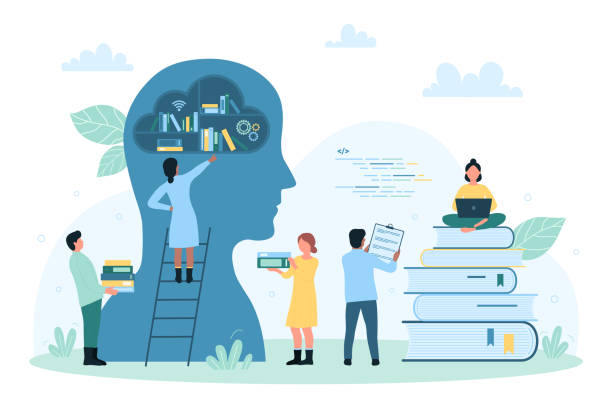
Knowledge, when left fragmented, is difficult to use effectively. Each book provides a piece of information or a perspective, but without connection, these fragments cannot form a coherent whole. Therefore, building a personal knowledge system is a crucial step in ensuring that knowledge can be retrieved and applied when needed.
Such a system is not merely a repository of information, but a structure that reflects an individual’s way of thinking. It involves categorizing, linking, and continuously updating ideas over time. When a new idea emerges, it does not exist in isolation, but is placed in relation to what is already known.
The process of building a knowledge system is also a process of clarifying understanding. As ideas are organized, similarities and differences become more apparent, allowing the reader to grasp the essence of issues more deeply.
More importantly, a personal knowledge system helps bridge the gap between “knowing” and “doing.” When knowledge is well-organized, the reader can quickly retrieve and apply it in specific situations. This transforms knowledge from a static resource into a dynamic tool.
Thus, reading should not stop at absorbing individual books, but should aim toward constructing an interconnected network of understanding. It is this network that ensures knowledge does not “remain on the shelf,” but becomes a living part of thought and action.
5. A CRITIQUE OF MODERN READING CULTURE
5.1 The Rise of Self-Help Books
In recent years, the self-help genre has grown rapidly, becoming one of the most dominant segments of the publishing industry. Its appeal lies in its ability to “simplify” complex aspects of life: success, happiness, discipline, mindset, and self-management. Concepts that are inherently multidimensional, shaped by various personal and social factors, are often presented as formulas, principles, or step-by-step frameworks.
To a certain extent, this simplification makes knowledge more accessible. It creates opportunities for many individuals to begin their journey of self-development. However, this very simplification also carries a risk: it creates the illusion that complex problems can be resolved through quick and universal solutions.
Many self-help books construct expectations of rapid transformation – that by applying a few principles or habits, one’s life will change significantly. In reality, however, changing behavior and mindset is a long-term process that requires persistence, experimentation, and continuous adjustment. When expectations are not met, readers may fall into disappointment or continue searching for a “new formula” in another book.
As a result, a cycle of knowledge consumption emerges: read – expect – fail to achieve – move on to the next book. Within this cycle, reading ceases to be a means of transformation and instead becomes a form of continuous consumption. Without critical thinking and careful selection, readers can easily be drawn into a stream of appealing promises lacking practical grounding, preventing knowledge from being transformed into sustainable action.
5.2 The Culture of “Fast Reading – Shallow Understanding”
Alongside the explosion of information, speed has become a highly valued factor in many areas, including reading. Speed-reading techniques, courses designed to optimize reading pace, and advice on “reading more books in less time” have all contributed to shaping a new trend: reading as an activity that must be accelerated.
However, optimizing for speed often comes at the expense of depth. Reading, by its nature, is not merely about absorbing information, but about thinking. It requires time to pause, to question, to relate, and to critically evaluate. When speed becomes the primary objective, these essential steps are often reduced or omitted.
The result is a form of “skimming” reading – readers grasp the main ideas but do not engage deeply with the structure of arguments or the more complex layers of meaning. Knowledge, in this case, is reduced to isolated key points, lacking internal coherence.
In the long term, the culture of “fast reading – shallow understanding” can erode the capacity for deep thinking. As readers become accustomed to processing information at a surface level, they gradually lose the patience required to engage with complex arguments or texts that demand sustained concentration. This runs counter to the very nature of reading as an intellectual activity – where depth matters more than quantity.

5.3 Performance Pressure in Reading
In the context of social media and the growth of online communities, reading is no longer a purely personal activity. It increasingly becomes part of one’s public image – something that can be shared, compared, and evaluated. The number of books read, reading lists, or yearly reading goals become visible metrics.
From this emerges a form of “performance pressure.” Readers no longer read solely for understanding, but also to achieve a number, to complete a goal, or to maintain the image of being a “dedicated reader.” In such an environment, reading shifts from an internal process to a performative activity.
This pressure can lead to strategic but ineffective choices: selecting easy books to increase quantity, reading quickly to meet targets, or skipping difficult sections to save time. As a result, the quality of reading declines, while the feeling of “having read a lot” is still maintained.
At a deeper level, measuring self-worth through the number of books read creates a distortion in perception. Knowledge, instead of being evaluated based on its applicability and real-world impact, is reduced to a numerical value. This obscures the core purpose of reading – internal transformation.
5.4 The Role of Social Media
Social media acts as a catalyst in shaping modern reading culture. On one hand, it enables the rapid dissemination of knowledge, facilitating the sharing of books, ideas, and reading experiences. Content such as book summaries, highlighted quotes, and quick “insights” makes information more accessible.
However, this very characteristic also transforms how knowledge is received. When content is compressed into short formats, key ideas are detached from their context, and complex arguments are reduced to memorable slogans. In this process, knowledge loses its depth and structural integrity.
Frequent exposure to short-form content can gradually shape a habit in readers: prioritizing information that is fast, easy to understand, and easy to consume. This reduces the ability to engage with longer, more complex texts – which are often where deeper layers of meaning reside.
Moreover, social media creates an environment where knowledge is consumed in a continuous stream. Each day, readers may encounter dozens of “valuable ideas,” yet most are neither retained nor applied. In this context, knowledge becomes fleeting information, lacking the time needed to “settle.”
Thus, while social media expands access to knowledge, it also presents a challenge: how to preserve depth in an environment that prioritizes speed. Without intentional effort, readers can easily be drawn into a mode of “instant knowledge consumption,” where knowing more does not equate to understanding deeply or achieving meaningful change.
6. THE TRUE VALUE OF READING – FROM KNOWLEDGE TO TRANSFORMATION
Reading, in its deepest sense, is not a singular act occurring between a person and a text, but a multi-layered process of transformation that extends from cognition to behavior, and from behavior to internal change. If it stops at the mere reception of information, reading has only completed a very small part of this entire cycle.
This process can be understood as a chain: from information, one forms understanding; from understanding, one moves to action; from action, one accumulates experience; and from experience, one gradually develops wisdom. Each step in this chain does not exist independently, but depends on the others. Information, if not processed, does not become understanding. Understanding, if not applied, does not generate experience. And experience, if not reflected upon, does not crystallize into wisdom.
Within this structure, action plays a decisive transformative role. It is the boundary between potential knowledge and actual knowledge. When an idea is put into action, it no longer exists as a hypothesis, but becomes part of reality. It is precisely in this process that elements which books cannot fully convey – specific contexts, real conditions, and individual responses – begin to interact with and reshape the original idea.
Without action, the entire process is interrupted. Knowledge, no matter how accurate, remains in a state of “possibility.” It is neither tested nor refined, and therefore cannot become a foundation for sustainable development. In this case, the reader may possess extensive understanding, yet lack the ability to convert that understanding into practical capability.
Furthermore, knowledge only acquires real value when it is personalized. An idea from a book, once applied, no longer retains its original form. It is adjusted according to context, goals, and the characteristics of the individual. This process of personalization makes knowledge dynamic and relevant, while also explaining why different readers of the same book may achieve entirely different outcomes.
At a higher level, reading is not merely about accumulating knowledge, but about transforming how individuals perceive and interact with the world. A valuable book is not defined by the amount of information it contains, but by its ability to alter the reader’s way of thinking, decision-making, and ultimately, action. This transformation may not occur immediately, but when accumulated over time, it produces structural changes in one’s life.
Therefore, the value of reading does not lie in the book itself as an object, but in how it is used as a tool. A book, no matter how carefully written, remains a collection of possibilities. It is the reader, through their approach and actions, who determines whether those possibilities become reality.
Reading, then, is not an endpoint, but a starting point. Its true value is not measured by the number of pages turned, but by the changes that have taken place – in thought, in behavior, and in the way one lives with oneself and engages with the surrounding world.
7. CONCLUSION – READING TO LIVE, NOT TO ACCUMULATE
Books, ultimately, do not possess the power to change lives in any direct sense. They do not act on behalf of individuals, do not make decisions for them, and certainly cannot produce results without the intervention of human behavior. Their value lies elsewhere: they open up possibilities – new perspectives, alternative methods, and suggestions for thinking and acting. However, possibilities, if not actualized, remain merely potential.
For this reason, the decisive factor does not lie in the book, but in the reader. Two individuals may read the same content yet arrive at entirely different outcomes. The difference does not stem from the information itself, but from how that information is received, processed, and integrated into life. When the reader actively transforms knowledge into action, the book begins to realize its value. Conversely, if knowledge remains at the level of understanding alone, it gradually loses its significance over time.
In an age where knowledge is no longer scarce, the central issue is no longer “how to know more,” but “how to use what is already known.” The explosion of information has made access to knowledge easier than ever, but it has also increased the risk of overload and fragmentation. In this context, the essential capacity is not acquisition, but transformation – turning information into concrete action, and understanding into practical capability.
This requires a fundamental shift in the way reading is approached. Instead of viewing reading as a process of accumulation – where value is measured by the number of books read – it should be seen as a process of practice, where value is measured by the degree of change that knowledge produces. Each book, in this sense, is no longer a unit of information, but a tool that can be used to solve problems, improve behavior, or expand awareness.
A book sitting on a shelf, in a physical sense, is not the problem. The real issue is when its content is never brought into life. When knowledge is not applied, it gradually becomes detached from reality and loses its capacity to have an impact. Conversely, even a single idea – however small – when implemented with seriousness, can generate cumulative changes over time, eventually leading to sustainable transformation.
At a deeper level, reading is not merely an intellectual activity, but a means of reshaping the way one lives. A valuable book is not defined by how much information it provides, but by its ability to transform how individuals think, choose, and act. This transformation does not need to be immediate or dramatic; it may begin with small changes, but when sustained, it gradually reshapes how one engages with the world.
Therefore, reading, in its fullest sense, is not about accumulating knowledge, but about creating transformation. Not about knowing more, but about living differently. And it is precisely in that transformation that the true value of reading is realized.