
In the context of modern society, where speed has become an implicit standard governing most economic activities and aspects of daily life, the concept of “success” has undergone a significant transformation in both its meaning and its mode of perception. In traditional models, success was often understood as the result of a long-term process of accumulation – requiring time, experience, real-world engagement, and even inevitable failures. In contrast, in the present context, it is increasingly compressed into a goal that must be achieved within a shorter timeframe, even as early as possible. Success is no longer merely a journey; it is gradually being reframed as a “time-bound milestone” that carries implicit pressure. This shift has given rise to a specific form of pressure – the pressure of “early success” – in which an individual’s value is measured not only by what is achieved, but also by how quickly it is achieved.
Notably, this pressure does not operate spontaneously; rather, it is continuously reinforced and reproduced through mechanisms of media and consumer culture. The proliferation of social media has contributed to the creation of a space in which success stories are selectively curated, edited, and presented in ways that maximize their impact. Long journeys marked by randomness and uncertainty are often reduced to “model success stories,” where outcomes are placed at the center while the process is pushed to the margins. Within such an environment, comparison becomes constant, and the feeling of “falling behind” can easily emerge, even when individuals have not yet embarked on a clearly defined developmental path.
Alongside this context, the book market has witnessed a strong surge in self-help publications, particularly those promising rapid wealth accumulation. These books no longer function solely as sources of knowledge; they increasingly operate as psychological consumer products, directly addressing the demand for shortcuts in an increasingly competitive world. With promises of the quickest path to financial freedom, personal independence, and control over one’s life, they create the impression that success is not only attainable but can be achieved by applying a properly “proven” system of methods.
However, it is precisely at this point that a fundamental issue arises. The question is not merely whether these books are effective, but more profoundly, what role they play in shaping readers’ perceptions of the nature of success. When success is presented as a sequence of replicable steps, does it truly reflect the complexity of reality, or is it merely a simplification designed to meet consumption demands? And as more individuals approach success through “ready-made formulas,” does this contribute to the development of real capability, or does it instead reinforce a system of expectations rooted in illusion?
1. The pressure of “early success” – a product of the times
1.1 The Origins of the Pressure
The pressure of “early success” does not emerge as an isolated psychological phenomenon, but rather as the result of a complex interaction between technological, cultural, and economic factors. First and foremost, it is necessary to recognize the central role of social media in restructuring how individuals perceive and evaluate success. Unlike traditional media, social platforms operate through attention-driven content selection mechanisms, where stories that are exceptional, unconventional, or beyond the norm are more likely to gain visibility and spread widely.

This leads to a systemic phenomenon: success is no longer represented according to its actual distribution, but is instead “skewed” toward exaggeration. Rare cases – such as individuals achieving significant success at a very young age – are presented as common models. Meanwhile, the majority of developmental trajectories, which are linear, gradual, and less dramatic, remain largely invisible. The result is a distorted cognitive environment in which what is exceptional is gradually perceived as the norm.
In addition, achievement-oriented culture functions as a reinforcing mechanism. Within a market economy, individual value is increasingly translated into quantifiable indicators – income, assets, professional status, and level of influence. When these indicators become the dominant criteria for evaluation, success is no longer understood as a multidimensional concept, but is reduced to metrics that can be directly compared. This creates a shared frame of reference in which individuals continuously position themselves in relation to others.
Mass media, with its preference for dramatic storytelling, further deepens this structure. “Success stories” are often constructed following a simplified narrative pattern: humble beginnings – a decisive turning point – outstanding results. However, in the process, elements such as time, failure, social conditions, and randomness are frequently omitted. The outcome is a form of “success narrative” that is linear and easily digestible, yet lacking structural authenticity.
1.2 The Shift in the Concept of Success
The transformation in how success is understood reflects a deeper shift in the value system of society. In traditional frameworks, success is closely associated with accumulation – not only of material resources, but also of knowledge, skills, and personal maturity. Time, in this context, serves as a necessary condition, allowing individuals to experience, adjust, and refine themselves.
However, in the modern context, where speed has become a core value, time is no longer perceived as a resource to be invested, but as a constraint to be overcome. As a result, success becomes “time-bound,” associated with specific milestones: achieving success before 25, stability before 30, attaining financial freedom as early as possible. When such milestones are repeated frequently enough in social discourse, they gradually become implicit norms.

A direct consequence of this shift is the restructuring of the role of youth. Whereas youth was once regarded as a period of exploration, trial, and learning, it is now transformed into a “high-performance phase,” where every decision is expected to yield optimal results. The space for exploration is narrowed, replaced by pressure to define a path early and achieve outcomes quickly.
Within this logic, early success is not merely an advantage, but becomes a form of “symbolic capital” – something that can be converted into future opportunities, credibility, and influence. Conversely, achieving success later in life is often interpreted as a sign of inefficiency or lack of capability, despite the fact that personal development processes are inherently diverse and non-uniform in their timelines.
1.3 Psychological Consequences
These transformations in social structure and perception extend beyond the conceptual level and have direct implications for individual psychological life. Continuous exposure to exaggerated models of success can lead individuals into a prolonged state of social comparison. This is a form of asymmetric comparison, in which one measures one’s unfinished process against the curated outcomes of others.
The first consequence is an increase in anxiety and insecurity. Feelings of being “slower” or “falling behind” can emerge even when individuals lack sufficient information to accurately assess their position. Notably, this state does not necessarily stem from actual failure, but from the gap between expectations and self-perception.
This is followed by the formation of a kind of “premature psychological failure.” Many individuals, despite not having undergone a full process of experimentation, conclude that they lack ability simply because they have not met socially constructed milestones. This can lead either to a decline in intrinsic motivation or, conversely, to impulsive decisions aimed at “shortening” the path to success.
In such a context, the demand for solutions that are quick and low-risk becomes increasingly pronounced. Promises of shortcuts, immediate effectiveness, or “formulas for success” gain greater appeal compared to long-term, complex pathways. It is precisely this demand that creates a favorable market for “fast-track” solutions, of which get-rich-quick books are a representative example.
At a deeper level, the pressure of “early success” also influences how individuals define their own value. When value becomes tightly linked to achievements within a fixed timeframe, elements such as the learning process, internal growth, and adaptability are gradually de-emphasized. This not only narrows the understanding of success, but also limits the ability to build a sustainable foundation for long-term development.
2. Get-rich-quick books – the operating mechanism of an illusion
2.1 General Characteristics
From a structural perspective, get-rich-quick books are typically designed according to a logic of simplification aimed at maximizing accessibility for readers. Content is divided into clear steps, principles, or “formulas,” creating the impression of a concrete roadmap that can be applied immediately. This mode of organization not only reduces cognitive load but also reinforces the perception that success is a system that can be learned and replicated.

The language used in these publications is direct, often imperative, and highly motivational. Complex concepts are frequently reformulated into slogans or simplified rules that are easy to remember. While this makes the material more accessible to a broad audience, it simultaneously reduces analytical precision and depth.
Another key characteristic lies in how these books frame the relationship between action and outcome. Rather than emphasizing uncertainty and time delays, they often present a direct, almost linear correlation: executing step A will lead to result B. This mechanical clarity creates a sense of certainty, leading readers to believe that success is not only attainable but also predictable and controllable.
In addition, many of these books rely on individual success stories as empirical validation of their methods. However, such narratives are typically selected and constructed in ways that reinforce the central argument, rather than offering a comprehensive account of context and influencing factors. This contributes to the appearance of a coherent and persuasive framework, while in reality it rests on selectively curated evidence.
2.2 Psychological Strategies
At a deeper level, the appeal of get-rich-quick books lies not solely in their content, but in how they engage with the psychological structure of the reader. First, they directly exploit the fear of falling behind – a common psychological state in highly competitive environments. When individuals perceive themselves as lagging behind socially established standards, the desire for a rapid solution becomes increasingly urgent.
Alongside this is the aspiration for rapid transformation. In a context where time is perceived as a scarce resource, promises of quick change hold particular appeal. These books respond to this demand by offering a pre-constructed “success script,” thereby reducing the uncertainty associated with forging an independent path.
Another important factor is the creation of an “illusion of control.” By framing success as the outcome of adhering to a specific set of principles, these books reinforce the belief that individuals can fully control results through precise action. In an unpredictable world, this sense of control carries significant psychological value, as it alleviates anxiety and fosters confidence in one’s capacity for change.
However, this mechanism also introduces a critical issue. When success is tightly linked to the correct application of a method, failure is easily interpreted as a result of insufficient execution, rather than as a consequence of external or structural factors. This not only intensifies personal pressure but also obscures the inherent limitations of the proposed models.

2.3 The Core Problem
The central issue with get-rich-quick books lies in the excessive simplification of a phenomenon that is inherently complex. In reality, success emerges from the interaction of multiple variables: individual capability, socio-economic conditions, networks, timing, and elements of randomness. These variables are not only diverse but also context-dependent.
Yet within these publications, success is often reconstructed as a linear sequence of actions, where each step is assumed to be universally replicable. This approach disregards the specificity of individuals and environments, resulting in a model that is highly generalized but lacks practical applicability.
A concrete manifestation of this simplification is the universalization of personal experience. Individual success stories are presented as broadly applicable evidence, while contextual factors – such as market conditions, rare opportunities, or initial advantages – are frequently underrepresented. This leads to a conflation between “a true story” and “a universally applicable rule.”
Furthermore, the omission of randomness from success models creates an illusion of determinism. Readers may come to believe that correct execution will inevitably yield results. In reality, however, even well-reasoned strategies do not guarantee success, as they remain subject to uncontrollable variables.
From a cognitive standpoint, this mechanism constructs an image of success that is fundamentally unrealistic – not because it is entirely false, but because it lacks essential components necessary to accurately represent the phenomenon. When approaching success through such a model, readers face not only the risk of failure in application but also the possibility of developing distorted expectations about how the world actually operates.
3. The cognitive trap: when knowledge becomes a commodity
3.1 The “Illusion of Understanding”
One of the most notable consequences of consuming knowledge in formulaic form is the emergence of an “illusion of understanding.” When information is presented in a concise, well-structured, and easily memorable format, readers tend to confuse the act of receiving information with genuinely grasping the essence of a problem. The ability to repeat a principle, a process, or a “secret” does not necessarily imply the ability to apply it in complex and dynamic contexts.
From a cognitive perspective, this is the result of knowledge being “compressed” into easily digestible units, thereby reducing the need for analysis and critical thinking. Readers are not required to confront ambiguity, multidimensionality, or exceptions – all of which are inherent to reality – but instead engage with a simplified system. This creates a sense of certainty, yet lacks the foundation necessary to handle situations that fall outside predefined patterns.
As a result, the gap between “knowing” and “understanding” continues to widen. Knowing refers to the ability to recognize and recall information; understanding involves placing that information within context, testing its limits, and adjusting it when necessary. When knowledge is not validated through real-world experience or reflective processes, it cannot easily be transformed into genuine competence. Instead, it exists as a form of “passive knowledge” – capable of creating a sense of progress, but not leading to meaningful change in action.
3.2 Replacing Action with Inspiration
A defining characteristic of get-rich-quick publications is their ability to generate immediate motivation. Through success stories, assertive claims, and highly encouraging language, they activate a state of psychological excitement, leading readers to believe that change is both possible and within reach. However, this very effect contains an inherent paradox: inspiration can become a substitute for action.
In many cases, reading and absorbing positive messages creates a feeling equivalent to having already “begun” the process of change. Readers may experience a form of symbolic satisfaction – the sense that they are moving closer to their goals – without actually engaging in concrete actions. This phenomenon becomes particularly evident when reading turns into a repetitive activity rather than a starting point for practical implementation.
The issue becomes clearer when considered in relation to time. Inspiration, by nature, is short-lived and tends to dissipate quickly if not reinforced by structured action. In the absence of a clear system of practice – including specific goals, feedback mechanisms, and iterative adjustments – initial motivation fades rapidly. The result is a gap between expectation and reality, where individuals come to realize that “feeling ready” is not equivalent to “being capable of execution.”
When expected results fail to materialize, the common response is not to refine methods or increase effort, but to seek a new source of inspiration. This reflects a shift from a logic of action to a logic of consumption: instead of addressing problems through practice, individuals continue to search for solutions within knowledge products.
3.3 The Repetitive Consumption Cycle
From these mechanisms, a structural cycle gradually emerges: reading – excitement – expectation – lack of results – disappointment – search for new knowledge sources. This is not merely an individual phenomenon, but also a reflection of how knowledge becomes integrated into the logic of consumer markets.
Within this cycle, each book is no longer approached as a tool for solving specific problems, but as a form of “stimulus” that provides a temporary sense of progress. The value of knowledge lies not in its long-term applicability, but in its capacity to generate short-term positive emotions. This transformation fundamentally alters the nature of reading: from a process of accumulating and transforming knowledge into a repetitive act of consumption.
Notably, this cycle tends to be self-reinforcing. Each instance of disappointment is interpreted not as a limitation of the adopted model, but as an indication that a “better method” is needed. This sustains the belief in the existence of a perfect formula, while simultaneously encouraging continued consumption of similar products.
At a deeper level, this repetition gives rise to a form of cognitive dependency. Individuals become accustomed to seeking solutions externally, rather than developing their own capacity for analysis and adjustment. In this context, knowledge no longer functions as a means of enhancing autonomy, but instead becomes a factor that perpetuates dependence.
When knowledge is integrated into the mechanisms of the market in this way, it loses its original function as a tool for expanding awareness and is transformed into a commodity – produced, consumed, and continuously replaced. It is through this very process that the cognitive trap takes shape: readers believe they are making progress, while in reality, they may simply be moving within a cycle that produces no substantive change.
4. Far-reaching consequences
4.1. At the Individual Level
Continuous exposure to exaggerated and unrealistic standards of success does not merely generate temporary pressure; it also erodes an individual’s capacity for self-direction. When external models become overwhelmingly dominant, individuals are more likely to depend on external frames of reference rather than developing internal standards aligned with their own abilities, circumstances, and values. In this context, success is no longer an internally constructed concept, but becomes a borrowed objective – defined by what is celebrated within the surrounding environment.
The result is a form of structural disorientation. Individuals may continuously shift their goals, methods, or even fields of pursuit according to the latest “success trends,” yet lack a stable developmental axis. This not only disperses resources – time, effort, and attention – but also undermines the capacity for long-term accumulation, which is a necessary condition for any sustainable development process.
Moreover, the formation of expectations centered on rapid results directly affects the capacity for persistence. Long-term processes, which inherently require repetition, adjustment, and the acceptance of failure, become difficult to tolerate when they do not produce immediate outcomes. Individuals may either abandon efforts prematurely or frequently change direction, under the assumption that the issue lies in the method rather than in the nature of the process itself. Over time, this weakens the ability to endure delays – a critical factor in most domains, from education and career development to investment.
At a deeper level, distorted perceptions of success also influence how individuals evaluate themselves. When personal value becomes tightly bound to difficult and time-sensitive standards, feelings of inadequacy or failure can emerge even in the absence of sufficient empirical grounds. This may lead to two opposing extremes: either the undervaluation of one’s own abilities or the pursuit of goals that exceed one’s capacity in the short term, both of which carry negative implications for long-term development.
4.2 At the Level of Reading Culture
The prevalence of “easily digestible” content does not merely reflect reader demand; it also contributes to the restructuring of the entire ecosystem of reading culture. As formulaic, concise, and easily accessible materials gain dominance, the criteria for what constitutes “valuable content” gradually shift toward speed and the ability to generate immediate emotional impact.
In this context, reading tends to move from depth to breadth. Instead of striving to understand a subject comprehensively, readers are inclined to consume a wide range of content within a short period, but with limited depth of processing. This results in the decline of core cognitive abilities such as analysis, synthesis, and critical thinking – capacities that cannot be developed without sustained deep reading and reflection.
Notably, this transformation occurs not only at the individual level but also influences how content is produced. As preferences increasingly favor simplicity and immediacy, authors and publishers tend to adapt by simplifying content, sometimes omitting necessary complexities. The result is a feedback loop between supply and demand: readers become accustomed to simplified material, and the market continues to provide products that reinforce this habit.
The long-term consequence is the weakening of a reading culture grounded in depth. Works that require time, concentration, and intellectual engagement gradually lose their central position, while “fast-consumption” content becomes the new norm. This shift not only affects the quality of knowledge acquisition but also limits the ability to engage with and process complex issues in real-world contexts.
4.3 At the Societal Level
At a broader scale, the proliferation of simplified conceptions of success contributes to the formation of a collective system of expectations that lacks a solid grounding in reality. As more individuals come to believe in the existence of universally applicable “formulas for success,” the gap between expectation and reality begins to widen.
This gap manifests not only in terms of outcomes but also in how processes are evaluated. Long-term journeys characterized by experimentation and failure – which are typical in most real-world cases – risk being undervalued or overlooked because they do not conform to standardized images of success. This creates an environment in which persistence and gradual accumulation are devalued, while rapid results – even if unsustainable – are prioritized.
Another consequence is the rise of a form of systemic dissatisfaction. When expectations are elevated based on unrepresentative models, many individuals may feel discontent with their own reality, even when they are progressing along a normal developmental path. This affects not only individual psychology but also broader social stability, as the discrepancy between expectation and reality becomes increasingly pronounced.
Finally, it is important to note that these consequences do not operate in isolation; rather, they interact and reinforce one another. Distortions at the individual level contribute to changes in reading culture, which in turn shape how knowledge is produced and consumed within society. Conversely, social and cultural structures continue to reinforce the initial cognitive tendencies. It is within this feedback loop that the effects of the “early success” pressure and fast-track knowledge products not only persist but tend to deepen over time.
5. The true value of self-help books
5.1 Distinguishing Between Levels of Value
Critiquing get-rich-quick books does not equate to dismissing the entire self-help genre. In reality, this is a broad field encompassing various types of works with differing levels of value. Therefore, a fundamental prerequisite is to establish a clear distinction between works grounded in rigorous research and those that function primarily as slogan-driven products designed to satisfy immediate emotional needs.
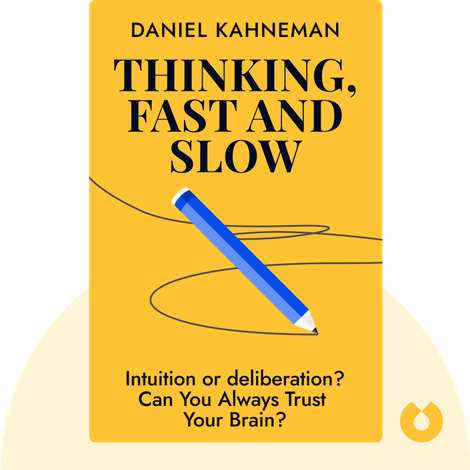
Valuable self-help books are often built upon research in fields such as psychology, cognitive science, or behavioral economics. Rather than imposing “formulas for success,” they offer analytical frameworks that help readers better understand the mechanisms underlying behavior, motivation, and decision-making processes. The value of these works lies not in promising specific outcomes, but in expanding awareness and providing cognitive tools.
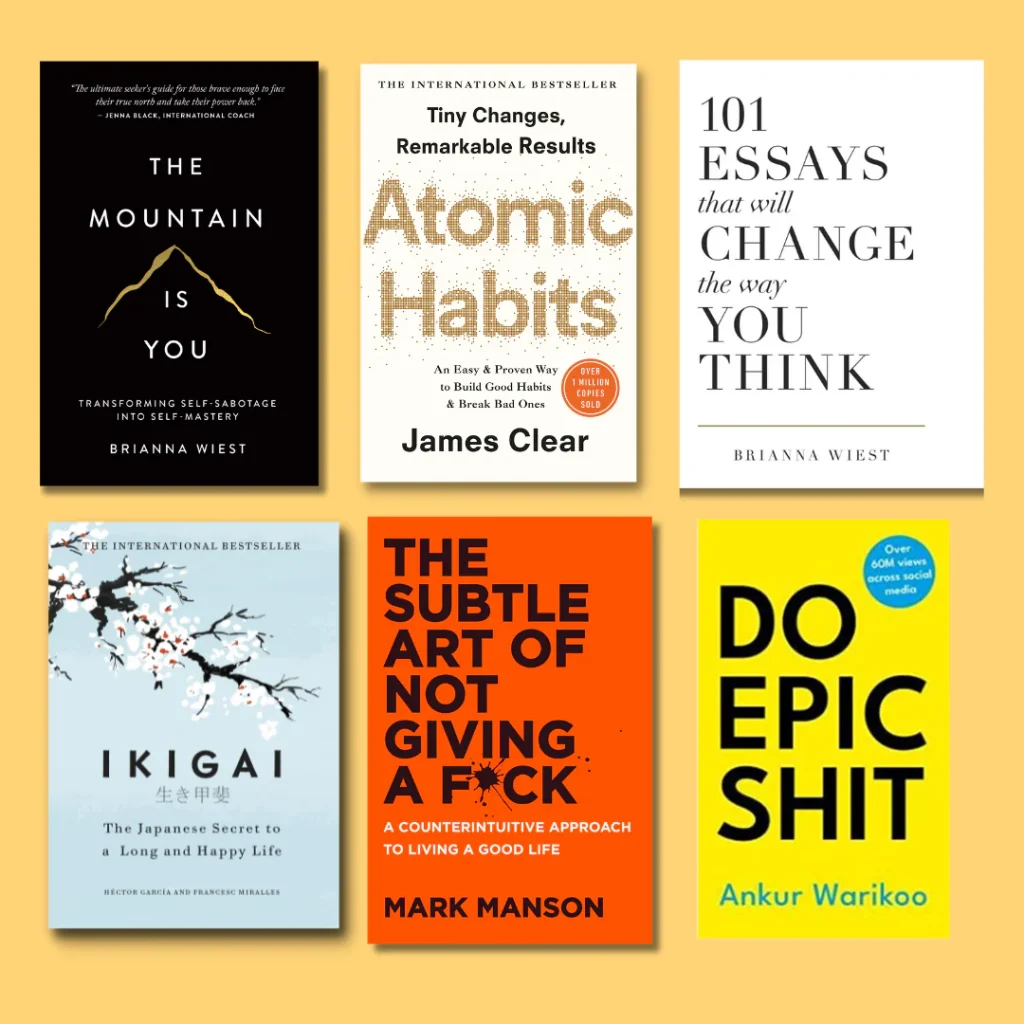
In contrast, slogan-driven products tend to prioritize accessibility and the ability to generate rapid inspiration. Their content is often simplified, leaning more toward assertion than analysis, with limited attention paid to the conditions under which their claims apply. The difference between these two categories lies not only in content but also in how they position the role of the reader: one encourages independent thinking, while the other tends to provide ready-made answers.
5.2 The Limits of Theoretical Knowledge
Even in the case of works grounded in solid academic foundations, it is important to recognize that knowledge conveyed through books is inherently indirect and generalized. Models, theories, and conceptual frameworks, no matter how carefully constructed, remain simplifications of reality intended for explanatory purposes. They cannot fully encompass the diversity and variability of the specific situations each individual encounters.
As such, the value of theoretical knowledge is only realized when it is subjected to practical testing. Applying a principle is not a matter of mechanical replication, but requires flexible adaptation based on context, available resources, and personal objectives. It is through processes of experimentation, deviation, and adjustment that knowledge becomes “internalized” – transformed from external information into internal capability.
A significant consequence of failing to recognize these limits is the tendency to absolutize book-based knowledge. When theoretical concepts are treated as complete truths, readers may become dependent, seeking external validation rather than developing independent evaluative capacity. This runs counter to the fundamental purpose of knowledge: to enhance autonomy in both thought and action.
5.3 The Decisive Role of the Reader
From the above analysis, it becomes evident that the true value of self-help books does not lie entirely in their content, but depends significantly on how readers receive and apply that knowledge. The same book, approached in different ways, can lead to entirely different outcomes: one results in the passive accumulation of information, while the other leads to a conscious transformation of understanding.
Effective reading requires active engagement from the reader. This includes questioning the arguments presented, identifying the conditions under which they apply, and, more importantly, testing them through personal experience. In this sense, reading is not the passive reception of a complete system, but participation in an ongoing dialogue with knowledge.
In addition, readers must clearly recognize the role of books as supportive tools rather than substitutes for action. Books can provide direction, suggestions, and conceptual frameworks, but they cannot replace the process of practice – where skills are developed and validated. When this boundary is clearly established, self-help books can realize their value as useful references, rather than becoming objects of dependency.
In summary, the issue does not lie in whether self-help books are inherently “good” or “bad,” but in how they are produced and, more importantly, how they are used. When approached with a critical mindset and connected to real-world practice, they can contribute meaningfully to personal development. Conversely, when consumed passively and treated as comprehensive solutions, they risk becoming part of the very problem they claim to solve.
6. An alternative path: from “fast” thinking to “deep” thinking
6.1 Redefining Success
Escaping the pressure of “early success” first requires an adjustment at the conceptual level. Success, if understood in a sustainable way, should not be constrained by speed or standardized time-based milestones. Instead, it should be seen as a state of alignment – between the goals an individual pursues, the capabilities they possess, and the context in which they exist.
This approach allows for the restoration of diversity in developmental paths. There is no single “standard timeline” applicable to all individuals, nor is there a single model of success that must be achieved. When success is detached from time pressure, individuals are better positioned to focus on the quality of the process, rather than being governed by the pace of others.
At the same time, redefining success helps shift the focus from external comparison to internal evaluation. Value is no longer determined primarily by one’s position within a social frame of reference, but by the degree of progress relative to oneself under specific conditions. This serves as an important foundation for building a sustainable motivational system that is less dependent on external fluctuations.
6.2 Restoring the Value of the Process
One of the consequences of “fast” thinking is the tendency to undervalue the role of the process. However, in reality, all forms of development – from learning and career growth to creativity – operate on the principle of accumulation. Elements such as experimentation, failure, adjustment, and repetition are not obstacles, but the very mechanisms that generate progress.
Restoring the value of the process also means accepting the non-linear nature of development. Results do not always grow in a steady, upward trajectory; periods of stagnation, or even regression, are natural parts of the process. When this is clearly understood, individuals are better able to sustain persistence without being disrupted by unrealistic expectations.
Furthermore, the process functions as a feedback system. Through action and observation of outcomes, individuals can adjust strategies, identify strengths and weaknesses, and gradually refine their capabilities. This is something no “ready-made formula” can replace, as it depends directly on the interaction between the individual and their specific context.
6.3 Deep Reading Practices
In a context where knowledge is increasingly “commodified,” re-establishing a deep approach to reading becomes essential. Reading, in this sense, is not merely the act of receiving information, but a process of processing, evaluating, and restructuring knowledge.
An effective reading method requires at least three steps: analyzing content, critically examining assumptions, and relating ideas to personal reality. Analysis clarifies the structure of arguments and core concepts; critical evaluation identifies limitations and conditions of application; while real-world connection allows knowledge to be tested within a specific context.
More importantly, reading must be linked to action. Knowledge only acquires real value when it is tested and refined in practice. Therefore, rather than reading extensively, it is more important to read selectively and allocate time to “digest” content – transforming theoretical understanding into practical capability.
6.4 Building Real Competence
While get-rich-quick books often direct readers toward seeking formulas, a more sustainable approach is to focus on building real competence. In this context, competence is not a collection of fragmented knowledge, but the ability to perform effectively under specific conditions.
The process of building competence requires a combination of learning and practice. Knowledge provides direction, but only through repeated application can individuals develop skills and form professional intuition. This is especially critical in complex fields, where no fixed procedure can be applied to every situation.
In addition, the accumulation of real-world experience serves as an irreplaceable source of data. Each experience – whether successful or not – provides information that helps individuals better understand both their environment and themselves. Over time, this accumulation forms a solid foundation, enabling more accurate decision-making without reliance on external “formulas.”
7. Conclusion – success is not a shortcut
The pressure of “early success,” when situated within the broader context of contemporary society, should not be regarded as an inevitable truth, but rather as a product of structural systems that prioritize speed, efficiency, and measurable achievement. As these values become dominant norms, the way success is defined is correspondingly adjusted toward compressing time and simplifying processes. Within such an environment, get-rich-quick books are not merely products of the publishing market, but direct reflections of a psychological demand – the desire for certainty in an inherently uncertain world, and the urge to shorten the path of personal development.
However, it is precisely at the intersection of this demand and its corresponding products that a paradox emerges. When knowledge is restructured into formulas designed for rapid consumption, it loses its fundamental function of enabling individuals to understand and engage with reality. Simplified models, while offering clarity and ease of application, fail to capture the complexity of developmental processes in real life. Success, in practice, does not operate according to a linear or deterministic logic; it is the result of continuous accumulation, adjustment, and interaction with variables that cannot be fully predicted. Therefore, the pursuit of generalized “shortcuts” is not only ineffective, but may also lead to distorted expectations.
In a world that prioritizes speed, the acceptance of slowness is often misinterpreted as a sign of delay or inadequacy. Yet, from a developmental perspective, slowness is a necessary condition for depth to emerge. It is precisely during periods that do not yield immediate results that processes of accumulation – in knowledge, skills, and experience – can unfold fully. Stability and sustainability, if regarded as objectives, cannot be separated from such phases.
More importantly, abandoning the illusion of “shortcuts” does not mean abandoning the aspiration for success, but rather adjusting the approach toward it. Instead of seeking predefined models, individuals must construct a developmental process suited to their specific conditions – a process that may not be fast or linear, but is capable of adaptation and self-correction. It is this capacity, rather than speed, that ultimately determines the ability to sustain and expand achievements over time.
From this perspective, the value of success does not lie in how quickly or slowly it is attained, but in how it is formed. Outcomes achieved through accumulation and understanding tend to be more sustainable than those based on short-term methods. The long path, with all its complexity and uncertainty, is not an inefficient choice, but the only path that accurately reflects the nature of development. And it is through the willingness to accept and persist along this path that the possibility of achieving meaningful results is truly realized.