Over the past two decades, modern society has witnessed an unprecedented surge in publications, courses, videos, and podcasts related to personal development – commonly referred to as self-help. These resources appear across virtually every platform, from printed books, eBooks, and audiobooks to mobile apps, social media, and live streaming. The rise of this phenomenon can be attributed to multiple factors: the rapid pace of change in the workplace, pressure to succeed, constant social comparison, and the growing need for self-improvement to adapt to the ever-shifting dynamics of contemporary life.
Alongside the self-help craze comes the widespread promotion of positive thinking. The concept of “positive thinking” has become a prominent cultural mantra, with motivational slogans circulating on social media, posters, and even advertisements, aiming to inspire individuals toward happiness and success.
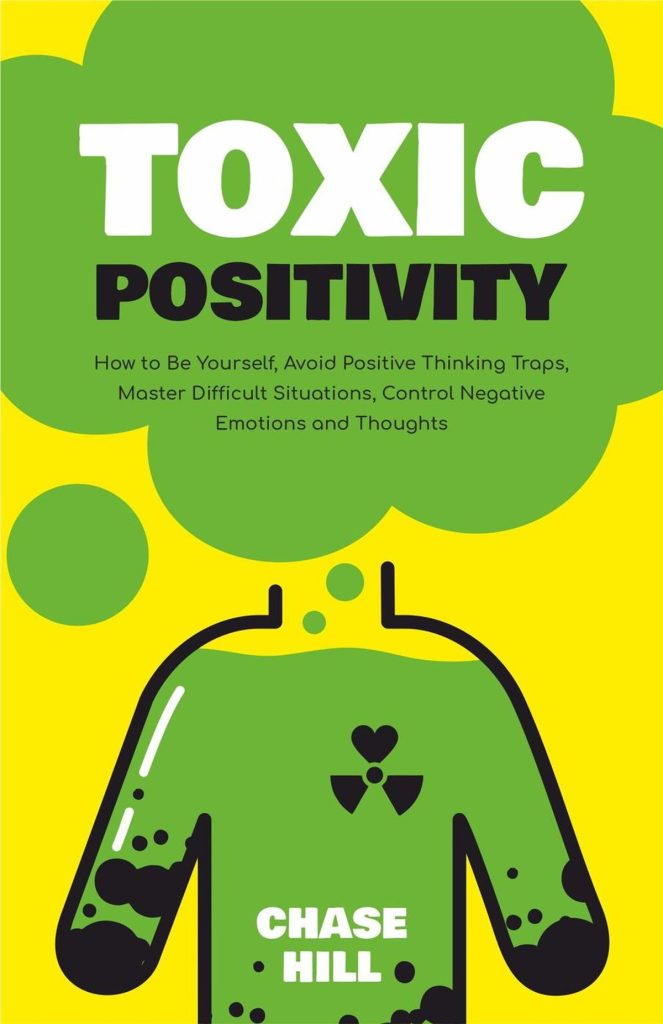
However, not all self-help content is constructive. A growing concern is the phenomenon of toxic positivity, which has quietly permeated communities, producing subtle yet significant psychological consequences that often go unrecognized. This raises a critical question: does the self-help craze truly offer value, or is it leading individuals into a sophisticated psychological and cultural trap? This article examines the phenomenon from multiple perspectives – historical, social, and personal – providing a comprehensive understanding of both self-help and the risks of toxic positivity.
1. Surveying the Self-Help Phenomenon
1.1 Origins and Development
The phenomenon of self-help is not a product of the digital age; it has existed and evolved for more than a century, reflecting humanity’s longstanding desire for self-improvement, happiness, and success. Classic works such as How to Win Friends and Influence People (Dale Carnegie, 1936) and Think and Grow Rich (Napoleon Hill, 1937) laid the foundations for modern self-help. These works not only guided readers in communication skills, financial management, and success-oriented thinking, but also introduced the concept of proactive self-development, emphasizing personal initiative over reliance on luck or external circumstances.
In the 21st century, self-help has become more diverse and widespread than ever before. No longer confined to printed books, self-help now exists across numerous digital platforms: eBooks, audiobooks, YouTube videos, podcasts, mobile apps focused on mindfulness and emotional regulation, and online courses on soft skills. This transition reflects a major trend – the demand for quickly accessible information, easily digestible content, and flexible application in daily life. An individual can read a motivational quote in five minutes, listen to a fifteen-minute podcast on meditation and emotional awareness, or participate in a short online course on time management – all aimed at becoming a “better version” of themselves.
This evolution also demonstrates that self-help continually adapts to social contexts. In a world where time is limited, information flows rapidly, and personal pressures are increasing, self-help provides a convenient means for individuals to enhance skills, reinforce mental resilience, and seek direction without investing hours in study or research.
1.2 Popular Topics
Current self-help content can be classified into four main areas, reflecting fundamental human needs in modern society:
- Financial and Professional Success:
Content in this category focuses on money management, investment, career development, personal branding, and achieving professional goals. Guidance is often presented as concrete steps, checklists, or short-term strategies to help readers perceive tangible progress. - Personal Happiness and Mindfulness:
This area includes lessons on meditation, emotional awareness, work–life balance, and spiritual growth. Self-help in this domain emphasizes self-awareness, emotional regulation, and harmony between personal needs and social environments. - Time Management and Productivity:
Extremely popular amid increasing work and study pressures, this content centers on planning, prioritization, enhancing personal efficiency, and managing long-term objectives. Methods such as the Pomodoro Technique, the Eisenhower Matrix, and other short-term time management principles are widely disseminated for easy adoption. - Positive Thinking and Motivation:
Positive thinking forms the core of contemporary self-help, emphasizing the ability to maintain optimism, overcome setbacks, and develop internal capabilities. Methods include self-reflective questioning, motivational reminders, and the establishment of daily habits to sustain enthusiasm and confidence.
A common feature of these topics is their digestibility: content is condensed, presented as simple formulas or motivational quotes with high shareability. In a context of limited time and decreasing patience, self-help becomes a quick and intuitive way to acquire knowledge, aligned with the fast-paced rhythms of modern life.
1.3 Positive Values
Self-help offers numerous benefits when approached thoughtfully and applied responsibly:
- Fostering personal motivation: Self-help encourages proactive change, goal-setting, and self-improvement through structured, actionable methods. It provides a framework for action, from managing emotions to developing professional skills.
- Providing soft skills: Beyond theoretical knowledge, self-help guides readers in essential modern-life skills such as time management, effective communication, critical thinking, mindfulness, and stress management strategies.
- Promoting a culture of self-directed learning: Reading, listening, and applying self-help nurtures a culture of self-learning, motivating individuals to explore diverse sources and translate knowledge into practical applications rather than passively consuming information.
Thus, when engaged with critical thinking and responsible practice, self-help can become a powerful tool for holistic personal development, enhancing both cognition and behavior, while laying the foundation for autonomy and adaptability in a socially complex environment.
2. Toxic Positivity – The Hidden Trap

2.1 Definition and Manifestations
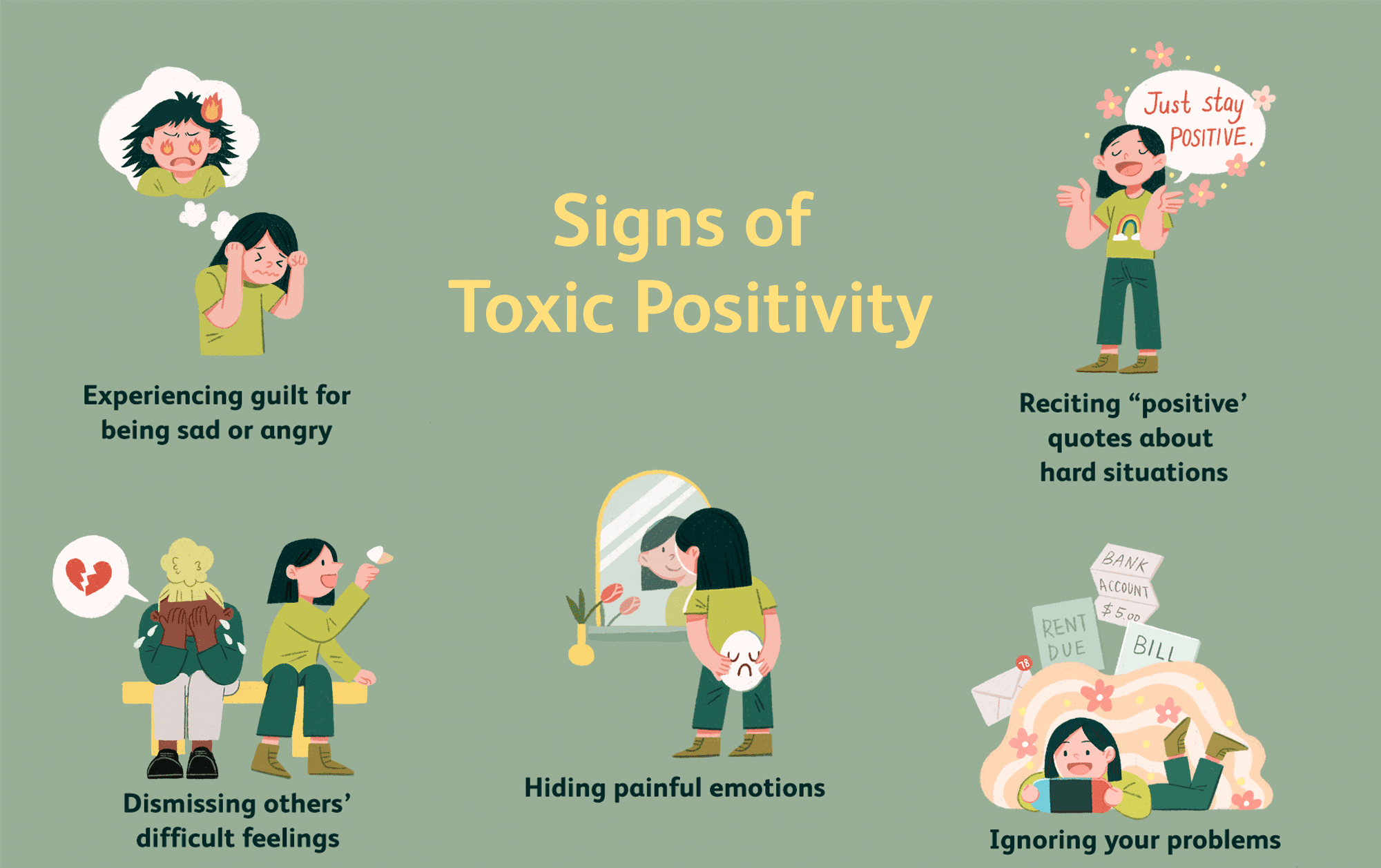
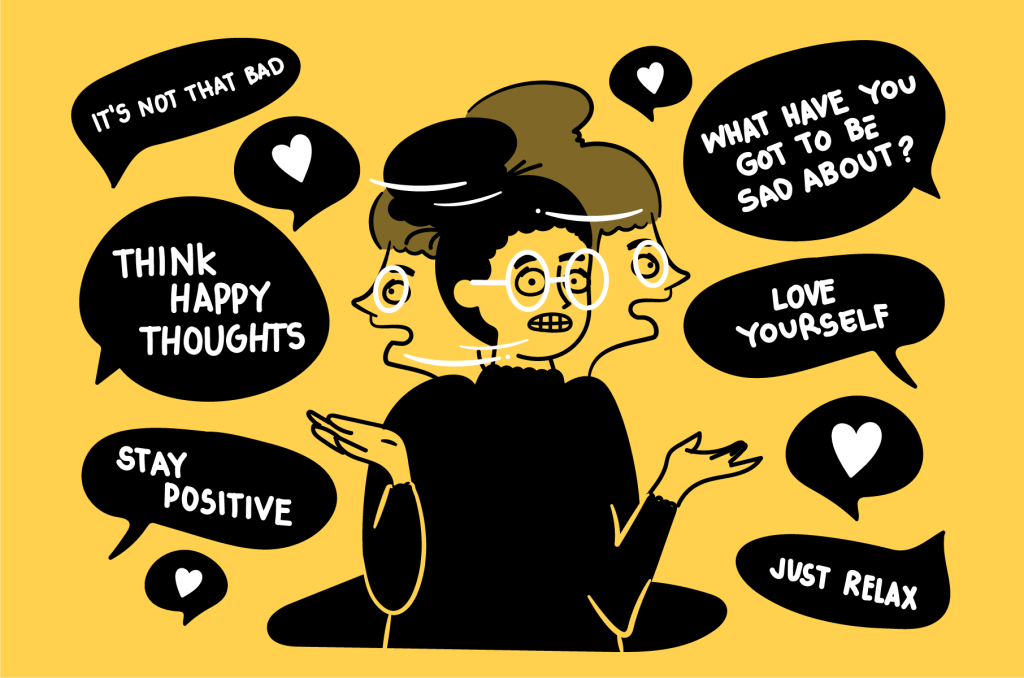
The concept of toxic positivity has emerged in recent psychological research to describe the phenomenon of maintaining an excessively positive attitude to the point of denying or dismissing negative emotions. In this context, any expression of anxiety, fear, sadness, or failure is often deemed “inappropriate” or something that must be eliminated immediately. Rather than acknowledging emotions naturally and finding ways to process them, common messages emphasize that individuals should focus solely on the positive aspects and disregard all negativity. Some frequently encountered examples include:
- “Just think positive, and everything will be fine.”
- “Don’t be sad – cheer up!”
- “Forget your failures and focus on the bright side.”
The manifestations of toxic positivity are not confined to self-help classes; they are prevalent across social media, advertising, and even everyday personal interactions, where individuals feel pressured to consistently display positivity. This creates an implicit cultural standard: people are expected to be happy and optimistic at all times, and any sign of negative emotion is interpreted as weakness or personal failure.
2.2 Psychological Risks
Toxic positivity produces a range of negative effects, profoundly impacting both mental well-being and social relationships:
- Guilt and self-blame:
When individuals are unable to maintain a positive attitude, they often fall into self-blame, perceiving themselves as weak, incompetent, or not “capable” enough to overcome challenges. This persistent sense of guilt can accumulate over time, leading to stress and reduced mental efficiency. - Suppression of genuine emotions:
Rather than processing and understanding negative emotions such as anxiety, sadness, or disappointment, individuals push them deep inside. Over time, this can result in emotional exhaustion, psychological imbalance, and an increased risk of depression. Toxic positivity frames natural emotions as “enemies,” undermining a person’s ability to confront and learn from negative experiences. - Impact on relationships:
Toxic positivity also diminishes the quality of social interactions. By imposing unrealistic standards of positivity on others, individuals may show a lack of empathy, fail to listen, or dismiss the actual experiences of those around them. This can lead to tension, emotional distance, and a reduced capacity for genuine sharing within personal and community relationships.
2.3 Underlying Causes
The phenomenon of toxic positivity arises from a combination of social, cultural, and economic factors:
- Commercialization of self-help:
As self-help has become a global industry, many products and courses are designed to create the illusion of “quick life-changing results” to attract consumers. These messages often oversimplify the process of personal development, focusing primarily on “staying positive” while neglecting the complex reality of human emotions. - Spread through social media:
Platforms such as Instagram, TikTok, and Facebook encourage short, easily shareable content. Motivational slogans, infographics, and positive quotes become widespread, yet they often lack depth and personal context. When consumed passively, such messages may lead individuals to believe that all challenges can be solved simply through a positive mindset, resulting in the denial of genuine emotions. - Performance and achievement culture:
Modern society places high value on continuous success, productivity, and happiness. In this environment, individuals feel pressured to be “happy and positive” at all times, regardless of personal circumstances or real difficulties. This performance-driven culture not only fosters toxic positivity but also increases stress, burnout, and sets unrealistic standards that are difficult for individuals to meet.
2.4 Recognizing Toxic Positivity
Identifying toxic positivity is the first and essential step in mitigating its negative effects. Some key indicators include:
- Assuming that all negative emotions are unreasonable.
- Advising others to “be positive immediately” without acknowledging their experiences.
- Believing that a positive attitude alone is sufficient to resolve any problem, regardless of complex circumstances.
Awareness of these signs enables individuals to distinguish between constructive motivation – which encourages action and personal growth – and toxic positivity, which denies genuine emotions and oversimplifies life’s challenges.h mạnh và sự ép buộc tích cực độc hại, từ đó khai thác self-help một cách tỉnh táo và hiệu quả hơn.
3. In-Depth Analysis: Social and Cultural Impacts
3.1 The Gap Between Ideals and Reality
One of the fundamental issues posed by self-help and positive thinking is the construction of idealized images of success, happiness, and personal perfection. Self-help content often depicts a life full of energy, efficiency, and continuous joy, leading readers or viewers to imagine that all difficulties can be easily overcome if they apply the “right formula” or maintain a positive mindset.
In reality, personal life is fraught with pressure, failure, loss, conflict, and uncertainty. When these positive ideals are imposed without practical guidance or tools for deep emotional awareness, individuals are prone to internal conflict. They may feel inadequate, incapable, or unsuccessful in meeting the “standards” set by self-help, social media, and contemporary culture. This discrepancy between expectation and reality generates psychological stress, a sense of helplessness, and ultimately undermines the personal development that self-help aims to promote.
3.2 Impact on Individual Cognition
People who overly rely on self-help and positive thinking risk developing an illusion of total control over their lives. They believe that attitude, positive thinking, and adherence to success formulas will allow them to overcome any problem, regardless of circumstances or personal limitations. When failure occurs, instead of viewing it as a learning experience, they often blame themselves, intensifying guilt and leading to prolonged stress.
This phenomenon also reduces critical self-reflection: individuals fail to evaluate real-world limits, overlook external factors or social contexts, and depend excessively on idealized models from self-help and social media. Consequently, the ability to process negative emotions diminishes, psychological problems intensify, and genuine personal growth and autonomy are restricted.
3.3 Manifestations in Popular Culture
Toxic positivity is vividly reflected in popular culture and social media. Memes, slogans, motivational quotes, and infographics condense messages into easily shareable phrases that often lack depth or personal context. Such messages encourage passive consumption, fostering the belief that all challenges must be “managed” through a positive mindset, regardless of actual experience.
Modern self-help courses, particularly short-term online programs, frequently promise “life transformation in 30 days” or “self-improvement in just a few weeks.” However, many of these courses fail to address participants’ personal issues, emotional experiences, or social contexts comprehensively. This creates a psychological risk: participants may feel disappointed, blame themselves, or experience pressure when results do not meet advertised claims, increasing stress and emotional imbalance.
A typical example is the widespread circulation of motivational quotes on TikTok or Instagram: bright, visually appealing images paired with concise positive messages, but offering no practical guidance, tools for coping with failure, or strategies for stress management. In such cases, positivity becomes a facade that masks genuine emotions rather than serving as a tool for cognitive development and effective coping skills.
4. Approaches to a Healthy Understanding and Use of Self-Help
4.1 Recognizing Toxic Positivity
The first step toward using self-help in a healthy way is to clearly distinguish constructive motivation from toxic positivity.
Constructive motivation consists of strategies, messages, or methods that encourage individuals to take action, develop awareness, and create tangible changes in their lives. It involves acknowledging difficulties, learning from failures, and using negative experiences as resources for growth.
Toxic positivity, by contrast, occurs when a positive attitude is maintained to an extreme, denying or imposing unrealistic standards of happiness. It leads individuals to ignore genuine emotions, feel pressured to maintain a constant appearance of optimism, and blame themselves when they fail to meet the “positive standard.”
Identifying these two states requires careful observation of one’s own emotions. Acknowledging pain, failure, stress, or frustration is not a sign of weakness, but a foundation for sustainable psychological development. Understanding this distinction allows self-help users to avoid the “trap” of toxic positivity while fully benefiting from the genuine value of personal development methods.
4.2 Effective Approaches to Self-Help
To use self-help effectively, several guiding principles should be followed:
- Select content appropriate to personal context:
Not all books, courses, or quotes are suitable for every individual. Learners need to assess their actual needs, applicability, and life context before engaging with material. Curating content carefully helps prevent information overload and reduces the risk of internalizing unrealistic standards. - Practice gradually, integrating theory with real-life experience:
Self-help is not a “one-time solution that permanently changes life.” Each skill or mindset must be practiced consistently, combined with real-world experiences. This approach allows individuals to evaluate effectiveness, adjust strategies, and avoid feelings of failure when results are not immediate. - Apply critical thinking and seek support when needed:
Users should question, critically evaluate, and assess the methods rather than accepting them uncritically. When encountering psychological difficulties, it is important to seek guidance from mental health professionals, mentors, or trustworthy communities to prevent stress accumulation or negative emotional patterns.

4.3 Building a Healthy Self-Help Culture
For self-help to serve as a sustainable development tool, a healthy self-help culture must be cultivated, including the following elements:
- Encourage sharing of both failures and successes:
A healthy self-help culture recognizes not only achievements but also setbacks and difficulties. Sharing these experiences helps individuals understand that failure is a natural part of growth, reducing pressure and enhancing learning capacity. - Include lessons on emotional regulation and mental health:
Self-help should go beyond performance or positive motivation, providing guidance on stress management, coping with negative emotions, and developing resilience. This ensures learners can balance pressure with genuine well-being. - Responsible commercialization:
Self-help products must be transparent about their limitations, realistic outcomes, and applicability. Promises of rapid transformation or guaranteed results are often unrealistic and can lead to disappointment or stress. Responsible commercialization ensures self-help serves as a useful tool rather than a source of psychological pressure.
A healthy self-help culture not only promotes comprehensive personal development in cognition and behavior but also fosters empathetic, sustainable communities, where failures and challenges are acknowledged as natural parts of growth. In this way, self-help becomes a genuine instrument for meaningful personal growth rather than a vehicle for superficial ideals or toxic positivity.
5. Conclusion and Emphasis on Value
Self-help is a powerful tool with the potential to deliver genuine value when approached with critical awareness and reflective judgment. However, when a positive attitude is taken to an extreme – focusing solely on outward optimism while neglecting genuine emotions and lived experiences – it becomes a subtle psychological hazard, generating stress, internal pressure, and feelings of personal inadequacy.
The core message is that individuals must engage with self-help through critical thinking, acknowledging and accepting the full spectrum of emotions while balancing personal growth with objective reality. Sustainable success and well-being cannot be achieved through enforced positivity; they emerge from deep self-understanding and the ability to confront challenges, failures, and pain authentically.
Only when self-help is employed with clear awareness, responsible practice, and a grounded mindset can it truly serve as a tool for comprehensive personal development – enhancing cognition, skills, and emotional resilience – rather than leading individuals into the subtle trap of toxic positivity.