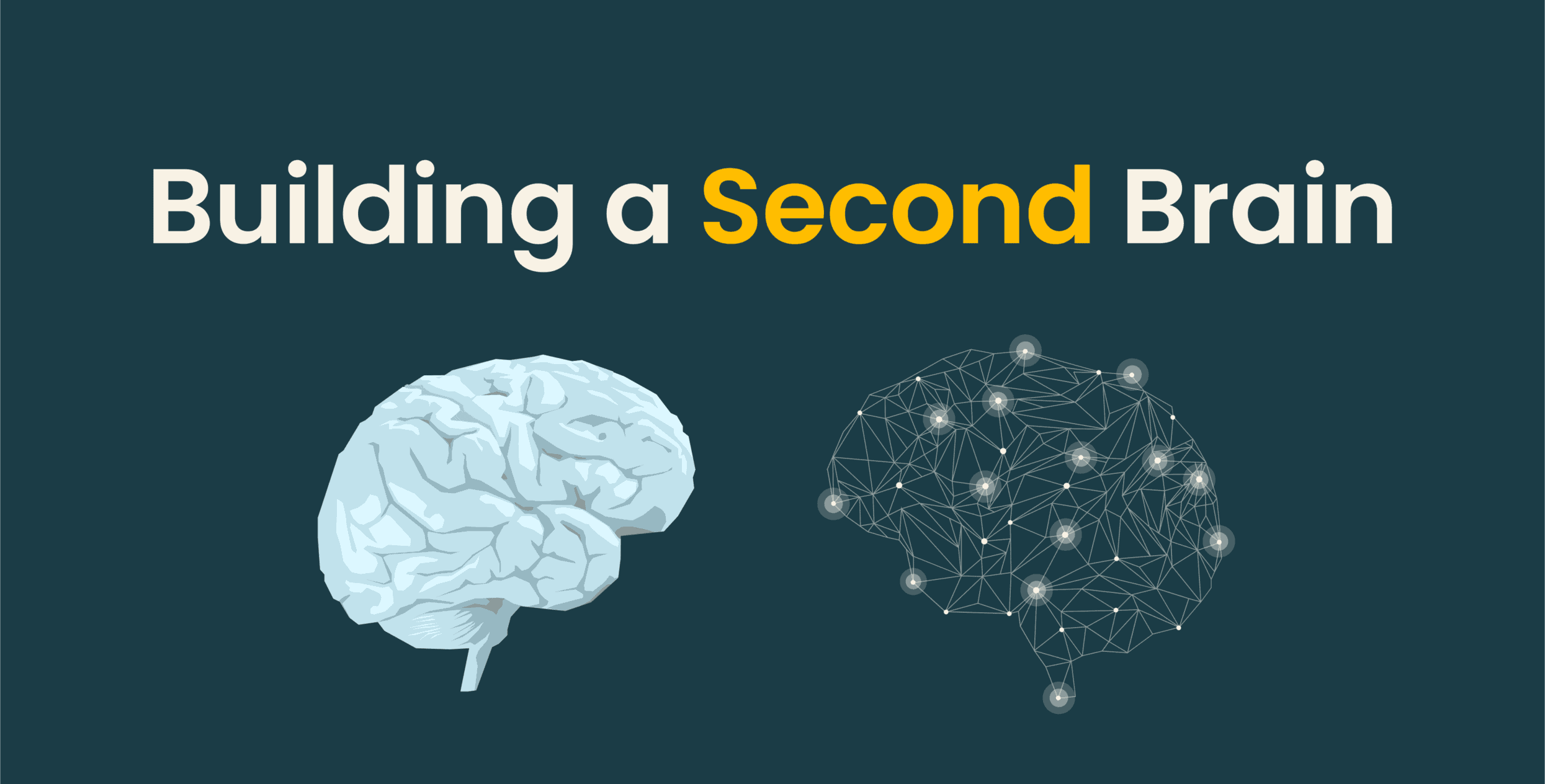

In the long course of human civilization, language has consistently been established as one of the most refined and complex manifestations of human intellect and consciousness. It is not merely a means of communication, but also the foundational structure of thought, a tool for organizing experience, and a space in which individuals construct, preserve, and convey their inner worlds. From ancient epic narratives imbued with collective identity – where communal memory is crystallized into poetry – to modern novels that reflect individual depth and existential crises; from political essays that shape social discourse to private diaries that record the most subtle fluctuations of the sou – writing, in all its forms, transcends the function of information transmission to become an act of existence, a way through which humans become self-aware and define themselves.
However, in the era of artificial intelligence, language is undergoing a transformation of a fundamentally new kind. Contemporary AI systems, trained on vast datasets and operating through sophisticated deep learning models, have reached an astonishing level of proficiency in generating text that is coherent, logical, and highly adaptable. Beyond reproducing linguistic structures, they are capable of producing texts rich in imagery and expressive nuance, even simulating the styles and tones of various genres. AI can compose poetry with rhythm and metaphor, craft narratives with relatively complete plot structures, engage in literary criticism with clear reasoning, and participate in domains once considered inseparable from human creativity.
This development raises an unavoidable and foundational question: if writing – with all its formal structures and surface expressions – can be simulated, reproduced, and optimized through algorithms, can “aesthetic perception,” the core element that gives literature its depth, also be transformed into a programmable capacity? In other words, does the reproduction of language entail the reproduction of the lived experience that language carries?

This question, therefore, extends beyond the realm of technology or technique and becomes a philosophical inquiry into the nature of being human. It compels us to confront fundamental concepts: what emotion is, how consciousness is formed, and what constitutes the capacity to “feel” – the ability to transform linguistic signals into meaningful lived experience. In this context, artificial intelligence is not merely a tool, but a reflective mirror through which humanity can reexamine itself as a being capable of feeling, thinking, and constructing meaning from lived experience.
1. Writing and Aesthetic Perception – Two Layers of Language
1.1 Writing: from technique to creation
At the foundational level, writing can be approached as a structured technical system, comprising elements such as vocabulary, grammar, syntax, and discourse organization. These components operate according to identifiable rules and can be analyzed, standardized, and reproduced through data-driven models. It is precisely at this level that artificial intelligence has achieved significant progress: it is capable of generating grammatically correct sentences, maintaining logical coherence across ideas, and even simulating stylistic features associated with different genres. In this sense, writing may be understood as a process of processing and organizing linguistic signals – an operation that can, to a certain extent, be mechanized.
However, to reduce writing to its technical dimension would be an oversimplification. At a deeper level, writing is no longer merely the arrangement of words according to rules, but an act of creation with an existential dimension. The writer does not simply “use” language as a tool, but also “exists” within language as a space of expression. Each sentence, therefore, does not only carry informational value or formal correctness, but also embodies lived experience, a personal perspective, and a specific state of consciousness at the moment of its articulation.
Writing, in its fullest sense, is the crystallization of inner life – where emotions, memories, reflections, and worldview are transformed into linguistic form. It is this dimension that gives a text its depth and uniqueness, and that distinguishes clearly between a text that is merely “produced” and one that is “lived through.” Consequently, the distinction between “writing as technical operation” and “writing as creative act” is not only conceptual, but also serves as a fundamental criterion for evaluating the limits and actual capacities of artificial intelligence in the domain of language.
1.2 Aesthetic perception: the capacity of a living subject
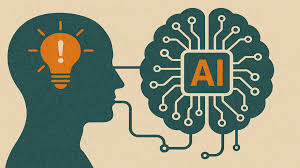
If writing is the process of constructing a text, then aesthetic perception is the process of receiving a text at a deeper level, where meaning is not only “understood” but also “experienced.” It is not simply the decoding of content or the grasping of information, but a complex activity that includes the ability to be moved by beauty, sensitivity to artistic structure, the capacity to empathize with the lives represented in the text, and the ability to relate it to one’s own accumulated life experiences.
From a structural perspective, aesthetic perception can be analyzed as consisting of multiple interrelated layers. At the cognitive level, the reader grasps the content, meaning, and message of the text. At the aesthetic level, they perceive the beauty embedded in its expressive form – from rhythm and imagery to overall artistic structure. At the emotional level, the reader establishes an affective connection with the characters, situations, or ideas presented. And at the experiential level, the text becomes a point of departure for personal associations, where the reader relates what is read to their own life.
However, what fundamentally defines aesthetic perception does not lie solely in these structural layers, but in its subjectivity. It is always tied to a conscious “self” – a subject capable of remembering, reflecting, and engaging in self-awareness. It is within this subject that the transformation from linguistic signal to meaningful experience takes place. Without a consciousness that can feel, a text is reduced to a sequence of signs; without an inner life as its foundation, any response to a text becomes mechanical and devoid of depth.
Therefore, while writing may be approached as a process that can be modeled to a certain extent, aesthetic perception, by virtue of its intrinsic connection to consciousness and lived experience, establishes fundamental limits for any attempt at technological replication. It is precisely at this point that the difference between humans and artificial intelligence becomes clear – not only in terms of capability, but in the very nature of what it means to “understand” and to “feel.”
2. AI Can Write – But to What Extent?
2.1 Reproducing form and style
In recent years, artificial intelligence has made significant advances in its ability to reproduce the formal features of texts. At the structural level, AI can generate writings that adhere closely to conventional genre norms: from an argumentative essay with a clear organization of introduction – body – conclusion, to a narrative with fully developed stages such as exposition, conflict, climax, and resolution. Beyond merely following structural frameworks, AI is also capable of adjusting tone and expression to suit specific communicative purposes, such as academic discourse, journalism, literary writing, or even everyday colloquial language.

More notably, AI can engage with what is often considered a profound expression of creative individuality: style. By analyzing and learning from vast amounts of textual data, AI is able to identify recurring patterns in word choice, sentence construction, rhythmic flow, and the development of ideas. It can then reproduce these features in the process of generating text, resulting in outputs that bear the appearance of a particular style. This capability creates a notable cognitive effect: readers may easily develop the impression that the text is not merely “produced” mechanically, but carries the imprint of a creative subject.
However, it must be emphasized that AI’s reproduction of style remains fundamentally imitative. It does not arise from an inner life or a process of forming individuality, but from the recombination of patterns already present in data. Therefore, what is referred to as “style” in AI-generated text is, ultimately, a statistical construct rather than an expression of personal identity.
2.2 Surface-level persuasiveness
One of the reasons AI-generated texts are readily accepted lies in their high degree of persuasiveness at the level of linguistic surface. These texts are typically fluent, maintaining coherence and logical consistency in argumentation, while employing imagery and expressive structures with relative flexibility. In many cases, particularly in informational, explanatory, or logically driven texts, the difference between AI-generated content and human writing is not immediately apparent.
This effect becomes even more pronounced in the context of modern reading habits, where there is a tendency to prioritize speed, clarity, and accessibility over depth of experience. When a text satisfies criteria such as coherence and logical organization, it is often considered “good enough,” regardless of whether its source is human or machine.
However, it is precisely at this point that an important distinction must be drawn: the persuasiveness of AI-generated text operates primarily at the surface level. It is based on the reproduction of linguistic patterns that have been standardized and validated in the past, rather than on any concrete lived experience. In other words, AI can produce a text that appears “as if it has meaning,” but not necessarily one that emerges from an internal process of meaning-making. This difference may not be immediately visible, but it becomes decisive when evaluating the depth and durability of a text’s value.

2.3 Writing as a probabilistic process
At its core, the writing process in artificial intelligence is grounded in probabilistic prediction. Based on learned data, the AI model calculates the likelihood of each linguistic unit – whether a word, phrase, or structure – appearing in a given context, and selects the option with the highest probability or best alignment with optimization objectives. This process unfolds continuously, step by step, until a complete text is formed.
This leads to a fundamental consequence: AI does not “know” what it is writing in any cognitive sense. It does not possess the intention to express an idea, nor does it have a communicative purpose arising from internal necessity, and it has no experience connected to the content it generates. All linguistic outputs produced by AI are the result of a sequence of optimized probabilistic calculations, rather than the expression of a conscious mind.
As a result, even though AI-generated texts may achieve a high level of accuracy, coherence, and even formal sophistication, they still lack a foundational element: existential depth. They do not reflect a lived process, bear no trace of personal experience, and do not arise from a need for self-expression. Writing, in this context, is no longer an act of existence, but becomes a technical function – efficient and flexible, yet fundamentally external to the realm of “living” within language.
3. The Limits of AI: The Inability to “Perceive”
3.1. The absence of lived experience
Aesthetic perception in literature, ultimately, is a process deeply rooted in human lived experience. A text only truly acquires meaning when it resonates with layers of memory, lived encounters, and emotional states that the reader has personally undergone. A sentence about loss is not merely understood intellectually, but also “felt” through one’s own experiences of separation, pain, or regret. Similarly, an image of loneliness can only evoke profound resonance in someone who has confronted the feeling of being isolated from the surrounding world. Aesthetic perception, therefore, is not simply the reception of information, but an encounter between text and life – where language becomes a catalyst that awakens experiences accumulated within the subject.

Artificial intelligence is entirely absent from this dimension. It has no personal life, no memories formed over time, and no experiential events. All of its “knowledge” derives from provided data, rather than from having “lived through” the world. As a result, when processing a text, AI cannot situate it within a concrete history of existence. It may identify themes, analyze structure, and reproduce relevant expressive patterns, but it cannot experience what the text conveys. Consequently, what is called AI’s “understanding” remains at the level of processing and reorganizing information, lacking the depth of internalized experience.
3.2 The absence of consciousness and subjectivity
One of the fundamental conditions of aesthetic perception is the presence of a conscious subject – a “self” capable of awareness of both itself and the world. When humans read a text, they do not merely receive content; they are simultaneously aware of the act of receiving: they know that they are reading, thinking, and being moved. It is precisely this reflexive capacity – the ability to turn back upon oneself to observe and evaluate one’s own cognitive state – that gives depth to the experience of perception.
Artificial intelligence possesses no form of consciousness in this sense. It has no capacity for self-awareness, no subjective experience, and no center of existence to which its operations can be referred. AI does not “know” that it is processing language, nor does it “feel” the outcomes of that process. Therefore, attributing a “self” to AI is an act of anthropomorphism, a metaphorical projection that helps humans conceptualize its functioning, rather than a reflection of its actual nature. In the absence of subjectivity, any form of “perception” attributed to AI remains an external simulation without an internal foundation.
3.3 The absence of genuine emotion
One of the most easily misunderstood aspects of AI is its capacity to express emotion. AI can generate passages that depict sadness with subtle language, convey joy through vivid imagery, or reconstruct states of despair with considerable expressive precision. On the surface, such texts may create the impression that AI “understands” or even “experiences” the emotions it describes.
However, it is essential to distinguish between describing emotion and feeling emotion. Humans experience emotions as real psychological – physiological states, intimately tied to the body, memory, and lived circumstances. AI, by contrast, processes linguistic expressions of emotion as data patterns. It has no nervous system, no biological responses, and no inner life through which emotions can arise or be experienced. Therefore, all emotional expressions in AI-generated text are the result of reproducing learned linguistic structures, rather than reflections of an actually occurring emotional state. The gap between “expression” and “experience” here is an ontological one, not something that can be bridged by increasing technical sophistication.
3.4 The absence of genuine empathy
Empathy represents one of the highest expressions of aesthetic perception, as it requires not only recognizing another’s state, but also the ability to place oneself in their position and perceive the world from their perspective. It is a complex capacity that integrates cognition, emotion, and personal experience. Empathy is not merely understanding that another is suffering, but the ability to “share” that suffering to a certain degree.
Artificial intelligence can simulate empathetic responses through language. It can produce contextually appropriate replies, employing familiar expressions to convey concern, comfort, or support. However, these responses do not arise from an internal experience, but from the recognition of corresponding patterns in data. AI does not truly “place itself” in another’s position, because it has no “self” to begin with. Its empathy, therefore, exists only at a functional level – as a programmed response – rather than as a genuine psychological state.
Precisely because it lacks the foundations of experience, consciousness, and emotion, AI’s capacity for empathy cannot reach the human level of depth. It may facilitate communication and create the impression of being heard, but it cannot replace a living subject in the act of truly feeling and sharing existential experience.
4. The Paradox: AI Does Not Feel, Yet Still Evokes Emotion
4.1 Emotion belongs to the reader
One of the key points for understanding this paradox lies in the very nature of emotion in the process of textual reception. A text, in itself, does not “contain” emotion in any material or intrinsic sense; it consists only of linguistic signs – structures capable of suggesting, activating, and guiding psychological responses. It is the reader, with their memory, experience, and inner life, who becomes the subject that generates emotion in the act of engaging with the text.

When a sentence evokes sadness, it does not mean that sadness inherently resides within the words, but rather that the words have touched upon a corresponding layer of memory or experience in the reader. Similarly, an image does not carry aesthetic emotion on its own, but becomes “beautiful” when it is received by a subject capable of perceiving and evaluating beauty. Aesthetic perception, therefore, is a co-constructive process – one in which the text provides the signals, while the reader provides emotional depth.
In this context, the fact that a text generated by AI can evoke emotion is not contradictory. AI does not need to “possess emotions” in order to produce emotional effects in readers. What is required is the ability to reproduce linguistic structures that have the potential to trigger such responses. In other words, emotion does not reside on the side of the writer (or the generative system), but is formed on the side of the receiver. For this reason, despite lacking an inner life, AI can still indirectly participate in the creation of emotional experience.
4.2 The emotional legacy within data
Another important factor that helps explain this phenomenon lies in the nature of the data on which AI is trained. Modern language systems do not generate text from nothing; rather, they learn from vast corpora consisting of millions or even billions of texts written by humans across different periods and contexts. These texts do not merely contain information, but also carry traces of emotion, experience, and reflection – elements that have been encoded into language.
When AI learns from such data, it does not “understand” these emotions in an experiential sense, but it can identify and reproduce patterns associated with them. For example, expressions of sadness, love, or loss often share certain linguistic characteristics – in vocabulary, rhythm, and imagery. Through training, AI can reconstruct these features with high accuracy, thereby producing texts that bear the appearance of emotional depth.
This gives rise to a distinctive impression: AI-generated text may be perceived as having a “soul.” However, upon closer examination, this “soul” is not the product of a feeling subject, but a reflection of a collective emotional heritage accumulated within the data. In this sense, AI functions as an intermediary – a tool that redistributes and restructures emotional expressions that fundamentally belong to human experience.
4.3 The reflection effect
Another psychological mechanism that clarifies this paradox is the reflection effect in the act of reading. Humans have a tendency to search for and recognize themselves within a text. When reading a passage, the reader does not merely receive information, but also compares the content with personal experience, thereby creating a certain alignment between “what is read” and “what has been lived.”
By generating familiar and broadly applicable linguistic structures, AI inadvertently becomes a reflective surface. What it produces, though not derived from personal experience, may still coincide with common patterns of human experience. When such alignment occurs, readers tend to attribute depth to the text, perceiving it as a meaningful expression, even as a voice possessing a certain “soul.”
However, it must be emphasized that this depth does not reside within the text itself, but emerges through the interaction between the text and the reader. AI does not generate reflection from within; it merely provides a surface sufficiently compatible for the reader to recognize themselves within it.
5. Humans and AI – Two Distinct Models
5.1 Humans: creation from existence
For humans, writing is not merely a skill or a tool, but an integral part of lived existence. Every act of writing is tied to a specific experience, a particular state of consciousness, and an internal need for expression. A text, therefore, is not only the final product, but also the trace of a lived process – where emotions, memories, and reflections are transformed into language.
In literature, this becomes even more evident. A work is evaluated not only through its content or form, but also through the depth of experience it carries. The writer, in the process of creation, does not simply “produce” a text, but also “lives through” it. It is precisely this element that constitutes the uniqueness and irreplaceability of human creativity.
5.2 AI: generation from data
In contrast, for artificial intelligence, a text is not the result of a lived process, but the product of data processing. AI has no experience, no consciousness, and no intrinsic need for expression. All of its acts of “writing” are externally prompted and carried out through computational models.
This means that, although AI-generated text may reach a high level of formal completeness and communicative effectiveness, it does not carry existential depth. It does not reflect an inner life, does not contain a trajectory of lived experience, and does not arise from a need for self-expression. Writing, in this case, is not an existential act, but a technical function executed on demand.
5.3 An ontological gap
From these differences, it becomes clear that the gap between humans and AI is not merely a matter of degree of capability, but one of fundamental nature. Humans are living subjects – possessing consciousness, experience, and the capacity for perception and reflection. AI, by contrast, is a processing system – operating on the basis of data and algorithms, without an inner life.
This gap is ontological, meaning it cannot be easily eliminated through technological advancement alone. Even as AI becomes increasingly sophisticated in simulating language and behavior, it still lacks the foundation required for genuine aesthetic perception: consciousness and lived experience. Therefore, the difference between humans and AI is not only a difference in “what can be done,” but also in “what something is” – on one side, a being that exists as a subject; on the other, a system that operates.
6. Counterarguments and Future Possibilities
In discussions surrounding artificial intelligence and the capacity for aesthetic perception, a notable viewpoint is often raised: if a system can simulate human behavior with sufficient accuracy, then the distinction between “having emotions” and “not having emotions” becomes unnecessary. According to this argument, what humans refer to as “aesthetic perception” can be understood as a set of behavioral expressions – including modes of response, forms of expression, and patterns of interaction with texts or with others. If AI can fully reproduce these expressions, then functionally, it may be considered as possessing the capacity for perception, regardless of whether it has any internal experience.

This approach bears the imprint of behaviorism, in which psychological states are not defined by subjective experience, but by observable behavior. From this perspective, whether a system truly “feels” or not is not the central issue; what matters is whether it can behave as if it feels. If a text generated by AI can move readers emotionally, and if AI can respond appropriately to human emotional states, then the search for an “inner state” within the system may be regarded as unnecessary, or even unverifiable.
However, this line of reasoning quickly encounters limitations when examined through the lens of ontology. Behavior, no matter how finely simulated, remains only the external manifestation of a deeper process – the process of experience. In humans, emotions are not merely observable reactions, but subjective states, intimately tied to consciousness, to the body, and to an individual’s history of existence. When a person feels pain, that pain is not only expressed through behavior, but also exists as a real experience, possessing depth and meaning for the subject.
By contrast, an AI system, even if it can appear to be “in pain” through language or simulated behavior, has no corresponding experience underlying that expression. It has no body through which to feel, no consciousness through which to register, and no memory through which to accumulate experience. Therefore, similarity in behavior does not imply similarity in essence. A system may speak about pain and react as if it is in pain, but this does not mean that it actually undergoes pain in an existential sense.
This distinction becomes particularly significant when considering the concept of aesthetic perception. If perception is defined merely as a sequence of observable responses, then AI may approach the ability to “simulate” it. But if perception is understood as an internal process – in which meaning is formed through the interaction between text and lived experience – then behavioral simulation is insufficient. In this sense, aesthetic perception cannot be separated from subjectivity and inner life.
Looking toward the future, it is undeniable that artificial intelligence will continue to develop rapidly, especially in its capacity to simulate language and behavior. AI systems may become increasingly sophisticated in reproducing emotional expressions, and may even participate in complex interactions requiring sensitivity and adaptability. This may blur the boundary between humans and machines at the level of appearance, making distinctions more difficult in practice.
However, increasing sophistication in simulation does not equate to a transformation in essence. The problem of consciousness – whether a system can truly “feel” or possess subjective experience – remains an unresolved question. This is not merely a technical issue, but a profound philosophical one, concerning the nature of mind, consciousness, and experience.
At present, there is no evidence to suggest that an artificial system can possess consciousness in the way humans understand it. Programming responses, no matter how advanced, is fundamentally different from the formation of an inner life. Therefore, even as the future may witness significant advances in AI’s capacity for simulation, the question of its genuine capacity for “aesthetic perception” will remain an open problem – not only for science and technology, but also for philosophy and epistemology concerning human nature itself.
7. Philosophical Implications and Human Value
The emergence of artificial intelligence does not merely bring about technological change, but also raises fundamental questions about how humans understand themselves. First and foremost, it compels us to reconsider the concept of “creativity” – a notion long associated with human identity. If creativity is understood in a reductive sense, as the production of a new product, a complete text, or an aesthetically structured form, then AI has clearly been participating in this process effectively. It can generate outputs that meet formal criteria, even to the point where they are difficult for humans to distinguish.

However, when creativity is placed within a deeper dimension, as a process of living – in which humans experience the world, internalize encounters with reality, and transform them into linguistic expression – the central role of the human becomes irreplaceable. Creativity, in this sense, is not only about “what is created,” but “where it is created from”: from a concrete life, from memories, emotions, and reflections accumulated over time. A literary work, therefore, is not merely the result of technique, but the trace of a lived journey. It is precisely this element that gives human creativity its depth and enduring value, something that AI, by virtue of its non-experiential nature, cannot reproduce.
In this context, aesthetic perception must also be reconsidered as a capacity that extends beyond purely aesthetic evaluation. It is not only the ability to recognize beauty or assess artistic structure, but also an expression of humanity – of a subject capable of feeling, resonating, and connecting what is received with one’s own life. When humans perceive a work, they do not merely “understand” it; they live with it, allowing it to reshape how they view the world and themselves.
For this reason, aesthetic perception is inseparable from the capacity to experience the world as a meaningful space. It enables humans not only to exist biologically, but to exist as conscious beings – capable of questioning, seeking value, and constructing meaning from what they encounter. In this sense, perception is not a detachable skill, but a constitutive element of human spiritual life.
Within the age of artificial intelligence, literature does not lose its place. On the contrary, as language generation becomes increasingly mechanized, the value of literature is further highlighted in precisely the dimension that AI cannot reach: its ability to preserve and evoke lived experience. Literature becomes a unique space in which humans do not merely receive information, but confront themselves – their limitations, aspirations, and inner contradictions.
Within this space, reading and writing are no longer merely intellectual activities, but existential acts – through which humans affirm their capacity to feel and to understand the world. For this reason, rather than being replaced by AI, literature in this era may be seen as becoming even more essential: a domain in which humans recognize that, amid technological advancement, there remains an irreducible dimension – the dimension of experience, consciousness, and what it means to be human.
8. Conclusion – Limits and Value
Artificial intelligence, with its remarkable advances in language technology, has demonstrated that “writing” – at the level of structure and expression – can be modeled and reproduced with increasing precision. It is capable of organizing coherent arguments, simulating diverse styles, and even recreating emotional expressions in a persuasive manner. In the future, this capacity will undoubtedly continue to expand, making the boundary between texts produced by humans and those generated by machines increasingly difficult to distinguish at the level of form.

However, it is precisely at the point where AI appears to come closest to human capability that its limitations become most evident. The simulation of language does not equate to the possession of experience; the reproduction of emotion does not equate to the feeling of emotion. “Writing,” in the case of AI, remains a process of processing and organizing data which, no matter how sophisticated, still operates outside the realm of inner life. In contrast, “aesthetic perception” – with its full depth of consciousness, memory, experience, and emotional resonance – is a capacity intrinsically tied to the existence of a living subject.
The gap between “writing” and “feeling,” therefore, cannot be understood merely as a technical distance that may gradually be narrowed over time. It is an ontological boundary, arising from the fundamental difference between two modes of existence: on one side, the human being – a conscious subject with inner life and the capacity for experience; on the other, artificial intelligence – a system of information processing without subjective experience. It is this boundary that defines the limits of technology while simultaneously highlighting the irreplaceable value of the human.
Within this context, the development of AI does not necessarily lead to the displacement of humans in the domain of language and literature. On the contrary, it contributes to clarifying what fundamentally belongs to the human. As machines become capable of “writing,” humans are led to recognize that their value does not lie merely in the ability to produce text, but in the ability to “live within language” – to transform words into a medium for expressing experience, a space for preserving memory, and a tool for constructing meaning.
Therefore, rather than viewing AI as a competitor in the field of creativity, it may be understood as a force that stimulates human self-reflection. It compels humans to confront a fundamental question: what constitutes the irreplaceable difference of being human? The answer, as suggested throughout, lies in the capacity for aesthetic perception – the ability to transform linguistic signs into lived experience, and from there, to construct meaning for existence.
It is precisely within the boundary between what can be simulated and what cannot be replaced that the human is not diminished, but instead becomes more clearly defined than ever: as a subject who lives, who feels, and who is capable of endowing language with a depth that no algorithm can fully attain.